Psoriasis Associated With Increased Risk of Acute Periapical Abscesses
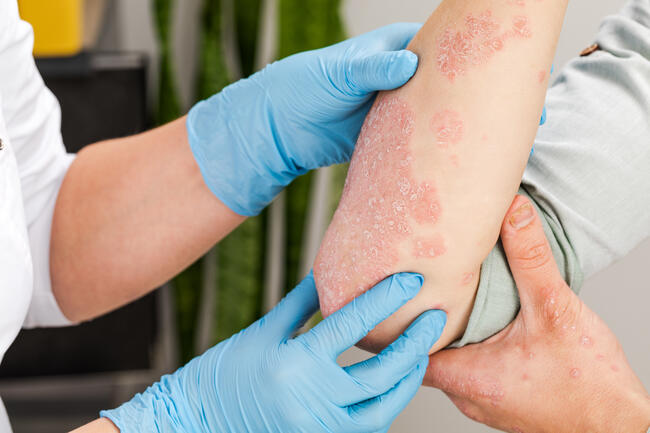
Patients with psoriasis had a significantly higher prevalence of acute periapical abscesses (PAs), with the association persisting after adjustment for several medical, behavioral, and treatment-related factors, according to findings from a retrospective hospital-based analysis.
Investigators evaluated de-identified clinical data from 2,108,676 patients to assess the prevalence of acute PAs among patients with psoriasis. Psoriasis and acute PAs without sinus involvement were identified using standardized diagnostic coding. Associations were evaluated using odds ratios (ORs) with 95% CIs, with multivariable logistic regression used to account for potential confounders.
Among 16,084 patients with psoriasis, 224 had an acute PA. Compared with the overall hospital population, patients with psoriasis had significantly greater odds of acute PAs (OR, 2.21; 95% CI, 1.94-2.53; P < .0001).
The association remained statistically significant after individual adjustment for diabetes (OR, 1.40), nicotine dependence (OR, 1.31), alcohol-related disorders (OR, 1.89), and biologic therapy use (OR, 1.77). Investigators also found that female and White patients with psoriasis had a higher prevalence of acute PAs compared with other demographic groups.
“Psoriasis is independently associated with an increased risk of acute PAs, even after accounting for common medical and behavioral risk factors,” the investigators concluded.
The investigators emphasized interdisciplinary care as a potential strategy for identifying and addressing oral complications in this population.
“Greater awareness among clinicians and closer collaboration between dermatology and oral health care providers can facilitate earlier diagnosis and preventive treatment,” they concluded.
Reference
Rotstein I, Katz J, Grandini S, Malvicini G, Garcia-Godoy F. Prevalence of periapical abscesses in psoriasis patients: a retrospective cross-sectional study. Restor Dent Endod. Published online August 10, 2026. doi:10.5395/rde.2026.51.e39