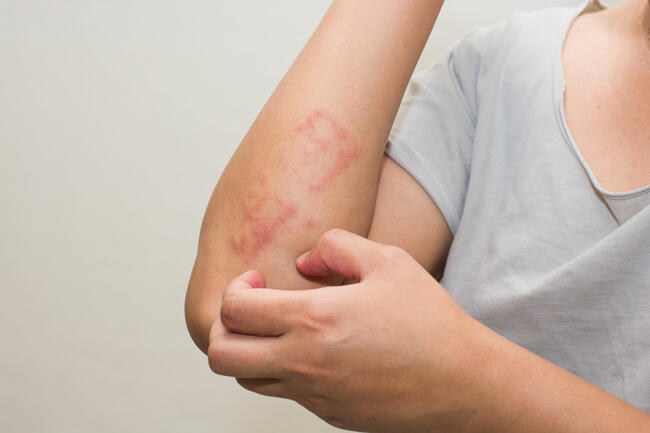
What you and your staff need to know about lesion measurement and how to differentiate the various size categories described by the dermatology CPT codes for surgical procedures to avoid over-coding or undercharging. Many dermatologic surgical CPT codes are selected based on certain size configurations. Examples of CPT codes that use size as one of the criteria in code selection include shave removals (11300 to 11313), excisions (11400 to 11646), repairs (12031 to 12057, 13100 to 13153, 14000 to 14300, or 15100 to 15260), destruction of vascular lesions (17106 to 17108), and destruction of malignant lesions (17260 to 17286). Understanding how the lesion is measured, as well as how to differentiate the various size categories described by the dermatology CPT codes for surgical procedures, is vital to avoid over-coding or undercharging. Here, then, are tips, terms and clarifications meant to help avoid the most common measuring mistakes made by dermatologists and their staff. 1: Largest Dimension The size of the lesion is based on the largest dimension (eg, length, width or depth). For example, if a lesion is irregular in shape measuring 1.2 cm/d x 3.0 cm/d, then you could use the 3.0 cm/d as your lesion size. If the lesion measures 2 x 3 x 5 mm/d, then you could use the 5 mm/d measurement as your lesion size. 2. Excised Diameter The revised excision definitions (CPT codes 11400 to 11646), as of CPT 2003, allow the provider to use the excised diameter versus the lesion size in code selection. Understanding the excised diameter concept is crucial in assuring that the correct code is selected assuring optimal reimbursement. The excised diameter includes the size of the lesion plus conservative margins. Some examples: • Let’s assume that the lesion measured 1.2 x 3.0 cm/d as indicated in #1. The lesion is excised with an elliptical incision taking a 2 mm/d margin on each side of the widest portion of the lesion. The elliptical incision measures 3.4 cm in width and 7.5 cm in length. The 3.4 cm measurement is used to select the excision code (eg, CPT codes 11400 to 11646). • Let’s do another example. Let’s say a lesion is 8 mm/d (not irregularly shaped but almost a perfect circle). The physician uses a 9 mm/d punch. The excision code would be based on the 9 mm/d measurement, not the 8 mm/d. Note: Picture diagrams on measuring and coding the removal of a lesion can be seen by going to the 2009 CPT book on the pages immediately preceding the descriptions of the excision of benign lesions. 3. Accurate Measurements Measure lesions before they are removed from the skin, for CPT codes 11300 to 11313 and 11400 to 11646. Do not rely on pathology reports. Lesions shrink anywhere from 10% to 30% after removal due to skin tension as well as shrinkage due to water loss of the tissue. The agent used in the specimen bottle also contributes to shrinkage. The most accurate measurement results from using a ruler and placing it on the skin before removal. 4. Size of Visible Lesion Shave removals (CPT codes 11300 to 11313) are selected based solely on the size of the measurable (eg, visible) lesion not including margins. If a lesion measures 6 mm/d, you would select the code based on a 6 mm/d measurement. 5. Convert Millimeters into Centimeters Staff must know how to correctly convert millimeters into centimeters. It’s important that staff understands the metric system and knows how to correlate measurements in the chart indicated in millimeters to centimeters used by CPT. I have seen cases where the physician indicated a 12-mm lesion of the back, which the staff billed out as 12 cm! 6. Size After Curettage, but Before Electrodesiccation. Destruction of malignant lesions (CPT codes 17260 to 17286) is selected based on the lesion size after curettage, but before electrodesiccation. For example, a superficial basal cell carcinoma looks to be 1.2 cm/d clinically. The physician curettes the lesion, enabling him/her to visualize the extent of the lesion more accurately. After curettage, the lesion measures 1.5 cm/d. To assure complete removal, electrodesiccation is performed using 2-mm margins around the entire periphery of the curetted area, resulting in a final defect of 1.9 cm/d. The destruction code is selected based on a 1.5 cm/d measurement. 7. Longest Length of Elliptical Incision Repair codes for intermediate closure (CPT codes 12031 to 12057) and complex repairs (CPT codes 13100 to 13153) are based on the longest length of the elliptical incision. Using the first example in #2 in which the physician performed an elliptical incision measuring 3.4 cm wide and 7.5 cm long, the repair code is selected based on the length of the ellipse (eg, 7.5 cm). Repair codes are measured in straight centimeters. Be sure that the operative report clearly differentiates between the excised diameter and the defect length. 8. Multiple Repairs — Add Lengths Together When repairs are performed on defects for more than one lesion on the same date of service using the same type of closure (either intermediate or complex) in the same anatomical classification as stipulated by CPT, the lengths of the repairs must be added together to arrive at a final defect size. Each repair cannot be billed separately. Unbundling multiple repairs using modifier 59 to override the CCI edits, when the claims should be billed with only one closure code, represents fraud, and is a violation of the Federal False Claims Act. Below are classification blocks for complex repairs. The rule is that only one CPT code from each block can be used during any one patient encounter.

Examples: • A patient had two basal cell carcinomas excised and repaired with complex linear repairs. Lesion #1 was on the left forehead with an excised diameter of 1.3 cm and the repair measured 3.2 cm long. Lesion #2 was on the left cheek with an excised diameter of 0.9 cm near the ear; the defect measured 2.2 cm long. Left forehead 3.2 cm long (13132) Left cheek 2.2 cm long (13131) Since both are from the same anatomical classification (block), you add together the lengths and choose one code that represents the lengths of both defects. 3.2 + 2.2 = 5.4 cm long. You bill these CPT codes: 11641 11642 13132 a. No modifiers are required unless you are in a postoperative period or bundled services are also billed on the same date of service. b. Excisions are never added together. • A patient had a basal cell carcinoma of the right eyebrow with an excised diameter of 1.0 cm that involved a complex linear repair, with the defect measuring 2.5 cm long. The patient also had a malignant melanoma of the right leg with an excised diameter of 3.0 cm that was repaired with an intermediate repair, with a defect measuring 8.4 cm long. Right eyebrow 2.5 cm long (13131) Right leg 8.4 cm long (12034) Since these codes are from different classifications (blocks), you do not add the sum of the lengths together. Each code is billed separately. You bill these CPT codes: 11641 11603 13131 12034 a. No modifiers are required unless you are in a post-operative period or bundled services are also billed on the same date of service. b. Excisions are never added together. Below are classification blocks for intermediate closures. The rule is that only one code from each block can be used during any one patient encounter.

• A patient had two lipomas of the upper and lower back excised and repaired each with excised diameters of 0.6 cm and 0.8 cm, respectively. The lesions were undermined and repaired with intermediate closure. The repairs measured: Upper left back 2.5 cm long (12031) Lower left back 2.7 cm long (12032) Since the codes 12031 and 12032 are from the same classification (block), you add both together (2.5 + 2.7 = 5.2 cm long defect) and select one code (12032). You bill these CPT codes: 11401 11401 -76 12032 a. No modifiers are required unless you are in a postoperative period or bundled services are also billed on the same date of service. b. Excisions are never added together. They are always billed separately on different lines of the claim form. c. If identical CPT codes are billed, do not bill these in units, but bill them on separate lines of the claim form using modifier 76 to show they are unrelated sites and not duplicate services. If your carrier does not accept modifier 76, then use modifier 59. • The patient had a large sebaceous cyst of the forehead with an excised diameter of 1.0 cm. The lesion was excised and repaired with an intermediate closure. A squamous cell carcinoma of the right arm with an excised diameter of 1.8 cm was also repaired with an intermediate closure. The defects measured: Forehead 2.4 cm long (12051) Right arm 5.1 cm long (12032) Since these codes are from different classifications (blocks), you do not add them together. You bill each one separately. a. CPT codes 11441 and 11602 would also be billed on this claim. b. No modifiers are required unless you are in a post-operative period or bundled services are also billed on the same date of service. 9. Primary vs. Secondary Defects Based on major changes in the 2004 AMA CPT book, adjacent tissue transfer codes (14000 to 14300) are selected based on the size of the primary as well as the secondary defect. CPT states, “For the purposes of code selection, the term ‘defect’ includes the primary and secondary defects. The primary defect resulting from the excision and the secondary defect resulting from flap design to perform the construction are measured together to determine the code.” To clarify this definition, CPT further clarified their intent, “The primary defect resulting from the excision and the secondary defect resulting from flap design to perform the reconstruction are measured together to determine the code.” See diagrams in the 2009 AMA CPT book at the beginning of the section that defines CPT codes 14000 to 14300. 10. Adjacent Tissue Transfer Errors Here’s more about errors related to adjacent tissue transfers. How to measure — Adjacent tissue transfer codes require measurement in square centimeters, so the operative report should indicate the final defect in square centimeters (versus straight centimeters) based on the final defect resulting from flap design. This measurement is made by taking the final repaired area and visualizing it as a rectangle or a square (depending on the configuration of the final defect.) Take the longest length and multiply it by the widest width, resulting in a final square centimeter defect measurement used for code selection. Example: • An O-T flap is created. The final “T-shaped” defect measured 3.5 cm for the length or “stem” of the “T” and 3.0 cm wide for the “top” of the “T”. For code selection, multiply 3.5 times 3.0 to arrive at 10.5 square cm. This is the size used for code selection. Two dimensions — Frequently, dermatologists measure the two lengths (eg, 3.0 cm and 3.5 cm) and add them together for code selection. This is incorrect. These two dimensions are multiplied not added. More than one flap — When more than one flap is performed on the same patient on the same date of service, the flaps are never added together. They are billed separately. If more than one flap is used, check the CCI edits and put modifier 59 on the bundled code, to show the two flaps were unrelated or represented a separate procedure. In Conclusion As with medical chart documentation, accuracy should be priority one. Accurate measurement can mean the difference between one CPT code versus another. Improper measuring by 1 millimeter can mean the loss of $30 to $100.00 per CPT code. Multiplied by hundreds of claims per year, the loss could be significant. So take the time to train your staff and keep that ruler within reach. Ms. Ellzey, President/ CEO of the Inga Ellzey Practice Group, Inc., in Casselberry, FL, is an expert on dermatology coding, documentation and reimbursement. She has more than 35 years of experience in the field of dermatology and is also the CEO and founder of two nationwide dermatology billing services. Disclosure: Ms. Ellzey has no conflict of interest with any subject matter contained in this article.
SIZE MATTERS
What you and your staff need to know about lesion measurement and how to differentiate the various size categories described by the dermatology CPT codes for surgical procedures to avoid over-coding or undercharging. Many dermatologic surgical CPT codes are selected based on certain size configurations. Examples of CPT codes that use size as one of the criteria in code selection include shave removals (11300 to 11313), excisions (11400 to 11646), repairs (12031 to 12057, 13100 to 13153, 14000 to 14300, or 15100 to 15260), destruction of vascular lesions (17106 to 17108), and destruction of malignant lesions (17260 to 17286). Understanding how the lesion is measured, as well as how to differentiate the various size categories described by the dermatology CPT codes for surgical procedures, is vital to avoid over-coding or undercharging. Here, then, are tips, terms and clarifications meant to help avoid the most common measuring mistakes made by dermatologists and their staff. 1: Largest Dimension The size of the lesion is based on the largest dimension (eg, length, width or depth). For example, if a lesion is irregular in shape measuring 1.2 cm/d x 3.0 cm/d, then you could use the 3.0 cm/d as your lesion size. If the lesion measures 2 x 3 x 5 mm/d, then you could use the 5 mm/d measurement as your lesion size. 2. Excised Diameter The revised excision definitions (CPT codes 11400 to 11646), as of CPT 2003, allow the provider to use the excised diameter versus the lesion size in code selection. Understanding the excised diameter concept is crucial in assuring that the correct code is selected assuring optimal reimbursement. The excised diameter includes the size of the lesion plus conservative margins. Some examples: • Let’s assume that the lesion measured 1.2 x 3.0 cm/d as indicated in #1. The lesion is excised with an elliptical incision taking a 2 mm/d margin on each side of the widest portion of the lesion. The elliptical incision measures 3.4 cm in width and 7.5 cm in length. The 3.4 cm measurement is used to select the excision code (eg, CPT codes 11400 to 11646). • Let’s do another example. Let’s say a lesion is 8 mm/d (not irregularly shaped but almost a perfect circle). The physician uses a 9 mm/d punch. The excision code would be based on the 9 mm/d measurement, not the 8 mm/d. Note: Picture diagrams on measuring and coding the removal of a lesion can be seen by going to the 2009 CPT book on the pages immediately preceding the descriptions of the excision of benign lesions. 3. Accurate Measurements Measure lesions before they are removed from the skin, for CPT codes 11300 to 11313 and 11400 to 11646. Do not rely on pathology reports. Lesions shrink anywhere from 10% to 30% after removal due to skin tension as well as shrinkage due to water loss of the tissue. The agent used in the specimen bottle also contributes to shrinkage. The most accurate measurement results from using a ruler and placing it on the skin before removal. 4. Size of Visible Lesion Shave removals (CPT codes 11300 to 11313) are selected based solely on the size of the measurable (eg, visible) lesion not including margins. If a lesion measures 6 mm/d, you would select the code based on a 6 mm/d measurement. 5. Convert Millimeters into Centimeters Staff must know how to correctly convert millimeters into centimeters. It’s important that staff understands the metric system and knows how to correlate measurements in the chart indicated in millimeters to centimeters used by CPT. I have seen cases where the physician indicated a 12-mm lesion of the back, which the staff billed out as 12 cm! 6. Size After Curettage, but Before Electrodesiccation. Destruction of malignant lesions (CPT codes 17260 to 17286) is selected based on the lesion size after curettage, but before electrodesiccation. For example, a superficial basal cell carcinoma looks to be 1.2 cm/d clinically. The physician curettes the lesion, enabling him/her to visualize the extent of the lesion more accurately. After curettage, the lesion measures 1.5 cm/d. To assure complete removal, electrodesiccation is performed using 2-mm margins around the entire periphery of the curetted area, resulting in a final defect of 1.9 cm/d. The destruction code is selected based on a 1.5 cm/d measurement. 7. Longest Length of Elliptical Incision Repair codes for intermediate closure (CPT codes 12031 to 12057) and complex repairs (CPT codes 13100 to 13153) are based on the longest length of the elliptical incision. Using the first example in #2 in which the physician performed an elliptical incision measuring 3.4 cm wide and 7.5 cm long, the repair code is selected based on the length of the ellipse (eg, 7.5 cm). Repair codes are measured in straight centimeters. Be sure that the operative report clearly differentiates between the excised diameter and the defect length. 8. Multiple Repairs — Add Lengths Together When repairs are performed on defects for more than one lesion on the same date of service using the same type of closure (either intermediate or complex) in the same anatomical classification as stipulated by CPT, the lengths of the repairs must be added together to arrive at a final defect size. Each repair cannot be billed separately. Unbundling multiple repairs using modifier 59 to override the CCI edits, when the claims should be billed with only one closure code, represents fraud, and is a violation of the Federal False Claims Act. Below are classification blocks for complex repairs. The rule is that only one CPT code from each block can be used during any one patient encounter.
Examples: • A patient had two basal cell carcinomas excised and repaired with complex linear repairs. Lesion #1 was on the left forehead with an excised diameter of 1.3 cm and the repair measured 3.2 cm long. Lesion #2 was on the left cheek with an excised diameter of 0.9 cm near the ear; the defect measured 2.2 cm long. Left forehead 3.2 cm long (13132) Left cheek 2.2 cm long (13131) Since both are from the same anatomical classification (block), you add together the lengths and choose one code that represents the lengths of both defects. 3.2 + 2.2 = 5.4 cm long. You bill these CPT codes: 11641 11642 13132 a. No modifiers are required unless you are in a postoperative period or bundled services are also billed on the same date of service. b. Excisions are never added together. • A patient had a basal cell carcinoma of the right eyebrow with an excised diameter of 1.0 cm that involved a complex linear repair, with the defect measuring 2.5 cm long. The patient also had a malignant melanoma of the right leg with an excised diameter of 3.0 cm that was repaired with an intermediate repair, with a defect measuring 8.4 cm long. Right eyebrow 2.5 cm long (13131) Right leg 8.4 cm long (12034) Since these codes are from different classifications (blocks), you do not add the sum of the lengths together. Each code is billed separately. You bill these CPT codes: 11641 11603 13131 12034 a. No modifiers are required unless you are in a post-operative period or bundled services are also billed on the same date of service. b. Excisions are never added together. Below are classification blocks for intermediate closures. The rule is that only one code from each block can be used during any one patient encounter.
• A patient had two lipomas of the upper and lower back excised and repaired each with excised diameters of 0.6 cm and 0.8 cm, respectively. The lesions were undermined and repaired with intermediate closure. The repairs measured: Upper left back 2.5 cm long (12031) Lower left back 2.7 cm long (12032) Since the codes 12031 and 12032 are from the same classification (block), you add both together (2.5 + 2.7 = 5.2 cm long defect) and select one code (12032). You bill these CPT codes: 11401 11401 -76 12032 a. No modifiers are required unless you are in a postoperative period or bundled services are also billed on the same date of service. b. Excisions are never added together. They are always billed separately on different lines of the claim form. c. If identical CPT codes are billed, do not bill these in units, but bill them on separate lines of the claim form using modifier 76 to show they are unrelated sites and not duplicate services. If your carrier does not accept modifier 76, then use modifier 59. • The patient had a large sebaceous cyst of the forehead with an excised diameter of 1.0 cm. The lesion was excised and repaired with an intermediate closure. A squamous cell carcinoma of the right arm with an excised diameter of 1.8 cm was also repaired with an intermediate closure. The defects measured: Forehead 2.4 cm long (12051) Right arm 5.1 cm long (12032) Since these codes are from different classifications (blocks), you do not add them together. You bill each one separately. a. CPT codes 11441 and 11602 would also be billed on this claim. b. No modifiers are required unless you are in a post-operative period or bundled services are also billed on the same date of service. 9. Primary vs. Secondary Defects Based on major changes in the 2004 AMA CPT book, adjacent tissue transfer codes (14000 to 14300) are selected based on the size of the primary as well as the secondary defect. CPT states, “For the purposes of code selection, the term ‘defect’ includes the primary and secondary defects. The primary defect resulting from the excision and the secondary defect resulting from flap design to perform the construction are measured together to determine the code.” To clarify this definition, CPT further clarified their intent, “The primary defect resulting from the excision and the secondary defect resulting from flap design to perform the reconstruction are measured together to determine the code.” See diagrams in the 2009 AMA CPT book at the beginning of the section that defines CPT codes 14000 to 14300. 10. Adjacent Tissue Transfer Errors Here’s more about errors related to adjacent tissue transfers. How to measure — Adjacent tissue transfer codes require measurement in square centimeters, so the operative report should indicate the final defect in square centimeters (versus straight centimeters) based on the final defect resulting from flap design. This measurement is made by taking the final repaired area and visualizing it as a rectangle or a square (depending on the configuration of the final defect.) Take the longest length and multiply it by the widest width, resulting in a final square centimeter defect measurement used for code selection. Example: • An O-T flap is created. The final “T-shaped” defect measured 3.5 cm for the length or “stem” of the “T” and 3.0 cm wide for the “top” of the “T”. For code selection, multiply 3.5 times 3.0 to arrive at 10.5 square cm. This is the size used for code selection. Two dimensions — Frequently, dermatologists measure the two lengths (eg, 3.0 cm and 3.5 cm) and add them together for code selection. This is incorrect. These two dimensions are multiplied not added. More than one flap — When more than one flap is performed on the same patient on the same date of service, the flaps are never added together. They are billed separately. If more than one flap is used, check the CCI edits and put modifier 59 on the bundled code, to show the two flaps were unrelated or represented a separate procedure. In Conclusion As with medical chart documentation, accuracy should be priority one. Accurate measurement can mean the difference between one CPT code versus another. Improper measuring by 1 millimeter can mean the loss of $30 to $100.00 per CPT code. Multiplied by hundreds of claims per year, the loss could be significant. So take the time to train your staff and keep that ruler within reach. Ms. Ellzey, President/ CEO of the Inga Ellzey Practice Group, Inc., in Casselberry, FL, is an expert on dermatology coding, documentation and reimbursement. She has more than 35 years of experience in the field of dermatology and is also the CEO and founder of two nationwide dermatology billing services. Disclosure: Ms. Ellzey has no conflict of interest with any subject matter contained in this article.
What you and your staff need to know about lesion measurement and how to differentiate the various size categories described by the dermatology CPT codes for surgical procedures to avoid over-coding or undercharging. Many dermatologic surgical CPT codes are selected based on certain size configurations. Examples of CPT codes that use size as one of the criteria in code selection include shave removals (11300 to 11313), excisions (11400 to 11646), repairs (12031 to 12057, 13100 to 13153, 14000 to 14300, or 15100 to 15260), destruction of vascular lesions (17106 to 17108), and destruction of malignant lesions (17260 to 17286). Understanding how the lesion is measured, as well as how to differentiate the various size categories described by the dermatology CPT codes for surgical procedures, is vital to avoid over-coding or undercharging. Here, then, are tips, terms and clarifications meant to help avoid the most common measuring mistakes made by dermatologists and their staff. 1: Largest Dimension The size of the lesion is based on the largest dimension (eg, length, width or depth). For example, if a lesion is irregular in shape measuring 1.2 cm/d x 3.0 cm/d, then you could use the 3.0 cm/d as your lesion size. If the lesion measures 2 x 3 x 5 mm/d, then you could use the 5 mm/d measurement as your lesion size. 2. Excised Diameter The revised excision definitions (CPT codes 11400 to 11646), as of CPT 2003, allow the provider to use the excised diameter versus the lesion size in code selection. Understanding the excised diameter concept is crucial in assuring that the correct code is selected assuring optimal reimbursement. The excised diameter includes the size of the lesion plus conservative margins. Some examples: • Let’s assume that the lesion measured 1.2 x 3.0 cm/d as indicated in #1. The lesion is excised with an elliptical incision taking a 2 mm/d margin on each side of the widest portion of the lesion. The elliptical incision measures 3.4 cm in width and 7.5 cm in length. The 3.4 cm measurement is used to select the excision code (eg, CPT codes 11400 to 11646). • Let’s do another example. Let’s say a lesion is 8 mm/d (not irregularly shaped but almost a perfect circle). The physician uses a 9 mm/d punch. The excision code would be based on the 9 mm/d measurement, not the 8 mm/d. Note: Picture diagrams on measuring and coding the removal of a lesion can be seen by going to the 2009 CPT book on the pages immediately preceding the descriptions of the excision of benign lesions. 3. Accurate Measurements Measure lesions before they are removed from the skin, for CPT codes 11300 to 11313 and 11400 to 11646. Do not rely on pathology reports. Lesions shrink anywhere from 10% to 30% after removal due to skin tension as well as shrinkage due to water loss of the tissue. The agent used in the specimen bottle also contributes to shrinkage. The most accurate measurement results from using a ruler and placing it on the skin before removal. 4. Size of Visible Lesion Shave removals (CPT codes 11300 to 11313) are selected based solely on the size of the measurable (eg, visible) lesion not including margins. If a lesion measures 6 mm/d, you would select the code based on a 6 mm/d measurement. 5. Convert Millimeters into Centimeters Staff must know how to correctly convert millimeters into centimeters. It’s important that staff understands the metric system and knows how to correlate measurements in the chart indicated in millimeters to centimeters used by CPT. I have seen cases where the physician indicated a 12-mm lesion of the back, which the staff billed out as 12 cm! 6. Size After Curettage, but Before Electrodesiccation. Destruction of malignant lesions (CPT codes 17260 to 17286) is selected based on the lesion size after curettage, but before electrodesiccation. For example, a superficial basal cell carcinoma looks to be 1.2 cm/d clinically. The physician curettes the lesion, enabling him/her to visualize the extent of the lesion more accurately. After curettage, the lesion measures 1.5 cm/d. To assure complete removal, electrodesiccation is performed using 2-mm margins around the entire periphery of the curetted area, resulting in a final defect of 1.9 cm/d. The destruction code is selected based on a 1.5 cm/d measurement. 7. Longest Length of Elliptical Incision Repair codes for intermediate closure (CPT codes 12031 to 12057) and complex repairs (CPT codes 13100 to 13153) are based on the longest length of the elliptical incision. Using the first example in #2 in which the physician performed an elliptical incision measuring 3.4 cm wide and 7.5 cm long, the repair code is selected based on the length of the ellipse (eg, 7.5 cm). Repair codes are measured in straight centimeters. Be sure that the operative report clearly differentiates between the excised diameter and the defect length. 8. Multiple Repairs — Add Lengths Together When repairs are performed on defects for more than one lesion on the same date of service using the same type of closure (either intermediate or complex) in the same anatomical classification as stipulated by CPT, the lengths of the repairs must be added together to arrive at a final defect size. Each repair cannot be billed separately. Unbundling multiple repairs using modifier 59 to override the CCI edits, when the claims should be billed with only one closure code, represents fraud, and is a violation of the Federal False Claims Act. Below are classification blocks for complex repairs. The rule is that only one CPT code from each block can be used during any one patient encounter.
Examples: • A patient had two basal cell carcinomas excised and repaired with complex linear repairs. Lesion #1 was on the left forehead with an excised diameter of 1.3 cm and the repair measured 3.2 cm long. Lesion #2 was on the left cheek with an excised diameter of 0.9 cm near the ear; the defect measured 2.2 cm long. Left forehead 3.2 cm long (13132) Left cheek 2.2 cm long (13131) Since both are from the same anatomical classification (block), you add together the lengths and choose one code that represents the lengths of both defects. 3.2 + 2.2 = 5.4 cm long. You bill these CPT codes: 11641 11642 13132 a. No modifiers are required unless you are in a postoperative period or bundled services are also billed on the same date of service. b. Excisions are never added together. • A patient had a basal cell carcinoma of the right eyebrow with an excised diameter of 1.0 cm that involved a complex linear repair, with the defect measuring 2.5 cm long. The patient also had a malignant melanoma of the right leg with an excised diameter of 3.0 cm that was repaired with an intermediate repair, with a defect measuring 8.4 cm long. Right eyebrow 2.5 cm long (13131) Right leg 8.4 cm long (12034) Since these codes are from different classifications (blocks), you do not add the sum of the lengths together. Each code is billed separately. You bill these CPT codes: 11641 11603 13131 12034 a. No modifiers are required unless you are in a post-operative period or bundled services are also billed on the same date of service. b. Excisions are never added together. Below are classification blocks for intermediate closures. The rule is that only one code from each block can be used during any one patient encounter.
• A patient had two lipomas of the upper and lower back excised and repaired each with excised diameters of 0.6 cm and 0.8 cm, respectively. The lesions were undermined and repaired with intermediate closure. The repairs measured: Upper left back 2.5 cm long (12031) Lower left back 2.7 cm long (12032) Since the codes 12031 and 12032 are from the same classification (block), you add both together (2.5 + 2.7 = 5.2 cm long defect) and select one code (12032). You bill these CPT codes: 11401 11401 -76 12032 a. No modifiers are required unless you are in a postoperative period or bundled services are also billed on the same date of service. b. Excisions are never added together. They are always billed separately on different lines of the claim form. c. If identical CPT codes are billed, do not bill these in units, but bill them on separate lines of the claim form using modifier 76 to show they are unrelated sites and not duplicate services. If your carrier does not accept modifier 76, then use modifier 59. • The patient had a large sebaceous cyst of the forehead with an excised diameter of 1.0 cm. The lesion was excised and repaired with an intermediate closure. A squamous cell carcinoma of the right arm with an excised diameter of 1.8 cm was also repaired with an intermediate closure. The defects measured: Forehead 2.4 cm long (12051) Right arm 5.1 cm long (12032) Since these codes are from different classifications (blocks), you do not add them together. You bill each one separately. a. CPT codes 11441 and 11602 would also be billed on this claim. b. No modifiers are required unless you are in a post-operative period or bundled services are also billed on the same date of service. 9. Primary vs. Secondary Defects Based on major changes in the 2004 AMA CPT book, adjacent tissue transfer codes (14000 to 14300) are selected based on the size of the primary as well as the secondary defect. CPT states, “For the purposes of code selection, the term ‘defect’ includes the primary and secondary defects. The primary defect resulting from the excision and the secondary defect resulting from flap design to perform the construction are measured together to determine the code.” To clarify this definition, CPT further clarified their intent, “The primary defect resulting from the excision and the secondary defect resulting from flap design to perform the reconstruction are measured together to determine the code.” See diagrams in the 2009 AMA CPT book at the beginning of the section that defines CPT codes 14000 to 14300. 10. Adjacent Tissue Transfer Errors Here’s more about errors related to adjacent tissue transfers. How to measure — Adjacent tissue transfer codes require measurement in square centimeters, so the operative report should indicate the final defect in square centimeters (versus straight centimeters) based on the final defect resulting from flap design. This measurement is made by taking the final repaired area and visualizing it as a rectangle or a square (depending on the configuration of the final defect.) Take the longest length and multiply it by the widest width, resulting in a final square centimeter defect measurement used for code selection. Example: • An O-T flap is created. The final “T-shaped” defect measured 3.5 cm for the length or “stem” of the “T” and 3.0 cm wide for the “top” of the “T”. For code selection, multiply 3.5 times 3.0 to arrive at 10.5 square cm. This is the size used for code selection. Two dimensions — Frequently, dermatologists measure the two lengths (eg, 3.0 cm and 3.5 cm) and add them together for code selection. This is incorrect. These two dimensions are multiplied not added. More than one flap — When more than one flap is performed on the same patient on the same date of service, the flaps are never added together. They are billed separately. If more than one flap is used, check the CCI edits and put modifier 59 on the bundled code, to show the two flaps were unrelated or represented a separate procedure. In Conclusion As with medical chart documentation, accuracy should be priority one. Accurate measurement can mean the difference between one CPT code versus another. Improper measuring by 1 millimeter can mean the loss of $30 to $100.00 per CPT code. Multiplied by hundreds of claims per year, the loss could be significant. So take the time to train your staff and keep that ruler within reach. Ms. Ellzey, President/ CEO of the Inga Ellzey Practice Group, Inc., in Casselberry, FL, is an expert on dermatology coding, documentation and reimbursement. She has more than 35 years of experience in the field of dermatology and is also the CEO and founder of two nationwide dermatology billing services. Disclosure: Ms. Ellzey has no conflict of interest with any subject matter contained in this article.