In dermatology, we are fortunate to have many insightful practitioners and great teachers and mentors. Some are bright stars in our special universe–others unsung heroes. All of these colleagues have much to share, from wisdom to humor to insights into dermatology and life. This column allows us to gain insight from these practitioners and learn more about them.
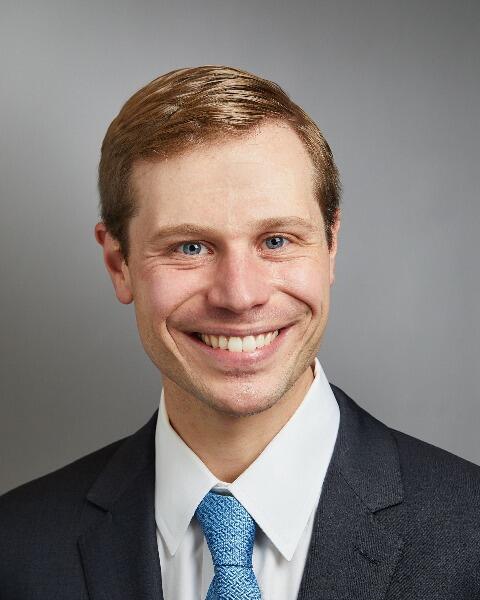
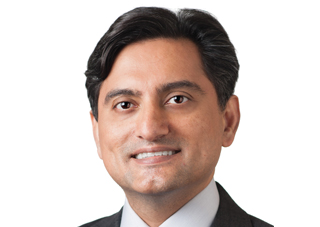 Murad Alam is professor of dermatology, otolaryngology, and surgery, and chief of the section of cutaneous and aesthetic surgery at Northwestern University’s Feinberg School of Medicine. He received his undergraduate and medical degrees from Yale University. Dr. Alam completed an internship in internal medicine at the University of Michigan, and residency training in dermatology at Columbia University. He subsequently received fellowship training in laser and cosmetic surgery at SkinCare Physicians/Harvard Medical School in Boston, and Mohs micrographic surgery at DermSurgery Associates in Houston.
An author of more than 150 publications, Dr. Alam is head of the surgical advisory board of JAMA Dermatology, associate editor of Lasers in Medical Science, and assistant editor of Dermatologic Surgery. He is series co-editor of the Procedures in Cosmetic Dermatology books, and overall has edited 20 books, including Evidence-Based Procedural Dermatology, Cosmetic Dermatology in Skin of Color, Requisites in Cosmetic Dermatology, Body Rejuvenation, Non-Surgical Tightening and Lifting, Treatment of Leg Veins, and Merkel Cell Carcinoma. He is co-section head of the Dermatologic and Cosmetic Surgery section of the Faculty of 1000.
Dr. Alam is secretary of the board of directors of the American Society for Dermatologic Surgery, and a member of the board of directors of the American College of Mohs Surgery. He is chair of the American Academy of Dermatology’s Health Care Finance Committee; an advisor to the AMA-CPT Panel that oversees definitions for medical procedures in the United States; a member of the Non-melanoma Skin Cancer Panel of the National Comprehensive Cancer Network that develops federally recognized guidelines for the clinical care of cancer; and a voting member on the General and Plastic Surgery Devices Panel of the FDA. Dr. Alam is president of the Blade and Light Society, an organization of volunteer dermatologic surgeons who perform charitable mission work to treat skin cancers and train surgical dermatologists in underserved countries.
Dr. Alam’s clinical practice includes the treatment of skin cancer, as well as cosmetic dermatology and laser surgery. His research is on the effectiveness, side effects, and costs of different surgical treatments. Dr. Alam is the director of the Northwestern University ACGME-approved fellowship training program in procedural dermatology, and the Northwestern University ASDS-approved fellowship training program in Cosmetic Dermatologic Surgery, both of which provide advanced dermatologic surgery training to a select group of board-certified dermatologists.
Q. What part of your work gives you the most pleasure?
A. This is a hard question. I enjoy my work in large part because it is varied, and includes diverse elements like clinical care, teaching, clinical research, and administration. If I had to pick out just 1 element, it may be clinical research, which combines the creative impulse to consider a question that has not been previously addressed, with the desire to apply any knowledge learned to directly and immediately improve patient care.
Q. Are an understanding and appreciation of the humanities important in dermatology and why?
A. Some appreciation of the humanities is probably important in medicine in general, and dermatology in particular. Our patients struggle with problems like impaired appearance and social embarrassment that transcend purely medical or scientific solutions. It is axiomatic that much of dermatology deals with psychological issues, and I think we still have much work to do to address these proactively and effectively, despite the difficulty of doing so in the hustle of a busy practice. To the extent that we in dermatology often can only offer modest relief and not cures, it is probably helpful for us to be able to also provide patients the perspective, coping strategies, and humor that often emanate from a wider worldview, which includes the humanities.
Article continues on page 2
{{pagebreak}}
Q. What is your greatest regret?
A. I am not sure I have 1 regret. In my opinion, 1 decision, right or wrong, rarely has a major ongoing impact. Perhaps there are such pivotal decisions in the lives of some, but probably not in mine. I almost became an economist, and if I had, I think I would probably have enjoyed it as much as medicine. The hard reality is that in a brief life, it is impossible to do everything you would like to do, and be everyone you would like to be. If I could, I would like to live many different lives, in different contexts, with different friends, and different careers. If there is an ongoing regret, and regret may not be the right word, it is the disappointment that occurs when I feel that I do not respond effectively or efficiently to external events. While it is a popular postmodern notion that we all live predictable lives, and react in unsurprising ways, given our upbringing and endogenous resources, I prefer to think we have a great deal of control over our lives. Stuff happens, good and bad, and the best thing to do is to think clearly about the available options, select the best one, and then implement the associated actions. Paralysis deriving from excessive introspection, postponement of decision-making, and reluctance to take a stance is something to be actively combated. The best way to avoid feelings of regret and to feel empowered is to exercise the courage to follow what you honestly consider to be the best course for you to do at a given point in time.
Q. Who was your hero/mentor and why?
A. I have been blessed with very many kind mentors. These include Rick Edelson, who helped me get a dermatology position although I was an unexceptional medical student. When I considered dropping out of dermatology residency, and trying something else, David Bickers, my chair, encouraged me to consider this irrevocable step for a little while longer, by which time my doubt had passed. Ken Arndt, Jeff Dover, and Leonard Goldberg, my fellowship directors, have been like second parents for over a decade, and have continually overlooked my faults, offered encouragement, and opened numerous professional doors for me. I think the best a mentor can do is to have high expectations of you, and to have faith that you can rise to the occasion. Now that I have the opportunity to work with young medical students and residents, I try to remember the generosity and kindness that have been repeatedly offered to me, and the empowering effect of having your mentors believe in you. Some people are late bloomers, and desire and commitment are more important than inherent skill or intellectual gifts.
Q.Which patient had the most effect on your work and why?
A. I did not lose a patient in internship until my last month. Obviously, this was just luck, but I liked to think it was because I was a very careful doctor. When my first patient died it reminded me that as doctors, we do not save or kill, and that we have very little power, apart from the ability to offer kindness and encouragement and hope. I still have that patient’s last bedside vitals flow sheet, which I saved as a reminder. As a dermatology resident, I had the opportunity to care for an infant with dystrophic epidermolysis bullosa. The patient, of course, required immense, ongoing effort from her family. I was amazed and humbled by the grace and sacrifice of the child’s mother, who while barely literate and with very limited resources, refused to accept defeat and met her child’s needs with calm, compassion, precision, maturity, and indefatigable effort.
Q. What is the best piece of advice you have received and from whom?
A. If you want to do something professionally, and if the opportunity arises at an inopportune time, take it, because life is short, and it may not come around again (Ken Arndt). Edward Zigler, professor of psychology at Yale and my first employer, once shared with me that despite his professional successes (he was the founder of the federal Head Start program), work had not made him as happy as he had expected, and that much of his joy had derived from taking time for his family and friends. Back then, I found this an odd bit of spontaneous self-revelation, directed, as it was, to a lowly undergraduate research assistant. But, of course, now I realize he was gently offering advice.
Q. Which medical figure in history would you want to have a drink with and why?
A. Probably some nameless surgeon from ancient times, in Egypt or India, who attempted some extreme reconstructive surgery. How did they think this through? Where did they get the courage to proceed? How did they psychologically cope with bad outcomes? Also, I am impressed by Werner Forssmann, the father of clinical cardiac catheterization, who inserted a catheter into his own forearm and threaded it up to his right atrium, to show proof of concept. Apparently, his seat of the pants approach got him thrown off some hospital staffs, but he did manage to win a Nobel Prize and transform cardiac care.
Q. What is the greatest political danger in the field of dermatology?
A. The greatest political danger to the field of dermatology is excessive centralized regulation of medicine coupled with trivialization of what we do. Excessive government regulation can be a problem because it may be administered by those who poorly understand dermatology and our patients’ needs. A centralized, bureaucratized approach to medicine is not compatible with the oft-repeated but seldom met goal of individualized patient care, and indeed such a system may even preferentially value other outcomes, like cost reduction. Regulation and consolidation is also a problem in the private sector, with large hospital groups absorbing private practices. As doctors lose control of the medical system to hospital chiefs, government administrators, and third-party insurance company rule-makers, patients will lose out, too. While doctors are not angelic and do have their own interests, they are more committed to patient welfare than any of these other actors.
Trivialization of dermatologists as pimple-poppers, whose work can be replicated perfectly by midlevel providers, spas attached to hair salons, or telemedicine outfits, is a concurrent threat. We all need to work hard to improve our perception among the public, and even among other physicians. If dermatologists become peripheral to the practice of dermatology, patients will suffer. We pioneer the advances in the field, we provide the optimal diagnostics and therapeutics, and we are patients’ best allies. Protecting scope of practice is not selfish: We cannot help our patients if we cannot help ourselves.
Dr. Barankin is a dermatologist in Toronto, Ontario, Canada. He is author-editor of 7 books in dermatology and is widely published in the dermatology and humanities literature.
In dermatology, we are fortunate to have many insightful practitioners and great teachers and mentors. Some are bright stars in our special universe–others unsung heroes. All of these colleagues have much to share, from wisdom to humor to insights into dermatology and life. This column allows us to gain insight from these practitioners and learn more about them.
 Murad Alam is professor of dermatology, otolaryngology, and surgery, and chief of the section of cutaneous and aesthetic surgery at Northwestern University’s Feinberg School of Medicine. He received his undergraduate and medical degrees from Yale University. Dr. Alam completed an internship in internal medicine at the University of Michigan, and residency training in dermatology at Columbia University. He subsequently received fellowship training in laser and cosmetic surgery at SkinCare Physicians/Harvard Medical School in Boston, and Mohs micrographic surgery at DermSurgery Associates in Houston.
An author of more than 150 publications, Dr. Alam is head of the surgical advisory board of JAMA Dermatology, associate editor of Lasers in Medical Science, and assistant editor of Dermatologic Surgery. He is series co-editor of the Procedures in Cosmetic Dermatology books, and overall has edited 20 books, including Evidence-Based Procedural Dermatology, Cosmetic Dermatology in Skin of Color, Requisites in Cosmetic Dermatology, Body Rejuvenation, Non-Surgical Tightening and Lifting, Treatment of Leg Veins, and Merkel Cell Carcinoma. He is co-section head of the Dermatologic and Cosmetic Surgery section of the Faculty of 1000.
Dr. Alam is secretary of the board of directors of the American Society for Dermatologic Surgery, and a member of the board of directors of the American College of Mohs Surgery. He is chair of the American Academy of Dermatology’s Health Care Finance Committee; an advisor to the AMA-CPT Panel that oversees definitions for medical procedures in the United States; a member of the Non-melanoma Skin Cancer Panel of the National Comprehensive Cancer Network that develops federally recognized guidelines for the clinical care of cancer; and a voting member on the General and Plastic Surgery Devices Panel of the FDA. Dr. Alam is president of the Blade and Light Society, an organization of volunteer dermatologic surgeons who perform charitable mission work to treat skin cancers and train surgical dermatologists in underserved countries.
Dr. Alam’s clinical practice includes the treatment of skin cancer, as well as cosmetic dermatology and laser surgery. His research is on the effectiveness, side effects, and costs of different surgical treatments. Dr. Alam is the director of the Northwestern University ACGME-approved fellowship training program in procedural dermatology, and the Northwestern University ASDS-approved fellowship training program in Cosmetic Dermatologic Surgery, both of which provide advanced dermatologic surgery training to a select group of board-certified dermatologists.
Q. What part of your work gives you the most pleasure?
A. This is a hard question. I enjoy my work in large part because it is varied, and includes diverse elements like clinical care, teaching, clinical research, and administration. If I had to pick out just 1 element, it may be clinical research, which combines the creative impulse to consider a question that has not been previously addressed, with the desire to apply any knowledge learned to directly and immediately improve patient care.
Q. Are an understanding and appreciation of the humanities important in dermatology and why?
A. Some appreciation of the humanities is probably important in medicine in general, and dermatology in particular. Our patients struggle with problems like impaired appearance and social embarrassment that transcend purely medical or scientific solutions. It is axiomatic that much of dermatology deals with psychological issues, and I think we still have much work to do to address these proactively and effectively, despite the difficulty of doing so in the hustle of a busy practice. To the extent that we in dermatology often can only offer modest relief and not cures, it is probably helpful for us to be able to also provide patients the perspective, coping strategies, and humor that often emanate from a wider worldview, which includes the humanities.
Article continues on page 2
{{pagebreak}}
Q. What is your greatest regret?
A. I am not sure I have 1 regret. In my opinion, 1 decision, right or wrong, rarely has a major ongoing impact. Perhaps there are such pivotal decisions in the lives of some, but probably not in mine. I almost became an economist, and if I had, I think I would probably have enjoyed it as much as medicine. The hard reality is that in a brief life, it is impossible to do everything you would like to do, and be everyone you would like to be. If I could, I would like to live many different lives, in different contexts, with different friends, and different careers. If there is an ongoing regret, and regret may not be the right word, it is the disappointment that occurs when I feel that I do not respond effectively or efficiently to external events. While it is a popular postmodern notion that we all live predictable lives, and react in unsurprising ways, given our upbringing and endogenous resources, I prefer to think we have a great deal of control over our lives. Stuff happens, good and bad, and the best thing to do is to think clearly about the available options, select the best one, and then implement the associated actions. Paralysis deriving from excessive introspection, postponement of decision-making, and reluctance to take a stance is something to be actively combated. The best way to avoid feelings of regret and to feel empowered is to exercise the courage to follow what you honestly consider to be the best course for you to do at a given point in time.
Q. Who was your hero/mentor and why?
A. I have been blessed with very many kind mentors. These include Rick Edelson, who helped me get a dermatology position although I was an unexceptional medical student. When I considered dropping out of dermatology residency, and trying something else, David Bickers, my chair, encouraged me to consider this irrevocable step for a little while longer, by which time my doubt had passed. Ken Arndt, Jeff Dover, and Leonard Goldberg, my fellowship directors, have been like second parents for over a decade, and have continually overlooked my faults, offered encouragement, and opened numerous professional doors for me. I think the best a mentor can do is to have high expectations of you, and to have faith that you can rise to the occasion. Now that I have the opportunity to work with young medical students and residents, I try to remember the generosity and kindness that have been repeatedly offered to me, and the empowering effect of having your mentors believe in you. Some people are late bloomers, and desire and commitment are more important than inherent skill or intellectual gifts.
Q.Which patient had the most effect on your work and why?
A. I did not lose a patient in internship until my last month. Obviously, this was just luck, but I liked to think it was because I was a very careful doctor. When my first patient died it reminded me that as doctors, we do not save or kill, and that we have very little power, apart from the ability to offer kindness and encouragement and hope. I still have that patient’s last bedside vitals flow sheet, which I saved as a reminder. As a dermatology resident, I had the opportunity to care for an infant with dystrophic epidermolysis bullosa. The patient, of course, required immense, ongoing effort from her family. I was amazed and humbled by the grace and sacrifice of the child’s mother, who while barely literate and with very limited resources, refused to accept defeat and met her child’s needs with calm, compassion, precision, maturity, and indefatigable effort.
Q. What is the best piece of advice you have received and from whom?
A. If you want to do something professionally, and if the opportunity arises at an inopportune time, take it, because life is short, and it may not come around again (Ken Arndt). Edward Zigler, professor of psychology at Yale and my first employer, once shared with me that despite his professional successes (he was the founder of the federal Head Start program), work had not made him as happy as he had expected, and that much of his joy had derived from taking time for his family and friends. Back then, I found this an odd bit of spontaneous self-revelation, directed, as it was, to a lowly undergraduate research assistant. But, of course, now I realize he was gently offering advice.
Q. Which medical figure in history would you want to have a drink with and why?
A. Probably some nameless surgeon from ancient times, in Egypt or India, who attempted some extreme reconstructive surgery. How did they think this through? Where did they get the courage to proceed? How did they psychologically cope with bad outcomes? Also, I am impressed by Werner Forssmann, the father of clinical cardiac catheterization, who inserted a catheter into his own forearm and threaded it up to his right atrium, to show proof of concept. Apparently, his seat of the pants approach got him thrown off some hospital staffs, but he did manage to win a Nobel Prize and transform cardiac care.
Q. What is the greatest political danger in the field of dermatology?
A. The greatest political danger to the field of dermatology is excessive centralized regulation of medicine coupled with trivialization of what we do. Excessive government regulation can be a problem because it may be administered by those who poorly understand dermatology and our patients’ needs. A centralized, bureaucratized approach to medicine is not compatible with the oft-repeated but seldom met goal of individualized patient care, and indeed such a system may even preferentially value other outcomes, like cost reduction. Regulation and consolidation is also a problem in the private sector, with large hospital groups absorbing private practices. As doctors lose control of the medical system to hospital chiefs, government administrators, and third-party insurance company rule-makers, patients will lose out, too. While doctors are not angelic and do have their own interests, they are more committed to patient welfare than any of these other actors.
Trivialization of dermatologists as pimple-poppers, whose work can be replicated perfectly by midlevel providers, spas attached to hair salons, or telemedicine outfits, is a concurrent threat. We all need to work hard to improve our perception among the public, and even among other physicians. If dermatologists become peripheral to the practice of dermatology, patients will suffer. We pioneer the advances in the field, we provide the optimal diagnostics and therapeutics, and we are patients’ best allies. Protecting scope of practice is not selfish: We cannot help our patients if we cannot help ourselves.
Dr. Barankin is a dermatologist in Toronto, Ontario, Canada. He is author-editor of 7 books in dermatology and is widely published in the dermatology and humanities literature.
In dermatology, we are fortunate to have many insightful practitioners and great teachers and mentors. Some are bright stars in our special universe–others unsung heroes. All of these colleagues have much to share, from wisdom to humor to insights into dermatology and life. This column allows us to gain insight from these practitioners and learn more about them.
Murad Alam is professor of dermatology, otolaryngology, and surgery, and chief of the section of cutaneous and aesthetic surgery at Northwestern University’s Feinberg School of Medicine. He received his undergraduate and medical degrees from Yale University. Dr. Alam completed an internship in internal medicine at the University of Michigan, and residency training in dermatology at Columbia University. He subsequently received fellowship training in laser and cosmetic surgery at SkinCare Physicians/Harvard Medical School in Boston, and Mohs micrographic surgery at DermSurgery Associates in Houston.
An author of more than 150 publications, Dr. Alam is head of the surgical advisory board of JAMA Dermatology, associate editor of Lasers in Medical Science, and assistant editor of Dermatologic Surgery. He is series co-editor of the Procedures in Cosmetic Dermatology books, and overall has edited 20 books, including Evidence-Based Procedural Dermatology, Cosmetic Dermatology in Skin of Color, Requisites in Cosmetic Dermatology, Body Rejuvenation, Non-Surgical Tightening and Lifting, Treatment of Leg Veins, and Merkel Cell Carcinoma. He is co-section head of the Dermatologic and Cosmetic Surgery section of the Faculty of 1000.
Dr. Alam is secretary of the board of directors of the American Society for Dermatologic Surgery, and a member of the board of directors of the American College of Mohs Surgery. He is chair of the American Academy of Dermatology’s Health Care Finance Committee; an advisor to the AMA-CPT Panel that oversees definitions for medical procedures in the United States; a member of the Non-melanoma Skin Cancer Panel of the National Comprehensive Cancer Network that develops federally recognized guidelines for the clinical care of cancer; and a voting member on the General and Plastic Surgery Devices Panel of the FDA. Dr. Alam is president of the Blade and Light Society, an organization of volunteer dermatologic surgeons who perform charitable mission work to treat skin cancers and train surgical dermatologists in underserved countries.
Dr. Alam’s clinical practice includes the treatment of skin cancer, as well as cosmetic dermatology and laser surgery. His research is on the effectiveness, side effects, and costs of different surgical treatments. Dr. Alam is the director of the Northwestern University ACGME-approved fellowship training program in procedural dermatology, and the Northwestern University ASDS-approved fellowship training program in Cosmetic Dermatologic Surgery, both of which provide advanced dermatologic surgery training to a select group of board-certified dermatologists.
Q. What part of your work gives you the most pleasure?
A. This is a hard question. I enjoy my work in large part because it is varied, and includes diverse elements like clinical care, teaching, clinical research, and administration. If I had to pick out just 1 element, it may be clinical research, which combines the creative impulse to consider a question that has not been previously addressed, with the desire to apply any knowledge learned to directly and immediately improve patient care.
Q. Are an understanding and appreciation of the humanities important in dermatology and why?
A. Some appreciation of the humanities is probably important in medicine in general, and dermatology in particular. Our patients struggle with problems like impaired appearance and social embarrassment that transcend purely medical or scientific solutions. It is axiomatic that much of dermatology deals with psychological issues, and I think we still have much work to do to address these proactively and effectively, despite the difficulty of doing so in the hustle of a busy practice. To the extent that we in dermatology often can only offer modest relief and not cures, it is probably helpful for us to be able to also provide patients the perspective, coping strategies, and humor that often emanate from a wider worldview, which includes the humanities.
Article continues on page 2
{{pagebreak}}
Q. What is your greatest regret?
A. I am not sure I have 1 regret. In my opinion, 1 decision, right or wrong, rarely has a major ongoing impact. Perhaps there are such pivotal decisions in the lives of some, but probably not in mine. I almost became an economist, and if I had, I think I would probably have enjoyed it as much as medicine. The hard reality is that in a brief life, it is impossible to do everything you would like to do, and be everyone you would like to be. If I could, I would like to live many different lives, in different contexts, with different friends, and different careers. If there is an ongoing regret, and regret may not be the right word, it is the disappointment that occurs when I feel that I do not respond effectively or efficiently to external events. While it is a popular postmodern notion that we all live predictable lives, and react in unsurprising ways, given our upbringing and endogenous resources, I prefer to think we have a great deal of control over our lives. Stuff happens, good and bad, and the best thing to do is to think clearly about the available options, select the best one, and then implement the associated actions. Paralysis deriving from excessive introspection, postponement of decision-making, and reluctance to take a stance is something to be actively combated. The best way to avoid feelings of regret and to feel empowered is to exercise the courage to follow what you honestly consider to be the best course for you to do at a given point in time.
Q. Who was your hero/mentor and why?
A. I have been blessed with very many kind mentors. These include Rick Edelson, who helped me get a dermatology position although I was an unexceptional medical student. When I considered dropping out of dermatology residency, and trying something else, David Bickers, my chair, encouraged me to consider this irrevocable step for a little while longer, by which time my doubt had passed. Ken Arndt, Jeff Dover, and Leonard Goldberg, my fellowship directors, have been like second parents for over a decade, and have continually overlooked my faults, offered encouragement, and opened numerous professional doors for me. I think the best a mentor can do is to have high expectations of you, and to have faith that you can rise to the occasion. Now that I have the opportunity to work with young medical students and residents, I try to remember the generosity and kindness that have been repeatedly offered to me, and the empowering effect of having your mentors believe in you. Some people are late bloomers, and desire and commitment are more important than inherent skill or intellectual gifts.
Q.Which patient had the most effect on your work and why?
A. I did not lose a patient in internship until my last month. Obviously, this was just luck, but I liked to think it was because I was a very careful doctor. When my first patient died it reminded me that as doctors, we do not save or kill, and that we have very little power, apart from the ability to offer kindness and encouragement and hope. I still have that patient’s last bedside vitals flow sheet, which I saved as a reminder. As a dermatology resident, I had the opportunity to care for an infant with dystrophic epidermolysis bullosa. The patient, of course, required immense, ongoing effort from her family. I was amazed and humbled by the grace and sacrifice of the child’s mother, who while barely literate and with very limited resources, refused to accept defeat and met her child’s needs with calm, compassion, precision, maturity, and indefatigable effort.
Q. What is the best piece of advice you have received and from whom?
A. If you want to do something professionally, and if the opportunity arises at an inopportune time, take it, because life is short, and it may not come around again (Ken Arndt). Edward Zigler, professor of psychology at Yale and my first employer, once shared with me that despite his professional successes (he was the founder of the federal Head Start program), work had not made him as happy as he had expected, and that much of his joy had derived from taking time for his family and friends. Back then, I found this an odd bit of spontaneous self-revelation, directed, as it was, to a lowly undergraduate research assistant. But, of course, now I realize he was gently offering advice.
Q. Which medical figure in history would you want to have a drink with and why?
A. Probably some nameless surgeon from ancient times, in Egypt or India, who attempted some extreme reconstructive surgery. How did they think this through? Where did they get the courage to proceed? How did they psychologically cope with bad outcomes? Also, I am impressed by Werner Forssmann, the father of clinical cardiac catheterization, who inserted a catheter into his own forearm and threaded it up to his right atrium, to show proof of concept. Apparently, his seat of the pants approach got him thrown off some hospital staffs, but he did manage to win a Nobel Prize and transform cardiac care.
Q. What is the greatest political danger in the field of dermatology?
A. The greatest political danger to the field of dermatology is excessive centralized regulation of medicine coupled with trivialization of what we do. Excessive government regulation can be a problem because it may be administered by those who poorly understand dermatology and our patients’ needs. A centralized, bureaucratized approach to medicine is not compatible with the oft-repeated but seldom met goal of individualized patient care, and indeed such a system may even preferentially value other outcomes, like cost reduction. Regulation and consolidation is also a problem in the private sector, with large hospital groups absorbing private practices. As doctors lose control of the medical system to hospital chiefs, government administrators, and third-party insurance company rule-makers, patients will lose out, too. While doctors are not angelic and do have their own interests, they are more committed to patient welfare than any of these other actors.
Trivialization of dermatologists as pimple-poppers, whose work can be replicated perfectly by midlevel providers, spas attached to hair salons, or telemedicine outfits, is a concurrent threat. We all need to work hard to improve our perception among the public, and even among other physicians. If dermatologists become peripheral to the practice of dermatology, patients will suffer. We pioneer the advances in the field, we provide the optimal diagnostics and therapeutics, and we are patients’ best allies. Protecting scope of practice is not selfish: We cannot help our patients if we cannot help ourselves.
Dr. Barankin is a dermatologist in Toronto, Ontario, Canada. He is author-editor of 7 books in dermatology and is widely published in the dermatology and humanities literature.