Which medications and procedures are safe for pregnant patients? Valerie Hanft, MD, answers questions about pregnancy-related skin issues, cosmetic procedures and over-the-counter drugs, and reviews the FDA pregnancy safety ratings for common dermatology medications. Austin, TX, dermatologist Valerie Hanft has spoken frequently on the topic of drug considerations for pregnant patients, with the growing baby’s health uppermost in mind. “The general rule is for the pregnant woman to speak first with her obstetrician and make a treatment decision based on weighing the risk against the benefits.”
What skin issues are specifically associated with pregnancy?
Many skin issues associated with pregnancy, maintains Dr. Hanft, are not preventable and treatment for these new conditions, as well as pre-existing ones, may be limited by the safety rating of the appropriate medications. Growths. Pregnancy hormones stimulate many kinds of growths, notes Dr. Hanft. “Most commonly, we see increases in acrochordons, angiomas, nevi and warts.” She adds, “As pregnancy is also a mild state of immunosuppression, warts can be more numerous or more difficult to treat. During pregnancy, we rely on liquid nitrogen therapy or electrocautery and prefer to avoid chemical treatment modalities.” As for the moles, she explains, “Many women notice not only more moles, but that some grow in size or darken.” If the changes in moles are concerning, she does not hesitate to perform a biopsy during pregnancy, just as she would otherwise. Rashes, Changes in Acne. There are also a number of pregnancy-associated rashes. Among them, she calls pruritic urticarial papules and plaques of pregnancy (PUPPP) the “classic example.” Many of these rashes can be managed with judicious use of topical steroids and antihistamines. In addition, she says other pre-existing skin conditions may change in severity. “Common eczema rashes seem to worsen or increase in frequency during pregnancy, and patients will report unpredictable changes in their acne, which can worsen or even clear entirely.” Melasma. Melasma, or the mask of pregnancy, is one of the most frequently reported pregnancy-related complaints, second only to stretch marks. It is especially common among those with dark skin, and it may persist after the delivery.
What can be done to prevent these conditions and other conditions?
While most of the pregnancy-associated lesions and dermatoses, she states, are not preventable, for those that can be limited or their risk of contraction reduced, she offers these suggestions. To limit melasma, or chloasma, Dr. Hanft stresses the importance of meticulous sun protection. She prefers physical sunscreens, such as titanium dioxide and zinc oxide, and says that the estrogenic effects of soy can worsen those dark patches. “Pregnant patients should be extra cautious around children with viral exanthems as some can have serious sequelae should the mother become infected. In addition, I recommend the inactivated flu vaccine — not nasal spray — but many other vaccines are contraindicated,” warns Dr. Hanft. Also, women with a history of genital herpes should be reminded to make their obstetricians aware of it to avoid transmission to the newborn during delivery.
Which dermatology-related drugs can be safely used during pregnancy?
Many acne/rosacea medications are not recommended during pregnancy. There are a few, however, that can be used without concern, namely those in Category A in the FDA use-in-pregnancy ratings, a set of guidelines introduced in 1979 that established safety profiles that defined the risks for fetal injury caused by pharmaceutical agents used in the United States. (See Table.) Note that they are not intended to delineate the risks to nursing infants. Dr. Hanft discusses these categories, noting that the use of some in all but Category X may be justified, depending on the severity of a condition and stage of pregnancy. Category A — The few drugs that are included in this category — folic acid and levothyroxine — have been on the market for many years and have been used in a large number of pregnant women. Category B — These drugs are generally considered safe but not as definitively as those in group A. They include drugs — such as antibiotics (penicillin, erythromycin) and antihistamines — not studied in humans for which animal studies showed no risk or drugs for which animal studies showed risk, but human studies did not. Category C — Dr. Hanft calls this the big gray zone, due to inadequate data in humans. It includes drugs for which animal studies may have been positive or negative for fetal risk, and no human studies have been done. Among them are oral and topical steroidal anti-inflammatory drugs; benzoyl peroxide and retinoids, as well as the quinolone group, which includes ciprofloxacin, the antibiotic trimethoprim/ sulfamethoxazole (Septra), and some antifungals including flucanazole, ketoconazole and itraconazole. Category D — For these drugs, data in human studies have shown risk, but their use may be justified. It includes tetracycline, which can cause fetal tooth discoloration and skeletal abnormalities in the fetus and hepatotoxicity or fatty livers in mothers. It also includes the antifungal potassium iodide, which can affect thyroid function and cause goiters in the developing fetus. Category X — Dr. Hanft terms these drugs — isotretinoin, thalidomide, methotrexate, topical 5-fluorouracil — “absolutely contraindicated,” as “in these drugs, fetal risk clearly outweighs any possible benefit for the patient.” In addition to isotretinoin and thalidomide, many chemotherapeutic drugs are rated X. These include methotrexate.
How are risks and benefits considered during pregnancy?
Again, saying that the obstetrician should be consulted on drugs being considered in categories B to D, Dr. Hanft explains that pregnancy stage can be the deciding factor. Early pregnancy. The primary concern with safety relates to organogenesis in the first and second trimesters, especially from the fifth week, when placental circulation is established, through the third month, when organogenesis is presumably complete. “The physician has the most freedom to prescribe drugs in the B, C, and if, absolutely necessary, D categories during the second trimester after the structures are formed but before issues of gestation, labor and hemorrhage come into play.” Late pregnancy. Some over-the-counter drugs, most notably the NSAIDs, must be avoided during the third trimester. “For example, most problems with aspirin are associated with the third trimester, including premature closure of the patent ductus arteriosus, which compromises fetal circulation. Aspirin can also influence the duration of gestation and labor, thereby contributing to post maturity,” says Dr. Hanft. From the Category B antibiotics and antihistamines, the estolate form of erythromycin cannot be prescribed due to hepatoxicity concerns in the mother, and diphenhydramine is contraindicated during the last few weeks of pregnancy because of reports that it can cause retrolental fibroplasia.
What do you consider ‘best practices’ for skin conditions during pregnancy?
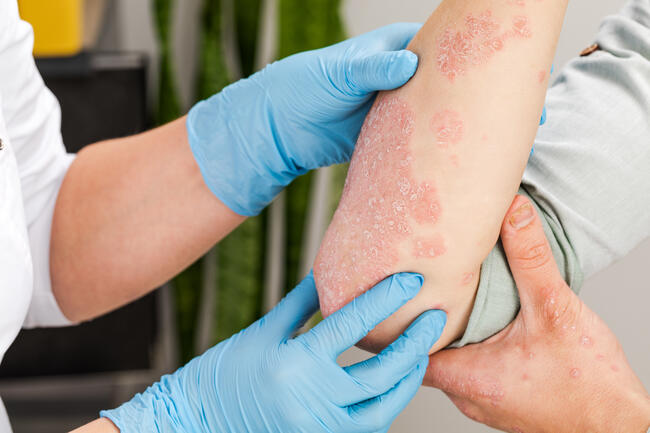
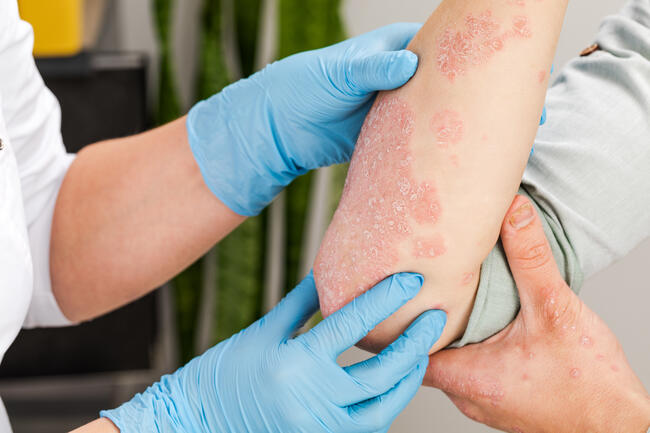
Dr. Hanft stresses the importance of always prescribing higher on the category chain when possible, offering the following recommendations. Acne. Topical therapy is preferred for the treatment of acne during pregnancy. From Category B, a few options are topical metronidazole, topical azelaic acid, clindamycin and — except in its estolate form in the third trimester — oral erythromycin. Psoriasis. Phototherapy is considered the safest therapy for extensive psoriasis during pregnancy. From Category B, loratidine and diphenhydramine are best-choice antihistamines. Topical corticosteroids and topical calcineurin inhibitors tacrolimus and pimecrolimus are Category C and should be used judiciously. Viral Infections. For the treatment of genital warts, physical modalities such as cryotherapy are felt to be safe in pregnancy. Acyclovir, famciclovir and valacyclovir are all pregnancy Category B. Fungal Infections. From Category B is oral terbinafine. From Category C are fluconazole and itraconazole, but most dermatologists limit these medications to topical use. Bacterial Infections. Penicillins, cephalosporins and azithromycin are all pregnancy Category B and are generally considered safe in pregnancy.
At which point do you recommend patients discontinue any questionable drugs?
Dr. Hanft says she recommends that Category C and D drugs be discontinued — although topical steroids may be used sparingly — when patients are trying to conceive. Isotretinoin must be stopped at least 1 month prior.
What cosmetic procedures can be safely undertaken during pregnancy?
“Aside from microdermabrasions and facials, I do not recommend cosmetic procedures as a general rule. The majority of cosmetic procedures have not been studied in the pregnant or lactating patient. And, should a patient have a complication, treatment options are often be limited. For example, if the patient experiences any hyperpigmentation after laser hair removal, hydroquinone should not be used.”
A Word About the Categories
Although Dr. Hanft made it clear that she generally considers pregnancy no time to trade benefits for risks, she states her belief — shared by many of her colleagues — that the pregnancy category might overstate the risk for some of the medications dermatologists depend upon. This, she says, is particularly the case with medications available in both topical and systemic forms. “Systemic steroids are known to cause cleft palate in mice and possibly low birth weight and hypoadrenalism in humans, while when topical steroids are used on a limited area for a defined period of time, their risk is considered minimal,” points out Dr. Hanft. “Similarly, it is widely believed that tretinoin’s C category has more to do with the devastating risk of birth defects associated with oral isotretinoin than isolated reports linking topical use to ear malformations.”
Which medications and procedures are safe for pregnant patients? Valerie Hanft, MD, answers questions about pregnancy-related skin issues, cosmetic procedures and over-the-counter drugs, and reviews the FDA pregnancy safety ratings for common dermatology medications. Austin, TX, dermatologist Valerie Hanft has spoken frequently on the topic of drug considerations for pregnant patients, with the growing baby’s health uppermost in mind. “The general rule is for the pregnant woman to speak first with her obstetrician and make a treatment decision based on weighing the risk against the benefits.”
What skin issues are specifically associated with pregnancy?
Many skin issues associated with pregnancy, maintains Dr. Hanft, are not preventable and treatment for these new conditions, as well as pre-existing ones, may be limited by the safety rating of the appropriate medications. Growths. Pregnancy hormones stimulate many kinds of growths, notes Dr. Hanft. “Most commonly, we see increases in acrochordons, angiomas, nevi and warts.” She adds, “As pregnancy is also a mild state of immunosuppression, warts can be more numerous or more difficult to treat. During pregnancy, we rely on liquid nitrogen therapy or electrocautery and prefer to avoid chemical treatment modalities.” As for the moles, she explains, “Many women notice not only more moles, but that some grow in size or darken.” If the changes in moles are concerning, she does not hesitate to perform a biopsy during pregnancy, just as she would otherwise. Rashes, Changes in Acne. There are also a number of pregnancy-associated rashes. Among them, she calls pruritic urticarial papules and plaques of pregnancy (PUPPP) the “classic example.” Many of these rashes can be managed with judicious use of topical steroids and antihistamines. In addition, she says other pre-existing skin conditions may change in severity. “Common eczema rashes seem to worsen or increase in frequency during pregnancy, and patients will report unpredictable changes in their acne, which can worsen or even clear entirely.” Melasma. Melasma, or the mask of pregnancy, is one of the most frequently reported pregnancy-related complaints, second only to stretch marks. It is especially common among those with dark skin, and it may persist after the delivery.
What can be done to prevent these conditions and other conditions?
While most of the pregnancy-associated lesions and dermatoses, she states, are not preventable, for those that can be limited or their risk of contraction reduced, she offers these suggestions. To limit melasma, or chloasma, Dr. Hanft stresses the importance of meticulous sun protection. She prefers physical sunscreens, such as titanium dioxide and zinc oxide, and says that the estrogenic effects of soy can worsen those dark patches. “Pregnant patients should be extra cautious around children with viral exanthems as some can have serious sequelae should the mother become infected. In addition, I recommend the inactivated flu vaccine — not nasal spray — but many other vaccines are contraindicated,” warns Dr. Hanft. Also, women with a history of genital herpes should be reminded to make their obstetricians aware of it to avoid transmission to the newborn during delivery.
Which dermatology-related drugs can be safely used during pregnancy?
Many acne/rosacea medications are not recommended during pregnancy. There are a few, however, that can be used without concern, namely those in Category A in the FDA use-in-pregnancy ratings, a set of guidelines introduced in 1979 that established safety profiles that defined the risks for fetal injury caused by pharmaceutical agents used in the United States. (See Table.) Note that they are not intended to delineate the risks to nursing infants. Dr. Hanft discusses these categories, noting that the use of some in all but Category X may be justified, depending on the severity of a condition and stage of pregnancy. Category A — The few drugs that are included in this category — folic acid and levothyroxine — have been on the market for many years and have been used in a large number of pregnant women. Category B — These drugs are generally considered safe but not as definitively as those in group A. They include drugs — such as antibiotics (penicillin, erythromycin) and antihistamines — not studied in humans for which animal studies showed no risk or drugs for which animal studies showed risk, but human studies did not. Category C — Dr. Hanft calls this the big gray zone, due to inadequate data in humans. It includes drugs for which animal studies may have been positive or negative for fetal risk, and no human studies have been done. Among them are oral and topical steroidal anti-inflammatory drugs; benzoyl peroxide and retinoids, as well as the quinolone group, which includes ciprofloxacin, the antibiotic trimethoprim/ sulfamethoxazole (Septra), and some antifungals including flucanazole, ketoconazole and itraconazole. Category D — For these drugs, data in human studies have shown risk, but their use may be justified. It includes tetracycline, which can cause fetal tooth discoloration and skeletal abnormalities in the fetus and hepatotoxicity or fatty livers in mothers. It also includes the antifungal potassium iodide, which can affect thyroid function and cause goiters in the developing fetus. Category X — Dr. Hanft terms these drugs — isotretinoin, thalidomide, methotrexate, topical 5-fluorouracil — “absolutely contraindicated,” as “in these drugs, fetal risk clearly outweighs any possible benefit for the patient.” In addition to isotretinoin and thalidomide, many chemotherapeutic drugs are rated X. These include methotrexate.
How are risks and benefits considered during pregnancy?
Again, saying that the obstetrician should be consulted on drugs being considered in categories B to D, Dr. Hanft explains that pregnancy stage can be the deciding factor. Early pregnancy. The primary concern with safety relates to organogenesis in the first and second trimesters, especially from the fifth week, when placental circulation is established, through the third month, when organogenesis is presumably complete. “The physician has the most freedom to prescribe drugs in the B, C, and if, absolutely necessary, D categories during the second trimester after the structures are formed but before issues of gestation, labor and hemorrhage come into play.” Late pregnancy. Some over-the-counter drugs, most notably the NSAIDs, must be avoided during the third trimester. “For example, most problems with aspirin are associated with the third trimester, including premature closure of the patent ductus arteriosus, which compromises fetal circulation. Aspirin can also influence the duration of gestation and labor, thereby contributing to post maturity,” says Dr. Hanft. From the Category B antibiotics and antihistamines, the estolate form of erythromycin cannot be prescribed due to hepatoxicity concerns in the mother, and diphenhydramine is contraindicated during the last few weeks of pregnancy because of reports that it can cause retrolental fibroplasia.
What do you consider ‘best practices’ for skin conditions during pregnancy?
Dr. Hanft stresses the importance of always prescribing higher on the category chain when possible, offering the following recommendations. Acne. Topical therapy is preferred for the treatment of acne during pregnancy. From Category B, a few options are topical metronidazole, topical azelaic acid, clindamycin and — except in its estolate form in the third trimester — oral erythromycin. Psoriasis. Phototherapy is considered the safest therapy for extensive psoriasis during pregnancy. From Category B, loratidine and diphenhydramine are best-choice antihistamines. Topical corticosteroids and topical calcineurin inhibitors tacrolimus and pimecrolimus are Category C and should be used judiciously. Viral Infections. For the treatment of genital warts, physical modalities such as cryotherapy are felt to be safe in pregnancy. Acyclovir, famciclovir and valacyclovir are all pregnancy Category B. Fungal Infections. From Category B is oral terbinafine. From Category C are fluconazole and itraconazole, but most dermatologists limit these medications to topical use. Bacterial Infections. Penicillins, cephalosporins and azithromycin are all pregnancy Category B and are generally considered safe in pregnancy.
At which point do you recommend patients discontinue any questionable drugs?
Dr. Hanft says she recommends that Category C and D drugs be discontinued — although topical steroids may be used sparingly — when patients are trying to conceive. Isotretinoin must be stopped at least 1 month prior.
What cosmetic procedures can be safely undertaken during pregnancy?
“Aside from microdermabrasions and facials, I do not recommend cosmetic procedures as a general rule. The majority of cosmetic procedures have not been studied in the pregnant or lactating patient. And, should a patient have a complication, treatment options are often be limited. For example, if the patient experiences any hyperpigmentation after laser hair removal, hydroquinone should not be used.”
A Word About the Categories
Although Dr. Hanft made it clear that she generally considers pregnancy no time to trade benefits for risks, she states her belief — shared by many of her colleagues — that the pregnancy category might overstate the risk for some of the medications dermatologists depend upon. This, she says, is particularly the case with medications available in both topical and systemic forms. “Systemic steroids are known to cause cleft palate in mice and possibly low birth weight and hypoadrenalism in humans, while when topical steroids are used on a limited area for a defined period of time, their risk is considered minimal,” points out Dr. Hanft. “Similarly, it is widely believed that tretinoin’s C category has more to do with the devastating risk of birth defects associated with oral isotretinoin than isolated reports linking topical use to ear malformations.”
Which medications and procedures are safe for pregnant patients? Valerie Hanft, MD, answers questions about pregnancy-related skin issues, cosmetic procedures and over-the-counter drugs, and reviews the FDA pregnancy safety ratings for common dermatology medications. Austin, TX, dermatologist Valerie Hanft has spoken frequently on the topic of drug considerations for pregnant patients, with the growing baby’s health uppermost in mind. “The general rule is for the pregnant woman to speak first with her obstetrician and make a treatment decision based on weighing the risk against the benefits.”
What skin issues are specifically associated with pregnancy?
Many skin issues associated with pregnancy, maintains Dr. Hanft, are not preventable and treatment for these new conditions, as well as pre-existing ones, may be limited by the safety rating of the appropriate medications. Growths. Pregnancy hormones stimulate many kinds of growths, notes Dr. Hanft. “Most commonly, we see increases in acrochordons, angiomas, nevi and warts.” She adds, “As pregnancy is also a mild state of immunosuppression, warts can be more numerous or more difficult to treat. During pregnancy, we rely on liquid nitrogen therapy or electrocautery and prefer to avoid chemical treatment modalities.” As for the moles, she explains, “Many women notice not only more moles, but that some grow in size or darken.” If the changes in moles are concerning, she does not hesitate to perform a biopsy during pregnancy, just as she would otherwise. Rashes, Changes in Acne. There are also a number of pregnancy-associated rashes. Among them, she calls pruritic urticarial papules and plaques of pregnancy (PUPPP) the “classic example.” Many of these rashes can be managed with judicious use of topical steroids and antihistamines. In addition, she says other pre-existing skin conditions may change in severity. “Common eczema rashes seem to worsen or increase in frequency during pregnancy, and patients will report unpredictable changes in their acne, which can worsen or even clear entirely.” Melasma. Melasma, or the mask of pregnancy, is one of the most frequently reported pregnancy-related complaints, second only to stretch marks. It is especially common among those with dark skin, and it may persist after the delivery.
What can be done to prevent these conditions and other conditions?
While most of the pregnancy-associated lesions and dermatoses, she states, are not preventable, for those that can be limited or their risk of contraction reduced, she offers these suggestions. To limit melasma, or chloasma, Dr. Hanft stresses the importance of meticulous sun protection. She prefers physical sunscreens, such as titanium dioxide and zinc oxide, and says that the estrogenic effects of soy can worsen those dark patches. “Pregnant patients should be extra cautious around children with viral exanthems as some can have serious sequelae should the mother become infected. In addition, I recommend the inactivated flu vaccine — not nasal spray — but many other vaccines are contraindicated,” warns Dr. Hanft. Also, women with a history of genital herpes should be reminded to make their obstetricians aware of it to avoid transmission to the newborn during delivery.
Which dermatology-related drugs can be safely used during pregnancy?
Many acne/rosacea medications are not recommended during pregnancy. There are a few, however, that can be used without concern, namely those in Category A in the FDA use-in-pregnancy ratings, a set of guidelines introduced in 1979 that established safety profiles that defined the risks for fetal injury caused by pharmaceutical agents used in the United States. (See Table.) Note that they are not intended to delineate the risks to nursing infants. Dr. Hanft discusses these categories, noting that the use of some in all but Category X may be justified, depending on the severity of a condition and stage of pregnancy. Category A — The few drugs that are included in this category — folic acid and levothyroxine — have been on the market for many years and have been used in a large number of pregnant women. Category B — These drugs are generally considered safe but not as definitively as those in group A. They include drugs — such as antibiotics (penicillin, erythromycin) and antihistamines — not studied in humans for which animal studies showed no risk or drugs for which animal studies showed risk, but human studies did not. Category C — Dr. Hanft calls this the big gray zone, due to inadequate data in humans. It includes drugs for which animal studies may have been positive or negative for fetal risk, and no human studies have been done. Among them are oral and topical steroidal anti-inflammatory drugs; benzoyl peroxide and retinoids, as well as the quinolone group, which includes ciprofloxacin, the antibiotic trimethoprim/ sulfamethoxazole (Septra), and some antifungals including flucanazole, ketoconazole and itraconazole. Category D — For these drugs, data in human studies have shown risk, but their use may be justified. It includes tetracycline, which can cause fetal tooth discoloration and skeletal abnormalities in the fetus and hepatotoxicity or fatty livers in mothers. It also includes the antifungal potassium iodide, which can affect thyroid function and cause goiters in the developing fetus. Category X — Dr. Hanft terms these drugs — isotretinoin, thalidomide, methotrexate, topical 5-fluorouracil — “absolutely contraindicated,” as “in these drugs, fetal risk clearly outweighs any possible benefit for the patient.” In addition to isotretinoin and thalidomide, many chemotherapeutic drugs are rated X. These include methotrexate.
How are risks and benefits considered during pregnancy?
Again, saying that the obstetrician should be consulted on drugs being considered in categories B to D, Dr. Hanft explains that pregnancy stage can be the deciding factor. Early pregnancy. The primary concern with safety relates to organogenesis in the first and second trimesters, especially from the fifth week, when placental circulation is established, through the third month, when organogenesis is presumably complete. “The physician has the most freedom to prescribe drugs in the B, C, and if, absolutely necessary, D categories during the second trimester after the structures are formed but before issues of gestation, labor and hemorrhage come into play.” Late pregnancy. Some over-the-counter drugs, most notably the NSAIDs, must be avoided during the third trimester. “For example, most problems with aspirin are associated with the third trimester, including premature closure of the patent ductus arteriosus, which compromises fetal circulation. Aspirin can also influence the duration of gestation and labor, thereby contributing to post maturity,” says Dr. Hanft. From the Category B antibiotics and antihistamines, the estolate form of erythromycin cannot be prescribed due to hepatoxicity concerns in the mother, and diphenhydramine is contraindicated during the last few weeks of pregnancy because of reports that it can cause retrolental fibroplasia.
What do you consider ‘best practices’ for skin conditions during pregnancy?
Dr. Hanft stresses the importance of always prescribing higher on the category chain when possible, offering the following recommendations. Acne. Topical therapy is preferred for the treatment of acne during pregnancy. From Category B, a few options are topical metronidazole, topical azelaic acid, clindamycin and — except in its estolate form in the third trimester — oral erythromycin. Psoriasis. Phototherapy is considered the safest therapy for extensive psoriasis during pregnancy. From Category B, loratidine and diphenhydramine are best-choice antihistamines. Topical corticosteroids and topical calcineurin inhibitors tacrolimus and pimecrolimus are Category C and should be used judiciously. Viral Infections. For the treatment of genital warts, physical modalities such as cryotherapy are felt to be safe in pregnancy. Acyclovir, famciclovir and valacyclovir are all pregnancy Category B. Fungal Infections. From Category B is oral terbinafine. From Category C are fluconazole and itraconazole, but most dermatologists limit these medications to topical use. Bacterial Infections. Penicillins, cephalosporins and azithromycin are all pregnancy Category B and are generally considered safe in pregnancy.
At which point do you recommend patients discontinue any questionable drugs?
Dr. Hanft says she recommends that Category C and D drugs be discontinued — although topical steroids may be used sparingly — when patients are trying to conceive. Isotretinoin must be stopped at least 1 month prior.
What cosmetic procedures can be safely undertaken during pregnancy?
“Aside from microdermabrasions and facials, I do not recommend cosmetic procedures as a general rule. The majority of cosmetic procedures have not been studied in the pregnant or lactating patient. And, should a patient have a complication, treatment options are often be limited. For example, if the patient experiences any hyperpigmentation after laser hair removal, hydroquinone should not be used.”
A Word About the Categories
Although Dr. Hanft made it clear that she generally considers pregnancy no time to trade benefits for risks, she states her belief — shared by many of her colleagues — that the pregnancy category might overstate the risk for some of the medications dermatologists depend upon. This, she says, is particularly the case with medications available in both topical and systemic forms. “Systemic steroids are known to cause cleft palate in mice and possibly low birth weight and hypoadrenalism in humans, while when topical steroids are used on a limited area for a defined period of time, their risk is considered minimal,” points out Dr. Hanft. “Similarly, it is widely believed that tretinoin’s C category has more to do with the devastating risk of birth defects associated with oral isotretinoin than isolated reports linking topical use to ear malformations.”