Perioperative Care: Antibiotics, Anticoagulants, Pain Control, and Anxiolysis
Clinical Summary
Mohs Surgery: Antibiotics, Anticoagulation, Pain Control, and Immunosuppressed Patients
-
Antibiotics & anticoagulation: Preoperative antibiotics are generally limited to artificial heart valves/recent joint replacement (<6 months) with mucosal or infected-site surgery; postoperative antibiotics are rarely indicated (infection rates <1%). Most patients continue anticoagulants/antiplatelets, though multiple agents increase bleeding risk.
-
Pain/anxiety management: Preferred postoperative regimen is scheduled acetaminophen + NSAIDs, minimizing opioids; tramadol/hydrocodone reserved for large reconstructions. For anxiety, pre-op consultation plus diazepam 5 mg and careful local anesthesia techniques improve tolerance.
-
Immunosuppressed patients: Review and modify risk-enhancing medications when possible (voriconazole, azathioprine); chemoprophylaxis strategies include nicotinamide 500 mg BID, escalation to acitretin, and selective use of capecitabine for high-volume SCC burden.
Reviewed by Riya Gandhi, MA, Associate Editor of Immunology Group
Dr Rajiv Nijhawan discusses how dermatologic surgeons can often avoid unnecessary antibiotics and interruption of anticoagulants while optimizing outcomes through careful perioperative planning, multimodal pain management, and coordinated chemoprophylaxis strategies for high-risk immunosuppressed patients.
Transcript
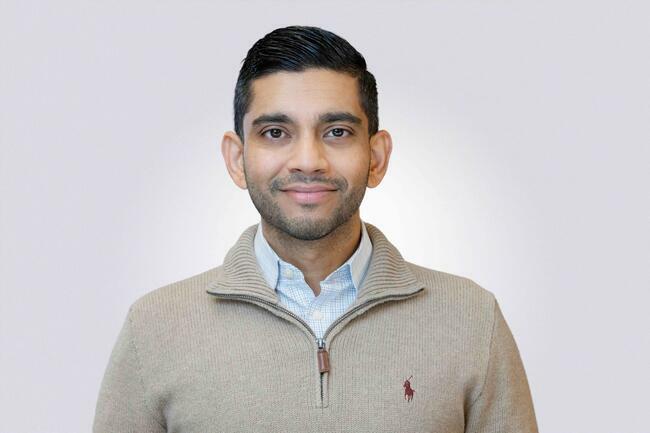
Hi everyone. I'm Rajiv Nijhawan. I'm a Mohs surgeon at UT Southwestern Medical Center in Dallas, Texas, where my primary focus is on skin cancer surgery, reconstructive surgery, and I also have a specialized clinic managing high-risk skin cancer patients such as immunosuppressed and transplant patient populations.
Who actually needs preoperative antibiotics—and who doesn’t?
Dr Nijhawan: So, I do think as dermatologists and derm surgeons, we sometimes overprescribe preoperative antibiotics. The 2 main indications for antibiotics are having an artificial joint or artificial heart valve. And the joint should be, honestly, within 6 months. I do think some people have a practice pattern of 12 months of a recent joint, but most importantly, you're only giving to those individuals when you are operating on a mucosal surface, such as the lip, genitalia potentially, or on infected skin. And it's pretty rare that we're actually working or surgically operating on truly infected skin. So, in my practice, it really kind of limits itself to just oral mucosa, genital mucosa, etc. in the context of an artificial heart valve or a very recent joint replacement. I think the caveat always is if an orthopedic surgeon is very adamant that the patient take preoperative antibiotics, of course you don't want to contradict what their primary orthopedic surgeon is telling them to do and providing it.
The way we found it to be the easiest is by just having extra antibiotics within our clinic and administering them if necessary so we don't have to delay care in any way. But for the most part, for most patients, even if they've had a recent joint infection and you're working on intact cutaneous surfaces and non-infected skin, those patients really don't need antibiotics preoperatively.
How do you handle patients on anticoagulants or antiplatelet therapy?
Dr Nijhawan: So, in my practice, 97% of my patients I'm seeing for the first time and operating on them the same day. And uniformly, and I think there's a lot of data to support this, that you really do not need to hold or stop any sort of anticoagulant therapy for dermatologic surgery. The thought is it's a higher risk to the patient to undergo a stroke or a TIA or have a cardiac issue while off the therapy. Whereas we as neurosurgeons are very comfortable managing patients who are on blood thinners as well. Of course, there are certain situations and there's some data to show those patients who are on multiple anticoagulants, for example, or like a Plavix and aspirin. Those patients are more likely to have postoperative bleeds. And depending on the type of reconstruction that the patient requires, you can always have a conversation with their primary practicing physician on the safety of stopping it and the timing of that.
Sometimes a patient who may need multi-stage reconstruction, you decide to actually wait until that's held before performing that larger reconstruction. But pretty much uniformly, we do not hold or stop anything. But again, there is data to show that patients who are on multiple anticoagulants are at high risk for bleeding, hematoma formation, etc. So, it's very much on a case-by-case basis that you would stop it. There is some data to show that the BTK inhibitors do increase bleeding risk in patients on it. It's in the CLL patient population. So, in those cases, again, you may consider holding it, especially for large reconstruction, but uniformly, we continue everything in our practice.
Which patients benefit most from anxiolysis, and what’s your go-to approach?
Dr Nijhawan: So, patients who come and they've already identified themselves as highly anxious and concerned about the procedure, I always try to meet them in consultation preoperatively. That's a small subset of patients that I do meet preoperatively in person, one-on-one. That way I can really talk them through the procedure. They have time to reflect on it, make them comfortable with the plan, and really go step-by-step of what we're going to be doing with the Mohs, the waiting, and then the reconstruction. If patients are adamant that they do want an oral anxiolytic, I definitely give them a prescription. My go-to is Valium. I usually give 5 mg. Sometimes I'll even give them 2 pills. They tell me they have trouble sleeping the night prior. That way they can take 5 mg the night prior to the procedure, and then 5 mg, again, about 30 to 45 minutes before the procedure itself.
One of our most important things is we have them sign the consent form at the time of consultation. So that way, if they are on an anxiolytic at the time of surgery, our consent still stands from the time of the consultation. We mandate that they have a companion that sits with them the entire time of Mohs surgery as well, that they have a driver that brings them to and from. Luckily, because we perform everything under local anesthesia, we strongly recommend that they have food with their anxiolytic, that way they don't get a stomach upset in any way. And then a lot of times anxiety and pain can go hand in hand. So, we really make sure that we're prioritizing their pain management as well and making sure that they're comfortable throughout the procedure as well. There's always little tips, and oftentimes it's the needle injection, that first needle injection that they're most nervous about.
So, even just icing that area before the needle goes in, really injecting slowly. We buffer our lidocaine as well. We do nerve blocks when indicated to make sure that they stay as comfortable as possible. If it's in a highly sensitive area, and there's data to show that around the eyes, the nose, or the lips tend to be a little more sensitive. As soon as we take the Mohs layer and they'll be waiting for an hour to hour and a half, we actually go ahead and inject bupivacaine, which is longer acting anesthetic compared to lidocaine. That way they can stay as comfortable as possible while they're waiting for the results. And then if we have to take another layer or start the reconstruction, it's a lot more comfortable as we supplement the anesthesia for those next steps. But patients do really well with the anxiolytic, so we're not scared to prescribe it, and I think it definitely calms their nerves, but I think the preoperative consultation is very important.
Oftentimes, the patients who want it are the ones who've had a previously bad experience with other types of procedures, and they're just nervous about having that. Again, talking them through the Mohs procedure is very, very helpful. Redirecting them is incredibly helpful. And then also younger patients or a history of low pain threshold, those are the patients who tend to require it the most, but it's amazing where just even a 5-to-10-minute conversation can really ease their anxiety about the procedure. So that way when they come in for the actual procedure, they already kind of know what to expect.
When are postoperative antibiotics truly warranted?
Dr Nijhawan: So, this is, again, a controversial topic, but we are very, very adamant about not overprescribing antibiotics. We teach our trainees to do the same as well, but that does mean really having good sterile prep and sterile technique. When I say sterile, it's just making sure you're being mindful of the operative area, what's been prepped, what's not been, and making sure that you're not in any way contaminating your surgical field in any way. There is a lot of data to show that even clean gloves have equal infection rates compared to truly sterile gloves. So, it doesn't necessarily have to be this completely sterile procedure. Remember, it's derm surgery. So, we're really doing clean procedures more than anything else, but it's all about your approach with prep, intraoperative intentionality in terms of how your assistants are taking care of them and how their glove handling is, and all those kind of things. You're hand washing beforehand, and then obviously the postoperative prep.
So really there's no one indication where a patient absolutely needs postoperative antibiotics. The World Health Organization has really said that even if you are thinking there may have been a compromise in sterile field or a sterile technique in some way, a patient moved or something happened, then perioperative antibiotics are really all that's indicating. So, giving a loading dose like you would for a joint replacement in the mucosal surface, giving them something immediately post-op is probably just as effective rather than giving a week-long course of postoperative antibiotics. A lot of dermatologists have also started adding and compounding clindamycin, for example, into their lidocaine. So, when you are injecting lidocaine, the anesthetic to get patients comfortable, it has the antibiotic properties locally infiltrated. And there's been some good studies to show the benefits of decreasing infection rates. Again, luckily in terms of what we do in dermatologic surgery, our infection rates are very, very low to begin with, less than 1%.
And there's often very little true indication for giving postoperative antibiotics. Some of the things that we've done, I think patients sometimes think that an open wound and granulating wounds are higher rates for infection. So just educating patients that an open wound actually has lower rates for infection because you don't have the foreign material of suture material within that defect. So sometimes just educating the patients to ease some of their nerves or anxiety about infection is all that's necessary. We also do a lot of other approaches for infection prevention. We do a lot of vinegar soaks, for example, dilute vinegar. It's literally a bowl of water, a tablespoon of white vinegar, have patients clean their wound with that once a day or every other day, especially for granulating wounds that are taking longer to heal, such as lower extremity granulating wounds. That's been a technique that we've used.
We do not recommend postoperative, even topical, antibiotics, given the rates of allergic contact dermatitis that have been associated with that. And again, we don't over-prescribe postoperative antibiotics either.
What’s your strategy for effective pain control while minimizing opioid use?
Dr Nijhawan: Yeah, pain control is obviously something that's very important to manage, and we always tell patients you want to get ahead of the pain rather than letting it build up. So, our approach is, of course, keeping them comfortable for the procedure itself and managing their anxiety. Those will go hand in hand, but immediately postoperatively, we tell them to start a regimen of using alternating oral acetaminophen as well as oral NSAIDs, such as ibuprofen, and alternating them. Our general approach is, as long as there's no contraindication, start with 2 Tylenol or acetaminophen, and 3 hours later, take 2 to 3 ibuprofen, just alternating those almost as if they were scheduled to prescribe. There's been good data to show by using that alone, it supersedes the pain management of using an acetaminophen with codeine, and you're avoiding having to give any sort of narcotic prescription to the patient as well.
The other thing that we are strong proponents of is icing it right away. So, we tell our patients to apply ice packs over the bandaged wound for 5 to 10 minutes every hour that they're awake that day, as well as the subsequent 1 or 2 days, depending on how swollen that area can get. Sometimes when we're working on the forehead, for example, swelling has nowhere to go, but down with gravity, so their eyes get swollen and puffy, and that's always a concern of theirs. So, we are always proactive in terms of managing expectations and we let them know that they can expect that and they can even ice around their eyes as necessary as well. We tell them to keep their head elevated as well while they're sleeping, so that way the swelling can drain away from that surgical wound as quickly as possible. Rest is also very critical in the immediate postoperative period.
So, rest, icing, a compression bandage can be very helpful in the immediate postoperative period as well. For lower extremity areas that are healing either by secondary tension or sutured wounds, even forearms, etc., we wrap them. So, we'll do Coban wrap for the postoperative bandage, but we'll tell patients to replicate that wrap with either an ACE wrap or using compression sleeves, compression socks, etc., on pretty much all extremities whenever possible. The compression can be very helpful and of course elevating whenever possible as well. But we've been successful in minimizing opioid use by just making sure that they're maximizing their over-the-counter analgesics before even having to introduce a pain prescription. If we do need to give a pain prescription, our first prescription is really tramadol, which is a little bit milder than hydrocodone. There are some patients who say tramadol doesn't do anything for me.
And in those situations, we would give them a hydrocodone. But again, that's very much limited to patients who have a very large reconstruction like a paramedian forehead flap or cartilage graft or some of the more multi-staged or multi-subunit reconstruction. Whereas most patients, whether it's a small graft or a linear repair, really do not warrant a prescription pain medication. And then the other thing that we're very mindful of is not overprescribing the number of pills if the patient does need a pain prescription, our max is really 10, and most patients, we only give them 6 to 8. There's been good data to show that the pain post Mohs really peaks at hour 36. So really, they just need to get through the first day, day and a half, and then their pain generally subsides very, very quickly thereafter. It's quite rare for a patient to have significant pain postoperative day 3 or 4.
In the situation where a patient has used their pain prescription, whether it's 8 pills or 10 pills that we prescribe and they're calling for a refill, we never prescribe a refill without an in-office visitation just because there could be something else going on. Could it be a hematoma that's developed that needs a dressing? Could it be the start of an infection and that's why the pain is persisting? So, we always want to evaluate them to make sure we're not missing something. And even then, if they do need a refill, it's max 4 to 6 pills that we're giving in that time period. And then end-stage renal disease patients, it's a little bit trickier to manage because of their kidney dysfunction. So, in those patients, there's been good data to show that just giving them tramadol
How do you approach immunosuppressed patients—when should you consider chemoprophylaxis or modifying therapy?
Dr Nijhawan: So usually, I take care a lot of immunosuppressed patients. Oftentimes they are transplant recipients. And the big thing is making sure we're taking a close look at their medications. We want to make sure they're off any phototoxic medication. So, a lot of our lung transplant patients used to historically be prescribed voriconazole. We pretty much uniformly make sure they're off that medication completely. There are nice alternatives now with posaconazole or isavuconazole if they need it either for a prophylactic measure or a therapeutic measure. So really making sure you're reviewing medications of the immunosuppressed patient populations very closely, make sure they're off phototoxic medications such as voriconazole. And then we'll look to see what medications they are on. For example, transfer patients often initially are placed on azathioprine, and there's been data to show that azathioprine does increase skin cancer risk. So, we'll have conversations with their transplant teams to see if we can modify the dosage of the azathioprine.
But actually, first and foremost, we try to see if we can switch them to an alternative such as mycophenolate, which is thought to be a little bit safer compared to azathioprine. So first and foremost, we're trying to change their medications if we can, decrease their doses of their anti-rejection or immunosuppressant medications so that they're at the lowest possible doses. Of course, we don't make those recommendations personally. We have those conversations with the transplant team and the transplant team then makes those adjustments as needed. In terms of true chemoprophylaxis, all of our patients are on nicotinamide pretty much 500 mg twice a day for prophylaxis. There are good data to show a decrease in precancerous and cancerous lesions even in immunosuppressed patient populations. And then if a patient is making anywhere from 6 to 8 squamous cell skin cancers within a year period, that's when we start the conversation about starting acitretin.
And even if a patient's made 1 to 2 high-risk skin cancers like squamous cells, we'll start the conversation of using oral acitretin as a chemoprophylactic measure. Of course, if they are on multiple medications or if they're transplant, we always get clearance with their primary teams to make sure they're comfortable with us starting that medication. Again, having managed even liver transplant patients, kidney transplant patients, almost 99% of the time their transplant teams are more than comfortable with us starting them in that patient population. And then very rarely in patients who are on their max doses of acitretin, they're on nicotinamide and they're still making lots of squamous cell skin cancers, we'll refer them to medical oncology for conversation about initiating oral capecitabine. Oral capecitabine is the oral prodrug to 5-FU, and it has had nice benefit from a chemoprophylactic measure. We do alter the dosing just so it is a little bit more tolerable compared to the standard chemo dosing that you would give for another type of cancer.
And usually it's a 1 week on and then 1 to 2 weeks off type of regimen, and patients can do quite well with it, and I do think it decreases the acceleration of their skin cancer development as well. So lots of different things to consider, changing their immunosuppression so that they're at the lowest possible doses, getting them off azathioprine, getting them off phototoxic medications like voriconazole are critical, and then step-by-step introducing nicotinamide, acitretin if necessary, and even oral capecitabine can be helpful when these patients are making a lot of squamous cell skin cancers.