Retrograde Access Moves to the Forefront: Rethinking CTO Crossing Strategies

Alexianer St. Gertrauden Hospital Vascular Centre, Berlin, Germany
During a Thursday afternoon session at the Amputation Prevention Symposium 2026, Ralf Langhoff, MD, asked attendees to reconsider when retrograde access should be used for chronic total occlusion (CTO) interventions. He argued that retrograde access has evolved beyond a bailout technique and should be considered a primary strategy in carefully selected patients based on anatomy rather than operator habit.
Drawing on published evidence, procedural experience, and case examples, Dr Langhoff emphasized that while antegrade and crossover approaches remain the conventional standard because of their familiarity, broad device compatibility, and use in major clinical trials, these approaches are not always best suited for every lesion. He highlighted the unique characteristics of distal caps, which are often softer, less fibrotic, and more conical than proximal caps, making them easier to penetrate while reducing the likelihood of entering the subintimal space.
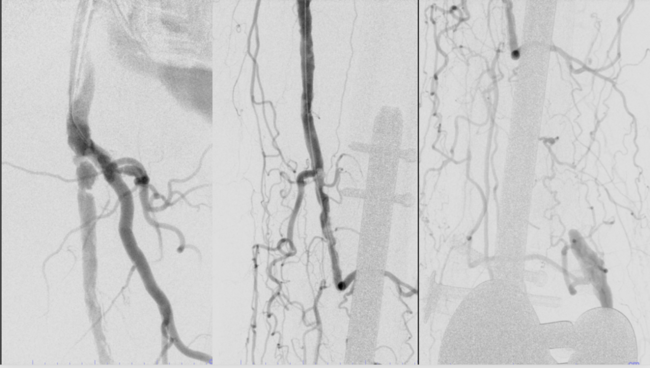
Dr Langhoff acknowledged that randomized data supporting a primary retrograde-first strategy are still lacking, but he pointed to consistent reports of technical success rates exceeding 80% to 95%, high limb salvage rates, and low complication rates across published studies. He illustrated these concepts through several complex cases involving superficial femoral artery, popliteal, below-the-knee, iliac, and mesenteric occlusions, demonstrating how retrograde or bidirectional approaches can simplify challenging anatomy, preserve important landing zones, minimize unnecessary dissections, and reduce reliance on re-entry devices.
Rather than framing the discussion as antegrade vs retrograde access, Dr Langhoff advocated for bidirectional procedural planning that begins with careful preprocedural imaging. He proposed an anatomy-driven algorithm that incorporates duplex ultrasound and computed tomography angiography to evaluate lesion morphology before selecting the initial crossing strategy. In patients with flush occlusions, difficult proximal caps, or heavily calcified lesions, he suggested that a primary retrograde approach may offer the most efficient path to successful revascularization, while shorter lesions with favorable proximal caps may still be well suited for an antegrade-first strategy.
The presentation also addressed the practical considerations that continue to limit wider adoption of retrograde access, including the learning curve, the need for advanced duplex-guided access skills, small vessel size, vasospasm, hematoma risk, wire support requirements, and occasional device limitations. Despite these challenges, Dr Langhoff maintained that selecting the easiest crossing strategy before beginning the procedure can improve efficiency while avoiding unnecessary procedural complexity.