Home-Based Conservative Wound Management for No-Option Chronic Limb-Threatening Ischemia
A Retrospective Observational Study
A Retrospective Observational Study
Abstract
Objective: To evaluate the survival duration and symptom control outcomes of patients with chronic limb-threatening ischemia (CLTI) who were deemed unsuitable for further revascularization and opted for conservative wound management (CWM) instead of major amputation. Methods: A retrospective observational study of 39 consecutive patients with CLTI who chose CWM following the abandonment of curative revascularization strategies between October 2018 and April 2024 across 4 home-based medical clinics in Tokyo, Japan, was conducted. Data collected included baseline characteristics, pain intensity using the Numeric Rating Scale (NRS), and survival duration. Kaplan-Meier analysis and Wilcoxon signed-rank tests were performed to assess outcomes. Results: The median survival time after initiating CWM was 180 days. Median NRS pain scores significantly improved from 8.0 (interquartile range [IQR] 4.75) at baseline to 4.0 (IQR 1.0) during follow-up (P<.001). In stratified analysis, patients with severe foot infection (Wound, Ischemia, and foot Infection [WIfI] fI = 3) had a markedly shorter median survival (~ 60 days) compared to those with less severe infection (fI ≤ 2) who survived approximately 200 days. No statistically significant difference was observed between these subgroups, likely due to the limited sample size. Conclusions: In patients with CLTI who were assessed as unlikely to achieve ulcer healing and declined major amputation, CWM enabled approximately 6 months of home-based survival with meaningful pain control. These findings support the role of CWM as a viable end-of-life care option for patients for whom limb salvage is not feasible and aggressive surgical intervention is undesirable.
J CRIT LIMB ISCHEM 2026:6(3):E96-E101. doi: 10.25270/jcli/CLIG-2600004
Key words: chronic limb-threatening ischemia, conservative wound management, palliative care, home-based treatment
Background
Chronic limb-threatening ischemia (CLTI) represents the end-stage manifestation of peripheral artery disease, characterized by ischemic rest pain, nonhealing ulcers, and gangrene.1 While revascularization—either surgical or endovascular—remains the cornerstone of limb salvage strategies, approximately 15% to 20% of patients are considered “no-option” candidates.2,3 These patients are precluded from aggressive intervention due to anatomical constraints (eg, absence of target vessels), repeated procedural failures, or severe comorbidities that render the surgical risk prohibitive.
According to the 2019 Global Vascular Guidelines (GVG), patients with nonsalvageable limbs or those with limited life expectancy should be considered for either major amputation or wound care with palliative intent.4 However, clinical guidelines often lack specific protocols for the latter, leaving a “gray zone” in decision-making for patients in whom revascularization has failed or is deemed futile.
Major amputation, while traditionally considered a definitive solution to eliminate the source of infection and pain, is associated with extremely poor prognosis in patients with CLTI. Recent data indicate that perioperative mortality and the loss of independent living status following major amputation are profoundly high, particularly in frail patients.5-9 Furthermore, for many elderly patients, limb loss symbolizes a loss of dignity and marks the transition to permanent institutionalization, making amputation a psychologically unacceptable choice.10,11
In this context, conservative wound management (CWM), consisting of regular local care, infection control, pain management, and nutritional support, has been proposed as a practical alternative. Although several studies have reported clinical outcomes of CWM,12,13 the outcomes specifically for patients deemed unsuitable for revascularization and for whom even major amputation was withheld due to advanced age or severe comorbidities remain largely unclarified. Consequently, data evaluating survival duration and the degree of pain control during this period are currently limited. In this study, 39 consecutive patients with CLTI who received CWM after the abandonment of revascularization attempts were retrospectively reviewed. The aim was to assess the duration of home-based survival and changes in pain levels during follow-up, thereby evaluating the role of CWM as a viable end-of-life care strategy in advanced CLTI.
Methods
Study design and setting
This retrospective observational study was conducted at 4 home-based medical clinics affiliated with the TOWN Homecare Clinic group in Tokyo, Japan (Akishima, Mitaka, Itabashi, and Johnan). All participating institutions specialize in providing home-based medical care, particularly end-of-life hospice and palliative care. Therefore, all patients in this cohort received formal palliative care provided by a trained multidisciplinary team. The study period ranged from October 2018 to April 2024.
Patient selection
Consecutive patients diagnosed with CLTI who were deemed unsuitable for further revascularization (no-option CLTI) and opted for CWM instead of major amputation were included. Patients were eligible for inclusion if they had ischemic wounds deemed unlikely to heal, explicitly declined major amputation, and received continuous home-based care throughout the study period. In this study, the no-option status was determined for all patients by a multidisciplinary foot care team at their respective tertiary referral hospitals. This team typically included vascular surgeons, cardiologists, plastic surgeons, and anesthesiologists. The assessment of revascularization suitability was based on objective blood flow evaluations, including catheter angiography, computed tomography angiography, or duplex ultrasound.
The decision to pursue CWM rather than major amputation was reached through shared decision-making when (1) revascularization was deemed technically unfeasible or had previously failed, (2) aggressive limb salvage was considered clinically inappropriate due to wound extent or infection severity, and (3) major amputation was either classified as high-risk by surgeons or anesthesiologists due to advanced age and comorbidities or was explicitly declined by the patient and their family.
Conservative wound management protocol
The primary goal of CWM was to maintain wound stability, prevent the central progression of infection, and minimize wound expansion rather than achieve complete healing. To accomplish this, a standardized institutional wound care protocol was applied to all patients. Daily wound cleansing, primarily performed by visiting nurses, was mandatory. Following cleansing, topical treatments were applied. While povidone-iodine ointments were most frequently used for infection control, cadexomer iodine or other specific wound dressings were selected depending on the individual wound characteristics (eg, exudate volume or presence of necrotic tissue). Consequently, daily wound cleansing, topical treatment application, and complete dressing (gauze) replacements were consistently performed in all cases. Physicians visited the patients weekly on average, performing debridement and prescribing antibiotics as clinically indicated.
Pain management was an integral part of the CWM protocol. In cases where conventional analgesics (nonsteroidal anti-inflammatory drugs or acetaminophen) were insufficient, opioid analgesics or peripheral nerve blocks (eg, sciatic nerve block) were aggressively administered to ensure adequate symptom relief. Notably, when peripheral nerve blocks were indicated, they were performed at the patient’s home under portable ultrasound guidance to avoid the physical burden of hospital transfer.
Data collection and outcome measures
Data were retrospectively collected from electronic medical records. Baseline characteristics included age, sex, comorbidities, and the Society for Vascular Surgery (SVS) Wound, Ischemia, and foot Infection (WIfI) classification. Pain intensity was assessed using the Numerical Rating Scale (NRS), recorded at the initiation of CWM and during follow-up visits. Pain intensity using the NRS was evaluated by physicians or visiting nurses during each routine clinical examination, which typically occurred once or twice per month. The “follow-up NRS pain score” represents the median of all individual NRS pain scores recorded for each patient from the initiation of CWM until the time of death. The primary outcome was home-based survival. Survival time was defined as the number of days from the initiation of CWM to death, confirmed through home visit records or death certificates.
Statistical analysis
Continuous data were assessed for normality using the Shapiro-Wilk test. Given that all continuous variables in this study were non-normally distributed, they are presented as medians with interquartile ranges (25th and 75th percentiles) and were compared using the Mann-Whitney U test. Categorical variables are summarized as numbers and percentages and were compared using Fisher’s exact test.
To evaluate changes in pain intensity, the NRS pain scores at the initiation of CWM were compared with the median NRS pain scores during the follow-up period using the Wilcoxon signed-rank test.
Survival outcomes were analyzed using the Kaplan-Meier method to estimate the cumulative incidence of all-cause mortality, with group comparisons performed using the log-rank test.
All P values were 2-sided, and a P value <.05 was considered statistically significant. All statistical analyses were performed using R software (version 4.4.3; R Foundation for Statistical Computing), utilizing the “tableone”, “tidyverse”, “rstatix”, and “survival” packages.
Ethical considerations
The present study was performed in accordance with the Declaration of Helsinki and was approved by the Institutional Review Board of each participating clinic. Written informed consent for the use of anonymized data was obtained from all patients or their legal representatives.
Results
Patient characteristics
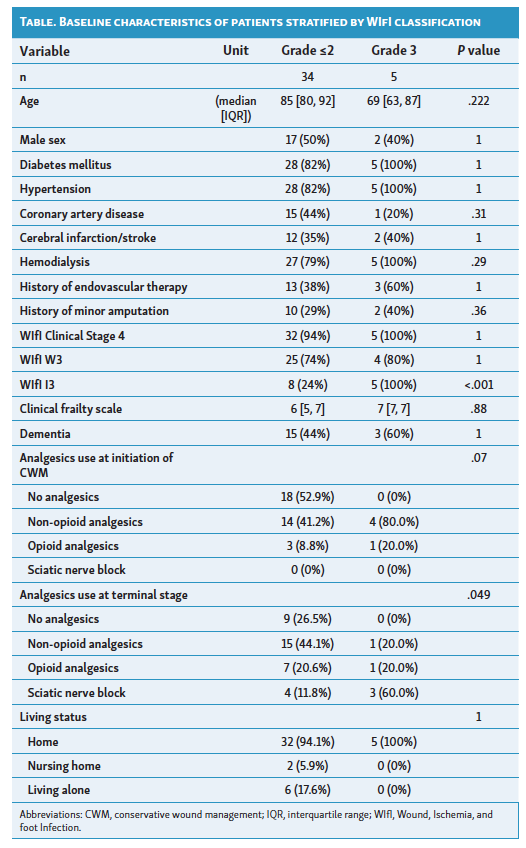
A total of 39 patients with CLTI who declined major amputation and were managed conservatively were included in the study. All patients received care at home. Baseline characteristics are shown in the Table. The median age was 85 years, and the majority had diabetes mellitus and hypertension. Dementia was identified based on clinical diagnoses in medical records. Stratification by the SVS WIfI classification revealed no significant differences in comorbidities between the groups.
Survival outcomes
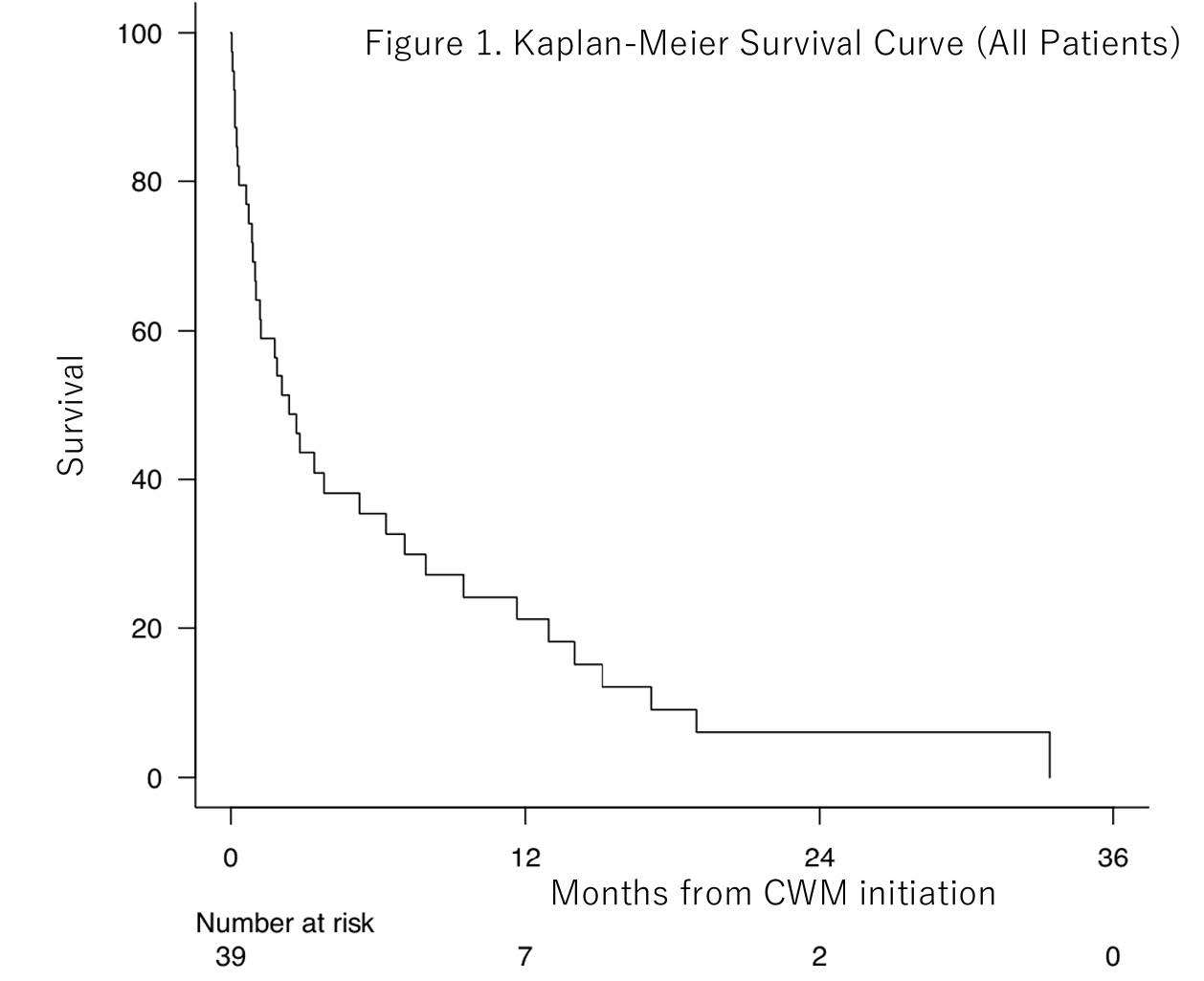
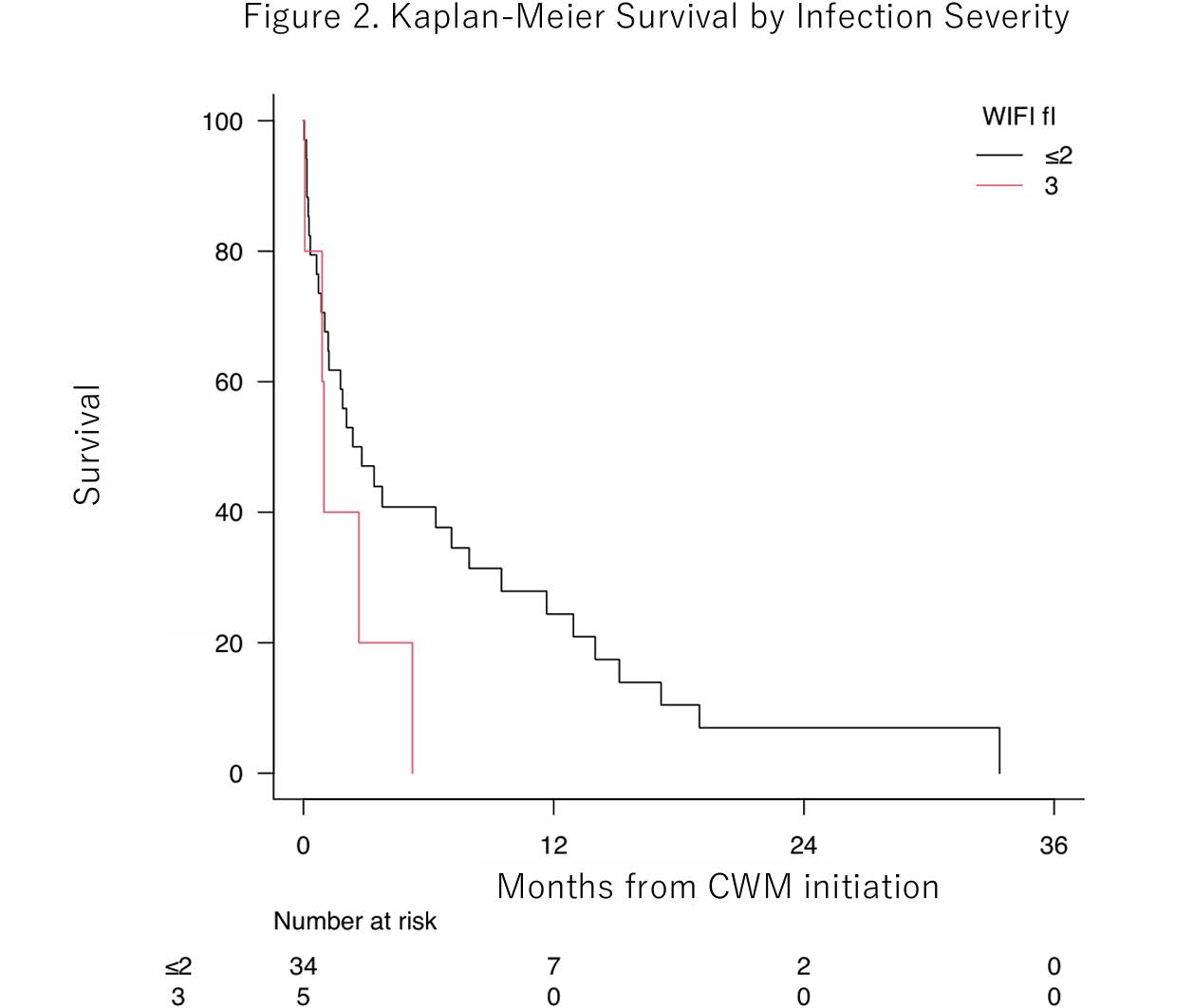
The median survival time following the initiation of CWM was 180 days. Kaplan-Meier analysis showed that approximately 50% of patients remained alive at 6 months (Figure 1). The observed range of survival durations extended up to 12 months, but most deaths occurred within the first 6 months of care. Notably, none of the 39 patients required hospital readmission for either limb-related or non-limb-related reasons during the follow-up period. Because these patients and their families explicitly prioritized spending their final days at home, acute clinical deteriorations were managed entirely in the home setting. Consequently, the overall survival time reported in this study corresponds entirely to the number of days patients successfully spent at home. In an exploratory analysis stratified by the WIfI fI grade, there was a trend toward shorter home-based survival in patients with severe infection (fI = 3; median duration of ~ 60 days) compared to those with less severe infection (fI ≤ 2; nearly 200 days) (Figure 2). However, given the very small sample size in the severe infection group (n = 5), definitive conclusions cannot be drawn, and this observation should be considered strictly hypothesis-generating.
Pain control
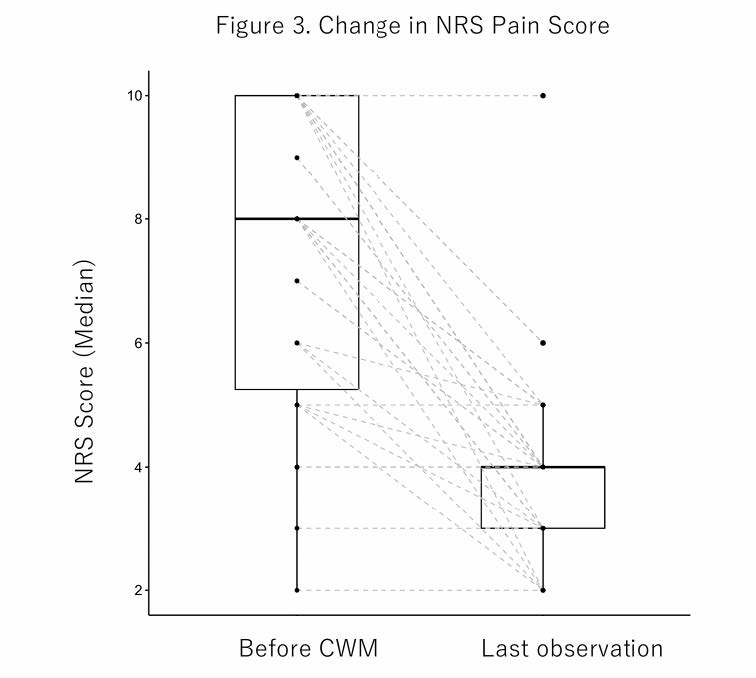
Among 38 patients with available pain data, the median NRS pain score decreased from 8.0 (interquartile range [IQR]: 4.75) at baseline to 4.0 (IQR: 1.0) during follow-up. This reduction was statistically significant (Wilcoxon signed-rank test, P<.001) (Figure 3), indicating effective pain relief over the course of home-based care. To achieve this pain control, analgesic regimens were escalated during the follow-up. Furthermore, 7 patients (17.9%) required sciatic nerve blocks for intractable ischemic pain. All these nerve blocks were successfully performed at the patients’ homes under portable ultrasound guidance, eliminating the need for hospital readmission for pain management.
Antibiotic usage
Systemic antibiotics were not administered continuously but prescribed intermittently as clinically indicated for acute exacerbations of infection. Depending on the severity, these were administered either orally or intravenously at the patient’s home. During the follow-up period, systemic antibiotic therapy was required in all 5 patients (100%) in the severe infection group (fI = 3) and in 18 of the 34 patients (52.9%) in the less severe infection group (fI ≤ 2).
Causes of death
Although determining the precise cause of death in a home-based end-of-life care setting is clinically challenging, an analysis of the clinical diagnoses recorded on the patients’ death certificates was performed. Of the recorded deaths, only 4 cases were directly attributed to limb-related sepsis. The majority of the remaining deaths were attributed to senility (advanced frailty) and cardiovascular events. This distribution reflects the competing mortality risks inherent in this cohort’s advanced age and severe baseline comorbidities, including the high prevalence of hemodialysis.
Representative Case
The following descriptive case is presented to illustrate a typical clinical care trajectory of home-based CWM and is not intended as proof of overall therapeutic effectiveness.
A 92-year-old woman with a history of cardiac disease presented with recurrent CLTI despite multiple prior endovascular therapies and minor amputations. At presentation, she had extensive gangrene with residual osteomyelitis extending beyond the forefoot (Figure 4A; WIfI clinical stage 4). Given her advanced age, high surgical risk due to comorbidities, and explicit preference to avoid further aggressive interventions, the patient and her family opted for CWM instead of major amputation.
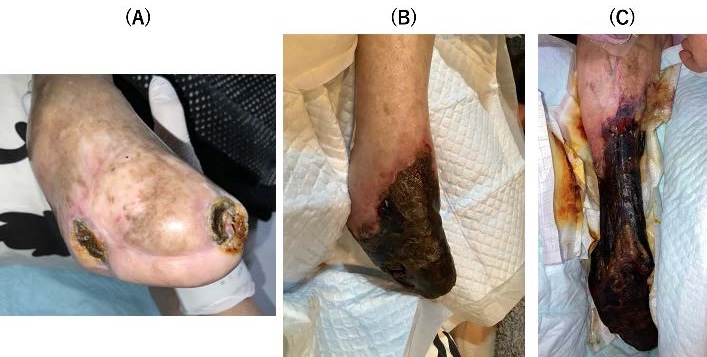
The primary goal of care was pain relief and infection control to maintain home-based living. The patient received daily wound cleansing and ointment application by visiting nurses. Although the necrotic area gradually expanded over time (Figure 4B), aggressive pain management using opioids successfully maintained her NRS pain score at 0–2 and she remained free of subjective distress. She was able to live at home for approximately 12 months. Ultimately, the infection progressed rapidly to extensive wet gangrene involving the lower leg (Figure 4C), and she died peacefully at home without emergency hospitalization.
Discussion
Summary of main findings
The present study investigated the clinical outcomes of patients with CLTI who were deemed unsuitable for further revascularization and opted for CWM instead of major amputation. The findings demonstrate that CWM allowed patients to remain at home for a median of 180 days. Pain levels were significantly reduced, with the median NRS pain score improving from 8 to 4 (P<.001). This suggests that effective symptom control and a reasonable period of home-based living are achievable even in the absence of curative interventions.
Impact of infection severity
Importantly, when stratified by the severity of foot infection, patients with severe infection (fI = 3) had a median survival duration of only 60 days, whereas those with less severe infection (fI ≤ 2) survived for nearly 200 days. Although this difference did not reach statistical significance, likely due to the limited sample size, the trend strongly indicates that the degree of local infection is a critical prognostic factor. For patients with uncontrolled deep infection, CWM may serve more as short-term end-of-life care rather than a strategy for long-term maintenance.
Comparison with previous studies
A recent meta-analysis evaluating conservative treatment in CLTI reported a 1-year all-cause mortality rate of 18%, a major amputation rate of 27%, and amputation-free survival of 60%.13 However, considerable heterogeneity exists across studies; some report major amputation rates as high as 73% to 95% within 1 year for untreated CLTI.14 The natural history of untreated or non-revascularizable CLTI is characterized by high rates of limb loss and mortality. Understanding these baseline risks is essential for contextualizing the outcomes of home-based CWM. Furthermore, the SPINACH study (the largest CLTI registry in Japan) reported that approximately 20% of patients failed to achieve wound healing at 1 year, even after endovascular therapy or bypass surgery.3 This implies that a significant proportion of patients with CLTI eventually face the dilemma of major amputation vs permanent wound bearing, regardless of prior interventions.
Uniqueness of this study
Most existing data on “conservative treatment” pertain to patients for whom ulcer healing is still anticipated. In contrast, this study specifically focused on a no-option population assessed as unlikely to heal and who explicitly declined major amputation. To our knowledge, this is the first study to describe the clinical course—specifically focusing on home-based survival and pain control—in this high-risk cohort managed entirely in a home care setting.
Clinical implications
Given that major amputation is associated with high perioperative mortality and a loss of independence, particularly in frail elderly patients, the decision is fraught with difficulty. Until now, evidence guiding decision-making for those who decline amputation has been scarce. Our results fill this gap by showing that approximately 6 months of life with adequate pain relief can be preserved at home. This offers a viable third option for patients who prioritize comfort, dignity, and aging in place over aggressive surgical interventions.
Limitations
This study has several limitations. First, it was a retrospective observational study with a small sample size, which limits the statistical power. Second, the absence of a control group (eg, patients who underwent major amputation) prevents a direct comparison of survival and quality of life. Third, selection bias may exist, as patients who chose CWM might have had different baseline values regarding life-sustaining treatments compared to those who accepted amputation. Ultimately, whether a 6-month prognosis is perceived as short or long depends largely on individual patient values and goals of care. Our findings provide a foundational evidence base to facilitate shared decision-making in these complex clinical scenarios.
Conclusion
CWM was associated with several months of home-based survival and improved reported pain scores in this selected cohort of patients with no-option CLTI who declined major amputation. While the retrospective and noncomparative nature of this study limits generalizability, these findings support the further study of palliative home-based care pathways for patients for whom limb salvage is not feasible and aggressive surgical intervention is undesirable.
Affiliations and Disclosures
Makoto Utsunomiya, MD, PhD, is from the TOWN Homecare Clinic Johnan, Tokyo, Japan, and Division of Cardiovascular Medicine, Toho University Ohashi Medical Center, Tokyo, Japan; Akane Eda, RN, is from the TOWN Homecare Clinic Johnan, Tokyo, Japan; Daisuke Ueshima, MD, PhD, is from the Department of Cardiology, Kameda General Hospital, Chiba, Japan; Hiroshi Sakamoto, MD, is from the TOWN Homecare Clinic Itabashi, Tokyo, Japan; Atsushi Tosaka, MD, is from the TOWN Homecare Clinic Mitaka, Tokyo, Japan; and Mikio Kinoshita, MD, is from the TOWN Homecare Clinic Akishima, Tokyo, Japan.
The authors report no financial relationships or conflicts of interest regarding the content herein.
Manuscript accepted June 16, 2026.
Address for correspondence: Makoto Utsunomiya, MD, PhD, TOWN Homecare Clinic Johnan, 1-40-6 Kamiikedai Ohta-ku, Tokyo, Kanto 145-0064 Japan. Email: m.utsu0705@gmail.com
References
1. Norgren L, Hiatt WR, Dormandy JA, Nehler MR, Harris KA, Fowkes FG; TASC II Working Group. Inter-society consensus for the management of peripheral arterial disease (TASC II). J Vasc Surg. 2007;45 Suppl S:S5-67. doi:10.1016/j.jvs.2006.12.037
2. Conrad MF, Crawford RS, Hackney LA, et al. Endovascular management of patients with critical limb ischemia. J Vasc Surg. 2011;53(4):1020-1025. doi:10.1016/j.jvs.2010.10.088
3. Iida O, Takahara M, Soga Y, Kodama A, Terashi H, Azuma N; SPINACH Investigators. Three-year outcomes of surgical versus endovascular revascularization for critical limb ischemia: the SPINACH study (surgical reconstruction versus peripheral intervention in patients with critical limb ischemia). Circ Cardiovasc Interv. 2017;10(12):e005531. doi:10.1161/CIRCINTERVENTIONS.117.005531
4. Conte MS, Bradbury AW, Kolh P, et al; GVG Writing Group. Global vascular guidelines on the management of chronic limb-threatening ischemia. J Vasc Surg. 2019;69(6S):3S-125S.e40. doi:10.1016/j.jvs.2019.02.016
5. Stern JR, Wong CK, Yerovinkina M, et al. A meta-analysis of long-term mortality and associated risk factors following lower extremity amputation. Ann Vasc Surg. 2017;42:322-327. doi:10.1016/j.avsg.2016.12.015
6. Davenport DL, Ritchie JD, Xenos ES. Incidence and risk factors for 30-day postdischarge mortality in patients with vascular disease undergoing major lower extremity amputation. Ann Vasc Surg. 2012;26(2):219-224. doi:10.1016/j.avsg.2011.05.012
7. Jones WS, Patel MR, Dai D, et al. High mortality risks after major lower extremity amputation in Medicare patients with peripheral artery disease. Am Heart J. 2013;165(5):809-815.e1. doi:10.1016/j.ahj.2012.12.002
8. van Netten JJ, Fortington LV, Hinchliffe RJ, Hijmans JM. Early post-operative mortality after major lower limb amputation: a systematic review of population and regional based studies. Eur J Vasc Endovasc Surg. 2016;51(2):248-257. doi:10.1016/j.ejvs.2015.10.001
9. Ogaki T, Iida O, Hata Y, et al. The perioperative and long-term fates of patients with chronic limb-threatening ischaemia who underwent secondary major amputations. Int Wound J. 2022;19(1):36-43. doi:10.1111/iwj.13594
10. Taylor SM, Kalbaugh CA, Blackhurst DW, et al. Preoperative clinical factors predict postoperative functional outcomes after major lower limb amputation: an analysis of 553 consecutive patients. J Vasc Surg. 2005;42(2):227-235. doi:10.1016/j.jvs.2005.04.015
11. Coffey L, Gallagher P, Desmond D. Goal pursuit and goal adjustment as predictors of disability and quality of life among individuals with a lower limb amputation: a prospective study. Arch Phys Med Rehabil. 2014;95(2):244-252. doi:10.1016/j.apmr.2013.08.011
12. Verwer MC, Wijnand JGJ, Teraa M, Verhaar MC, de Borst GJ. Long term survival and limb salvage in patients with non-revascularisable chronic limb threatening ischaemia. Eur J Vasc Endovasc Surg. 2021;62(2):225-232. doi:10.1016/j.ejvs.2021.04.003
13. van Reijen NS, Hensing T, Santema TKB, Ubbink DT, Koelemay MJW. Outcomes of conservative treatment in patients with chronic limb threatening ischaemia: a systematic review and meta-analysis. Eur J Vasc Endovasc Surg. 2021;62(2):214-224. doi:10.1016/j.ejvs.2021.01.005
14. Lepäntalo M, Mätzke S. Outcome of unreconstructed chronic critical leg ischaemia. Eur J Vasc Endovasc Surg. 1996;11(2):153-157. doi:10.1016/s1078-5884(96)80044-x