Rosacea and Gut Health: Exploring the Gut-Skin Connection
Clinical Summary
Rosacea and the Gut–Skin Axis: SIBO, Rifaximin, and Refractory Disease Management
-
Gut–skin connection in rosacea: Evidence suggests a subset of patients with rosacea and small intestinal bacterial overgrowth (SIBO) may improve after rifaximin, while SIBO-negative patients do not show similar benefit.
-
When to consider SIBO testing: In treatment-resistant rosacea unresponsive to standard topical/systemic therapies and lifestyle modification, clinicians may consider SIBO testing, including validated at-home kits requiring specific dietary preparation.
-
Comprehensive rosacea management: Rosacea involves vascular, neuronal, immune, microbiome, and gut-related pathways; management often requires layered strategies including trigger avoidance, topical/systemic therapies, and selective gut-directed interventions.
Reviewed by Riya Gandhi, MA, Associate Editor of Immunology Group
Dr Ted Lain discusses the emerging role of gut health in rosacea, including the link between small intestinal bacterial overgrowth (SIBO) and treatment-resistant disease. Learn when dermatologists may consider SIBO testing, how gut-directed therapies such as rifaximin may fit into refractory rosacea care, and why rosacea requires a comprehensive approach that addresses skin, vascular, immune, neuronal, and microbiome factors.
TRANSCRIPT:
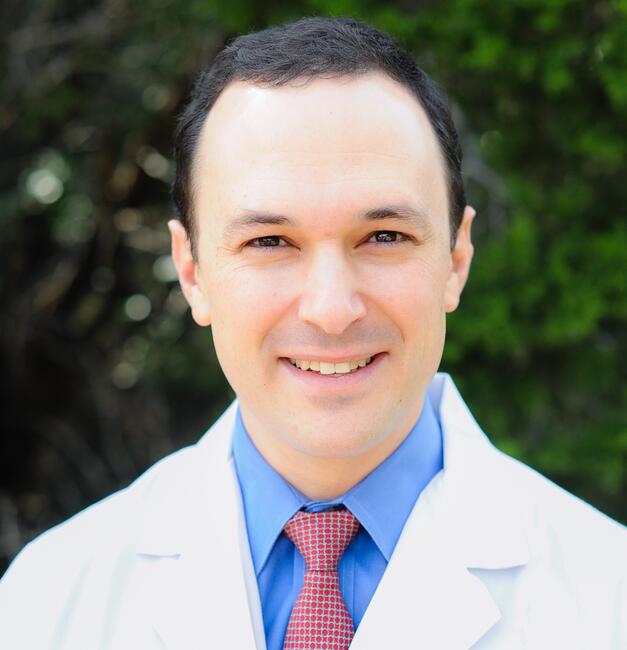
Hi, I'm Dr Ted Lain. I'm a board-certified dermatologist. I practice in Austin, Texas.
What is the current evidence linking gut health and the pathophysiology of rosacea, and how should it influence clinical management?
We don't have a ton of data to support the role of gut health in rosacea, but there are a few studies that I highlight in my talk, where if a patient does have SIBO, for example, and we eradicate the gut bacteria with a broad spectrum antibiotics such as rifaximin, we show that for those SIBO-positive patients on rifaximin, we're able to reduce the severity of the rosacea substantially. Now, for rosacea patients without SIBO, the use of Rifaximin really did nothing. So it's truly for that subset of rosacea patients who have SIBO that we can make a difference for them. And as we all know, dermatologists and providers in the space, there are some rosacea patients who are very resistant to traditional therapy, and we may need to turn to our second and third lines. Perhaps we need to start thinking about gut health as one of those second or third-line treatments so that we can truly help all patients, even the most resistant ones.
Are there specific gastrointestinal conditions, microbiome patterns, or triggers that clinicians should be screening for in patients with refractory rosacea?
Yeah, I think if you do have someone that's refractory to the low-dose antibiotics, for example, the topicals that we all use, lifestyle changes as well. It's really time to start thinking about the gut, and that's where SIBO analysis can come in. There are third-party vendors that offer at-home testing kits with really good instructions for patient use, because SIBO testing is not easy for patients. There's a diet that needs to be followed before. There's a very specific way it needs to be done in order for us to maximize the efficacy of the test. I do think that dermatologists and providers in the space need to consider SIBO testing for their refractory patients. It would be considered out-of-pocket, but based on the data and my own experience, it could be quite helpful.
How can dermatologists practically incorporate gut-directed therapies—such as diet, probiotics, or systemic treatments—into a comprehensive rosacea care plan?
Well, I think that dermatologists right now do have a comprehensive rosacea care plan, right? We talk about, or at least I hope we're talking about, lifestyle modifications. We know the very common triggers. We know the role of sun exposure, for example. So those kinds of lifestyle modifications have been foundational for our treatment of rosacea for a long time. Unfortunately, with global warming, it just makes it much harder to control rosacea as well as the pigmentary issues that can happen with aging skin. So, that is foundational, then as we layer on some of the more effective systemic treatments as well as topical treatments, it's all part of a care plan. Unfortunately, unlike some of our other inflammatory disease states, we don't have knockout punches, right? We don't have that single biologic which works in 95% of our patients and has a profound difference after one injection, for example, or pills that have a profound improvement as well. We really have to use multiple tools in our toolbox to treat that moderate-to-severe rosacea patient. And then we have to go even further for those resistant patients.
Are there any tips or insights you would like to share regarding the gut-skin connection in rosacea?
You know, I think that we as dermatologists are exploring the different connections within the body to the skin. So, the mind-skin connection, for example, the gut-skin connection as well. Rosacea, in particular, is one of the disease states where those kinds of connections are inherent to the pathogenesis of disease. We know, for example, the neuronal aspect of rosacea, the vascular aspect of rosacea, the immunologic aspect of rosacea. So it's a disease where multiple body systems come together, which makes it more difficult to treat because you never know which one is the primary. So that's why I put together the gut-skin connection talk in rosacea, just to highlight the fact that rosacea may not just be skin deep and has connections apart from the skin that we may need to explore in order to produce the best result for our patients.