When Economics Meets Innovation: Matching Deep Venous Arterialization to the Right Site of Service

The Vascular Institute of Atlantic Medical Imaging, Vineland, New Jersey
Friday morning at the Amputation Prevention Symposium, Mike Watts, MD, FSIR, of the Vascular Institute of Atlantic Medical Imaging, examined an important question surrounding deep venous arterialization (DVA): not simply whether the procedure can prevent amputation in patients with no-option chronic limb-threatening ischemia (CLTI), but how the economics of care delivery influence where and how it can be successfully performed. Dr Watts emphasized that site of service has become a critical factor in determining the financial sustainability of DVA while preserving access to limb salvage for one of vascular medicine's most challenging patient populations.
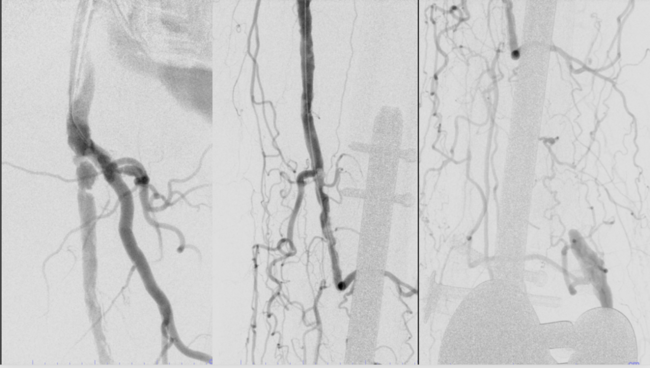
The presentation began by highlighting the significant unmet need among patients with no-option CLTI, noting that approximately 1 in 5 patients lacks a viable surgical or endovascular revascularization target and historically faced major amputation. DVA offers a new treatment pathway by rerouting arterial blood flow into the pedal venous system to restore perfusion to ischemic tissue, creating an opportunity for limb preservation in patients who previously had few therapeutic options.
Dr Watts compared the 2 current approaches to DVA. The FDA-approved LimFlow system provides a purpose-built platform designed specifically for the procedure, incorporating the crossing system, valvulotome, and covered stent into a standardized kit that demonstrated high technical success in the PROMISE II trial. Alternatively, physicians can perform an off-the-shelf DVA using commonly stocked devices already available in many vascular labs. While the off-the-shelf approach offers lower device costs and greater flexibility, it carries a higher rate of reintervention, highlighting the balance between accessibility and long-term procedural durability.
A central focus of the session was the influence of site of service on reimbursement and overall procedural viability. Dr Watts reviewed the economic landscape across hospital outpatient departments, ambulatory surgery centers (ASCs), and physician office-based laboratories, explaining that each setting presents distinct reimbursement models and operational considerations. Hospital outpatient departments offer the highest reimbursement and full access to dedicated DVA technology, while ASCs provide strong reimbursement with lower overhead. In contrast, physician office settings currently lack a reimbursement pathway for the dedicated LimFlow system, making the off-the-shelf approach the only economically feasible option in that environment.
The presentation also reviewed the evolving reimbursement environment for 2026, including payment increases for hospital outpatient and ASC procedures, while emphasizing that CPT Category III code 0620T remains carrier-priced. Dr Watts stressed the importance of understanding payer coverage policies, proper coding practices, and the limitations surrounding office-based reimbursement as physicians consider incorporating DVA into their clinical practice.
Data presented from the PROMISE II trial and published meta-analyses demonstrated that both dedicated and off-the-shelf DVA approaches achieve limb salvage in approximately three out of four patients with no-option CLTI. While technical success and standardization favor the dedicated system, the availability and lower cost of off-the-shelf DVA expand treatment opportunities in settings where dedicated technology is not financially supported.