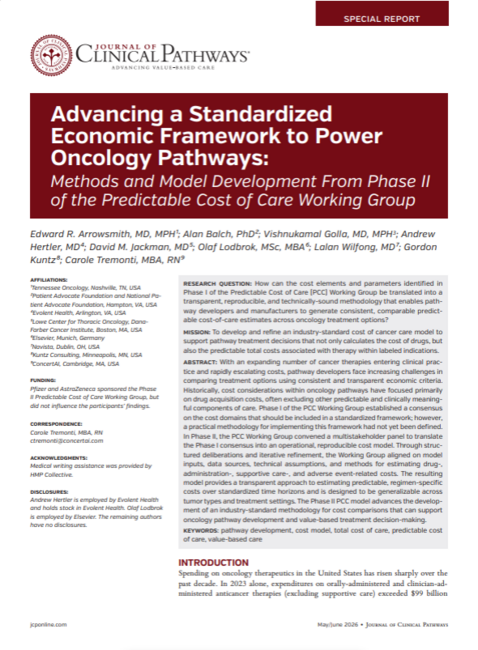
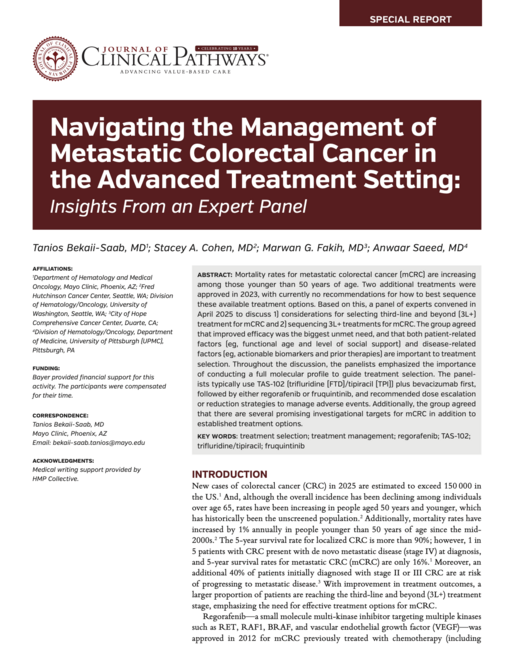
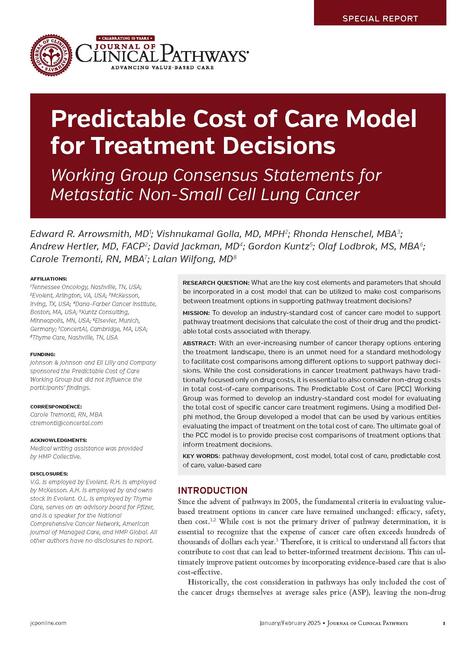
Episode 5: PBMs, Part D, and Pathways—Who Really Controls Oncology Access?
This episode of The Pathways Guys Podcast explores how Medicare Part D formularies are developed in oncology and the role pharmacy benefit managers (PBMs) play in shaping drug coverage, access, and reimbursement. Gordon Kuntz and Bryan Loy discuss formulary strategy, payer influence, prior authorization, and step therapy, highlighting how these tools impact patient access to treatments.
The following is an edited excerpt from the podcast for clarity and brevity.
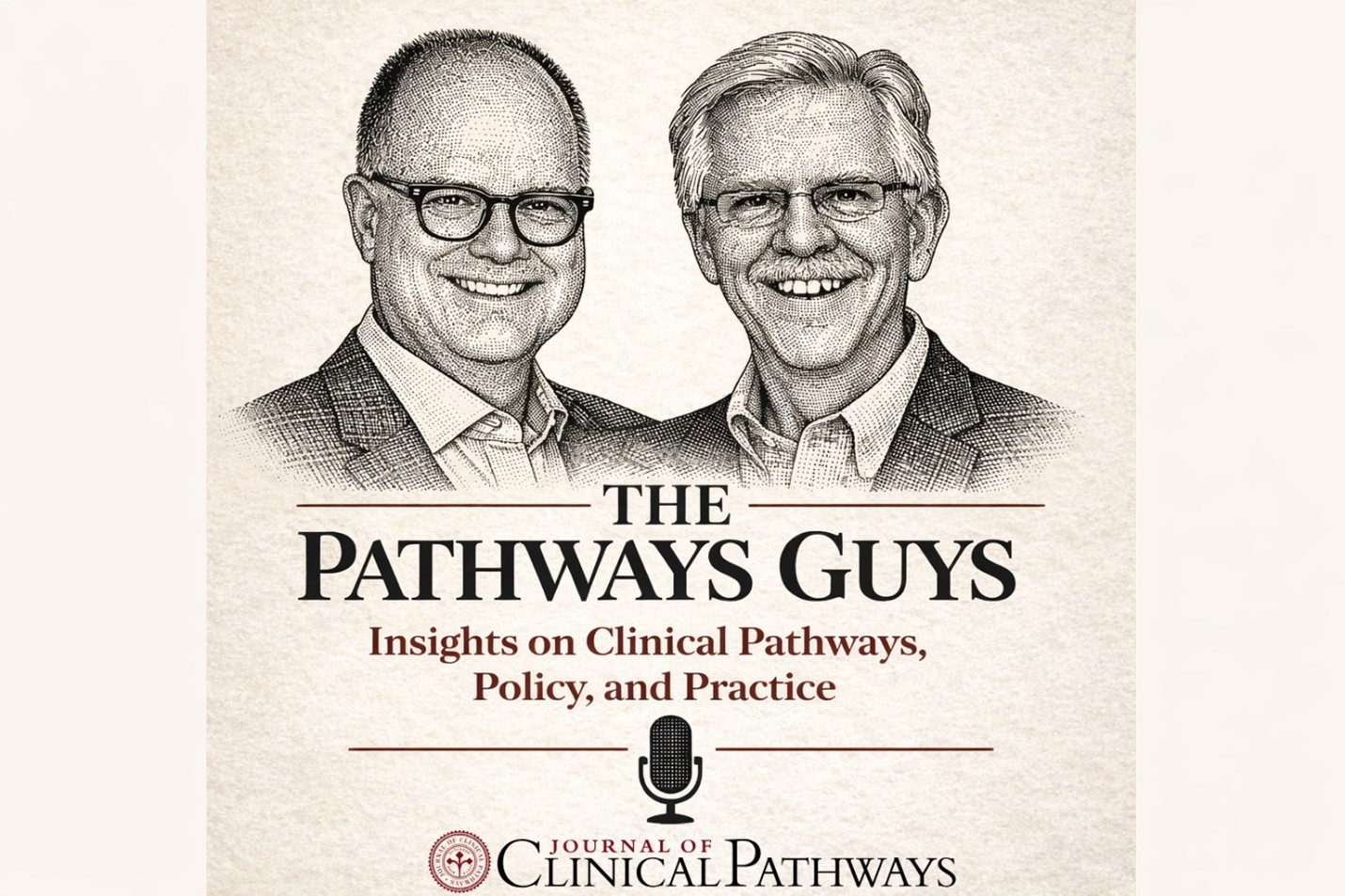
Gordon Kuntz: Hi, everyone! Welcome to The Pathway Guys Podcast, where you'll hear stories and perspectives from the front lines of payers, pathways, and oncology. Whether you're involved in market access or pharma, are a pathway developer or user, are in an oncology practice, or just want to better understand how the ecosystem and business of oncology works, this is the place for you. I'm Gordon Kuntz, a consultant with 20-plus years in the business of oncology.
Bryan Loy: And I'm Bryan Loy. I've got 20-plus years on the payer's side.
Kuntz: In this episode, we'll be talking about Part D formularies, the tiered lists of oral and self-injectable drugs dispensed through a pharmacy or specialty pharmacy that control whether and how much a PBM will reimburse for drugs. With about 30-35% of new oncology drugs being orals, this is a big deal for market access and oncology practices.
To kick us off, Bryan, I want to get your opinion on something. Most payers today have strong ties to a PBM, either because they own them—as many of the big payers do—or because of their long-term contracts. In my experience, I've encountered several instances where a payer would tell me they don't really control what the PBM does, or what's on their formulary. Whatever the PBM does, they end up doing it too.
To be honest, it seemed that they were sort of hiding behind the PBM. In your experience, how much influence does a payer have over the Part D formularies and over the PBM. It seems like the payers are the client, right?
Loy: In almost all instances, if they're not exactly the client, they certainly have a vested interest in seeing them be successful because they are in front of the customers, whether they are fully insured, self-funded employer groups, or whomever.
There is a growing tendency, given the arena of value-based care, to look at total cost of care. The percentage of oral drugs coming into play is not trivial, so they have an interest in that component of total cost of care. There is also an increasing shift to exercise influence from the medical side over to the PBM side.
Kuntz: But help me out here. If a payer either owns a PBM or has a contract with one, do they actually have input into the formulary, or is that delegated entirely?
Loy: There absolutely is influence. I’ve talked to many colleagues who participate in pharmacy and therapeutics discussions. Depending on how those committees are structured, there is often input from the insurance side.
Kuntz: Can you describe how PBMs develop their formularies? What do they base it on?
Loy: You have to start with the specific line of business. For example, government plans have guardrails to protect patients and include protected classes like oncology. But there’s still leverage for plans to create efficiencies. Formulary decisions consider clinical effectiveness, adverse events, and comparative value within a class.
You also have to consider financial impact—net cost vs price, including rebates. Sometimes higher-priced drugs are preferred because of rebates, which can seem counterintuitive. This creates tension in value-based care when lower-cost options may be clinically appropriate.
Listen to the full episode on Spotify.
Clinical Pathway Category: Business
This podcast episode contributes to the business dimension of clinical pathways by clarifying how Medicare Part D formularies and PBM-driven coverage decisions influence drug access, reimbursement, and overall cost of care, reinforcing the need for alignment between payer strategy and pathway design. It supports evidence-based oncology care by highlighting the importance of integrating clinical effectiveness, value-based considerations, and policy consistency into formulary and pathway decisions, ultimately improving care delivery through more transparent, coordinated, and patient-centered access to therapies.