The Shift From Central Fabrication to In-Office Digital Orthotic Production
As digital workflows become more affordable and accessible, practitioners are increasingly exploring in-office fabrication models that offer greater control, efficiency, and customization.
Key Takeaways
- Digital technology is challenging the traditional central fabrication model. This author cites improvements in scanning systems, design software, and manufacturing tools are making it increasingly feasible for clinicians to produce custom orthotics closer to the point of care.
- Modern workflows can reduce delays and improve quality control. Traditional fabrication often involves multiple handoffs and manual processes, while digital production can streamline workflows, minimize errors, and provide more consistent outcomes.
- 3D printing is accelerating the move toward in-office production. Lower equipment costs, improved printing materials, and advances in additive manufacturing are enabling practices to evaluate office-based or hybrid digital fabrication models that were previously impractical.
As a profession, podiatry has historically relied on centralized fabrication laboratories to produce custom orthotics. While materials and casting methods have evolved over the years, the overall workflow has remained surprisingly similar for decades: capture the foot, write a prescription, send it to a lab, and wait for the finished device to return.
That system has worked reasonably well for a long time. However, after years of prescribing orthotics and working directly within those workflows, I began noticing recurring problems that many providers quietly accept as “part of the process.” Turnaround delays, communication gaps, remake cycles, inconsistent modifications, and the difficulty of making small iterative changes all contribute friction to what should ideally be a highly repeatable treatment process.
The introduction of digital scanning improved one part of the workflow but often left the rest unchanged. Many clinics moved away from plaster casting and foam boxes toward laser scanners or smartphone-based acquisition systems, yet I noticed that downstream production frequently remained disconnected from the prescribing physician. In many cases, the prescription still passed through multiple layers of interpretation before final production of the orthotic.
Why That Variability Matters
Two orthotics made from the same scan and same prescription can still feel very different depending on how modifications are interpreted during fabrication. While experienced labs do excellent work, I have observed that the process itself can still introduce inconsistency simply because so many steps remain manual or fragmented.
Over the last several years, however, something important has started to change.
Affordable 3D scanning, improved computer-assisted design (CAD) systems, cloud-based workflows, and advances in additive manufacturing have begun making digital orthotic production more accessible to clinics themselves. At the same time, 3D printing materials, particularly flexible thermoplastic urethane (TPU) formulations, have improved dramatically. What was once viewed as experimental is increasingly becoming clinically viable.
As a result, I have seen more practices beginning to explore in-office orthotic production or hybrid digital manufacturing workflows. Interestingly, the biggest barrier does not seem to be the printer itself.
Modern desktop manufacturing hardware has become relatively affordable and reliable compared to where it was even 5 years ago. The real challenge is workflow consistency. Translating a prescription into a reproducible digital model requires much more than simply importing a foot scan into CAD software. Clinics need systems capable of managing patient records, organizing scan files, tracking modifications, maintaining manufacturing repeatability, and coordinating fulfillment in a way that does not create additional complexity for providers.
This realization was one of the primary reasons I began developing such a digital worfklow (ArchSpline Systems). The goal was never simply to create another CAD platform. It was to reduce workflow fragmentation and improve consistency between prescription, design, manufacturing, and follow-up. From my perspective as a podiatrist, the most important problem was not whether a device could be printed, but whether the entire treatment process could become more repeatable and scalable without sacrificing clinical customization.
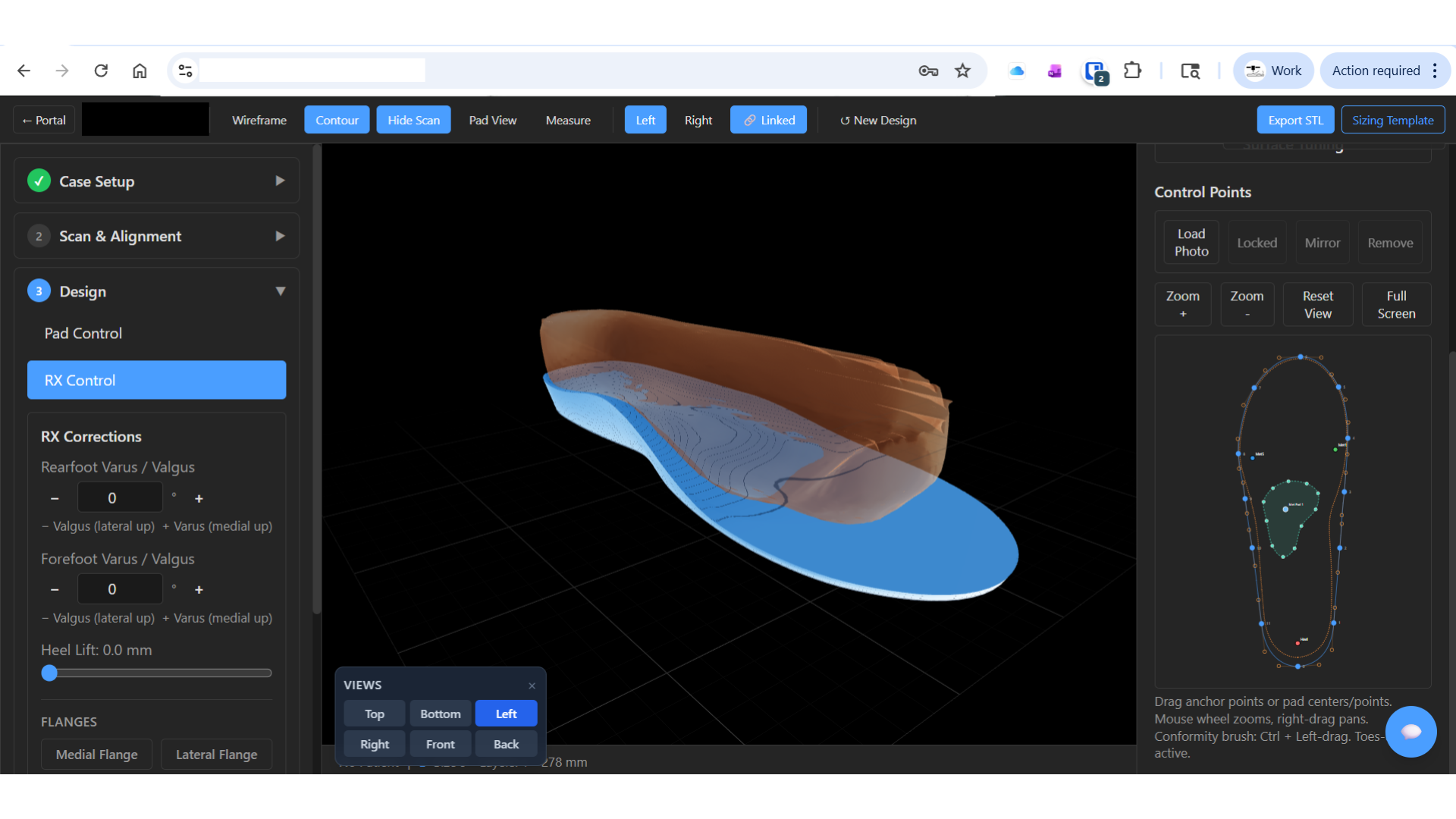
What makes digital manufacturing particularly interesting is the ability to iterate rapidly. Traditionally, even small orthotic modifications may require shipping devices back to a lab, rewriting prescriptions, or waiting through another production cycle. With integrated digital workflows, modifications can potentially be adjusted directly within the design environment and reproduced much more efficiently.
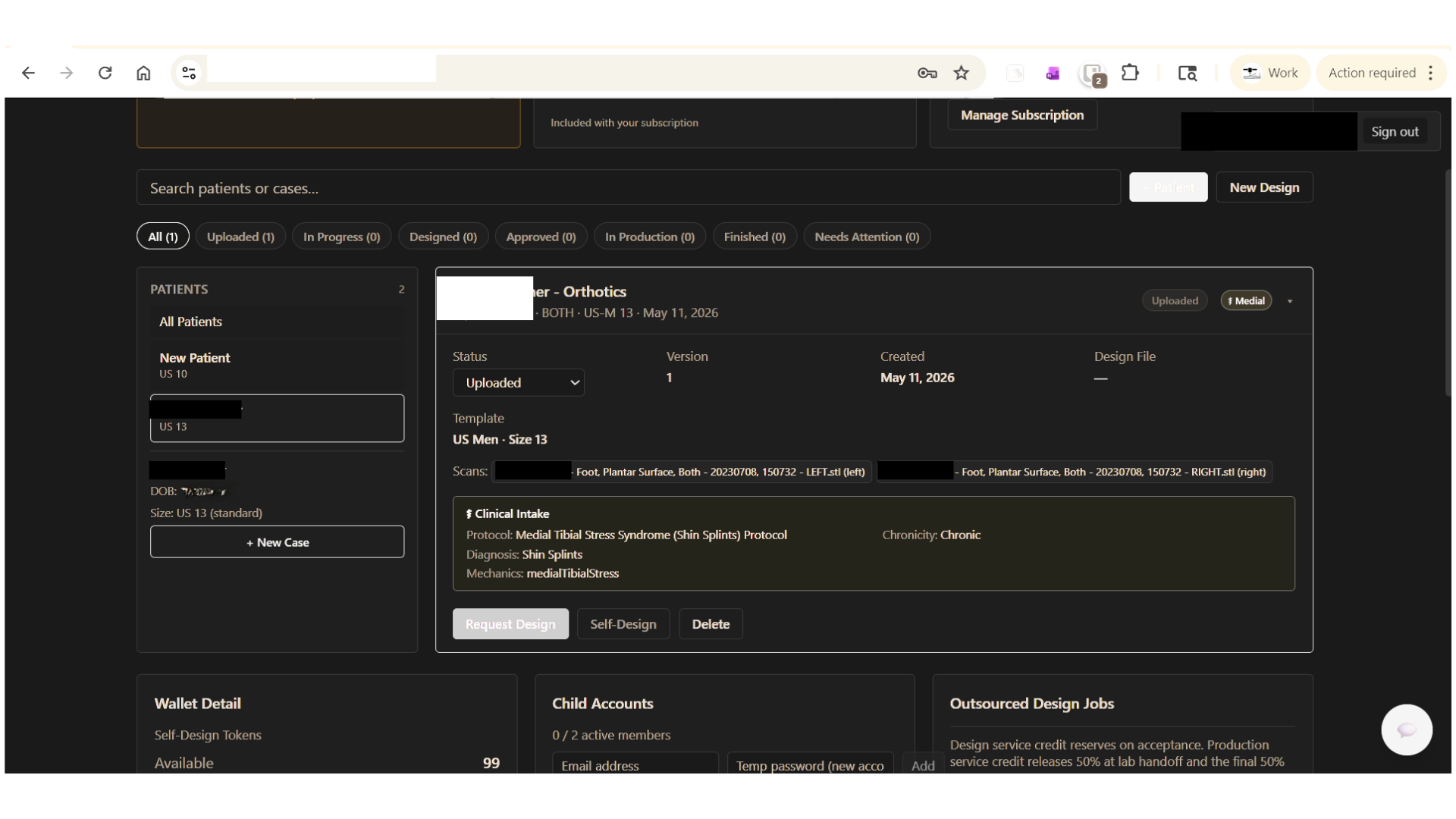
There are also practical business considerations driving interest in these systems. Many clinics are evaluating whether portions of orthotic production can be brought closer to the point of care. In my experience, faster turnaround, improved margins, reduced shipping delays, and greater direct oversight all become possible when manufacturing workflows become more digital.
That said, I do not believe centralized laboratories are disappearing anytime soon.
In fact, I suspect the future will likely be hybrid. Some clinics may choose to fully produce orthotics internally, while others may continue relying on centralized fabrication partners. Many will probably adopt mixed systems where scanning, prescription management, and design occur digitally within the clinic while production is routed to regional manufacturing centers or distributed print networks.
The common denominator that I find across all of these models is software infrastructure.
As orthotic workflows become increasingly digital, the industry may gradually shift from being primarily fabrication-driven toward being workflow-driven. Scan management, prescription translation, manufacturing automation, fulfillment routing, and long-term patient data organization will become increasingly important components of clinical orthotic care.
Looking further ahead, artificial intelligence and wearable technologies may accelerate this transition even further. Smart insoles, gait analysis systems, pressure mapping, and predictive modeling could eventually help guide orthotic modifications in ways that are far more data-driven than today’s workflows. While those technologies are still evolving, the foundational digital infrastructure being built now will likely determine how successfully the profession can integrate them in the future.
At its core, this shift is not about replacing podiatrists, biomechanics, or clinical expertise. It is about improving consistency, reducing inefficiencies, and giving providers greater control over the treatment process.
For years, orthotic production has largely been constrained by the limitations of fragmented workflows. Digital manufacturing may finally provide an opportunity to rethink that system from the ground up.
Bryan Kentner, DPM, is a podiatrist and founder of ArchSpline Systems, a digital orthotic design and manufacturing workflow platform focused on scan-to-print orthotic production systems. Disclosure: Artificial intelligence was used in part to assist with the drafting and organizational structure of this manuscript.
Artificial intelligence was employed to assist in organizing the manuscript's structure and improving its overall readability. All clinical claims, technical descriptions of the digital workflow, and biomechanical conclusions remain the sole responsibility of the author.
Disclosure: Dr. Bryan Kentner is the founder and owner of Archspline Systems, the digital workflow platform mentioned in this manuscript. This role involves financial interest in the technology described. The manuscript was written to provide a clinical overview of industry shifts and was not funded by external commercial interests.
© 2026 HMP Global. All Rights Reserved.
Any views and opinions expressed are those of the author(s) and/or participants and do not necessarily reflect the views, policy, or position of Podiatry Today or HMP Global, their employees, and affiliates.