From OR to Office: Bridging Surgical Thinking into Everyday Podiatry
Thinking like a surgeon extends far beyond the operating room. In this episode of Podiatry Today Podcasts, Dr. Timothy Miller discusses how surgical training can strengthen clinical decision-making, improve patient selection, and help podiatrists balance conservative care with timely intervention to achieve better long-term outcomes.
Key Takeaways
1. A surgical mindset is rooted in long-term thinking, not just operative skill.
Dr. Miller emphasizes that thinking like a surgeon means evaluating the full trajectory of patient care—from initial presentation through years of recovery and function—while carefully weighing whether the benefits of surgery truly outweigh its risks.
2. Conservative treatment can serve as a valuable test of surgical readiness.
Patient adherence to nonsurgical measures such as bracing, orthotics, physical therapy, and activity modifications often provides insight into postoperative restrictions and rehabilitation. Involving family members and support systems can further clarify whether a patient is positioned for success after surgery.
3. Knowing when not to operate is just as important as knowing when to intervene.
The discussion highlights the importance of avoiding unnecessary surgery while also recognizing when conservative management has been exhausted. Effective clinicians continually reassess treatment progress, remain willing to recommend second opinions when appropriate, and identify the point at which delaying intervention may lead to worse outcomes.
Please note: This content is a direct transcript, capturing the authentic conversation without edits. Some language may reflect the flow of live discussion rather than polished text.
Transcript
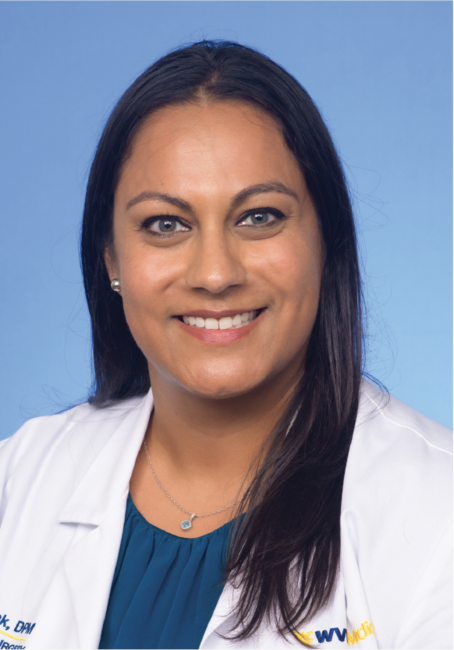
Jennifer Spector, DPM: Welcome to Podiatry Today podcast. I'm your host, Dr. Jennifer Spector, the associate editorial director for podiatry today. Today's episode focuses on a concept that doesn't always get explicitly discussed, but it quietly shapes some of the best clinical decision making in our field, what it really means to think like a surgeon even when outside of the operating room.
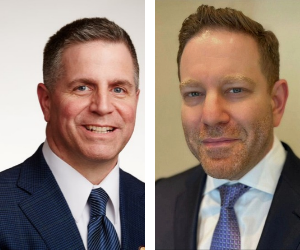
Joining me today is Dr. Timothy Miller, a board certified fellowship trained podiatrist and co-owner of Sunshine Foot and Ankle Experts in Orlando, Florida. Dr. Miller's deeply involved in advancing podiatric medicine through his leadership roles with ACFAS, ABFAS, and the Florida Podiatric Medical Association. He's also actively engaged in resident education and medical legal risk education. In this conversation, we'll explore how surgical training might influence everyday clinical thinking from selecting appropriate conservative care to avoiding common management pitfalls and how all podiatrists, regardless of surgical volume or involvement, can apply this mindset to improve patient outcomes. Dr. Miller, welcome to the podcast.
Timothy Miller, DPM: Thank you so much, Dr. Spector, and I really appreciate that wonderful intro. I'm really happy to be here. I love what you're doing with this podcast. I love how many different types of people you're connecting with from all different types of backgrounds, and I'm looking forward to helping my colleagues.
Jennifer Spector, DPM: Well, that's great and we're so glad that you're enjoying it. We hope the rest of the audience is too. And on the topic for today, this is so fascinating to me because many of us probably don't really pause to deliberately think about this. I know I didn't until you and I started talking about this, but from your perspective, what does it actually mean to think like a surgeon when you're in the clinic?
Timothy Miller, DPM: It's a great point that you bring up that you didn't really even think about it until somebody brought it up to you, because that was how it was brought up to me. Like you said before, I do work with residents and when I'm teaching residents, I'm teaching them to think critically and more importantly, what can and can't happen during your patient encounters and during your care. And when I was talking with them, I started to realize that our residencies are surgically focused and we're heavily trained in the surgical aspect of it, but it is so important that we employ conservative care. So as I'm discussing this with them, my first instinct is to push towards surgery because that's the training that they're in. But I feel like I was doing them a disservice because I wasn't going over the whole A to Z treatment options that could be done, surgery being included, but conservative therapy being an option.
So when we talk about think like a surgeon, yes, we're trained to use our hands and we're trained to manipulate the body into a way that helps the patient return to function of their desired activities. When we think like a surgeon, we can't just think of the immediate operative intervention. We have to think of that postoperative recovery and think of that one month, three months, six month, one year, three years, six year goals of this patient and what they want to do and what they want this surgery to accomplish. So thinking like a surgeon is, yes, we are able to use our hands or we're able to put our minds in a way that we can fix something, but we have to think of the long-term consequences of what we're doing. When we take that Hippocratic oath that first do no harm, are we going to be doing something surgically that may induce harm?
Yes, there's always risks to surgery, but do the benefits outweigh the risks? And if the benefits don't outweigh the risks, we are potentially looking at those long-term goals as being a negative. And when we see those long-term goals, if they are negative, then that's something we have to take a step back and evaluate the patient again and have further discussions with the patient that surgery may not be in their best interests. So it's very easy to do the surgical intervention. It's very hard to think of reasons or think of the long-term goals of what we want this patient to get back into and is it worth the time, the effort, not only on our parts as surgeons, but on the patient's recovery as well.
Jennifer Spector, DPM: You make so many great points there and I wonder how has your surgical training and your training of other individuals changed the way that you don't operate? Meaning how do you decide if that patient is better served with conservative care? You did speak a little bit about the outcomes. What types of things are you examining there?
Timothy Miller, DPM: So that's great. My residency was in New Jersey. I was with Atlantic Health in New Jersey and I thought I got wonderful residency training and I did a fellowship to focus more on things that I did not get to experience during residency. So my goal after graduating fellowship was whatever whoever walked in my door, there's something that I can do for them to help make them better. At the end of the day, that's what we are. We are healers. We are people who want to help others achieve their goals in life. When I first came out and graduated fellowship, I was like, all right, good. It's my time. Let me go ahead and be the guy. I worked with an orthopedic group. I was the person that they referred anything and everything to, and I was doing anything and everything. And it was because of the training that I had, I almost felt like I had to do these things because I knew how to do it and I knew what to do and I knew how to do it well, that was almost that I had to do it.
And then transitioning now to owning my practice and looking at a different perspective as what I have to do is much different than what I should and shouldn't do. Let me clarify that for a sec. So what I have to do as a provider, as a physician is to help those patients coming in needing help. I don't have to do surgery.
I don't have this external pressure now because of the training and because of my experience to push surgery on patients. Now, what I can do now is take a step back and view the patient as more of a holistic approach. We're trained in everything below the knee specifically and looking at that anatomy, I see something that's torn, I see something that's out of alignment and I know how to put that back, but is it something that number one, absolutely have to do to get the patient back to where they need to be? And number two, will that intervention potentially harm the patient going forward? Getting into this mindset of this more holistic approach, and I was told by attending and residency now that I mention it, Dr. Obinna Mgbako, fantastic doctor. I learned a lot from him and he would tell me that there's a patient attached to that foot
And it's very easy to do this and say, "Okay, this is what I'm fixing." But when you start to do this and can see everything coming in, I don't say it's a better way to approach medicine, but it's a more comforting way because then you can actually have legit whole conversations with the patient about their lifestyle and their needs, bringing in family members and talking to them and saying, "Yep, this is what we can do, but maybe this is something that we should hold off on until we try A, B, C, and D." So I've definitely have taken more conservative approach as I get in my older age, but it's nowhere against of my training or nor against that I don't want to do surgery. Trust me, I do plenty of surgery, but it's more of a team management approach with the patient and myself and their family members as opposed to how I viewed it as a more individual approach.
Jennifer Spector, DPM: Looking at some common case types, I'm thinking things like hallux valgus or frequent ankle sprainers, things along those lines, going those conservative routes, those non-surgical routes as part of the holistic evaluation and treatment plan, would that give you context clues then as to how they may handle say that postoperative course if their social and family histories or their support systems in place aren't set up to support true comprehensive non-surgical management, are they going to be set up to support that surgical management postoperatively?
Timothy Miller, DPM: That is an amazing question. I love that. And I love that because I think the conservative therapy trials are good tests for possible postoperative interventions or postoperative periods because if you're speaking with a patient and you say you have a recurrent ankle sprain, I need you to participate in physical therapy and wear your brace, wear these supportive shoes, perform these exercises, don't do this, do this, and they're not listening to you and they're not following you, what's the likelihood that they're going to be a hundred percent compliant postoperatively? So in essence, yes, this patient may have this continued pain, but you're setting them up for failure because intrinsically they may not be someone who's ready to open up and listen. Same thing with a bunion, right? You're talking about patients wear custom orthotics, changes in shoe gears, not wearing certain types of shoes and they're not listening to you, they're still wearing other things that they shouldn't be wearing or not wearing those orthotics.
If they're not listening to you, then what's to say they're going to listen to you later. And that is why I love having family members in the room and if I'm ever talking about surgery with a patient and a family member is not present, I make them call a significant other, a best friend, a sibling, because you need somebody else to hear it. And more often than not, those people that you talk to, those family members, they're the first people to throw the patient under the bus and say, "Nope, he has not been wearing that brace. He is outside mowing the grass in Crocs and he's still complaining of pain." And I love that because that's when now I can take that step back and view this more holistically and discuss with the patient saying, "This period of time now is much easier than a postoperative recovery. If you can't handle this now, if you can't listen to me now, we're setting you up for failure if we do surgery."
Jennifer Spector, DPM: And that honesty I think probably goes a long way. We've had a couple of episodes not too long ago where we talked a lot about building patient trust. And I wonder if this approach is a way to build trust with that patient so that if you do pursue surgical intervention down the line, that patient can have confidence knowing that they exhausted conservative therapies and that they've already built a working relationship with you as their doctor.
Timothy Miller, DPM: One hundred percent. And you sparked another thought in me too because when I speak with these patients, especially with surgery, I have to view them and talk to them like I am the patient and what would I want done on me? Because I have the knowledge if I have their pathology, what interventions would I want done on me? If it gets to a point where we've exhausted conservative therapy or if their pathology is too significant, not amenable to conservative therapy, I have to say, would I want this flatfoot reconstruction on myself? Would I be able to handle it or would I be able to respond in a positive manner postoperatively? And I'm honest with these patients. I say, listen, given what happened conservatively with you, given what the surgical intervention takes and the timeline, if I were you, I wouldn't do this surgery. I don't think this is right for you or vice versa, I think this is right for you.
And I've had patients who have come to me after having those conversations saying, "Nope, I don't think surgery is right for you. " Almost demanding surgery and saying, "Nope, I've done everything. Now it's time to do surgery." And I think another light bulb or another step in thinking like a surgeon is realizing when not to perform surgery. We know when to cut, now is when the time to not cut. And I've had to have realistic conversations with patients who are forcing or trying to say, "You got to do this surgery. This is it. I need it now. I need it now." That's when those bulbs go off in my head and I say, "You know what? I may not be the right surgeon for you." Or I say, "I think you need a second opinion." I am one of the first people to offer a second opinion.
And we have friends in the area, we talk to different surgeons in the area and they'll ask me, "Well, who should I go and see?" And I always say, "Contact your insurance, go online, look at Google reviews. I don't want to give you somebody that I know. I want you to get an unbiased opinion. Here's all your notes, here's all your information, go and check that. " And I think I have saved myself a large amount of headaches that I did not save myself in the beginning of my career.
Jennifer Spector, DPM: Right. I've heard some of our colleagues say that you don't regret the surgery that you don't do, but you may regret the ones that you do do.
Timothy Miller, DPM: That's it. And that is it. You can always cut later, right?
Jennifer Spector, DPM: Absolutely. And as we wrap up this episode today, let's flip the script just a little bit. And are there any areas of conservative management only or non-surgical management only where you think applying the surgical mindset could actually enhance care even further?
Timothy Miller, DPM: I love that question absolutely because there are times where I think we may push conservative therapy a little too far and intervention may have needed to be done earlier. And so if we're looking at conservative therapy and we're saying that, hey, for example, you've had this significant hallux valgus, this bunion deformity and your big toe is completely deviated laterally, your medial metatarsal head, that prominence in the medial foot and the inside of the foot is really prominent. And you're saying, "No, no, wider shoes. We should continue the wider shoes. We continue the orthotics, try stretching, try taping, try bracing." And then all of a sudden the patient may get a wound in that area. They may not even be immunologically compromised. They don't have diabetes, but they just get a big rubbing in the area or something happened where they tripped and fell and now their big toe completely dislocated because it was out of alignment.
That's when you say to yourself, did I push conservative therapy too far? Should we have done something sooner? So that's where talking about conservative therapy, non-surgical, but taking a surgeon's approach saying you need to identify the time when you realize conservative therapy has been exhausted. And there are plenty of doctors that are just conservative therapy only and may push that a little too far. And that's where I think we have a gift of our education and the tools that our hands can perform or the things that our hands can perform, the tools that we have, that's when we need to think how far can we push conservative therapy before we say that's it. Now it's time for an intervention.
Jennifer Spector, DPM: Thank you so much for all you do in the profession, but also for just sharing these valuable insights with us today on how that surgical mindset could really elevate everyday podiatric care.
Timothy Miller, DPM: It's my absolute pleasure. I appreciate you giving me a venue and a forum to talk about. I love helping my colleagues and giving back to the profession.
Jennifer Spector, DPM: We can all continue to learn from each other for sure from refining clinical decision-making to avoiding preventable missteps in conservative management. This discussion really highlights how thinking like a surgeon isn't just about operating, it's approaching every patient with a deeper level of analysis and foresight
Timothy Miller, DPM: Absolutely, 100%. And if we can have that foresight with that analysis and spend more time with the patients and really ask the right questions, I think our healthcare system would be in a much better place.
Jennifer Spector, DPM: And as we end this episode today, we'd like to thank our listeners for tuning in to Podiatry Today podcast. If you found this episode helpful, be sure to subscribe, share it with your colleagues and stay connected for more conversations that bring practical insights into your daily practice.
© 2026 HMP Global. All Rights Reserved.
Any views and opinions expressed are those of the author(s) and/or participants and do not necessarily reflect the views, policy, or position of Podiatry Today or HMP Global, their employees, and affiliates.