Behind the Bubbles: A Guide to Surfactants as Potential Allergens
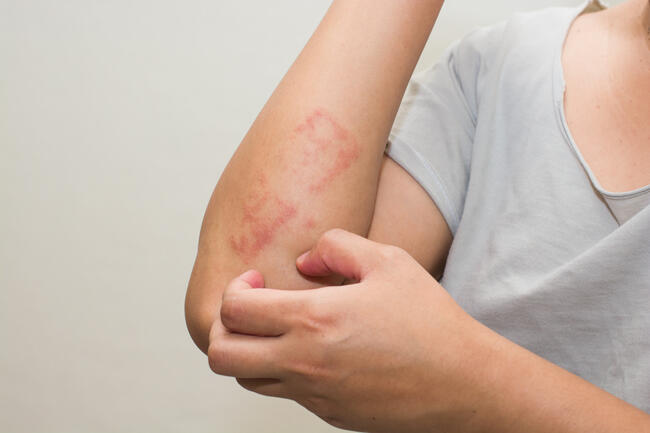
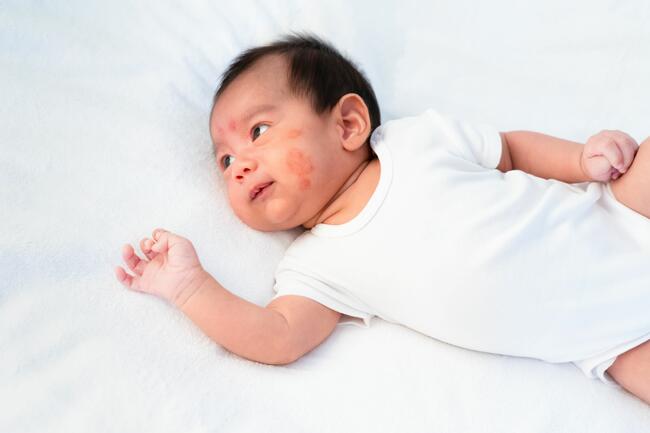
Estimated to affect approximately 20% of the general population, allergic contact dermatitis (ACD) is a delayed type IV hypersensitivity reaction of the skin that results from exposure to exogenous allergens.1 Patch testing is the gold standard for diagnosing ACD and involves affixing small amounts of suspected allergens in chambers to unaffected skin for 48 hours, then removing patches and monitoring for delayed reactions over several time points.2 Allergen avoidance is the mainstay treatment for ACD. The prevalence of contact allergy to specific allergens may fluctuate with time and reflects changes in the marketing and consumerism of today’s world.
An emerging class of allergens, surfactants are substances that decrease the surface tension of the skin, characterized as having polar and nonpolar moieties within a single molecule. They have numerous uses, including for cleaning, lathering, foaming, softening, and eliminating static.3 To understand the usage of surfactants in the ever-changing skincare industry, it is important to consider their origins. Historically, the earliest types of soaps were made using a mixture of oil, alkali, and water. The mixing of alkali and oil created a surfactant with lathering and cleansing properties, and this reaction was termed saponification. Traditional soaps were made from animal fats and plant ashes containing alkali carbonates, whereas modern soaps use fat derived from plant or nut oils, such as coconut, palm, and castor oils.4 The US Food and Drug Administration defines soap as a product made primarily of alkali salts of fatty acids. Today, there are very few “true soaps” that are available commercially, having been replaced by synthetic detergent products.5 Synthetic detergents, also called syndets, used as cleaning agents are made from synthetic surfactants, compounds chemically synthesized to contain polar and nonpolar moieties.6
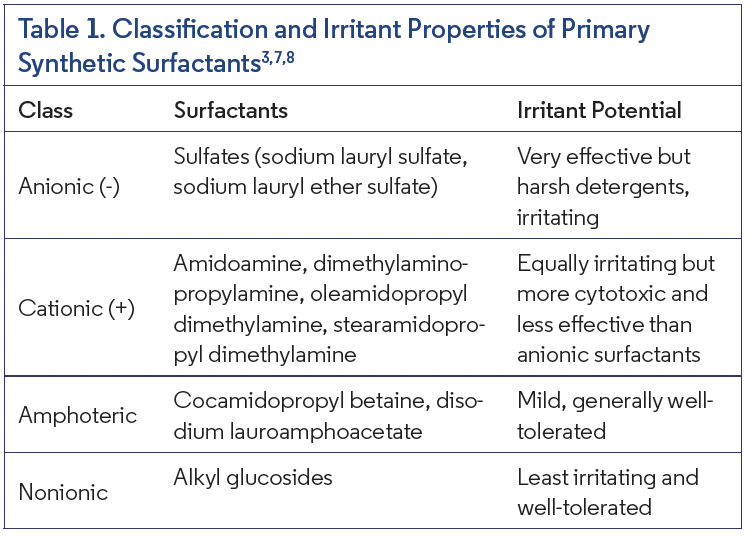
The utility of a surfactant is determined by the carboxylic acid salt formed during saponification and is broadly categorized into 4 classes: amphoteric, anionic, cationic, and nonionic (Table 1). The charge of surfactants influences their cleansing and foaming abilities, as well as irritant potential. There are various cleansers available for purchase, each with distinct compositions, typically using 2 or more synthetic surfactants.3 With the rise in contact sensitization to these surfactants, it is essential for dermatologists to consider their role in eliciting skin reactions.
Sulfates
Sulfate surfactants are anionic molecules made of an alkyl chain covalently bonded to a sulfate ester group that is ionized (typically with Na+), with functions in micelle formation and membrane disruption, making them effective cleaning and lathering agents.9 Sulfates were one of the first classes of synthetic surfactants developed in the early 21st century in response to significant shortages of soaps after World War I in Germany.10 Historically, sulfates were the most widely used surfactants in industrial, household, and personal care products, a trend corroborated by a 2019 study by the American Contact Dermatitis Society’s (ACDS) Contact Allergen Management Program (CAMP). This analysis found that laureth/pareth sulfates were the leading surfactant class in shampoos and other hair care products, dish soaps, and laundry detergents, although not in household cleaning and eye products.11 Sodium lauryl sulfate, also called sodium dodecyl sulfate, is the most common sulfate surfactant used in high-foaming personal care products and toothpastes.
While sulfate surfactants are extremely efficient cleansing and foaming agents, they are also harsh and well-known agents of irritant contact dermatitis. In particular, sodium lauryl sulfate has been associated with aphthous ulcers, mucosal irritation, and desquamation from use in toothpastes.12 Due to the strong irritant potential of sulfates, companies have progressively switched to using gentler surfactants, such as sodium lauryl ether sulfate, which undergoes additional ethoxylation in its production.
Cocamidopropyl Betaine and Related Surfactants
Cocamidopropyl betaine (CAPB) was named the Contact Allergen of the Year in 2004. It is a mild, amphoteric surfactant that creates a rich lather in numerous rinse-off products, including shampoos, conditioners, cleansers, and cosmetics.13 CAPB is synthesized from reacting coconut-derived fatty acids with dimethylaminopropylamine (DMAPA), leaving amidoamine and DMAPA as leftover impurities. Consistent findings across studies have reported that sensitization to CAPB is likely from residual amounts of DMAPA and amidoamine, rather than to CAPB itself. Oleamidopropyl dimethylamine (OPDMA), a cationic emulsifier, is synthesized in a similar fashion to CAPB with DMAPA as a starting material, and OPDMA is found in similar products. Allergenicity is thought to arise from primary and tertiary amine groups that are separated by 2 to 3 carbon atoms in CAPB-related compounds, including amidoamine, DMAPA, and OPDMA.14 There are numerous other chemicals related to CAPB that should be avoided in CAPB-allergic individuals (Table 2). However, patients who are sensitive to CAPB-related surfactants do not need to routinely avoid coconut or other coconut derivatives.
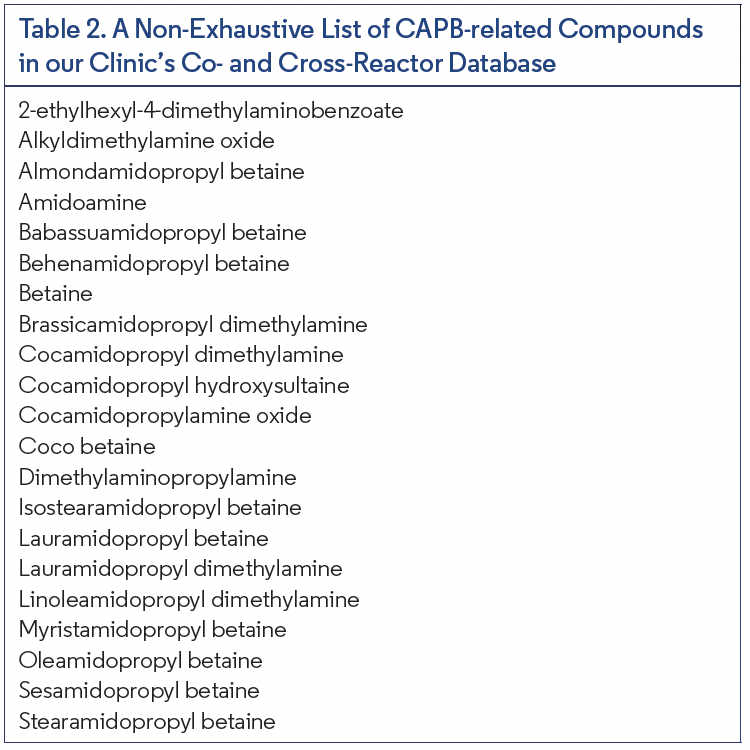
Contact allergy to CAPB-related surfactants has been extensively reported in the literature. The North American Contact Dermatitis Group’s (NACDG) patch testing results from 2021 to 2022 demonstrated significant increases in the positivity rates of OPDMA (4.1%), DMAPA (3.5%), and amidoamine (2.7%).2 At our institution, the most common routes of CAPB exposure in allergic individuals were from rinse-off hair products, particularly shampoos, as well as hand and dish soaps. In our experience of patch testing patients with suspected CAPB allergy, reactions to manufacturing impurities and related compounds (OPDMA, DMAPA, and amidoamine) vary considerably among individuals. Patients may react to 1 or more of these substances but not necessarily all of them. As such, comprehensive testing of each of these compounds is important to ensure CAPB allergy is not missed. Because there are so many compounds related to CAPB, it can be challenging for CAPB-allergic patients to find safe products. Our patients have found success with avoiding CAPB using allergenavoidance databases, such as SkinSafe and ACDS CAMP.
Alkyl Glucosides
Alkyl glucosides are nonionic, mild surfactants that are produced from condensing glucose with palm or coconut oil-derived fatty alcohols.15 Glucosides are multi-purpose, with emulsifying, cleansing, and lathering properties. Although these surfactants were first introduced in the 1930s, they have become increasingly popular in recent years due to their eco-friendly nature from being entirely biodegradable.16 There are 19 distinct compounds that fall under this class of surfactants, including decyl, lauryl, coco, and cetearyl glucosides, where cross- and co-reactivity have been reported.15,16 Glucosides are most frequently used in rinse-off products, such as shampoos, conditioners, body washes, and cleansers.16
Alkyl glucosides were named Contact Allergen of the Year in 2017 due to the increasing use of glucosides in personal care products coinciding with an upward trend in their sensitivity rates.16 Indeed, the NACDG has been testing decyl glucoside since 2009, showing the sensitivity rate has risen from 1.5% (2009–2012) to 1.7% (2013–2014) to 2.4% (2021–2022).2,16 Individuals with a history of childhood eczema, seasonal allergies, or asthma have been particularly noted to be at increased risk for sensitization to this relatively weak sensitizer.16 This might be attributed to increased susceptibility to allergen penetration from a disrupted skin barrier, as well as glucosides being commonly used in products marketed as hypoallergenic for sensitive skin. Although glucoside contact allergy is frequently associated with the use of rinse-off agents, there have been reports of ACD to glucosides in leave-on products, such as antiseptic lotion,17 sunscreen,18 and medicinal honey gel.19
Alkyl Amphoacetates
Alkyl amphoacetates are a family of imidazoline-derived amphoteric surfactants with long fatty acid (alkyl) chains. Similar to CAPB, amphoacetates are synthesized by forming a fatty acid amide followed by carboxymethylation in an aqueous medium. There are various compounds belonging to the amphoacetate family that diff er based on the type of fat used for synthesis (coconut vs palm kernel oil) and the length of their alkyl chains.20 Examples include sodium cocoamphoacetate, disodium cocoamphodiacetate, sodium lauroamphoacetate, and disodium lauroamphodiacetate. Since the 1950s, amphoacetates have been increasingly used in cosmetics as mild foaming and cleansing agents with a low potential for irritancy.20
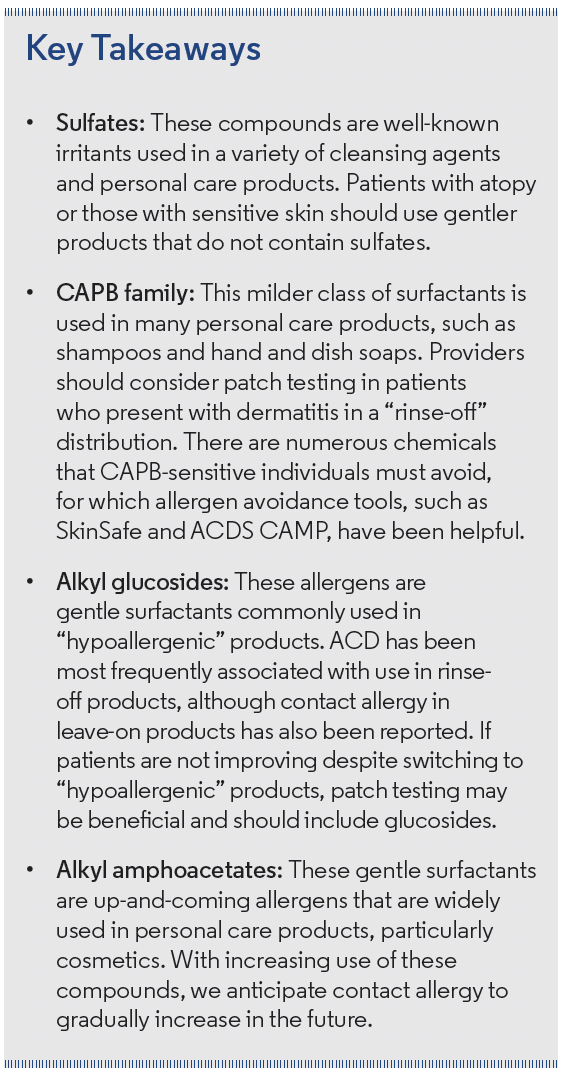
Despite widespread use, there are limited reports detailing contact reactions to amphoacetates. Pesonen et al. published a series of 5 cases of occupational contact dermatitis caused by sodium cocoamphopropionate in a hand cleanser.21 Hanson et al. reported 2 cases of ACD to a hypoallergenic liquid cleanser attributed to disodium lauroamphodiacetate, alongside sodium lauroyl sarcosinate and isostearamidopropyl morpholine lactate.22 Over the last 5 years at our specialized patch testing center, we have observed 17 allergic reactions (>1+ strength) to disodium lauroamphodiacetate, approximately half of which were found to be clinically relevant (definite or probable relevance).
Conclusion
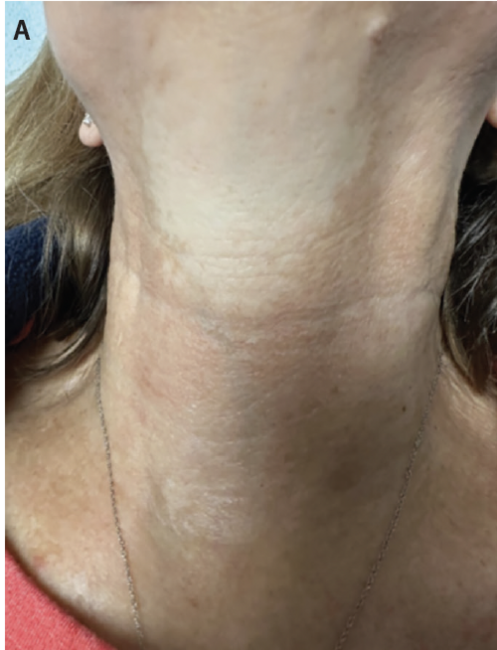
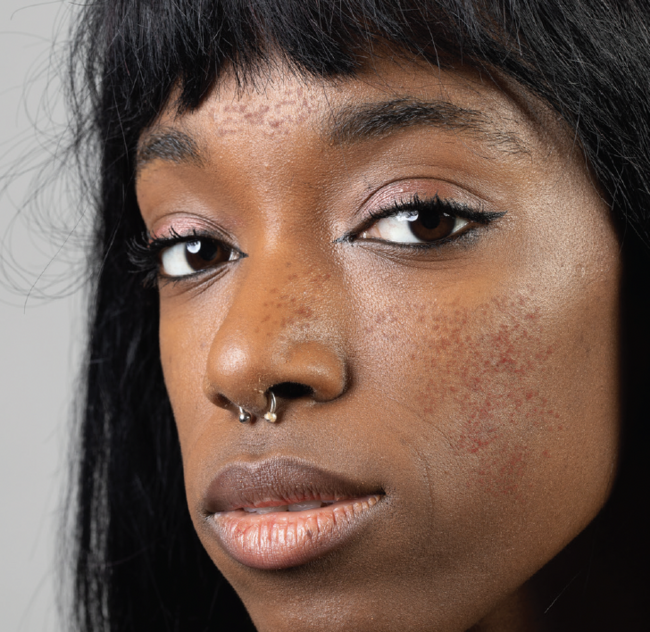
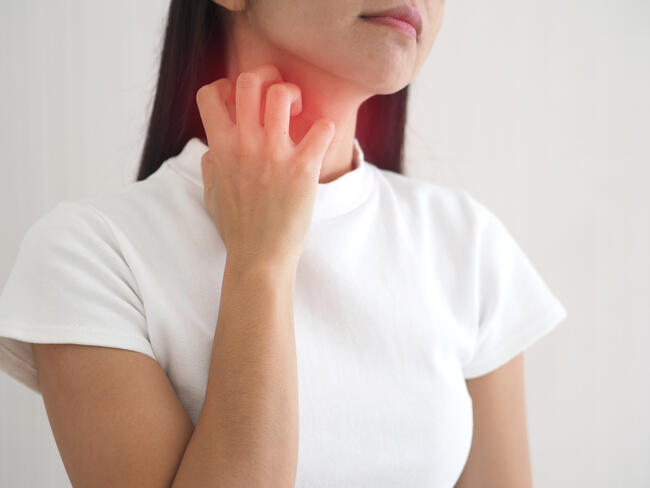
In summary, contact allergy to surfactants is continuing to rise. Patch testing for possible ACD to surfactants should be considered with dermatitis that presents in a “rinse-off ” distribution (forehead, hairline, eyelids, ears, neck, and/or upper chest and back), flares with use of personal care products, and/or is refractory to prescribed therapies. Common classes of surfactants responsible for ACD include CAPB-related compounds, alkyl glucosides, and alkyl amphoacetates.
© 2026 HMP Global. All Rights Reserved.
Any views and opinions expressed are those of the author(s) and/or participants and do not necessarily reflect the views, policy, or position of the Dermatology Learning Network or HMP Global, their employees, and affiliates.
Divya R. Alley is a fourth-year medical student at the University of Minnesota Medical School and a clinical research fellow at the Park Nicollet Contact Dermatitis Clinic in Minneapolis, MN. Dr Hylwa is the Allergen Focus section editor, a faculty physician in the department of dermatology at Hennepin Healthcare and Park Nicollet Contact Dermatitis Clinic, and an associate professor at the University of Minnesota in Minneapolis, MN.
Disclosure: Dr Hylwa has received speaker honoraria from the Contact Dermatitis Institute and the Alabama Dermatologic Society.
References
1. Alinaghi F, Bennike NH, Egeberg A, Thyssen JP, Johansen JD. Prevalence of contact allergy in the general population: a systematic review and meta-analysis. Contact Dermatitis. 2019;80(2):77-85. doi:10.1111/cod.13119
2. Houle MC, DeKoven JG, Atwater AR, et al. North American Contact Dermatitis Group patch test results: 2021–2022. Dermatitis. 2025;36(5):464-476. doi:10.1089/ derm.2024.0474
3. Presley C, Militello M, Barber C, et al. The history of surfactants and review of their allergic and irritant properties. Dermatitis. 2021; 32 (5): 289-297. doi:10.1097/ DER.0000000000000730
4. Routh HB, Bhowmik KR, Parish LC, Witkowski JA. Soaps: from the Phoenicians to the 20th century—a historical review. Clin Dermatol. 1996;14(1):3-6. doi:10.1016/0738-081X(95)00101-K
5. Frequently asked questions on soaps. US Food and Drug Administration. Accessed June 15, 2026. https://www.fda.gov/cosmetics/cosmetic-products/frequentlyasked-questions-soap
6. Kogawa AC, Cernic BG, do Couto LGD, Salgado HRN. Synthetic detergents: 100 years of history. Saudi Pharm J. 2017;25(6):934-938. doi:10.1016/j.jsps.2017.02.006
7. Corazza M, Lauriola MM, Bianchi A, Zappaterra M, Virgili A. Irritant and sensitizing potential of eight surfactants commonly used in skin cleansers: an evaluation of 105 patients. Dermatitis. 2010;21(5):262-268. doi:10.2310/6620.2010.10022
8. Salomon G, Giordano-Labadie F. Surfactant irritations and allergies. Eur J Dermatol. 2022;32(6):677-681. doi:10.1684/ejd.2022.4290
9. Anderson RL, Bray DJ, Del Regno A, Seaton MA, Ferrante AS, Warren PB. Micelle formation in alkyl sulfate surfactants using dissipative particle dynamics. J Chem Theory Comput. 2018;14(5):2633-2643. doi:10.1021/acs.jctc.8b00075
10. Singer MM, Tjeerdema RS. Fate and eff ects of the surfactant sodium dodecyl sulfate. Rev Environ Contam Toxicol. 1993;133:95-149. doi:10.1007/978-1-4613-9529-4_3
11. Weinhammer AP, Scheman A, Reeder MJ. Prevalence of surfactant in the contact allergen management program. Dermatitis. 2019;30(6):358-362. doi:10.1097/ DER.0000000000000511
12. Paul TJ, Taylor T, Babu RSA. Sodium lauryl sulphate. Br Dent J. 2019;227(12):10121012. doi:10.1038/s41415-019-1108-7
13. Kim D, Seok JK, Kim M, et al. Safety assessment of cocamidopropyl betaine, a cosmetic ingredient. Toxicol Res. 2024;40(3):361-375. doi:10.1007/s43188-024-00243-2
14. Moreau L, Sasseville D. Allergic contact dermatitis from cocamidopropyl betaine, cocamidoamine, 3-(dimethylamino)propylamine, and oleamidopropyl dimethylamine: co-reactions or cross-reactions? Dermat Contact Atopic Occup Drug. 2004;15(3):146-149. doi:10.2310/6620.2004.04011
15. Alfalah M, Loranger C, Sasseville D. Alkyl glucosides. Dermatitis. 2017;28(1):3-4. doi:10.1097/DER.0000000000000234
16. Sasseville D. Alkyl glucosides: 2017 “allergen of the year.” Dermatitis. 2017;28(4):296-296. doi:10.1097/DER.0000000000000290
17. Krehic M, Avenel-Audran M. Allergic contact dermatitis from decyl glucoside in an antiseptic lotion. Contact Dermatitis. 2009;61(6):349-350. doi:10.1111/j.16000536.2009.01604.x
18. Martínez-González MI, González-Pérez R, García-Rio I, Heras-González S. Allergic contact dermatitis caused by benzoic acid and lauryl glucoside in a sunscreen. Contact Dermatitis. 2017;77(3):186-187. doi:10.1111/cod.12810
19. Taylor MM, Jafarnia JL, Black TA, Nelson KC, Rogge MN. Letter: allergic contact dermatitis to Medihoney gel after mastectomy: role of alkyl glucoside sensitization. Dermatitis. 2026;37(1):122-124. doi:10.1089/derm.2025.0037
20. Leidreiter HI, Gruning B, Kaseborn D. Amphoteric surfactants: processing, product composition and properties. Int J Cosmet Sci. 1997;19(5):239-253. doi:10.1111/j.1467-2494.1997.tb00187.x
21. Pesonen M, Suomela S, Kuuliala O, Aalto-Korte K. Occupational contact allergy to sodium cocoamphopropionate in a hand cleanser. Contact Dermatitis. 2016;74(4):246-248. doi:10.1111/cod.12474
22. Hanson JL, Warshaw EM. Contact allergy to surfactants in a hypoallergenic liquid cleanser. Dermatitis. 2015;26(6):284-286. doi:10.1097/DER.0000000000000141