A Conversation With Lee Wheless, MD, PhD
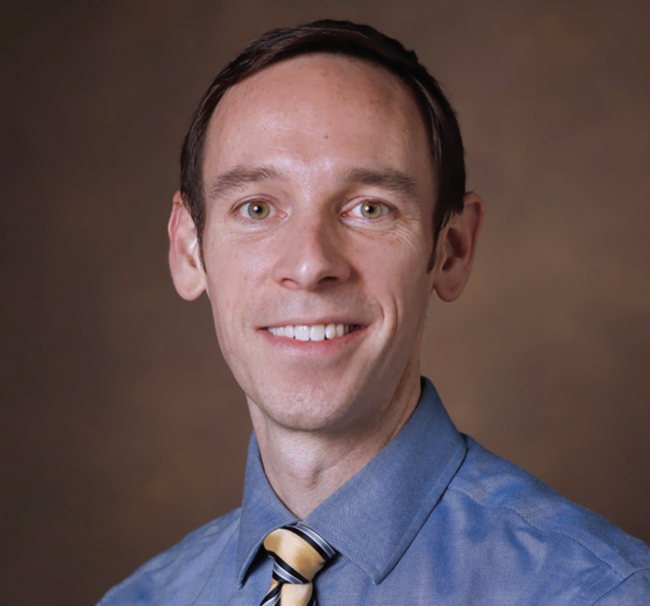
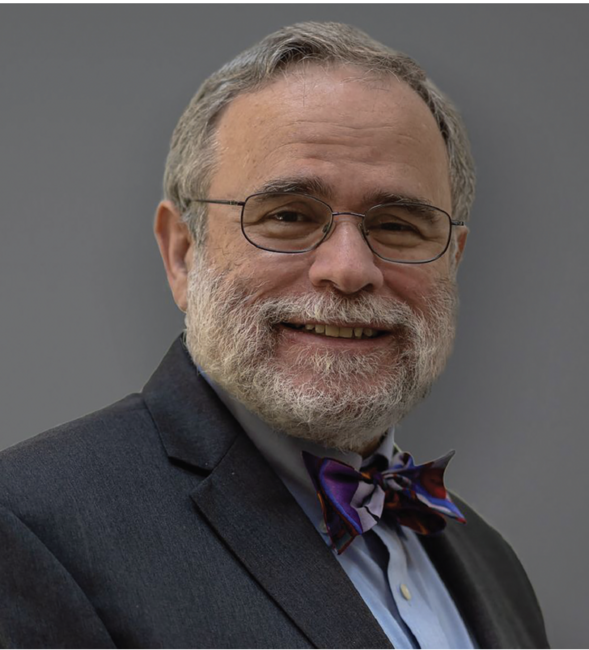
Dr Lee Wheless is an assistant professor of dermatology and epidemiology at Vanderbilt University Medical Center (VUMC) and the Tennessee Valley Healthcare System VA Medical Center in Nashville, TN. He attended Davidson College before completing his MD, PhD, and MSCR at the Medical University of South Carolina. From there, he did his preliminary year in internal medicine and residency in dermatology, both at VUMC, before joining the faculty and establishing his research program. Dr Wheless has authored more than 80 peer-reviewed papers, with much of his work focusing on patients with multiple skin cancers and prevention. Before being full-time at the Nashville VA, he oversaw the transplant dermatology clinic at VUMC. Dr Wheless is the chair of the Epidemiology Expert Resource Group for the American Academy of Dermatology and has previously served on the board of directors for the International Immunosuppression and Transplant Skin Cancer Collaborative. He is a tireless reviewer for JAMA Dermatology, JAAD, JID, and Dermatologic Surgery, among many other journals. Dr Wheless has been supported by grants from the Skin Cancer Foundation, the Dermatology Foundation, the Doris Duke Charitable Foundation, and the US Department of Veterans A airs.
Q. What part of your work gives you the most pleasure?
Two things. First, I love working with the residents. It is really gratifying to see them come in July 1 with varying degrees of shellshock after a rigorous intern year and not yet knowing a lot of dermatology, and then they become the ones teaching me new things by the end of their third year. They keep me on my toes and expose me to all the tips and tricks from the other attendings and papers that I have not had a chance to read. The second is I love being a researcher. I have been writing computer code for roughly 30 years and still do the vast majority of all the analyses in my studies, so it is exciting to run the model, see the results pop up on the screen, and be the first person in the world to learn this new knowledge.
Q. Which patient has had the most effect on your work and why?
Definitely one of my transplant patients. He was just a few years older than me and had received a transplant several years back due to acute organ failure of uncertain causes. He had been on a number of immunosuppressive regimens, including longterm azathioprine, and had experienced multiple episodes of rejection, leading to multiple pulses of high-intensity immunosuppression. When I started my transplant clinic, he had already had 40 to 50 skin cancers. Despite near-monthly fi eld therapy, chemoprophylaxis, and aggressive treatment of all his clinical lesions, he kept developing more; I would see him every single month to address the new spots that would occur. One day he showed up with a new spot on his cheek and what felt like a 3-cm node under his jaw, both of which were proven to be Merkel cell carcinoma (MCC) and both of which were shown in photos from 3 weeks prior at a Mohs post-op visit not to be there. He had an initial good response to chemo but ultimately died from his metastatic MCC a little over a year later. His case highlights the need for us to be able to prevent skin cancers on the front end rather than always playing catch-up. When he died, I counted that he had 84 different skin cancers treated over a span of 7 years. He spent nearly all the last 3 years of his life trying to heal up wounds from excisions and other surgeries. Although he would never complain, it got to be a huge burden that I am hoping we can reduce for patients like him in the future.
Q. What do you consider your greatest achievement?
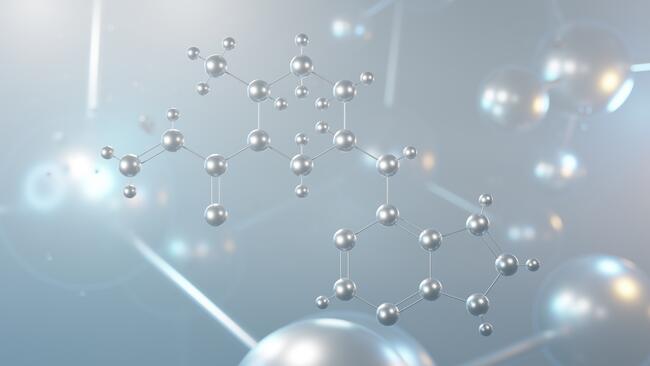
Professionally, 2025 brought a lot of things I am proud of. My group put out several papers that I hope we can follow up. First, we were able to describe the frequency and timing of multiple skin cancers in a dataset of more than 5 million patients to give data to some of the clinical decisions we have already been making. Next, my team was able to conduct a large study in 2 cohorts to address a pressing issue of whether metabolites from nicotinamide were increasing the rates of major adverse cardiovascular events, finding no increased risk in either group. I am really looking forward to seeing the follow-up molecular work by Allison Vidimos and her group. Every time I presented that work, I got asked the question, “Does nicotinamide actually work in preventing skin cancers?” I never had any intention of spending so much time studying nicotinamide, but thankfully my collaborators Drs Rebecca Hartman and Kim Breglio pushed for us to design a study to look at that question. Our resulting study showed a 50% reduction in skin cancer risk when taken after the first 1 or 2 skin cancers, but no significant effect when taken after 8 or more. The paper has had an immediate clinical impact and garnered worldwide media coverage that I was not expecting whatsoever. But as science does, it has led to more questions and ideas, and I am trying to get funding now for a prospective trial that would address some of the weaknesses of a strictly observational design we used and be the definitive answer.
Q. What has been your greatest disappointment?
Not so much any one thing but just thinking about all the different branch points in my winding career and how at the time they all seemed like disappointments. I thought I was going to be an engineer when I went to college, and did more math and physics classes than any sane person would before deciding on premed. I started in our medical science training program (MSTP) in a molecular genetics lab doing cell cultures, polymerase chain reaction, and tons of Western blots before switching into epidemiology. I went to medical school thinking I would be a surgical oncologist and did more surgery rotations than dermatology. Turning away from each of those initially felt like I had failed in what I set out to do. While none of those technically ended up being what I did, it is not hard to see how each one looped back around and is part of what I am doing now clinically and in the research world. It is so easy to get stuck in this rigid framework of what things are supposed to be that you can miss out on other amazing opportunities if you do not give yourself some grace to be flexible.
Q. Who was your hero/mentor and why?
Not to be cliché but my dad, Don Wheless. He was a private practice dentist and growing up it felt like everyone knew him. Any time we were out he would always have someone coming up to thank him or share a story of his infamous office antics. He would often have myself, my brother, or my sister accompany him on weekends to his office when he would do extra cases that I learned much later were usually charity. He taught every Friday at the University of North Carolina (UNC) dental school. He was also an Atlantic Coast Conference champion and Penn Relays champion quarter miler in track for UNC. He modeled hard work, focus, and humility and I have tried to keep those at the center of who I am and what I do.
Q. What is the best piece of advice you have received and from whom?
The Latin proverb “duos qui lepores sequitur neutrum capit” translates to “he who follows 2 rabbits catches neither.” Even 2000+ years ago, people understood the value of focus and deciding which goal is the important one. In our attention economy, I think it is so crucial to have that insight and decisiveness. When I first started as faculty, I had the same aspirations that so many of my MSTP cohort members did, that I would be able to do closer to a 50/50 time split between research and clinicals since I love them both. So, I did 2 full days of clinic and 3 days designated as research time. Anyone who has been junior faculty at a major academic medical center knows that the newest hire has the most new patient slots, and so every super-complex, 12th-opinion patient comes your way, and those folks do not fi t neatly into a 5- to 10-minute appointment, which bleeds over into research time. Fortunately, my VA Career Development Award was funded, and it helped (forced) me to drop that extra day of clinic. So, while I am sad that I do not have my transplant clinic anymore, my research productivity has skyrocketed, and I am proud of what my group has been publishing now that I am chasing just 1 rabbit.
Q. What is the greatest challenge in the eld of medicine or dermatology?
Probably how best to incorporate artificial intelligence (AI). I think we all learned from the COVID days that we need human interaction, no matter how effective telehealth or automated algorithms become. I am not worried that AI will put dermatologists out of a job. Instead, we need to adapt just like with any breakthrough and learn how to use it, what its limitations are, and where it works well. Twenty years ago, we barely had biologics and small molecule inhibitors, now you cannot turn on a TV or open a magazine without seeing an advertisement for one. I think once we accept that computers are far better than humans at pattern recognition and classification, we can start building that into our practice models, with AI-assisted triage of teledermatology, pre-op margin assessment in Mohs, and diagnosis of fixed and frozen slides. We will also be able to deploy real-time models within the electronic health record that can account for a far broader picture of individual patients than we could normally do without a time-intensive deep dive into the chart that can risk stratify and assess likely response to certain medications. Dermatologists and health systems who can incorporate these into their practice are going to become far more efficient and effective than those who do not.