Clinical pathways have been a reliable tool for standardizing the cancer care process, particularly important in light of the transition from fee-for-service to value-based care across the health care continuum. Within the past 5 years, there has been substantial growth in the utilization of oncology clinical pathways by both providers and payers. The American Society of Clinical Oncology (ASCO) State of Cancer Care in America 2017 report documented a 42% increase from 2014 to 2016 in practices reporting compliance with a pathway program.1,2 Furthermore, commercial payers have partnered with pathway vendors and oncology providers to implement oncology pathways as a method of reducing variation, controlling costs, and diminishing the complexities of prior authorization.
Even as clinical pathways have advanced in recent years, the optimal design and implementation of pathways is still evolving. According to the ASCO State of Cancer Care in America 2018, there are 12,423 US-based oncologists in the United States based in a variety of cancer centers, all of which are different in regard to location, infrastructure, size, setting, resources, programs, staff, and leadership.3 Thus, it is important to advance the growing knowledge and improve the use of clinical pathways through communication with leading cancer care institutions who have documented success developing and deploying their own pathways.
This article is the second installment in the Journal of Clinical Pathways “Cancer Center Spotlight” series, which provides readers with an inside look at clinical pathways programs at top cancer institutes within the United States. In this series, we profile cancer center clinical pathway teams and leaders to understand their pathways programs; their specific reasons for using clinical pathways; how their infrastructure and staff support pathways use; how the data captured by pathways is utilized for reporting and measuring; and how their pathways are evolving.
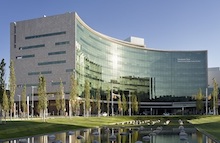
This installment focuses on the Taussig Cancer Institute at Cleveland Clinic, Cleveland, OH. Journal of Clinical Pathways staff traveled to their facility to speak with an array of important individuals familiar with and integral to pathway development, maintenance, and outcomes measurement. Their leaders and staff provided a comprehensive view of how Taussig Cancer Institute designs, implements, utilizes, and revises their clinical pathways as well as the role their pathways serve in meeting the larger mission of Cleveland Clinic.
Getting to Know the Taussig Cancer Institute
Cleveland Clinic is one of the largest academic medical centers in the state of Ohio and is nationally ranked in 15 adult specialties, nine pediatric specialties, and as the 4th best hospital in the country by US News and World Report in 2019.4 In 2018, Cleveland Clinic saw a total of 7.9 million patient visits, 238,000 admissions, and 220,000 surgical cases. Cleveland Clinic employs over 60,000 caregivers, of which 3953 are physicians and scientists and 16,600 are nurses, as well as 1923 residents and fellows in training and 110 accredited training programs. Patients seek treatment at Cleveland Clinic from all 50 states and 135 countries around the world.4
Cleveland Clinic is predominantly housed in 59 buildings stretched across a 170-acre main campus in Cleveland, OH. Additionally, 11 regional hospitals and 19 full-service family health centers are active throughout northeast Ohio. Cleveland Clinic also has locations in Florida, Nevada, Toronto (Canada), and Abu Dhabi (United Arab Emirates).4 “We like to say that we are one Cleveland Clinic, no matter where people first see their care,” noted Brian Bolwell, MD, chairman of the Cleveland Clinic Taussig Cancer Institute, Cleveland Clinic Cancer Center.
Dr Bolwell described how the organizational structure of Cleveland Clinic allows for inter-institute collaboration and direct communication with leadership:
“Cleveland Clinic is organized a little differently than most academic medical centers. We are classified into vertically integrated institutes (eg, Heart and Vascular, Cancer, Neurological, etc) and within each institute resides a chairman, which allows for a fairly streamlined chain of command. I have a direct pathway to the CEO of Cleveland Clinic. This works to our advantage because we can be nimbler than many other academic health care organizations with respect to decision-making.”
Cleveland Clinic Cancer Center’s main hub is the 377,000 square foot Taussig Cancer Center building nestled among the main campus Cleveland Clinic, with satellite locations in northern Ohio, Florida, and Abu Dhabi (United Arab Emirates). More than 400 doctors, nurses, and other health care professionals provide comprehensive care in a variety of cancer services, including genetic counseling, patient navigator and support services, medical oncology/hematology, blood and marrow transplant, oncologic surgery, radiation therapy, and palliative and supportive care.
Due to the expansive nature of Cleveland Clinic, the cancer program has the bandwidth and resources to strive for excellence and recognition in a variety of specialties. One focus of the cancer center is on fostering excellence in treating rare cancers, Dr Bolwell explained. Additionally, the cancer center is growing a clonal hematopoiesis of indeterminate prognosis (CHIP) clinic in collaboration with the Heart and Vascular Institute. The new CHIP clinic—first of its kind in Ohio and one of only few in the United States—will screen and monitor patients with clonal hematopoiesis of indeterminate potential: somatic mutations in blood or bone marrow cells that increase the risk of blood cancers and heart disease.
Increasing access to care, which include telemedicine or outreach work in the community, is also a focus of the cancer center. In addition, they are looking for ways to better leverage social media to enhance networking efforts and support better patient care and experiences.
Nonetheless, the most important pillar of care at Cleveland Clinic Cancer Center—as described to us by multiple team members—is the clinical pathways, referred to by the staff as “care paths.” To gain a more complete understanding of the background, necessary processes, and utilization of the care paths, we spoke at length with two integral members of the pathways team: Marc Shapiro, MD, medical oncologist and staff physician specializing in lung and lower gastrointestinal cancers, and Hetty Carraway, MD, hematologist and vice chair of strategy and enterprise development at Taussig Cancer Institute, Cleveland Clinic Cancer Center.
Care Paths at the Taussig Cancer Institute
Taussig Cancer Institute’s care paths originated in 2011 as part of a Cleveland Clinic-wide initiative to provide consistent, high-value care. Inspiration for the care paths stemmed partly from Cleveland Clinic’s expansion outside of the main campus and across the greater Ohio region and into Florida. Taussig Cancer Institute was a leader in developing care paths, though other institutes were involved in designing their own care paths as well, including neurology, internal medicine, and cardiology. “It was certainly not a heavy-handed process. The idea, instead, was to gather all of the department chairs and put their collective ideas together through breakout sessions and detailed discussion regarding patient management. Then, we took the consensus plan back to our separate institutes and within the institutes’ specific programs, then formalized the first care paths for specific disease types,” explained Dr Shapiro.