Elevating Real-World Oncology Research Through Clinician Engagement
In this interview, Jessica Paulus, ScD, discusses a clinician-focused framework for stakeholder engagement in real-world evidence research, highlighting how involving oncologists from the outset can improve data quality, efficiency, and research relevance in oncology.
 Please introduce yourself by stating your name, title, and any relevant experience you’d like to share.
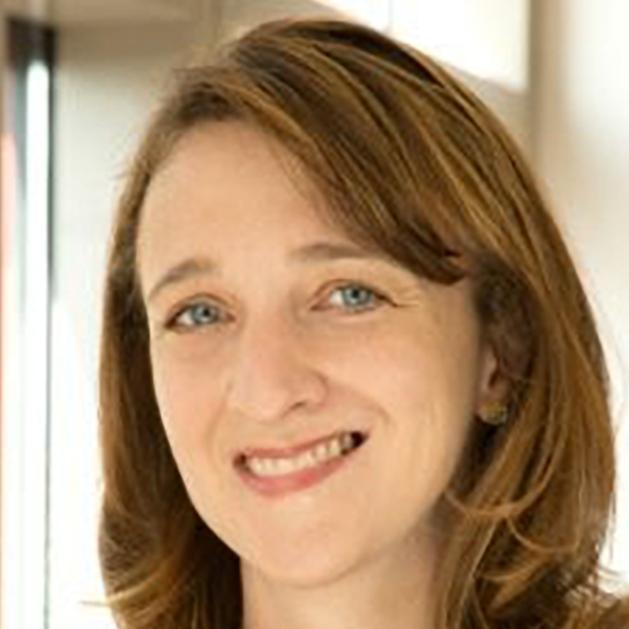
Jessica Paulus, ScD: My name is Jessica Paulus. I am an epidemiologist by training and I lead the real-world research team at Ontada. I oversee a group of scientists who are engaged in the conduct of real-world data-based investigations in oncology.
Can you provide an overview of the abstract you are presenting at ISPOR 2025?
Paulus: I would love to. This work was born out of several decades of recognition that engaging stakeholders in research is incredibly important. Early on, we learned how important it was to involve patients—particularly in the design of clinical trials.
We know that including patient perspectives on the outcomes that they care about and what makes participation in research rewarding for them can lead to raising the bar on the design and execution of clinical trials. Numerous organizations have developed guidance documents and policies that are fostering and promoting the integration of patient stakeholders, especially in clinical trials research.
Over time, we've recognized the importance of a much broader set of stakeholders—clinicians, payers, policymakers—and there are a number of well-known and well-established frameworks for how to lead research in ways that integrate the perspectives of all of those diverse stakeholders.
The Patient Centered Outcomes Research Institute (PCORI) in the US is a government institute that was set up about a decade ago and was designed to continue to invest in the engagement of stakeholders in research because we know that when we do that, we get better data, better outcomes, better quality of data—all kinds of ways in which we elevate the dissemination potential of research when we involve the people who are using the results. The reason this work was interesting to us is that the integration of stakeholders in real-world evidence or real-world database studies is something that has only more recently been attended to.
A number of organizations have set forth engagement frameworks for how to bring stakeholders into real-world database research. Our interpretation is that many of these were focused on the patient and bringing patient perspectives into research. The purpose of this work was to attend to the critical role of the clinician as a stakeholder because, of course, when real-world data is being generated, it's because of an interaction between the clinician and the patient at the bedside, and the technology of electronic medical records or other types of supportive technologies. It’s that critical interaction that is generating the data. The clinician is such a key stakeholder in real-world data quality and understanding how real-world database studies should be designed, interpreted, and disseminated.
We wanted to continue to contribute to this body of work around the engagement of stakeholders but, in this case, focusing on the oncologist, because my company studies oncology real-world data. We have access to data from the US Oncology Network and an electronic medical record they use.
What gaps did you identify in existing frameworks for stakeholder engagement that prompted the development of this clinician-focused framework?
Paulus: Part of this work involved a review of published literature, policy documents, and other types of statements that have come forth from scientific organizations and institutions involved in stakeholder engagement.
We went back to some of the earliest examples, published around 2010. The 7Ps framework is a very well-known model that involves engaging 7 different stakeholders, all beginning with a “P”—physicians, payers, patients, etc. We identified what perceived to be a gap in best practices for engaging clinicians in real-world data-based studies. That was the niche that we wanted to address.
We were well poised to think through this because, during our research activities at Ontada, we involve medical oncologists at every phase—from the conceptualization of the research, often including developing proposals for the life sciences industry, through to feasibility counts. They're with us through writing protocols, interpretation of data, and, of course, dissemination and next steps for research. It is the way that we conduct our regular activities. We had a nice little laboratory, in a way, to try to test some of the framework that we put together for this.
Are there any other key takeaways you’d like our audience to take from this?
Paulus: One of our key takeaways was the meaningful efficiency gains in our research when we made sure to include the perspectives of clinicians from the very beginning.
Some of this came through in terms of understanding what pieces of information are likely to be hidden or found in certain types of real-world data sources. It's the clinicians that often have the very best understanding of where important prognostic information on patients is "hiding." There is obviously an important role of epidemiologists and informaticians, but the clinician is the one who is typically at the point of care, where this information is being generated and archived.
As part of this work, we worked through a few case studies where there were key examples of time and money saved by understanding where to find information early on. For instance, were able to open fewer patient charts for the relatively time and cost burdensome activity of abstracting unstructured data from charts. That was one exemplar of how making sure there were clinicians at every step of the design was informing the design and retrieving certain pieces of information. Like most good scientific principles, it's so important to include these clinicians as early as possible, or maybe earlier than it even occurs to you to prevent downstream inefficiencies.