Embedding Genomic Data, Clinical Guidelines, and Payer Requirements Into Community Oncology Workflows
Key Takeaways
- Community oncology practices face increasing workflow complexity as clinicians navigate genomic data, biomarker results, clinical guidelines, and payer requirements when making treatment decisions.
- Intelligent medical records can integrate clinical decision support directly into existing workflows, reducing administrative burden and improving access to information needed for precision oncology.
- Streamlined workflows, coordinated care teams, and integrated technologies may improve clinical pathway adherence, reduce treatment delays, and support more personalized patient care.
As oncology care becomes increasingly complex, community practices face growing challenges in integrating genomic data, clinical guidelines, and payer requirements into everyday workflows. Rob Helton, DPT, Chief Product Officer at Ontada, a McKesson company, discusses how intelligent medical records (iMR) and integrated clinical decision support tools can reduce workflow fragmentation, improve clinical pathway adherence, and support more efficient precision oncology care.
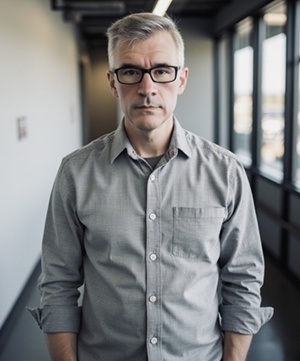 Rob Helton: Hi, everybody. I'm Rob Helton. I'm chief product officer at Ontada, which is a McKesson company. I have been in the EMR industry for about 15 years as an EMR enthusiast and product person. I am a clinician by background, and once upon a time, I had a technical role.
How does workflow fragmentation affect clinical decision-making and clinical pathway adherence in community oncology practices?
Helton: Oncology has become more complex in the last few years, and it will continue to become more complex due to research, treatment options, and growing technology in other areas (eg, biomarkers, inferences, etc). So, it's important to think about what goes into one treatment decision today. Getting to the point of being able to decide what you're going to do with a patient is multifactorial. This includes everything from pathology, biomarkers, genomics, treatment history, guidelines, payer expectations, prior authorization, and/or a clinical trial.
The workflow has not become easier as the research and the options have increased in complexity. So, the problem isn't that the information is not there. There is information everywhere. The problem is making it easy for the clinician to access that information, understand it, and then connect that information to action. We want the information to appear natively in the workflow, be usable, be clear, and then guide the clinician on what the best process is as well as the best outcome for the patient.
How can practices better integrate genomic data, clinical guidelines, and payer requirements into existing workflows without increasing administrative burden?
Helton: The first answer is to not build another dashboard, application, or a browser tab that somebody has to review before they can make a decision. We have plenty of information across the ecosystem, especially from the perspective of the EMR. The challenge is making it useful and simple. A clinician shouldn't have to go look for a biomarker result, then go somewhere else for guidance, then go somewhere else to find coverage, then go somewhere else to find out if there is a preferred medication. Those should all be part of the same decision, and they should all surface for the clinician at the moment they're making the decision. The right information should find the clinician, not the other way around. We are at an intersection where we keep lumping more and more responsibilities on our providers, increasing the mental burden, clutter, and taking away the joy of practice. We need to head in the opposite direction, especially as we see a rise in cancer rates. Patients are sicker for longer, and it's time that we do something to help.
Interviewer How does an Intelligent Medical Record (iMR) differ from a traditional EHR, and how could it improve precision oncology care?
Helton: When EMRs were being built 20 to 25 years ago, nobody saw the future that we live in today. Most of the EMRs were geared toward being a system of record that was regulatorily compliant and could made sure the bill could go out. And quite a bit of that was built around the provider’s note as an object, whether it's a billable or it's going to the patient afterwards. So as a system of record, EMRs have been effective, though not popular.
The iMR is a change in North Star vision from being regulatory compliant and a place where medical records are stored to thinking more as a place where workflows occur natively and information is surfaced to both support the patient outcome as well as the provider. It's also a change in the North Star of saying, “Today we want to be interoperable. Let all these systems plug in,” to saying “We want these systems to be embedded and part of the workflow natively, so that there's not additional tabs complexity.” We don't want the providers being the integration engine for patient care. The bottom line is the record today tells what happens to the patient. But it doesn't always help make decisions, and it doesn't always support the line of thought or the information necessary to guide the clinician in making that decision.
What practical steps can community oncology practices take to streamline workflows, reduce treatment delays, and improve access to precision medicine?
Helton: I love that you say practical. There's a lot that can be done today. The first thing I would say is that it's important for our practices and providers to fall in love with the problem they're solving and not necessarily jump to a solution.
So, in my world, it's all about workflow. Who's doing the work? What happens beforehand that you need to know? How do you make that information available when the decision is being made? And ultimately, what's the outcome that you want to measure?
It's important that people solving this problem sit down with the clinicians, nurses, care team, and anybody else involved in the process to identify constraints. Not all constraints are technological. Quite often, they're related to processes or education and training.
And then you have to design a better system and say, okay, if we want to have the patient seen within 24 hours, we want the information to go out, we want to guide this decision, and this information has to be available. It's about finding out where that information is, determining the right way to surface it, and then tracking whether it was helpful and continuing to iterate.
If your clinicians are going to multiple records and multiple places to find information, the lowest-tech solution today is to have someone prepare that information for them. And there are various technologies today that can help with that, such as chart summarization. But it's about making sure the information is at least available and that clinicians are aware of it before they walk into the room.
And then, when it comes to taking action, if it's not the provider taking the action, who is the right person? How do you know that it was communicated? How do you know that it was followed through? And then how do you guarantee that the patient received the care indicated by that decision?
How do you envision intelligent technologies transforming oncology clinical pathways, and what improvements in care delivery and patient outcomes could they support?
Helton: We are in an amazing time to participate at the intersection of health care and technology. I'll quote famous author William Gibson: "The future is here. It's just not evenly distributed."
Today, we have AI technology tools for various parts of the treatment recommendation process. We have pathway tools for National Comprehensive Cancer Network guidelines. We have medication tools, lab suggestion tools, clinical decision support tools, and nonclinical care decision support.
What I don't think anybody expected, and what I see as absolutely becoming necessary, is bringing all those tools together into one interface so that when a provider asks, "What's the best recommendation for my patient, and why?"—the why is critical—they get a blended answer.
That answer should bring together diagnostics, results, and labs; suggest orders that may be missing from the patient's chart; identify needs related to nutrition, social work, and consultations with other services; and make suggestions based on the best available information and guidelines. It should also bring expected outcomes into view so clinicians can see the most likely outcome for that specific patient.
And then, finally, it should follow through with items such as prior authorization and all the manual coordination tasks that humans take care of today, so that we can really have the entire care team focused on the patient and not on the manual steps involved in the process.
I don't think the future looks like more tools with their own applications and user interfaces. I think the future looks like more robust tools, all living inside the same workflows that support clinicians at the moment of care. And then there's full integration within the EMR, or the IMR, as we refer to it, so it drives action.