Expanding CAR T-Cell Therapy Access in Community Oncology
Key Takeaways:
- Community-based chimeric antigen receptor (CAR) T-cell therapy programs require provider buy-in, trained clinical teams, appropriate hospital partnerships, standardized procedures, and sustainable financial infrastructure to support safe, high-quality care.
- Clinical pathways and electronic health record tools can help identify eligible patients and prompt consideration of CAR T-cell therapy, but local treatment capacity remains critical to improving access.
- Expanding community CAR T-cell therapy may strengthen care coordination and continuity while reducing travel burdens, but reimbursement and payer barriers remain significant challenges.
As CAR T-cell therapy expands beyond academic medical centers, community oncology practices are increasingly positioned to bring advanced cellular therapies closer to patients while supporting continuity of care. In this interview, Gary L. Simmons, DO, MSHA, a medical oncologist and bone marrow transplant physician with Virginia Oncology Associates, discusses the clinical, operational, and infrastructure considerations involved in delivering CAR T-cell therapy in the community.
Please introduce yourself by stating your name, title, organization, and relevant professional experience.
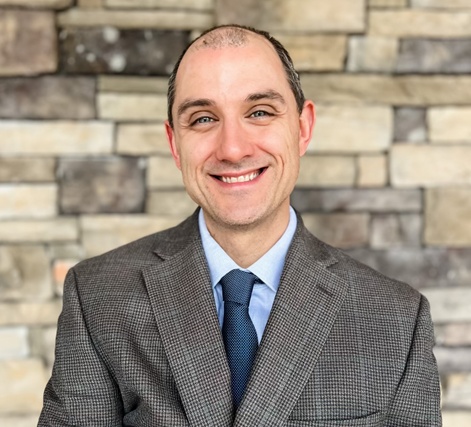 Gary Simmons, DO, MSHA: My name is Dr Gary Simmons, and I am a medical oncologist and bone marrow transplant doctor at Virginia Oncology Associates (VOA). I've been in the field for over 10 years. I did my original training at Virginia Commonwealth University in Richmond where I learned about cell therapy and CAR T cells. I was there for about 7 years with Dr John M. McCarty and his group. I then transitioned to community practice at the beginning of 2023.
What clinical, operational, and infrastructure capabilities are essential for safely establishing a CAR T-cell therapy program in a community oncology setting? And what were the most significant challenges VOA encountered during implementation?
Dr Simmons: There's a lot of buckets, as well as barriers. I tell people who are thinking about getting into this space, it’s a good opportunity if you're trying to control your patient flow and understand the coordination of care. The future is very optimistic in cellular therapy, so it's a good space to be in.
VOA is very forward-thinking. They've been accredited by the Foundation for the Accreditation of Cellular Therapy (FACT) for 20 years doing stem cell transplants and autologous stem cell transplants. We built the infrastructure of the program off that foundation.
Training, education, and resources are required to get the program up and running. There needs to be group buy-in from the practice and the providers. It’s important for doctors, nurses, PAs, or APPs to want to be involved in the program, want to take call responsibilities, and want to be able to see these patients often, including holidays and weekends.
There are also components like space, standard operating procedures, and apheresis of CAR T cells to take into consideration. For example, if somebody gets sick, what hospital are you going to put them in? How are you going to train that hospital system?
Finances, economics, and revenue also play a role in the program’s overall sustainability. There are a lot of fixed costs up front to build a program like this.
Lastly, you have to be able to run a program that is safe and of good quality where patients can receive excellent care.
As CAR T-cell therapy moves further into community oncology, how should clinical pathways evolve to help identify appropriate patients, determine the optimal timing for referral or treatment, and standardize care across the patient journey?
Dr Simmons: It's nice to say pathways and standardization, but is it practical? The reality is, I can go into an order set and say, “My patient has myeloma. It's second line. What's the right thing to do?” With artificial intelligence (AI) and other tools, the system can identify options like CAR T cells or bispecifics. But those options don’t always pop up automatically, and it's important that they do. Building those prompts into value-based pathways and other electronic medical record structures can help trigger the physician to consider these therapies.
Ten years after US Food and Drug Administration approval, only about 20% of eligible patients are getting CAR T cells. That's a real number that was just published recently in one of the American Society for Transplantation and Cellular Therapy journals. So, still only 2 out of 10 people are getting there. You can put it in the pathways, but in my opinion, we need programs built. We need development of programs out in the community where patients live to be able to get them access to care.
After treating more than 100 patients with CAR T-cell therapy in the community setting, what lessons have you learned about patient selection, toxicity management, care coordination, and other factors that could inform clinical pathway development at other community practices?
Dr Simmons: You learn a lot as you build it and do it. For patient selection, you start to realize who might be a better candidate for CAR T cells vs bispecifics. You start to realize CAR T cells have become a little easier to deliver in the community from the early days, such as using prophylactic dexamethasone for CAR T cells to minimize toxicities. We also lower certain doses of chemotherapies. You kind of play around with certain models of patient selection, dose reductions, and some other methods to improve the outcomes and safety of your program.
It's important to have a good “adverse events hospital” close by that you trust, where staff and providers are well-trained. We work with one where we have several patients with neurotoxicity and cell therapy toxicities. The hospital is doing a good job managing them, and the ICU is comfortable with them. So, all these sorts of tools need to be built out and thought through. And really, there's no other way to do it than to do it. You learn by doing, especially in medicine.
How does delivering CAR T-cell therapy within a community oncology practice affect continuity of care and coordination among oncologists, cellular therapy teams, hospitals, and other specialists compared with referring patients to an academic medical center?
Dr Simmons: Health care is really complicated. It's compartmentalized. It's slippery. It's difficult. I'll give you an example. I've been taking care of this patient for years, and I've developed rapport with them and their family. I've done his stem cell transplant for multiple myeloma. And then all of a sudden, he starts to progress and relapse. He has special needs that require support from his family. He lives locally here, and now he's relapsing and he has a very high-risk myeloma. So, the standard is to offer CAR T cells for this patient, which I've done. And then the payer, his payer at the time, declined recognizing that CAR T cells could be done in the community at VOA. The payer is requesting CAR T cells from the academic center. This patient and his family had to pack up and travel and go through a new team. And honestly, it's been very sloppy. The patient has been in and out of different hospital systems. He's currently in a different hospital from where he got readmitted. So the coordination of care is completely undone. There's no continuity.
This is one of the reasons why we are developing CAR T-cell programs locally here, so patients can stay within our practice. We can control the flow. We've already built the rapport with the patients. We can control the outcomes. This is important in oncology care. When a patient develops serious cancer that requires a certain treatment, it’s hard to ask them and their family at this very difficult time to get up and go somewhere else. The academic centers are excellent. I was there for a long time. But it's just pie-in-the-sky thinking to believe that all these patients are getting this care. Again, 2 out of 10 are; 8 out of 10 are not. We have to try to fix that.
Looking ahead, what role do you see community oncology practices playing in expanding access to CAR T-cell therapy and other advanced cellular therapies? And what changes in clinical pathways, reimbursement, or care delivery will be needed to support that expansion?
Dr Simmons: It's a hard job to be an oncologist. It's a great job, and I wouldn't do anything else, but it's emotionally difficult. You have patients with serious blood cancers, and you're trying to navigate all these systems, so you need an option that is easy to access and implement. Bispecifics are the competitor to CAR T cells, and they are used more and more because the treatment is easy to give. Unlike with CAR T cells, there are no authorization and single-case agreements.
Payers are going to have to make it easier for patients to get care in their community. Because it's going to be too difficult for providers to fight the system day after day, rather than saying, “No, you can't do it” and send patients away, they’re going to send patients to the academic centers or have the patients receive bispecific therapies in the community, which may result in inferior care.
On the other side, it also has to be economically sustainable for practices to deliver this care. These are very expensive products and require a lot of time from providers and patients. And there's little economic incentive for practices to build these programs and make this upfront investment on programmatic growth if it's not going to be financially sustainable.
Doctors know how to be doctors, and they want to take care of their patients. Providers and practices also want to maintain and retain their patients. So, it's incumbent on manufacturers and payers and all the other bureaucracies to make it easier for CAR T-cell or cell therapy expansion in the community. It's important to wake some folks up about the need for this in the community. Patients really need it. Doctors know how to do it. It's the other entities that need to help us do it.