Preparing for Oncology Pathway Placement Before and After Drug Launch
Biotech and pharmaceutical manufacturers tend to be focused on one main goal: getting their drug approved by the US Food and Drug Administration (FDA). While approval is important, this is only the first step in a long journey to the real goal, which is delivering a therapy to patients.
Why Pathways Belong in the Launch Plan
 Well before a drug is approved, pharma companies should begin developing a commercialization and access strategy. Some biotech companies erroneously believe that by getting FDA approval for their drug it will be utilized on that basis alone. However, this strategy is fatally flawed as there are always competitors. Even if a drug is vastly superior to the existing standard of care, with hundreds of drugs available to treat cancer, oncologists do not have time to research a new medication that might have appeared in a newsletter or a press release.
Pathways are one of the most effective ways to ensure that patients will have adequate access to your drugs. Because pathways tee up the standard of care recommendation for clinicians as part of their workflow, the drug is more likely to be selected by a clinician for a patient’s treatment. With about 70% of oncologists using pathways today and an average on-pathway adherence rate of 80%, at least 56% of the treatment decisions market-wide are aligned to the standard of care recommendation for a pathways program.1 For this reason, pharma companies should be paying attention to pathways early in their launch plan.
Steps to Prepare for Pathway Consideration
The following are steps to consider along the way.
Understand How Clinical Pathways Work
The first step is to understand what pathways are, how they work, and the criteria they use to determine a standard of care. Building relationships and a shared knowledge base early helps leaders make informed decisions throughout the pathway submission process. The Journal of Clinical Pathways, the Clinical Pathways Congress, and consulting resources can be instrumental in educating a company about and contextualizing these important issues.
Develop an Internal Pathways Strategy
Medical and commercial teams should agree on the value of pathways and the effort and budget needed to properly support this work before and after the launch of a drug. The company should determine who will be responsible for pathways submissions and relationships with pathway developers. Will there be a multidisciplinary steering committee? If so, how often will it meet? Who will help coordinate the relationships development and secure internal resources? A knowledgeable outside resource can help accelerate the development of the company’s approach for pathways.
Plan for Peer-Reviewed Publication
Pathways almost universally rely on published data from peer-reviewed journals. Disease committees within pathway developers use these data to make recommendations or changes to standards of care. Additionally, publication makes the source material available for review by oncologists using the system. Therefore, it’s important to develop a publishing strategy and timeline. The results of your clinical trial or other data should be published in a reputable journal prior to submission.
Build Relationships With Pathway Developers
Building relationships with pathway developers can help facilitate the submission of data. While some developers might be reserved when it comes to pharma due to past experiences, getting to know the people involved and approaching them in a professional and respectful way can lead to valuable insights. Consultants with deep expertise can help make those connections, and the Clinical Pathways Congress is a great place to mingle with pathway developers in a less formal setting.
Prepare for National Comprehensive Cancer Network Consideration
Many pathway developers rely on National Comprehensive Cancer Network (NCCN) guidelines as they evaluate new drugs. To get the best placement possible, develop a strategy for submitting data to the appropriate NCCN panel. Find an outside group with deep NCCN experience to help draft your submission—it will be worth every penny.
Tailor Submissions for Each Pathway Developer
As you prepare the first round of pathway submissions, be sure to tailor your approach for each developer. While some similarities exist, there are nuances between the developers, including their submission process, content requirements, and who uses their pathways. Outside consultants who have experience in pathways and drafting pathway submissions can help make sure your cover note hits the mark.
Present Predictable Cost-of-Care Data
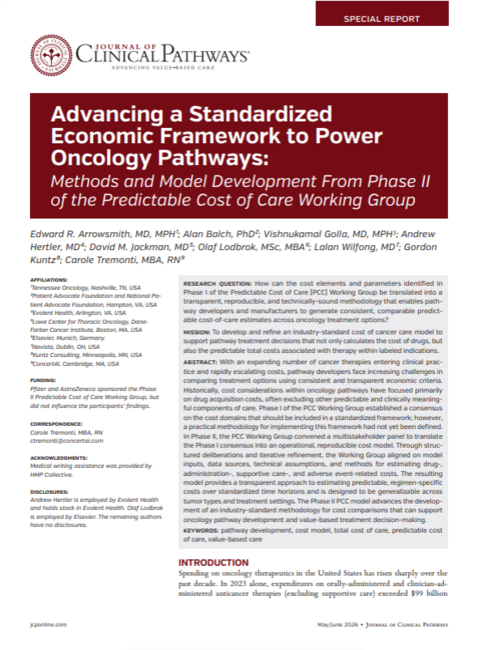
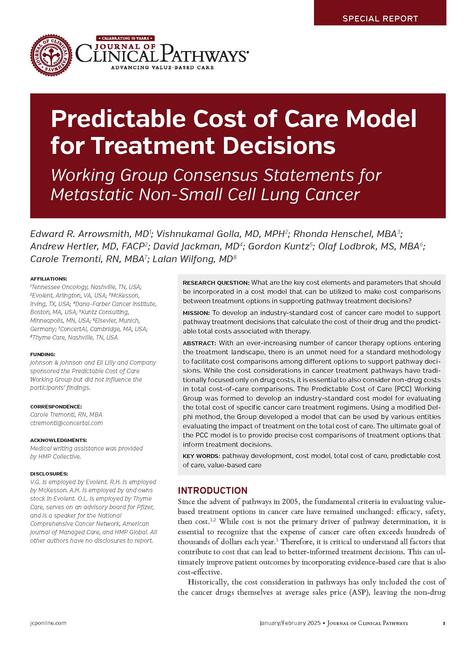
Compared to previous years, pathway developers, oncology practices, and payers are more attuned to a therapy’s total cost of care over 6 months to a year. Although most pathway developers still evaluate cost using a drug’s average sales price (or wholesale acquisition cost for an oral medication), total cost of care is also an important consideration. True total cost of care can only be accurately evaluated after the fact. However, a predictable cost of care model has been developed in collaboration with multiple pathway developers. This model sets aside variation based on specific patient characteristics and circumstances. Instead, it focuses on the direct costs of delivering the therapy, including the cost of the drug, administration, and side effect management.2-4 Since most pathway developers cannot evaluate pharma-built cost models, consider using the predictable cost of care model to submit your total cost data.
Engage Clinician Advocates
As you are developing the submissions, having advocates—such as key opinion leaders and clinicians who support the use of your therapy and can speak to their peers about it—in the process can make or break your efforts. Identifying and communicating with these advocates in a compliant manner is a crucial part of early sales and access efforts, as well as efforts to secure pathways placement. Understanding the relationship between advocates and the pathways they may be involved with is equally important.
The Challenge and Value of Preferred Placement
Getting a therapy listed as a preferred choice on pathways can be challenging. There is usually an incumbent and unseating the existing standard of care requires more than a small incremental advance. It requires real, meaningful clinical differentiation and a clear explanation of how it will impact patients, not just lab values.
For those pharma companies who are willing to dedicate the time, budget, and staff to understanding and working with pathways, the rewards can be significant. With on-pathway adherence averaging about 80%, being the single preferred recommendation could lead to substantial use at institutions that follow the pathway. If there are multiple options offered, on-pathway orders are divided among them.
Maintaining Your Pathway Position
Once you have made your submission and, hopefully, been successful, the organization’s dedication to pathways should not diminish. Gathering data and answering questions from the field is an ongoing process. Annual sales and brand planning should include an ongoing commitment of resources for pathway support. New competitors will emerge and you must defend your pathway position. New data and real-world studies may help cement that position, but you need to submit them for consideration.
When Your Drug Is Not on Pathways
Invariably, the question will come up: what if our drug is not on pathways? Sales can still occur without a pathway recommendation, but they are much easier with one. A good place to start is the estimated 20% of treatment selections that are off-pathway. If your organization can gain a significant portion of those selections, the disease committee may reconsider the therapy. Advocates and frequent utilizers can help educate their peers to help drive sales.
Conclusion: Engage Early in the Pathway Process
For pharma companies that delay considering pathways or decide not to invest the budget and resources to fully understand them, there is a small consolation: pathway developers will still consider your drug for inclusion, but without your input and perspective. Once an article or abstract on your drug is published, pathway developers are likely to find it and evaluate it. However, there are always competitors, and unseating an incumbent is very difficult. If you do not weigh in with your perspective and highlight relevant findings from your published data, you are missing out on an important opportunity to influence the process.
Clinical Pathway Categories: Business and Infrastructure & Innovation
This column advances the business category by outlining how manufacturers can incorporate peer-reviewed evidence, cost data, and pathway submissions into oncology drug launch and access planning. It also contributes to infrastructure & innovation by explaining how evidence-based pathway review and ongoing collaboration with developers can bring treatment recommendations into clinicians’ workflows and support informed oncology care.
References
1. “On-pathway” typically includes clinical trial enrollment, discontinuation of therapy, or one of several alternate therapies based on patient-specific characteristics.
2. Gallagher J. What is the Predictable Cost of Care (PCC) Working Group? J Clin Pathways. November 06, 2025. Accessed July 10, 2026. https://www.hmpgloballearningnetwork.com/site/jcp/news/what-predictable-cost-care-pcc-working-group
3. Gallagher J. Year 1 outcomes: advancing a standardized predictable cost of care model in US oncology. J Clin Pathways. November 11, 2025. Accessed July 10, 2026. https://www.hmpgloballearningnetwork.com/site/jcp/news/year-1-outcomes-advancing-standardized-predictable-cost-care-model-us-oncology
4. Arrowsmith EA, Blalch AJ, Golla V, et al. Advancing a standardized economic framework to power oncology pathways: methods and model development from phase ii of the Predictable Cost of Care Working Group. Special Report. J Clin Pathways. May/June 2026. Accessed July 10, 2026. https://www.hmpgloballearningnetwork.com/site/jcp/special-report/advancing-standardized-economic-framework-power-oncology-pathways-methods-0