Clinical study results demonstrate 88% effectiveness in reduction of symptoms caused by tennis elbow and related injuries
Los Angeles, CA (June 23, 2008) – BioBrace, a medical device manufacturer focused exclusively on medical conditions related to repetitive motion and sports injuries, announced today the launch of its highly anticipated ForeArmed® Active Implant Brace for epicondylitis and tendinosis sufferers. The brace uses the ancient art of acupressure and combines it with 21st Century biomechanics technology.
“We have had a tremendous amount of interest in our ForeArmed Active Implant Brace since the Cedars-Sinai Medical Center study appeared in the December issue of Orthopedics,” says Steve Cookston, founder of BioBrace.
Physicians from the Cedars-Sinai Medical Center in California tested BioBrace’s ForeArmed® on patients with tendinosis over a 26-week period. All patients reported the brace was comfortable to wear while performing tasks of daily living. Eighty-eight percent of the patients using the device reported relief of their symptoms. Sixty-eight percent reported “symptomatic relief and gain of strength.”
“What is unique about ForeArmed are the active implants inside the brace that put pressure on specific points of the forearm which helps to relieve pain,” adds Cookston. “ForeArmed® is also equipped with shock absorbing elements that alleviates stress on the afflicted area and improves healing.”
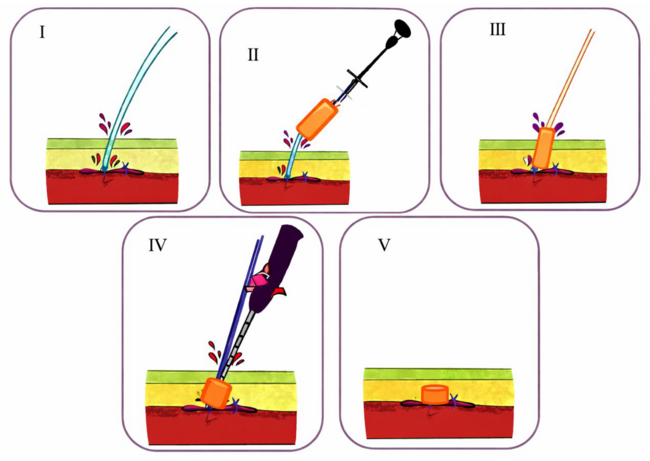
ForeArmed was designed to optimize the benefits of counterforce dampening, an effective mechanism that dissipates traumatic forces concentrated on the tendinous origin and stimulates secretion of naturally occurring pain modulators to the target site. The brace uses plastic cylindrical focal pressure transmitting elements placed directly over the proximal extensor carpi radialis brevis/extensor digitorum communis musculotendonous origin. These active implant elements are designed to place pressure onto the musculotendinous insertion site of the forearm. Additionally, the brace has shock absorbing elements placed over the lateral and medial epicondyles of the humerus.
“We are delighted with the clinical success achieved with the ForeArmed brace in the setting of tennis elbow and other forms of upper arm pain,” adds Cookston. “We are also encouraged by research that suggests ForeArmed can possibly even prevent repetitive motion injuries if used while performing activities that put stress on the tendons.“
The Cedars-Sinai Medical Center study concluded that the ForeArmed Active Implant device represents” a promising treatment modality for lateral tendonosis which is easy to use, avoids more invasive intervention, and is cost effective.”
“The investigative team conducting the clinical study on the ForeArmed brace was impressed by the positive clinical results achieved and also the user friendliness of the product; no patient reported any limitation of arm motion and no adverse effects were identified during the study”, David A. Kulber, MD, Clinical Chief of Surgery, Cedars Sinai Medical Center, Los Angeles, CA.
BioBrace is a medical device manufacturer focused exclusively on medical conditions related to repetitive motion and sports injuries. The company’s patented ForeArmed® Active Implant Brace utilizes pressure point implants combined with biomechanics technology to yield the world’s first “active bracing system” for pressure point therapy. Unlike “passive” straps and belts, ForeArmed® uses dynamic active implants and targets gentle pressure on specific acupressure meridians and nerve pathways, the source of pain from tennis elbow and other forms of epicondylitis, tendinitis and upper extremity pain. For more information, log onto www.BioBrace.com.
###
If you would like further information on this company or its technologies, please contact Kathy Scott at kathy@cookstongroup.com.