Device Occlusion of Giant Pulmonary Artery Aneurysm in a 12-Year-Old With Behçet's Disease
© 2026 HMP Global. All Rights Reserved.
Any views and opinions expressed are those of the author(s) and/or participants and do not necessarily reflect the views, policy, or position of the Journal of Invasive Cardiology or HMP Global, their employees, and affiliates.
J INVASIVE CARDIOL 2026. doi:10.25270/jic/26.00239. Epub July 28, 2026.
Pulmonary artery aneurysms (PAA) are a rare clinical feature of Behçet’s disease and pose significant risk of rupture due to blood vessel friability.1,2 PAAs have been managed with both surgical and endovascular intervention. Exclusion of a large PAA using an Amplatzer Duct Occluder (ADO) (Abbott) device has not previously been reported.
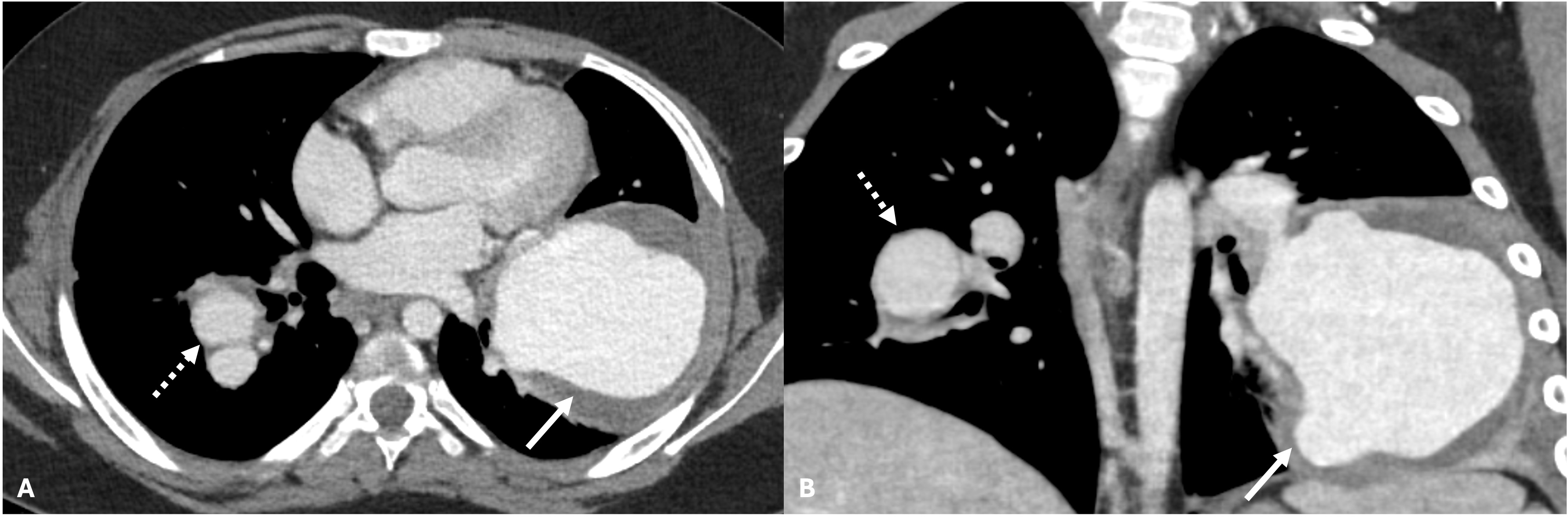
A 12-year-old boy underwent a chest computed tomography scan for evaluation of hemoptysis and weight loss, which identified multiple PAAs including a large left lower-lobe PAA (Figure 1). Infectious workup was negative, and the patient was diagnosed with Behçet’s disease. His hemoglobin decreased from 9 to 7 g/dL, and chest ultrasound demonstrated pleural fluid. Given concern for instability of the large PAA, we proceeded with transcatheter device occlusion.
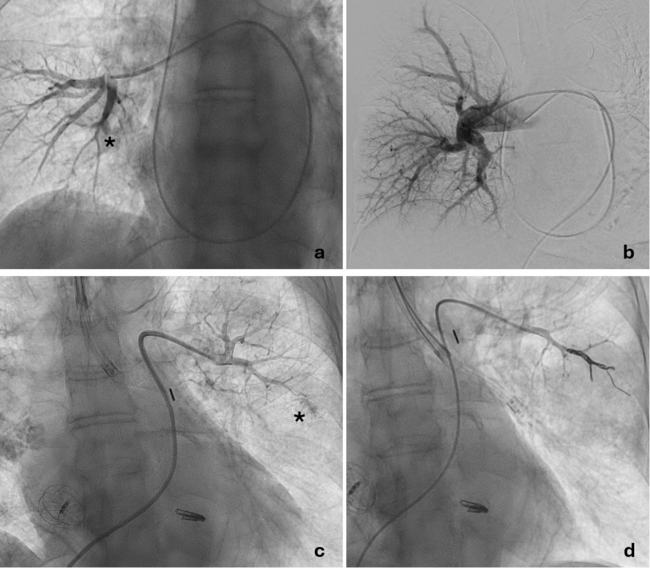
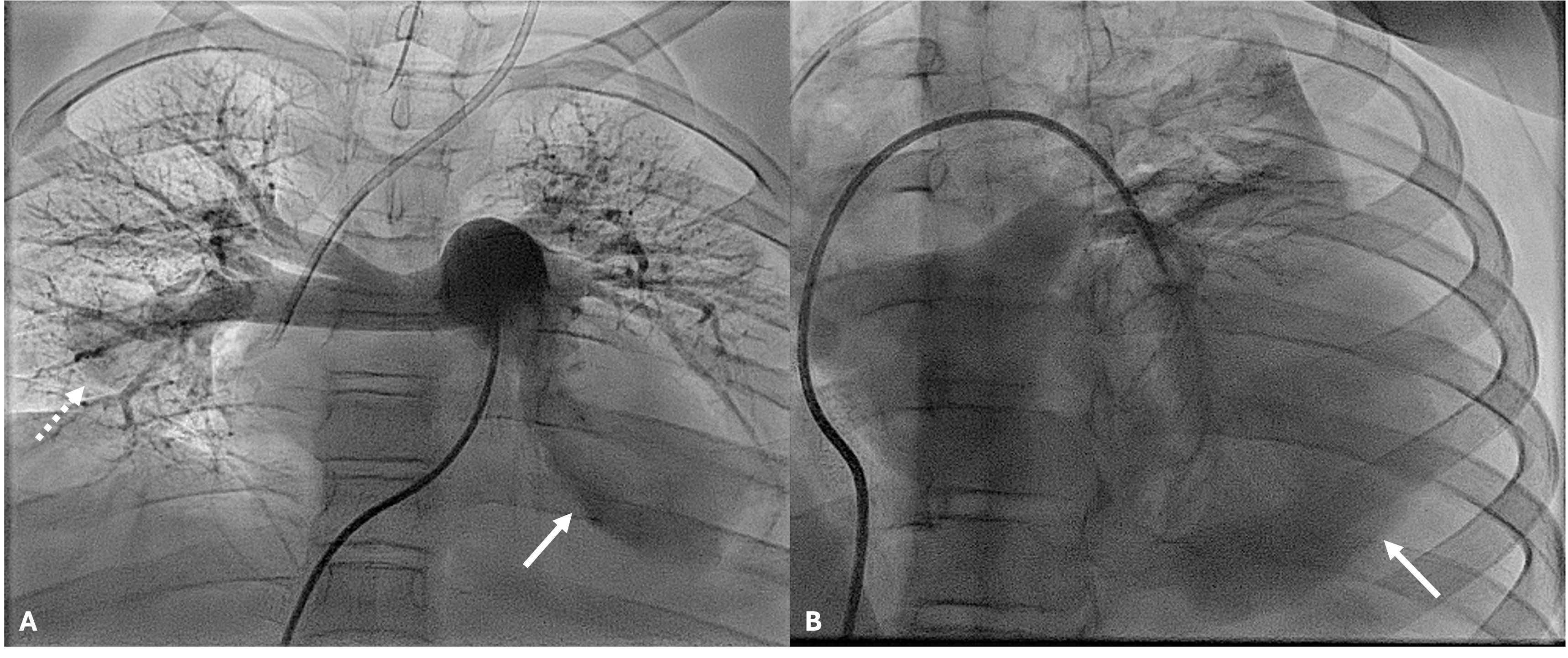
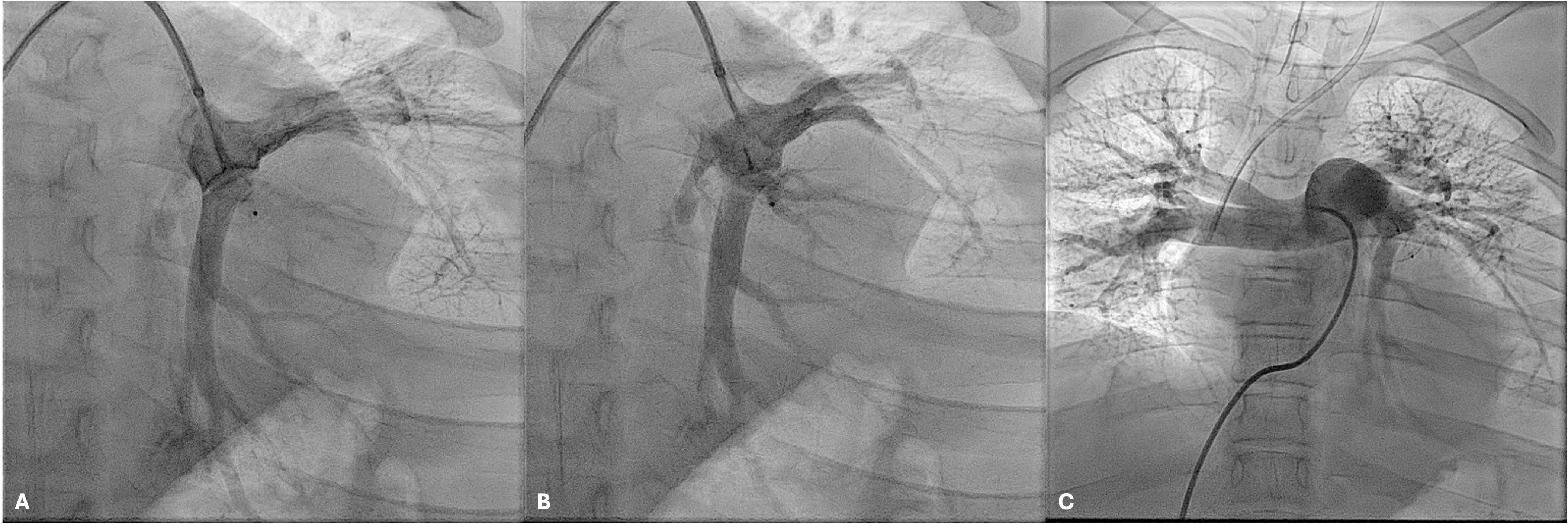
Cardiac catheterization demonstrated elevated pulmonary artery pressures of 44/23 with a mean of 23 mm Hg. Following angiography (Video 1, Figure 2), a 5F JB-1 Glidecath catheter with a Progreat microcatheter (Terumo) and a 0.014 Sion blue wire (Asahi Intecc) were used to access the PAA. A 5F long sheath was delivered to the PAA over a 0.035-inch Wholey wire (Medtronic). A 6/6 ADO II was deployed across the neck (Figure 3A). Prior to release, angiography demonstrated excessive protrusion of the device into the left pulmonary artery. The device was removed, and a 6/4 ADO II was deployed across the neck (Video 2, Figure 3B). Following release, there was no flow into the PAA (Figure 3C).
Endovascular treatment of PAAs in Behçet’s disease includes covered stents, vascular occlusion devices, and coil embolization.3 The ADO II is a favorable device for PAAs with a discrete neck because of its soft design and the ability for delivery through a small sheath.
Affiliations and Disclosures
Katherine Rand, MD1; Roberto Valdovinos, MD2; Cynthia Herrington, MD3; Neil D. Patel, MD4
From the 1Department of Cardiology, Boston Children’s Hospital, Boston, Massachusetts; 2Division of Rheumatology, Children’s Hospital Los Angeles, Keck School of Medicine, University of Southern California, Los Angeles, California; 3Division of Cardiothoracic Surgery, Children’s Hospital Los Angeles, Keck School of Medicine, University of Southern California, Los Angeles, California; 4Division of Pediatric Cardiology, Children’s Hospital Los Angeles, Keck School of Medicine, University of Southern California, Los Angeles, California.
Disclosures: The authors report no financial relationships or conflicts of interest regarding the content herein.
Consent statement: The authors confirm that informed consent was obtained from the patient’s parents for the intervention(s) described in the manuscript.
Address for correspondence: Neil D. Patel, MD, Division of Cardiology, Children’s Hospital Los Angeles, 4650 Sunset Blvd., MS 34, Los Angeles, CA 90027. Email: neipatel@chla.usc.edu
References
1. Kalra-Lall A, Donaldson J, Martin C III. Brief review: pulmonary artery aneurysms and pseudoaneurysms. Int J Cardiovasc Imaging. 2019;35(7):1357-1364. doi:10.1007/s10554-019-01547-3
2. Kharge JL, M UK, M L J, Newaskar AA, Shetty AU, Sridhar SL. Percutaneous closure of bilateral pulmonary artery aneurysms in Behcet's disease. JACC Case Rep. 2024;29(11):102341. doi:10.1016/j.jaccas.2024.102341
3. Samreen I, Darji P, Genobaga S, et al. Pulmonary artery aneurysm in Behcet disease: medical, endovascular or surgical intervention. Cureus. 2023;15(11):e49368. doi:10.7759/cureus.49368