Success Rate and Proposed Mechanism of Balloon Rupture in Hemostasis With MYNX CONTROL
© 2026 HMP Global. All Rights Reserved.
Any views and opinions expressed are those of the author(s) and/or participants and do not necessarily reflect the views, policy, or position of the Journal of Invasive Cardiology or HMP Global, their employees, and affiliates.
J INVASIVE CARDIOL 2026. doi:10.25270/jic/26.00184. Epub August 18, 2026.
Key Clinical Summary
- MYNX CONTROL achieved a high rate of immediate hemostasis following vascular closure.
- Antegrade vascular access and severe vascular calcification may increase the risk of balloon rupture during MYNX CONTROL deployment.
- Careful assessment of puncture direction and the severity of vascular calcification may help reduce the risk of balloon rupture and improve the safety and effectiveness of MYNX CONTROL.
Abstract
Objectives. Real-world data regarding the efficacy and safety of the MYNX CONTROL vascular closure device (Cordis) remain limited. The authors evaluated the efficacy and safety of MYNX CONTROL in routine clinical practice.
Methods. This single-center retrospective observational study included 127 consecutive patients who underwent femoral artery closure with MYNX CONTROL between August and December 2025.
Results. The primary endpoint was immediate hemostasis success, which was achieved in 120 patients (94.5%). Secondary endpoints included device-related complications, with a total of 7 events: balloon rupture (n = 2), minor bleeding (n = 2), hematoma (n = 2), and pseudoaneurysm (n = 1). Both cases of balloon rupture occurred during antegrade puncture in severely calcified vessels.
Conclusions. Balloon rupture was an infrequent but notable complication and occurred only in cases involving antegrade access and severe vascular calcification. Careful consideration of puncture direction and vascular calcification may further improve procedural safety when using MYNX CONTROL.
Introduction
Vascular closure devices (VCDs) have been reported to reduce the time to hemostasis and ambulation compared with manual compression, thereby improving patient satisfaction.1-3 However, device-related complications have also been reported, and evaluation of their safety remains an important clinical issue. MYNX CONTROL (Cordis) is an extravascular closure device that deploys a bioabsorbable sealant. Currently, real-world clinical data regarding the performance of this device and associated complications remain limited. Therefore, the aim of this single-center retrospective observational study was to evaluate the efficacy and safety of MYNX CONTROL after its introduction in clinical practice in Japan.
Methods
A total of 127 consecutive patients who underwent femoral artery access followed by closure with MYNX CONTROL between August and December 2025 were included in this analysis. The patients provided informed consent, and the study was approved by the ethics committee of the hospital.
Ultrasound-guided puncture was routinely performed. The puncture site was also confirmed under fluoroscopy without contrast injection, using the femoral head as a landmark. Before deployment of the MYNX CONTROL device, the position of the balloon at the puncture site was confirmed fluoroscopically.
The primary endpoint was immediate hemostasis success, defined as the absence of additional manual compression exceeding 1 minute, in accordance with the US Instructions for Use (IFU) for the MYNX CONTROL device. According to the institutional protocol, after confirmation of hemostasis following the deployment of MYNX CONTROL, adjunctive compression using a sandbag was applied. The secondary endpoint was procedure-related complications, including balloon rupture, minor bleeding, hematoma and pseudoaneurysm. Minor bleeding was defined as persistent bleeding at the access site requiring additional manual compression without blood transfusion, and hematoma as a palpable mass at the access site.
Results
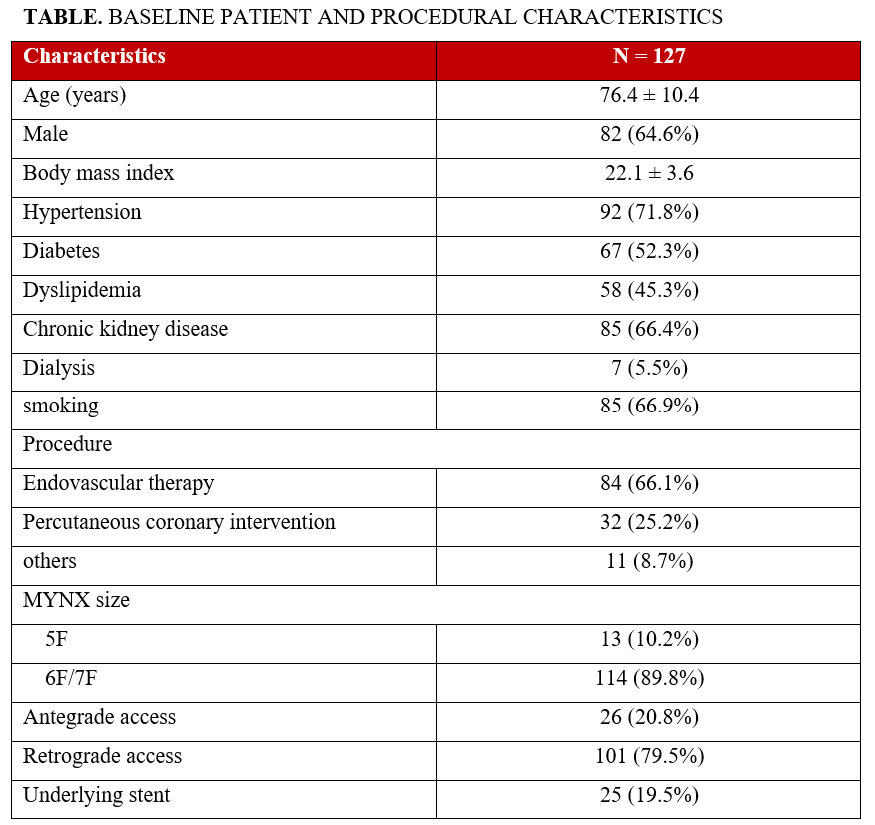
Baseline patient and procedural characteristics are summarized in the Table.The immediate hemostasis success rate was 94.5% (120 of 127 patients). Complications occurred in 7 patients, including balloon rupture (n = 2), minor bleeding (n = 2), hematoma (n = 2), and pseudoaneurysm (n = 1). The patient with the pseudoaneurysm required additional invasive treatment, whereas hemostasis was successfully achieved with additional manual compression in all other patients.
Discussion
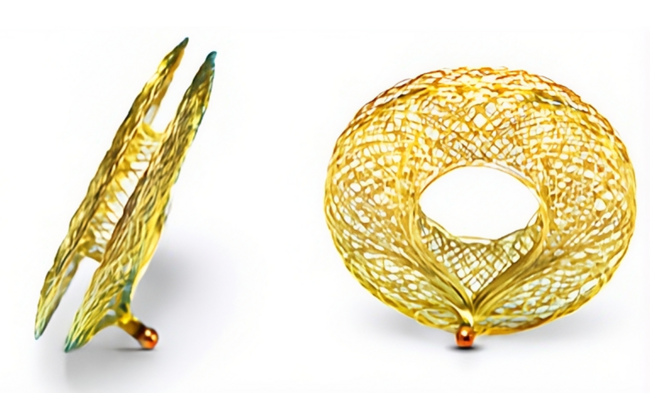
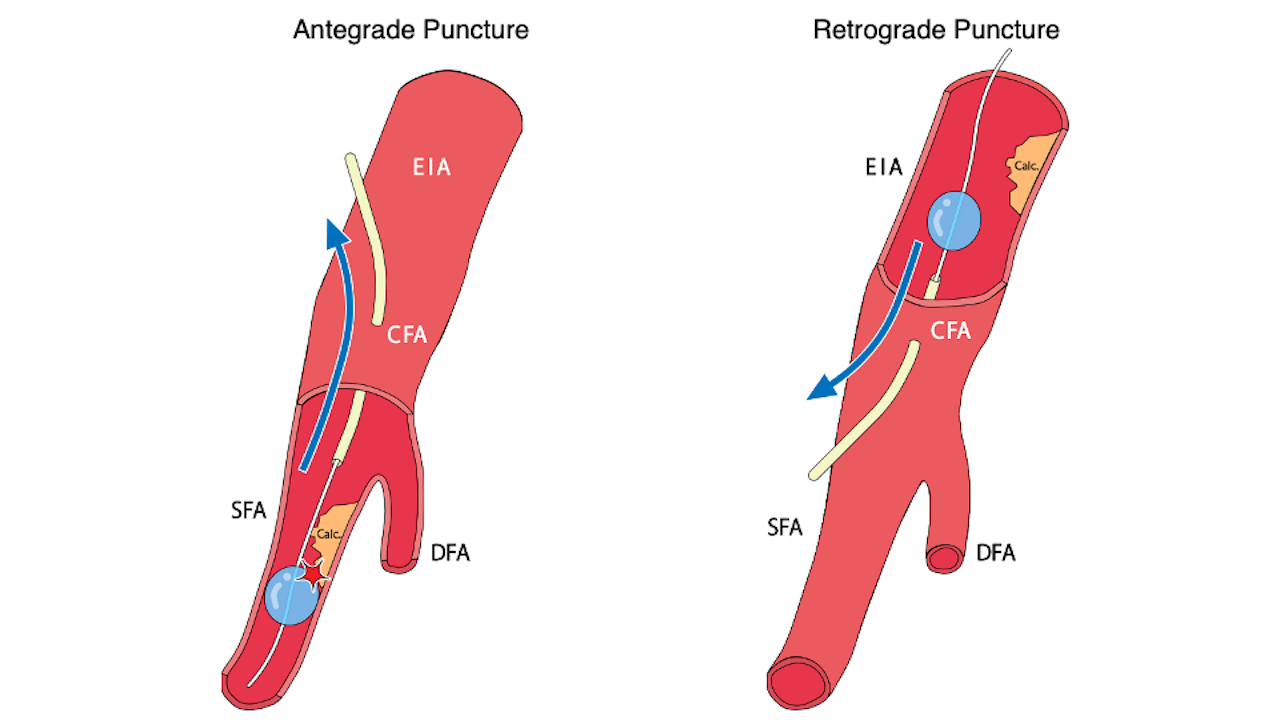
This study demonstrated a high rate of immediate hemostasis with MYNX CONTROL. Previous studies have reported hemostasis success rates of approximately 90% to 98% with VCDs,2,4,5 and the results of the present study are consistent with these reports. Balloon rupture is considered a device-specific procedural complication associated with MYNX CONTROL. In this study, both cases of balloon rupture occurred during antegrade puncture in vessels with severe calcification (Peripheral Artery Calcification Scoring System grade 3 and 4, respectively). Antegrade puncture is associated with smaller distal diameter of the superficial femoral artery, which may increase contact between the balloon and the arterial wall. In the presence of severe calcification, this mechanical interaction may increase the risk of balloon rupture (Figure). Accordingly, antegrade access and severe vascular calcification may be associated with balloon rupture during the use of MYNX CONTROL.
The potential impact of operator technique on clinical outcomes is another consideration. MYNX CONTROL requires accurate positioning and appropriate balloon inflation. Thus, technical factors may influence both hemostatic success and the occurrence of device-related complications. Importantly, MYNX CONTROL deploys a bioabsorbable sealant in the extravascular space and does not leave foreign material in the intravascular space. Therefore, even in cases of balloon rupture, immediate conversion to manual compression is possible, which may reduce the risk of serious vascular complications. This structural feature represents an important advantage of MYNX CONTROL compared with other closure devices that leave intravascular components.
Limitations
First, this was a single-center retrospective study with a relatively small sample size. Second, a direct comparison with other VCDs was not possible because of the lack of a control group. Third, adjunctive compression was routinely applied in this investigation; therefore, the hemostatic performance of the device alone could not be fully evaluated. Fourth, femoral artery diameter was not routinely measured. Finally, the present analysis was limited to short-term outcomes, and long-term vascular complications were not assessed.
Conclusions
MYNX CONTROL demonstrated a high rate of immediate hemostasis with an acceptable safety profile. The present findings suggest that MYNX CONTROL can be used safely with appropriate patient selection. Careful consideration of the puncture direction and the degree of vascular calcification may further enhance procedural safety and effectiveness.
Affiliations and Disclosures
Kaido Kobayashi, MD; Kei Ichihashi, MD; Kazuhiro Dan, MD, PhD, FACC
From Department of Cardiovascular Medicine, Ichinomiyanishi Hospital, Aichi, Japan.
Disclosures: The authors report no financial relationships or conflicts of interest regarding the content herein.
Address for correspondence: Kazuhiro Dan, MD, PhD, FACC, Department of Cardiovascular Medicine, Ichinomiyanishi Hospital, Kaimei-hira 1, Ichinomiya, Aichi 494-0001, Japan. Email: dan27k@gmail.com
References
- Schwartz BG, Burstein S, Economides C, Kloner RA, Shavelle DM, Mayeda GS. Review of vascular closure devices. J Invasive Cardiol. 2010;22(12):599-607.
- Mayer K, Gewalt S, Morath T, et al. Comparison of vascular closure devices vs manual compression after femoral artery puncture in patients on oral anticoagulation - post hoc analysis of the ISAR-CLOSURE trial. J Invasive Cardiol. 2021;33(9):E709-E715. doi:10.25270/jic/21.00081
- Pang N, Gao J, Zhang B, et al. Vascular closure devices versus manual compression in cardiac interventional procedures: systematic review and meta-analysis. Cardiovasc Ther. 2022;2022:8569188. doi:10.1155/2022/8569188
- Cangiano R, Di Girolamo A, Ascione M, et al. Safety and effectiveness of single ProStyle™/ProGlide™ for aortic endovascular procedures: single-style study. Front Cardiovasc Med. 2025;12:1559131. doi:10.3389/fcvm.2025.1559131
- Grandhi R, Zhang X, Panczykowski D, et al. Incidence of delayed angiographic femoral artery complications using the EXOSEAL vascular closure device. Interv Neuroradiol. 2015;21(3):401-406. doi:10.1177/1591019915581776