Early Discontinuation of Antithrombotic Therapy Following Left Atrial Appendage Closure: A Systematic Review and Meta-analysis
© 2026 HMP Global. All Rights Reserved.
Any views and opinions expressed are those of the author(s) and/or participants and do not necessarily reflect the views, policy, or position of the Journal of Invasive Cardiology or HMP Global, their employees, and affiliates.
J INVASIVE CARDIOL 2026. doi:10.25270/jic/26.00142. Epub July 29, 2026.
Key Clinical Summary
- Patients undergoing early (<6 months) complete discontinuation of all antithrombotic therapy after left atrial appendage closure (LAAC) had a high-risk bleeding and thromboembolic profile.
- Early antithrombotic discontinuation was not associated with increased stroke, all-cause mortality, major bleeding, or device-related thrombus.
- These findings suggest early antithrombotic discontinuation may be safe in selected high-bleeding-risk patients, pending confirmation in randomized trials.
Abstract
Objectives. Optimal postprocedural antithrombotic management after left atrial appendage closure (LAAC) remains undefined, particularly in patients with high bleeding risk. Early complete cessation (<6 months) of antithrombotic therapy (AT) following LAAC is increasingly adopted, yet supportive evidence is limited. This study sought to evaluate the safety of early (<6 months) complete discontinuation of AT after LAAC.
Methods. A systematic review and meta-analysis of observational studies was conducted. PubMed and Scopus were searched through September 2025. The primary endpoint was stroke events; secondary endpoints included all-cause mortality, major bleeding, and device-related thrombus (DRT). Random-effects models were used to calculate pooled risk ratios (RRs). Subgroup and sensitivity analyses were performed.
Results. Seven studies including 1841 patients (529 with early AT cessation) were analyzed. Patients undergoing early AT discontinuation exhibited high baseline thromboembolic and bleeding risk, and most of them (67%) had prior bleeding events. Over a weighted mean follow-up of 19.2 months, early discontinuation of AT was not associated with increased risk of stroke (RR, 1.04; 95% CI, 0.40-2.66), all-cause death (RR, 1.03; 95% CI, 0.49-2.17), major bleeding (RR, 1.22; 95% CI, 0.75-2.01), or DRT (RR, 0.49; 95% CI, 0.14-1.73). No significant differences were observed between very early (<1 month) and early (<6 months) cessation strategies.
Conclusions. Among high-bleeding-risk patients undergoing LAAC, early complete discontinuation of AT was not associated with an increased risk of thromboembolic events or death during mid-term follow-up. These results support the potential ischemic safety of early antithrombotic cessation in carefully selected patients and highlight the need for definite evidence from randomized trials.
Introduction
Left atrial appendage closure (LAAC) has become an established alternative to long-term oral anticoagulation for stroke prevention in patients with nonvalvular atrial fibrillation (AF) who are at high risk of bleeding or have contraindications to chronic anticoagulation therapy.1 Despite this, antithrombotic therapy (AT) is routinely prescribed after LAAC to prevent device-related thrombus (DRT) and early thromboembolic complications.2,3 However, postprocedural antithrombotic strategies remain largely empirical, with either short-term (1-3 months) dual antiplatelet therapy (DAPT) or oral anticoagulation routinely used, followed by long-term single antiplatelet therapy (SAPT).4
Patients undergoing LAAC represent a population prone to bleeding,5 and even reduced-intensity antithrombotic regimens may expose them to clinically relevant hemorrhagic complications. Furthermore, long-term antiplatelet therapy has shown a modest efficacy in preventing ischemic events in patients with AF while maintaining an associated bleeding risk, raising concerns about its net clinical benefit in LAAC recipients.6 As a result, minimizing both the intensity and duration of postprocedural AT has emerged as a potential strategy to further reduce bleeding without compromising thromboembolic protection.7-9
In recent years, some observational studies have explored early discontinuation of AT following LAAC, particularly in patients with high bleeding risk or prior major hemorrhagic events.10,11 However, these studies are heterogeneous and their findings have not been systematically synthesized. Therefore, the aim of this systematic review and meta-analysis was to provide data on baseline characteristics and evaluate the safety and clinical outcomes associated with early (<6 months post-procedure) discontinuation of all AT after LAAC.
Methods
Search strategy and data extraction
A systematic review and meta-analysis of the published data on early discontinuation of all AT after LAAC was conducted, in accordance with the guidance and reporting items specified in the Preferred Reported Items for Systematic Reviews and Meta-Analysis (PRISMA) statement.12 A literature search in the electronic databases PubMed (National Institutes of Health) and Scopus (Elsevier) was last performed on September 16, 2025. Further data were sought by manual search of secondary sources, including references from primary papers (backward snowballing) and data reported in international scientific conferences (Transcatheter Cardiovascular Therapeutics, Transcatheter Valve Therapies, Cardiovascular Research Technologies, EuroPCR, and PCR London Valves). The search included, among others, the following terms: “LAAO/LAAC”, “antiplatelet”, “anticoagulant”, “postprocedural therapy”. More details on the search strategy are presented in Supplemental Table 1. Clinical characteristics, procedural results, and outcomes were collected as reported by the authors.
Two investigators (P.V-C. and Q.B.) conducted the literature search, study selection, and data extraction. Titles, abstracts, and full texts were screened in duplicate using Covidence (Veritas Health Innovation, Ltd), which also supported data extraction and project management. Any discrepancies were resolved by consensus. Gathered data included (when available) baseline clinical characteristics and relevant comorbidities, procedural details, and follow-up outcomes. The study was conducted according to a prespecified protocol developed prior to data extraction, which is provided in the Supplemental Material. Adult patients undergoing LAAC with early complete cessation of all AT—within 6 months post-procedure, or no therapy at discharge—were included. Studies were excluded if they did not report predefined clinical outcomes of interest, did not evaluate early complete AT discontinuation after LAAC, lacked a clear definition of AT discontinuation timing, included populations undergoing non-transcatheter LAAC or pediatric patients, or represented non-original/duplicate data.
Study endpoints
The primary outcome of interest was the incidence of stroke at the longest reported follow-up. Secondary outcomes were all-cause death, DRT, and major bleeding (defined as Bleeding Academic Research Consortium [BARC] 3-5).13
Quality assessment
The methodological quality of the included studies was assessed independently by 2 reviewers following Cochrane Collaboration recommendations. Study quality and risk of bias were evaluated using the Newcastle-Ottawa Scale (NOS), with a maximum score of 9 points distributed across Selection (0-4), Comparability (0-2), and Outcome (0-3) domains. Studies scoring 7 to 9 points were considered low risk of bias, moderate risk if 5 to 6 points, and high risk if less than 5 points. A funnel plot was constructed only for the stroke outcome, as this was the only endpoint with a sufficient number of studies (n = 5) to allow a preliminary assessment of publication bias (Supplemental Figure 1). Nevertheless, the ability to detect true asymmetry remained limited given the small sample size (n < 10).
Statistical analysis
Continuous variables are displayed as mean (standard deviation) and categorical variables as frequencies (percentages) when presenting baseline characteristics. Weighted means (95% confidence interval [CI]) or frequencies (percentages) were used for overall outcomes and pooled baseline characteristics. Because of inconsistent reporting of follow-up duration and lack of patient-level time-to-event data, analyses were performed using aggregate event counts rather than time-adjusted estimates. Pooled risk ratios (RR) with 95% CI were calculated through a meta-analytic model based on the inverse variance weighting method. Between-study variance (τ²) was estimated using the DerSimonian and Laird random-effects approach, while the Mantel-Haenszel method was applied in the computation of the Q statistic and τ², consistent with RevMan methodology (The Cochrane Collaboration).
Statistical heterogeneity was quantified using Cochran’s Q and I². This index takes values between 0% and 100%, and the thresholds frequently used for heterogeneity are as follows: less than 25% suggests low, less than 50% moderate, and less than 75% large heterogeneity. A continuity correction of 0.5 was applied in studies containing zero events in one or both arms. Forest plots were generated for all relevant clinical outcomes (stroke, all-cause death, DRT, and major bleeding), reporting pooled estimates and heterogeneity metrics. When heterogeneity was present or expected based on clinical grounds, random-effects models were preferred over fixed-effects models. Sensitivity was tested through leave-one-out influence analysis, assessing the impact of individual studies on pooled results. A subgroup analysis was additionally performed comparing very early (<1 month) vs early (<6 months) all AT discontinuation. The Egger regression and visual inspection of funnel plots were used for the assessment of publication bias. Analyses were performed with R v4.5.0 using the “meta” package (R Foundation for Statistical Computing).
Results
Study selection and characteristics
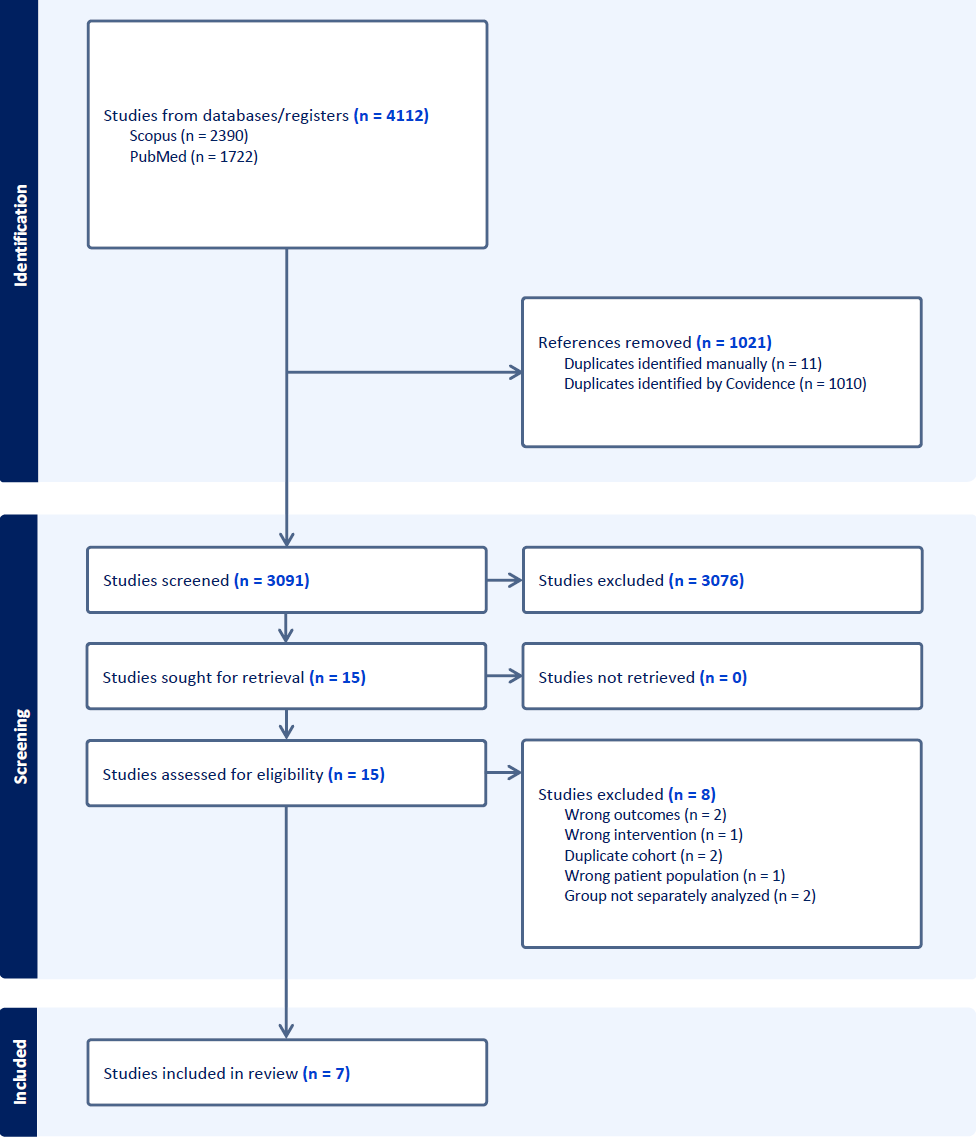
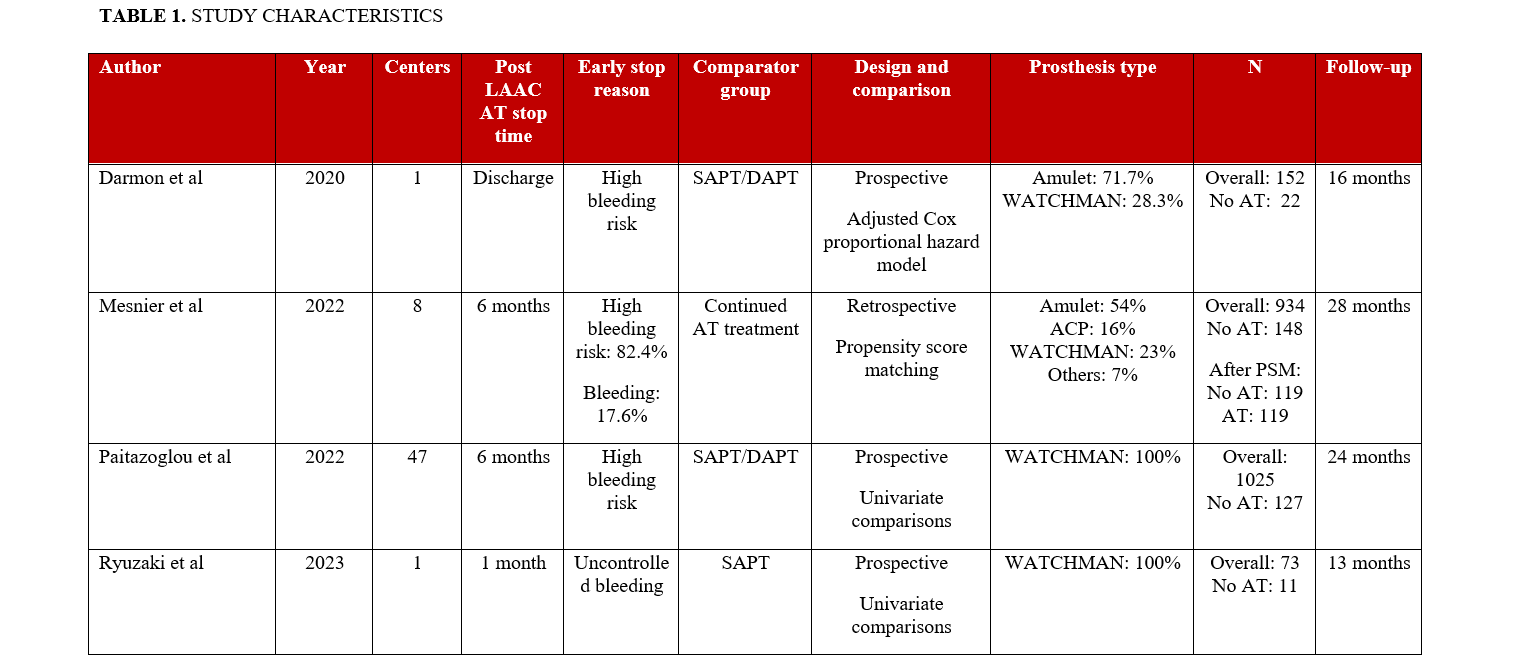
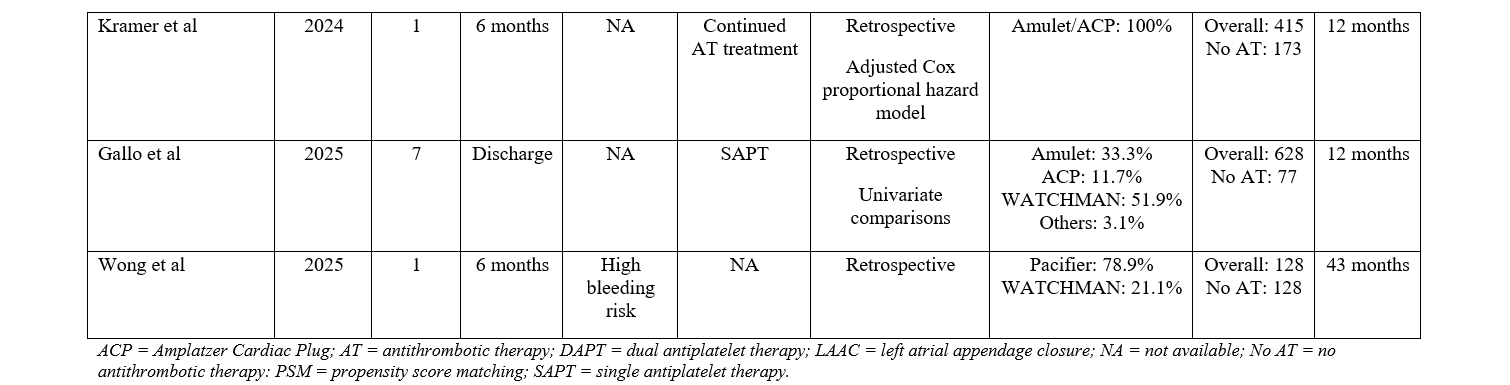
The searches of PubMed and Scopus identified 1722 and 2390 records, respectively, yielding 3091 records that were reviewed at the title and abstract level after exclusion of duplicates. Of those, 15 studies were selected and assessed for eligibility. After exclusion (ie, wrong outcomes [N = 2], wrong intervention [N = 1], duplicate cohort [N= 2], wrong patient population [N = 1], groups not analyzed separately [N = 2]), we finally included 7 publications10,11,14-18 describing patients with early cessation of all AT therapy after LAAC. Figure 1 shows the PRISMA flow diagram and Table 1 shows the main features of the studies included. The overall methodological quality was good, with a mean score of 7 out of 9 across studies. Six studies were classified as low risk of bias, while one was considered as moderate risk (Supplemental Table 2).
Baseline characteristics
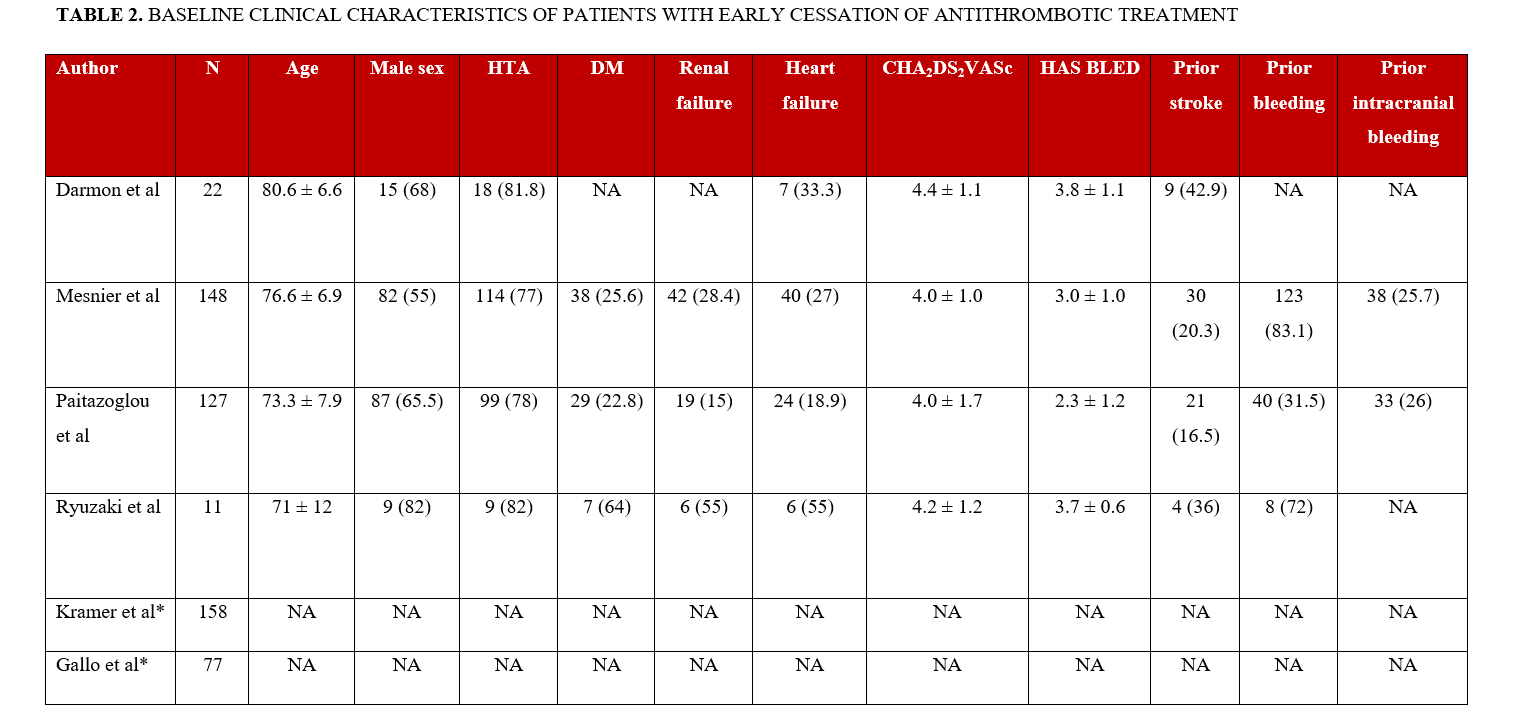
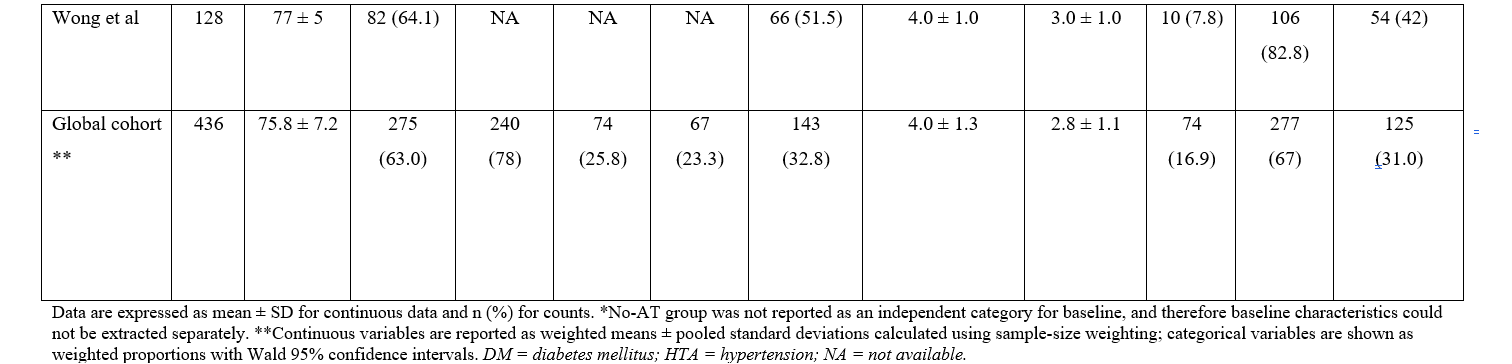
The main baseline clinical characteristics are presented in Table 2. Baseline data were available for 436 patients across 5 studies, as 2 studies did not report baseline characteristics separately for the no-AT group, precluding independent extraction. The weighted mean age was 76 years and 161 (37%) were female. Hypertension was present in most patients (240,78%), while diabetes mellitus (74, 25.8%), renal failure (67, 23.3%) and heart failure (143, 32.8%) were less frequently observed. The weighted mean CHA₂DS₂-VASc score was 4.0 ± 1.3, the weighted mean HAS-BLED score was 2.8 ± 1.1, and most patients (277, 67%) had at least 1 episode of prior bleeding, including intracranial bleeding (125, 31%), whereas prior stroke was relatively uncommon (74, 16.9%).
Clinical outcomes
Clinical outcomes are presented in Table 3. A total of 1849 patients were analyzed, of whom 529 (29%) underwent early complete discontinuation of antithrombotic therapy (no-AT group). Across the included cohorts, the weighted mean follow-up was 19.2 months. Event rates were generally low across studies.
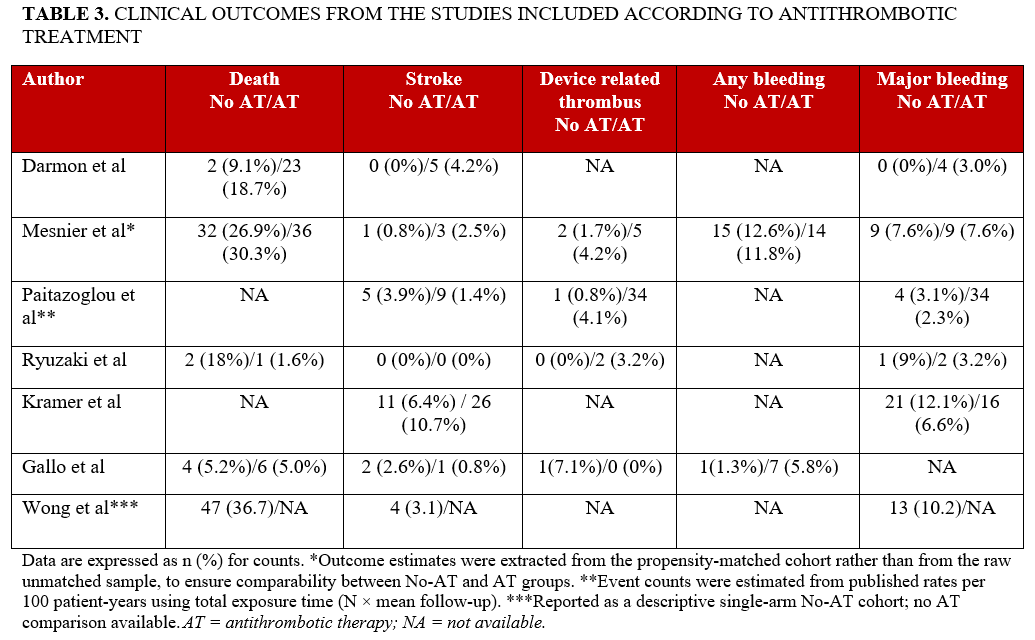
Among the 529 patients with available data on the primary outcome, stroke occurred in 3.6% (19/529) of the no-AT group and 3.4% (44/1312), of the AT group. All-cause mortality was observed in 17.5% (40/229) and 15.3% (66/431) of patients, respectively. Major bleeding (no-AT: 35/452, 7.7%; AT: 5.5%, 65/1192) and DRT (no-AT: 4/334, 1.2%; AT: 41/940, 4.4%) were infrequent. Data on any bleeding were reported in only 2 studies and therefore are presented descriptively without formal meta-analysis.
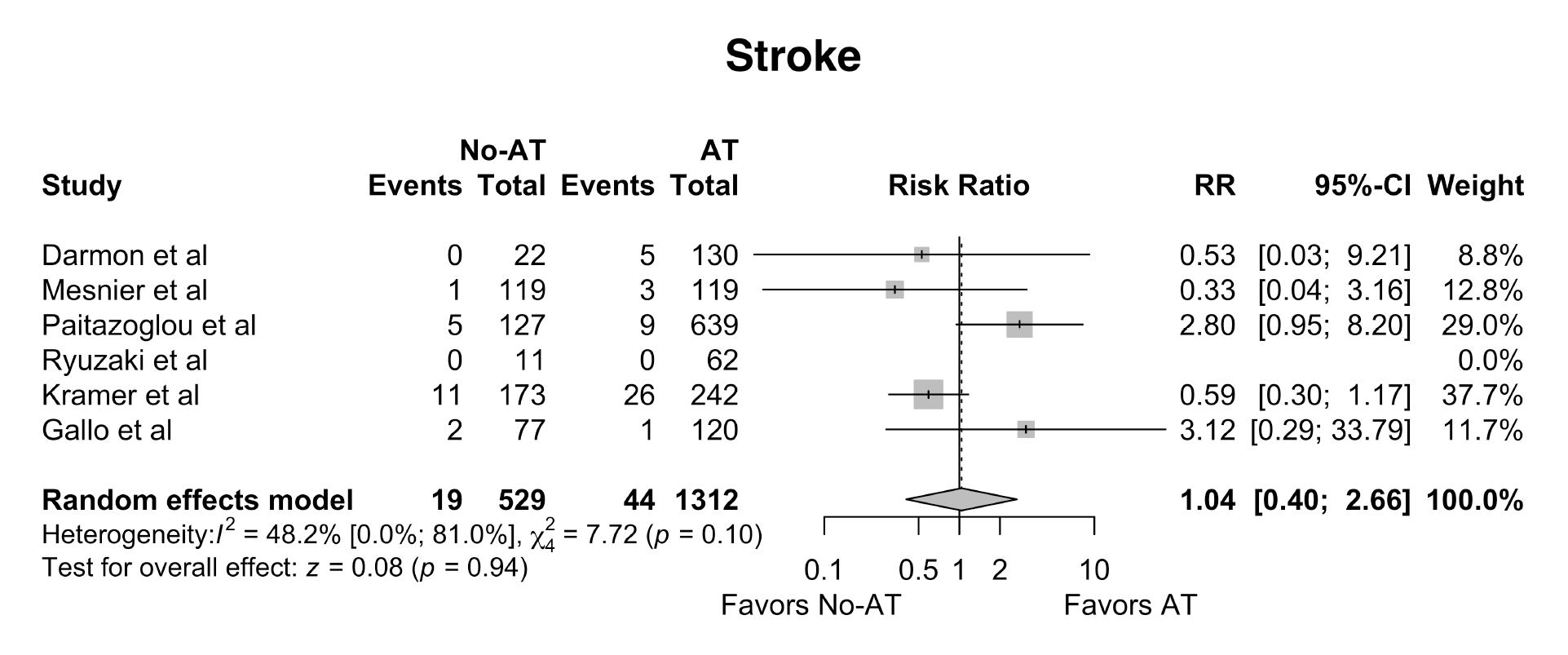
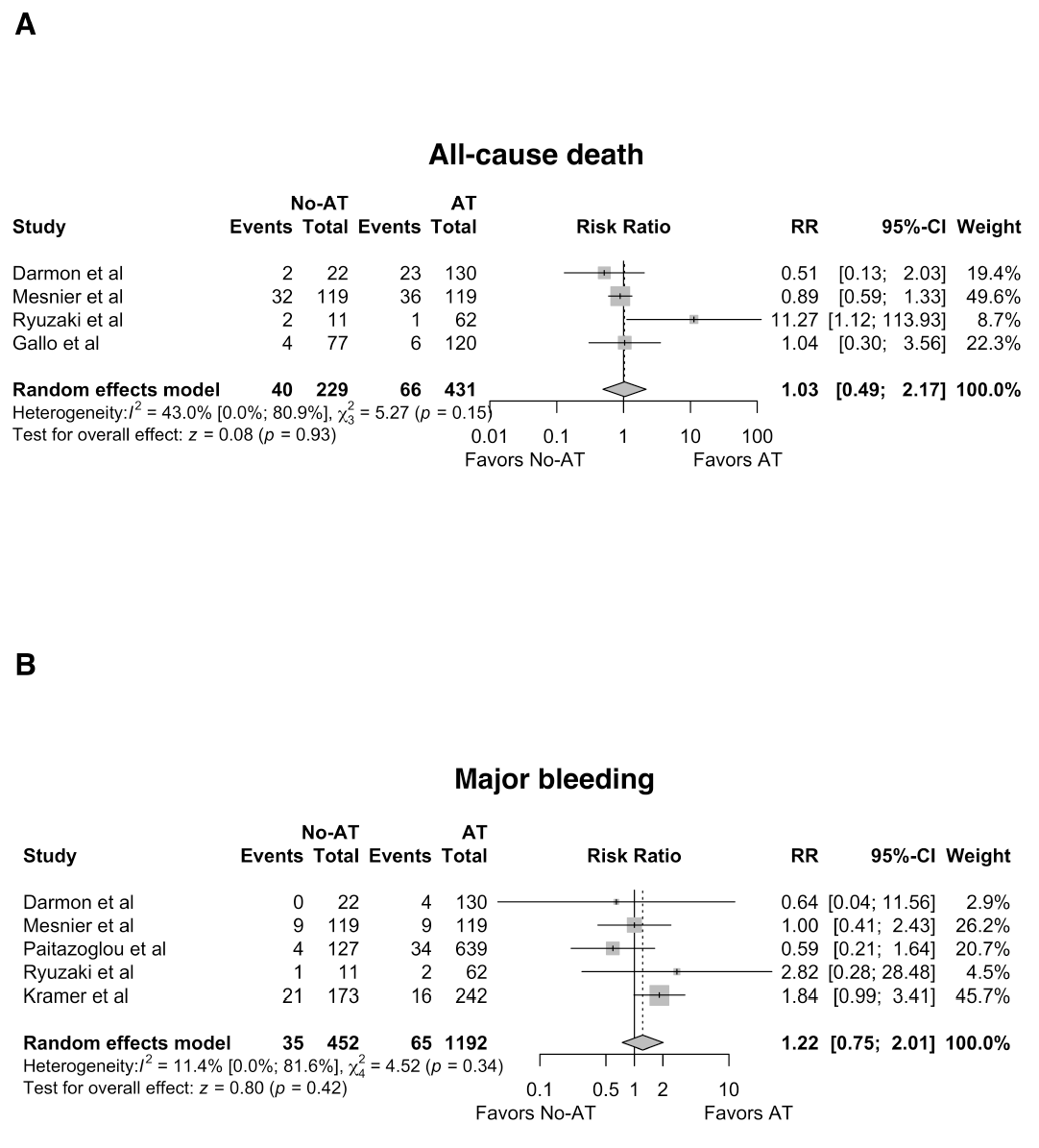
Early discontinuation of AT therapy was not associated with an increased risk of stroke (RR, 1.04; 95% CI, 0.40-2.66; P = .94), with moderate heterogeneity (I² = 48.2%) (Figure 2). Funnel plot inspection and Egger’s regression did not suggest publication bias (P = .8); however, given the limited number of included studies (<10), these analyses have limited reliability and should be interpreted with caution. Also, early discontinuation was not associated with significant differences in all-cause mortality (RR ,1.03; 95% CI, 0.49-2.17; P = 0.93; I² = 43.0%) or major bleeding (RR, 1.22; 95% CI, 0.75-2.01; P = .42; I² = 11.4%), with moderate and low heterogeneity observed for these outcomes, respectively (Figure 3). In addition, early discontinuation of AT therapy was not associated with differences in DRT (RR, 0.49; 95% CI, 0.14-1.73; P = .27; low heterogeneity, I² = 20.9%) (Supplemental Figure 2).
Subgroup and sensitivity analyses
In the subgroup analysis stratified by timing of complete AT discontinuation, no significant differences were observed between very early (<1 month) and early (<6 months) discontinuation for stroke (P for subgroup differences = .68) or major bleeding (P = .73). Pooled effect estimates were similar across subgroups, with no evidence of interaction according to timing of discontinuation (Supplemental Figure 3). Also, leave-one-out sensitivity analyses demonstrated that sequential exclusion of individual studies did not substantially change the pooled RRs or their statistical significance for any outcome, supporting the robustness of the main findings (Supplemental Figure 4).
Discussion
The main findings of this systematic review and meta-analysis, synthesizing fragmented observational evidence and encompassing 1841 patients (529 with early AT cessation), can be summarized as follows: (1) patients undergoing early (<6 months) complete discontinuation of AT therapy after LAAC represented a high-risk population with substantial baseline thromboembolic and bleeding risk; (2) early AT discontinuation was not associated with an increased risk of stroke, all-cause mortality, major bleeding, or DRT during mid-term follow-up; and (3) no differences in clinical outcomes were observed between very early (<1 month) and early (<6 months) AT discontinuation.
The best AT following LAAC remains to be elucidated.4 To date, post-LAAC AT management has largely relied on empirical recommendations, most commonly involving 1 to 3 months of DAPT.19 Early RCTs were conducted in patients eligible for long-term oral anticoagulation and employed relatively intensive regimens, including short-term vitamin K antagonist therapy combined with aspirin, followed by several months of DAPT.20,21 However, these protocols were largely driven by empirical considerations and were not designed to address the clinical profile of most patients currently undergoing LAAC, who frequently present with relative or absolute contraindications to oral anticoagulation.22 As a result, a wide range of alternative AT strategies has been explored in observational studies and real-world registries,23 including shorter durations of DAPT24 and less intensive regimens aimed at minimizing bleeding risk while preventing DRT.7,8,25 Also, recent RCTs (ADALA and ANDES) have explored short-term DOAC therapy as an alternative to DAPT after LAAC, suggesting potential reductions in DRT and bleeding.26,27 The heterogeneity of these approaches, extending to both treatment selection and duration, has contributed to substantial variability in postprocedural management and a persistent lack of consensus regarding the optimal AT regimen after LAAC.
In our study, early complete AT discontinuation was not associated with a higher rate of stroke compared with continued AT therapy. Of note, the stroke rate at 19-month follow-up remained low in the no-AT group (3.6%), in line with rates reported in large real-world LAAC registries,28,29 and also in studies where less intense AT regimes were evaluated showing stroke rates comparable to more intense regimes.8,25 Conversely, Carvalho et al’s meta-analysis observed a reduced thromboembolic risk with DAPT compared with SAPT after LAAC.30 Notably, when expressed as events per 100 patient-years, the observed stroke rate in the no-AT group (approximately 2.2 events per 100 patient-years) was lower than that expected based on the baseline CHA₂DS₂-VASc score (approximately 4.8 events per 100 patient-years), translating into an approximate 54% relative reduction. This comparison should be interpreted cautiously, as expected stroke rates vary across validation cohorts.
Moderate heterogeneity was observed in our study for stroke (I² = 48.2%), which appeared to be largely driven by the study by Paitazoglou et al,15 reporting an effect estimate in the opposite direction compared with other studies. First, this study included younger patients (mean age 73.3 ± 7.9 years) with a lower bleeding risk profile (mean HAS-BLED score 2.3 ± 1.2 and just 31.5% of prior bleeding) and a relatively long follow-up (24 months), potentially increasing event detection. In addition, the analysis was based on unadjusted comparisons—in contrast to other studies using adjusted models or propensity matching—increasing the risk of residual confounding. This suggests that early discontinuation of antithrombotic therapy may have been applied in a population with relatively lower hemorrhagic risk and potentially higher residual thromboembolic risk, which could partly explain the observed direction of effect. Despite this heterogeneity, sensitivity analyses excluding individual studies did not materially change the overall results, supporting the robustness of the findings. Thus, the lack of an apparent increase in thromboembolic events after early AT discontinuation provides a rationale to focus on bleeding outcomes, which represent a key driver of prognosis in patients undergoing LAAC.5
In the present meta-analysis, early complete discontinuation of AT after LAAC was not associated with a significant reduction in major bleeding events compared with continued AT treatment. This is consistent with previous evidence where major bleeding did not differ between light and intense regimes.8,25,30 In fact, in our study, the observed major bleeding rate (approximately 4.1 per 100 patient-years) was broadly consistent with that expected from the baseline HAS-BLED score (~3). However, our cohort had a high prevalence of prior bleeding (67%) and intracranial hemorrhage (31%), which suggests that conventional bleeding risk scores may not fully capture all relevant determinants of bleeding risk.31 For major bleeding, although overall heterogeneity was low (I² = 11.4%), the study by Kramer et al17 contributed a substantial proportion of the statistical weight and showed a higher rate of bleeding events in the no-AT group, which appears counterintuitive. This finding may be partly explained by indication confounding, as patients selected for early AT discontinuation may have had a higher baseline bleeding risk that was not fully captured because of incomplete reporting of baseline characteristics. In addition, the temporal relationship between bleeding events and treatment discontinuation cannot be properly assessed, raising the possibility that bleeding events may have prompted antithrombotic cessation rather than resulted from it. Furthermore, differences in study design, event definitions, and retrospective data collection may have contributed to this observation.
Taken together, these considerations suggest that the lack of a clear bleeding benefit with early AT cessation should be interpreted in the context of an already maximally reduced and highly complex bleeding risk profile. Importantly, no significant differences in stroke or major bleeding were observed between very early (<1 month) and early (<6 months) discontinuation strategies, suggesting that, in carefully selected patients, even very early cessation may be feasible. However, these findings should be interpreted with caution given the relatively limited number of patients in each group. Further subgroup analyses were not feasible due to limited data availability and inconsistent reporting across studies. Also, meta-regression analyses were not performed because of the limited number of studies and heterogeneity in reporting, which would have limited their statistical reliability.
Early intensive AT therapy after LAAC aims to prevent DRT by supporting device endothelialization and counteracting procedure-related thrombogenicity. Preclinical studies suggest that LAAC devices undergo partial to complete endothelialization within 30 to 90 days after implantation.32,33 From a mechanistic standpoint, this temporal pattern provides a biological rationale for considering AT discontinuation once the endothelialization process is expected to be completed. During this early postprocedural phase, the device surface remains in direct contact with circulating blood, potentially conferring a higher thrombogenic risk.34 However, delayed endothelialization remains a concern and late cases of DRT have been reported.35 In our study, DRT incidence was low (1.2% no-AT group vs 4.4% AT group) and consistent with that reported in contemporary registries, remaining below 5%.2,3,27,36Also, early AT discontinuation was not associated with a significant increase in the risk of DRT.
Nevertheless, these findings should be interpreted with caution. First, the true incidence of DRT may have been underestimated because of the lack of systematic imaging follow-up across the included studies. Also, patients who develop DRT are unlikely to remain without AT therapy thereafter, introducing an inherent treatment and selection bias in observational studies. In fact, detailed information on the timing of DRT and subsequent AT management was not available, precluding landmark analyses to assess outcomes beyond the occurrence of DRT. Also, Carvalho et al showed an increased risk of DRT in patients with no-AT from discharge compared with other AT strategies.30 However, in this metanalysis, there was a limited number of patients (n =175) and DRT events (n = 7) in the no-AT group. Taken together, these findings suggest that, in selected patients at very high bleeding risk, complete discontinuation of AT therapy after LAAC may be feasible without an apparent increase in ischemic events or DRT.
A limited number of randomized clinical trials are currently underway to address de-escalation and complete discontinuation of all AT strategies following LAAC. The ASPIRIN-LAAO trial (NCT03821883)37 investigates the safety of discontinuing aspirin at 6 months post-implantation, while the NAPT-LAAC trial38 compares a regimen of no AT therapy after an initial brief period of oral anticoagulation. Notably, NAPT-LAAC includes a very early no-AT arm after 45 days, directly addressing the question of very early complete cessation, whereas other trials of de-escalation are focused on monotherapy rather than permanent withdrawal. As results from these randomized studies are not yet available, robust evidence on early complete AT cessation remains limited and highlights the need for further randomized data to complement observational findings.
Taken together, our findings synthesize a fragmented body of observational evidence and suggest that early complete discontinuation of AT therapy after LAAC may be safe in selected high-risk patients, without an apparent increase in thromboembolic events or DRT during mid-term follow-up. While bleeding rates remained non-negligible, this likely reflects the extreme baseline vulnerability of this population rather than ongoing AT exposure. These results support individualized post-LAAC AT strategies and underscore the need for more evidence derived from prospective randomized trials to define the optimal intensity and duration of therapy.
Limitations
This study has several limitations that should be acknowledged. First, all included studies were observational, some of them with unadjusted comparisons, which inherently exposes the analysis to residual confounding and selection bias compared with studies using propensity matching or adjusted Cox models. Second, the overall sample size was modest and event rates were low, which may have reduced statistical power to detect small differences between treatment strategies and limits the precision of pooled estimates. In fact, although several studies were classified as low risk of bias according to the NOS, this assessment should be interpreted with caution. Many included studies were small observational cohorts, which are inherently subject to residual confounding, selection bias, and limited statistical power.
Third, baseline characteristics could not be extracted separately for the no-AT group in 2 studies, and 1 study reported outcomes in a descriptive single-arm no-AT cohort without a direct comparator. Specifically, the absence of key clinical variables such as CHA₂DS₂-VASc and HAS-BLED scores in 2 studies precludes a reliable evaluation of thromboembolic and bleeding risk balance between groups. This represents a potential source of confounding by indication, as patients selected for early discontinuation may differ systematically from those maintained on antithrombotic therapy. In addition, direct baseline comparisons between no-AT and AT groups were limited by the lack of uniformly reported baseline data for no-AT cessation patients, potentially introducing heterogeneity and limiting more detailed analyses.
Fourth, follow-up duration and AT regimens before discontinuation varied across studies, reflecting real-world practice but adding clinical heterogeneity. Specifically, differences in follow-up duration across studies represent a potential source of heterogeneity, as studies with longer follow-up may accrue a higher number of clinical events. Because of inconsistent reporting of patient-years and time-to-event data, we were unable to perform time-adjusted analyses. However, most studies reported follow-up durations within a relatively comparable range (approximately 12 to 28 months), which may partially mitigate this limitation. Also, in our analysis, an important source of heterogeneity was the variability in antithrombotic regimens within the comparator group (which included SAPT, DAPT, and unspecified continued antithrombotic treatment). Pooling these approaches may imply an assumption of equivalence that does not fully reflect their different risk-benefit profiles. Subgroup analyses according to specific antithrombotic regimens were not feasible due to limited data availability across studies.
Fifth, systematic imaging surveillance for DRT was not uniformly reported, potentially leading to underestimation of DRT incidence. Finally, detailed data on the timing of events and post-event AT management were not consistently available, precluding landmark analyses and limiting assessment of outcomes beyond specific clinical events. Therefore, although our findings provide the most comprehensive synthesis of the available evidence to date, they should be interpreted cautiously and considered hypothesis-generating, highlighting the need for adequately powered randomized trials.
Conclusions
In this systematic review and meta-analysis, early (<6 months) complete discontinuation of AT after LAAC was not associated with an increased risk of stroke, all-cause mortality, major bleeding, or DRT in the mid-term follow-up. No differences in clinical outcomes were observed between very early (<1 month) and early (<6 months) discontinuation strategies, suggesting that, in carefully selected patients, even very early cessation may be feasible. While major bleeding rates were not significantly reduced, this likely reflects the intrinsically high and complex bleeding risk of this population. Overall, these findings support individualized post-LAAC AT strategies and highlight the need for adequately powered randomized trials to define the optimal timing and safety of selected complete AT cessation.
Affiliations and Disclosures
Pablo Vidal-Calés, MD1; Quentin Battistolo, MD1; Maxim Ruel, MS1; Alicia Prieto-Lobato, MD, PhD1; Pedro Cepas-Guillen, MD, PhD2,3; Xavier Freixa, MD, PhD3; Josep Rodés-Cabau, MD, PhD1,2,4
From the 1Department of Cardiology, Quebec Heart and Lung Institute, Laval University, Quebec City, Quebec, Canada; 2Barcelona Clinical Coordinating Center, Mon Clínic Foundation, Barcelona, Spain; 3Department of Cardiology, Clínic Barcelona, Barcelona, Spain; 4Department of Research and Innovation, Clínic Barcelona, Barcelona, Spain.
Acknowledgments: Dr Vidal-Calés is supported by a grant from the Fundación Alfonso Martin Escudero (Madrid, Spain). Dr Rodés-Cabau holds the Research Chair “Fondation Famille Jacques Larivière” for the Development of Structural Heart Disease Interventions (Laval University, Québec City, Canada).
Disclosures: Dr Freixa is proctor for Abbott and Boston Scientific. Dr Rodés-Cabau has received institutional research grants from Boston Scientific and is consultant for Abbott. The remaining authors report no financial relationships or conflicts of interest regarding the content herein.
Address for correspondence: Josep Rodés-Cabau, MD, PhD, Quebec Heart & Lung Institute, Laval University, Quebec City, Canada. Email: josep.rodes@criucpq.ulaval.ca
References
1. Holmes DR Jr, Reddy VY, Gordon NT, et al. Long-term safety and efficacy in continued access left atrial appendage closure registries. J Am Coll Cardiol. 2019;74(23):2878-2889. doi:10.1016/j.jacc.2019.09.064
2. Alkhouli M, Busu T, Shah K, Osman M, Alqahtani F, Raybuck B. Incidence and clinical impact of device-related thrombus following percutaneous left atrial appendage occlusion: a meta-analysis. JACC Clin Electrophysiol. 2018;4(12):1629-1637. doi:10.1016/j.jacep.2018.09.007
3. Simard T, Jung RG, Lehenbauer K, et al. Predictors of device-related thrombus following percutaneous left atrial appendage occlusion. J Am Coll Cardiol. 2021;78(4):297-313. doi:10.1016/j.jacc.2021.04.098
4. Mesnier J, Cepas-Guillén P, Freixa X, et al. Antithrombotic management after left atrial appendage closure: current evidence and future perspectives. Circ Cardiovasc Interv. 2023;16(5):e012812. doi:10.1161/CIRCINTERVENTIONS.122.012812
5. Mesnier J, Cruz-González I, Guedeney P, et al. Early nonprocedural bleeding after left atrial appendage occlusion. JACC Cardiovasc Interv. 2024;17(15):1765-1776. doi:10.1016/j.jcin.2024.05.032
6. Hart RG, Pearce LA, Aguilar MI. Meta-analysis: antithrombotic therapy to prevent stroke in patients who have nonvalvular atrial fibrillation. Ann Intern Med. 2007;146(12):857-867. doi:10.7326/0003-4819-146-12-200706190-00007
7. Korsholm K, Nielsen KM, Jensen JM, Jensen HK, Andersen G, Nielsen-Kudsk JE. Transcatheter left atrial appendage occlusion in patients with atrial fibrillation and a high bleeding risk using aspirin alone for post-implant antithrombotic therapy. EuroIntervention. 2017;12(17):2075-2082. doi:10.4244/EIJ-D-16-00726
8. Antúnez-Muiños P, López-Tejero S, Cepas-Guillén P, et al. A comparison of simplified or conventional antithrombotic regimens after left atrial appendage closure in patients at high bleeding risk: the PLATEBRISK study. EuroIntervention. 2024;20(16):1018-1028. doi:10.4244/EIJ-D-24-00116
9. Merella P, Lorenzoni G, Delitala AP, et al. Left atrial appendage occlusion in high bleeding risk patients. J Interv Cardiol. 2019;2019(1):6704031. doi:10.1155/2019/6704031
10. Mesnier J, Cruz-González I, Arzamendi D, et al. Early discontinuation of antithrombotic treatment following left atrial appendage closure. Am J Cardiol. 2022;171:91-98. doi:10.1016/j.amjcard.2022.01.055
11. Wong SF, McCready JW, Cockburn J,et al. Discontinuation of antithrombotic management following left atrial appendage occlusion in high bleeding risk patients. Catheter Cardiovasc Interv. 2025;106(3):1864-1872. doi:10.1002/ccd.70014
12. Page MJ, McKenzie JE, Bossuyt PM, et al. The PRISMA 2020 statement: an updated guideline for reporting systematic reviews. PLoS Med. 2021;18(3):e1003583. doi:10.1371/journal.pmed.1003583
13. Mehran R, Rao SV, Bhatt DL, et al. Standardized bleeding definitions for cardiovascular clinical trials: a consensus report from the Bleeding Academic Research Consortium. Circulation. 2011;123(23):2736-2747. doi:10.1161/CIRCULATIONAHA.110.009449
14. Darmon A, Couture EL, Stein G, et al. Left atrial appendage closure in patients with atrial fibrillation at very high bleeding risk without postimplantation antithrombotic therapy. J Invasive Cardiol. 2020;32(10):385-391. doi:10.25270/jic/20.00111
15. Paitazoglou C, Bergmann MW, Ince H, et al; theEWOLUTION Investigators. True efficacy of LAA closure: patient outcomes on long-term single-antiplatelet or no therapy: insights from the EWOLUTION egistry. J Invasive Cardiol. 2022;34(5):E348-E355. doi:10.25270/jic/21.00240
16. Ryuzaki S, Kondo Y, Nakano M, et al. Antithrombotic regimen after percutaneous left atrial appendage closure - a real-world study. Circ J. 2023;87(12):1820-1827. doi:10.1253/circj.CJ-22-0687
17. Kramer A, Korsholm K, Nielsen-Kudsk JE. Single antiplatelet therapy following Amplatzer left atrial appendage occlusion. EuroIntervention. 2024;20(5):e301-e311. doi:10.4244/EIJ-D-23-00684
18. Gallo F, D'Addazio M, D'Amico G,et al. Safety and efficacy of a light antithrombotic regimen after left atrial appendage occlusion: Insights from the LOGIC (left atrial appendage occlusion in patients with gastrointestinal or IntraCranial bleeding) international multicenter registry. Cardiovasc Revasc Med. 2025;80:31-37. doi:10.1016/j.carrev.2025.01.002
19. Garot P, Nielsen-Kudsk JE, Freixa X, et al. Contemporary European practice in left atrial appendage closure: results from a survey focusing on planning, techniques and post-implantation management. BMJ Open. 2025;15(2):e090541. doi:10.1136/bmjopen-2024-090541
20. Holmes DR, Reddy VY, Turi ZG, et al; PROTECT AF Investigators. Percutaneous closure of the left atrial appendage versus warfarin therapy for prevention of stroke in patients with atrial fibrillation: a randomised non-inferiority trial. Lancet. 2009;374(9689):534-542. doi:10.1016/S0140-6736(09)61343-X
21. Reddy VY, Doshi SK, Kar S, et al; PREVAIL and PROTECT AF Investigators. 5-year outcomes after left atrial appendage closure: from the PREVAIL and PROTECT AF trials. J Am Coll Cardiol. 2017;70(24):2964-2975. doi:10.1016/j.jacc.2017.10.021
22. Merella P, Lorenzoni G, Marziliano N, et al. Nonvalvular atrial fibrillation in high-hemorrhagic-risk patients: state of the art of percutaneous left atrial appendage occlusion. J Cardiovasc Med (Hagerstown). 2019;20(1):1-9. doi:10.2459/JCM.0000000000000735
23. Ledwoch J, Sievert K, Boersma LVA, et al; EWOLUTION Investigators. Initial and long-term antithrombotic therapy after left atrial appendage closure with the WATCHMAN. Europace. 2020;22(7):1036-1043. doi:10.1093/europace/euaa074
24. Nielsen-Kudsk JE, Korsholm K, Damgaard D, et al. Clinical outcomes associated with left atrial appendage occlusion versus direct oral anticoagulation in atrial fibrillation. JACC Cardiovasc Interv. 2021;14(1):69-78. doi:10.1016/j.jcin.2020.09.051
25. Garot P, Cepas-Guillén P, Flores-Umanzor E, et al. Impact of intensive versus nonintensive antithrombotic treatment on device-related thrombus after left atrial appendage closure. Rev Esp Cardiol (Engl Ed). 2025;78(8):668-678. doi:10.1016/j.rec.2024.11.006
26. Freixa X, Cruz-González I, Cepas-Guillén P, et al. Low-dose direct oral anticoagulation vs dual antiplatelet therapy after left atrial appendage occlusion: the ADALA randomized clinical trial. JAMA Cardiol. 2024;9(10):922-926. doi:10.1001/jamacardio.2024.2335
27. Rodés-Cabau J, Nombela-Franco L, Cruz-Gonzalez I, et al. Short-term anticoagulation versus dual antiplatelet therapy for preventing device thrombosis following left atrial appendage closure: the ANDES randomized clinical trial. Circulation. 2025;152(25):1759-1768. doi:10.1161/CIRCULATIONAHA.125.077469
28. Boersma LV, Ince H, Kische S, et al. Evaluating real-world clinical outcomes in atrial fibrillation patients receiving the WATCHMAN left atrial appendage closure technology: final 2-year outcome data of the EWOLUTION trial focusing on history of stroke and hemorrhage. Circ Arrhythm Electrophysiol. 2019;12(4):e006841. doi:10.1161/CIRCEP.118.006841
29. Hildick-Smith D, Landmesser U, Camm AJ, et al. Left atrial appendage occlusion with the Amplatzer™ Amulet™ device: full results of the prospective global observational study. Eur Heart J. 2020;41(30):2894-2901. doi:10.1093/eurheartj/ehaa169
30. Carvalho PEP, Gewehr DM, Miyawaki IA, et al. Network meta-analysis of initial antithrombotic regimens after left atrial appendage occlusion. J Am Coll Cardiol. 2023;82(18):1765-1773. doi:10.1016/j.jacc.2023.08.010
31. Pisters R, Lane DA, Nieuwlaat R, de Vos CB, Crijns HJ, Lip GY. A novel user-friendly score (HAS-BLED) to assess 1-year risk of major bleeding in patients with atrial fibrillation: the Euro Heart Survey. Chest. 2010;138(5):1093-1100. doi:10.1378/chest.10-0134
32. Bass JL. Transcatheter occlusion of the left atrial appendage--experimental testing of a new Amplatzer device. Catheter Cardiovasc Interv. 2010;76(2):181-185. doi:10.1002/ccd.22536
33. Schwartz RS, Holmes DR, Van Tassel RA, et al. Left atrial appendage obliteration: mechanisms of healing and intracardiac integration. JACC Cardiovasc Interv. 2010;3(8):870-877. doi:10.1016/j.jcin.2010.04.017
34. Cepas-Guillén P, Robichaud M, O Hara G, et al. Role of early prothrombotic evaluation in device-related thrombus risk stratification after left atrial appendage closure. Struct Heart. 2025;9(10):100720. doi:10.1016/j.shj.2025.100720
35. Schmidt B, Nielsen-Kudsk JE, Ellis CR, et al. Incidence, predictors, and clinical outcomes of device-related thrombus in the Amulet IDE trial. JACC Clin Electrophysiol. 2023;9(1):96-107. doi:10.1016/j.jacep.2022.07.014
36. Kaneko H, Neuss M, Weissenborn J, Butter C. Predictors of thrombus formation after percutaneous left atrial appendage closure using the WATCHMAN device. Heart Vessels. 2017;32(9):1137-1143. doi:10.1007/s00380-017-0971-x
37. Chen M, Wang Q, Sun J, et al; ASPIRIN LAAO trial investigators. Double-blind, placebo-controlled randomised clinical trial to evaluate the effect of ASPIRIN discontinuation after left atrial appendage occlusion in atrial fibrillation: protocol of the ASPIRIN LAAO trial. BMJ Open. 2021;11(3):e044695. doi:10.1136/bmjopen-2020-044695
38. Otsuka T, Yamamoto M, Asami M, et al; the Ocean-Laac Investigators OB. No antithrombotic therapy versus single antiplatelet therapy after percutaneous left atrial appendage closure in non-valvular atrial fibrillation: rationale and design of the multicentre, randomised, non-inferiority NAPT-LAAC trial. EuroIntervention. 2026;22(8):e455-e462. doi:10.4244/EIJ-D-25-01307