Pulmonary Artery Rupture: Swan-Ganz Is Your Friend and Foe
© 2026 HMP Global. All Rights Reserved.
Any views and opinions expressed are those of the author(s) and/or participants and do not necessarily reflect the views, policy, or position of the Journal of Invasive Cardiology or HMP Global, their employees, and affiliates.
J INVASIVE CARDIOL 2026. doi:10.25270/jic/26.00299. Epub September 16, 2026.
We present 2 cases of Swan-Ganz catheter-induced pulmonary artery rupture that were managed successfully with favorable patient outcomes.
Case 1
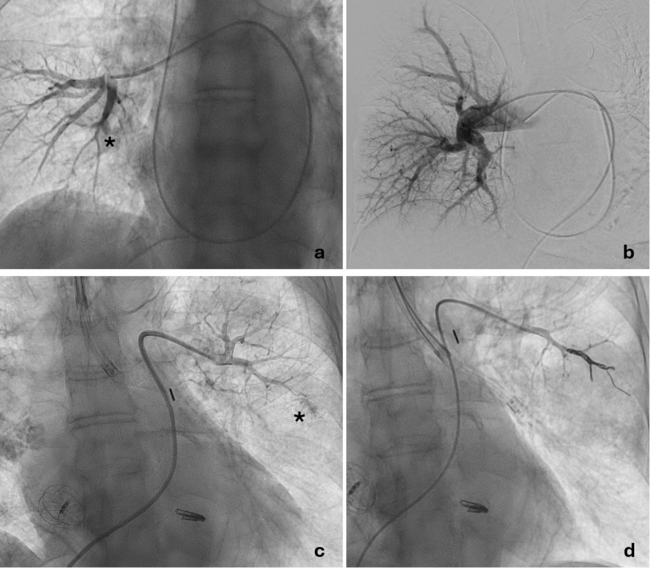
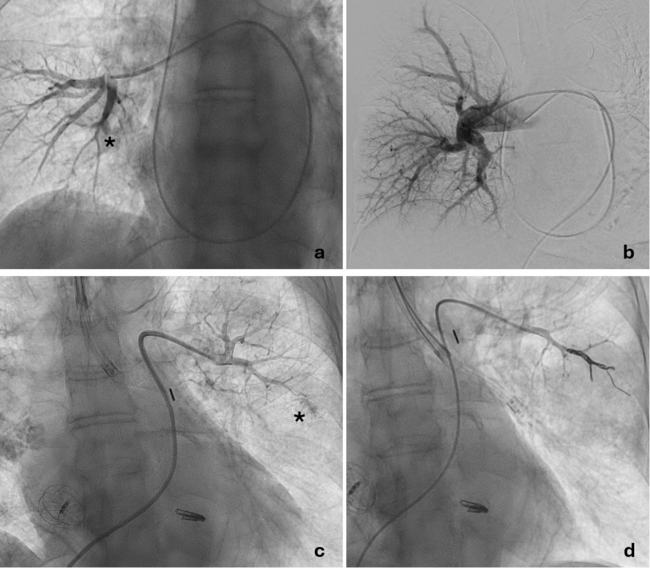
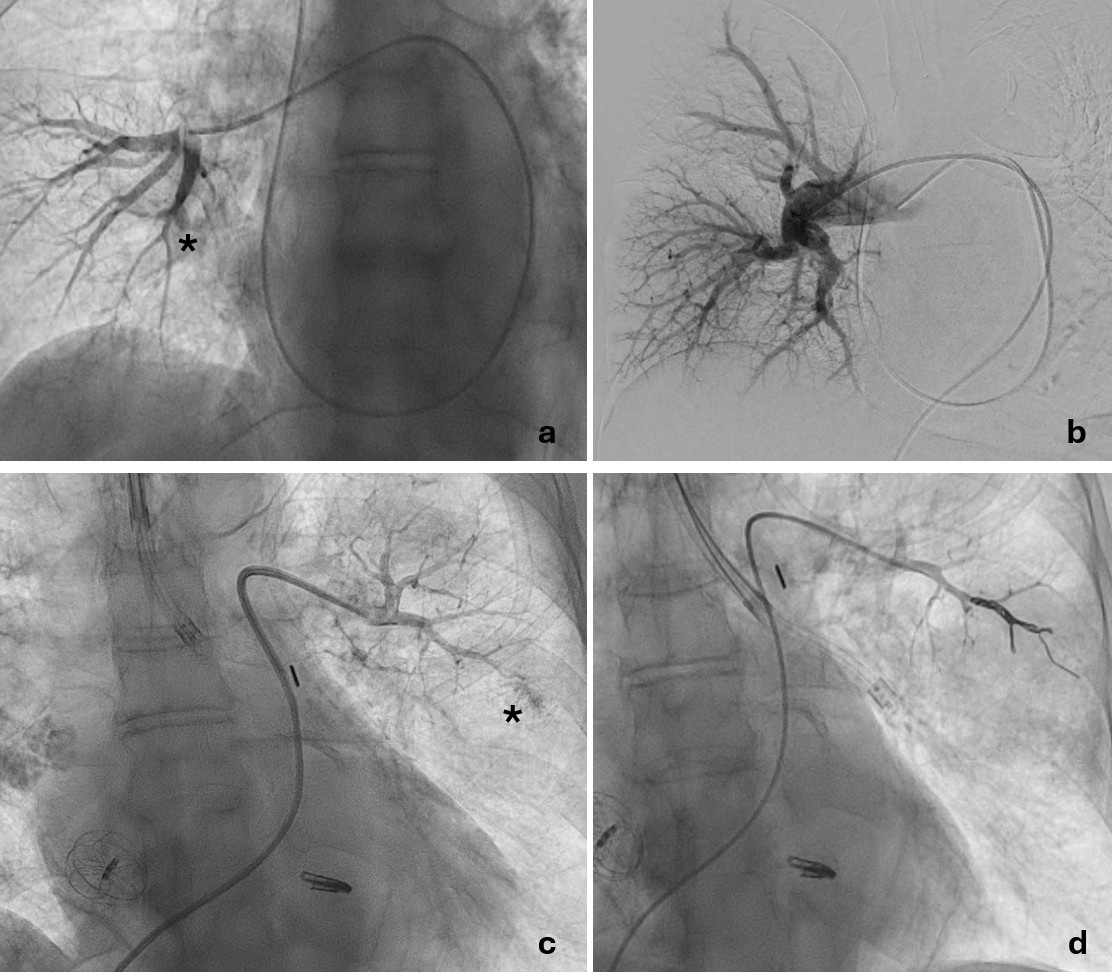
A 78-year-old woman with heart failure (HF) due to severe rheumatic mitral stenosis and moderate regurgitation was referred for left and right heart catheterization (RHC). RHC via right antecubital vein using a 6F Swan-Ganz thermodilution catheter (Edwards Lifesciences) showed severely elevated pulmonary capillary wedge pressure (PCWP) and moderate pulmonary hypertension. There was immediate hemoptysis following PCWP measurement requiring endotracheal intubation. The Swan-Ganz balloon was reinflated and a pulmonary artery (PA) angiogram (via distal tip injection) showed PA branch rupture (Figure A, Video 1). After 5 to 10 minutes of prolonged balloon inflation, repeat angiography revealed no residual extravasation (Figure B, Video 1). This was confirmed by bronchoscopy showing no rebleeding. The patient was extubated after 24 hours and underwent elective bioprosthetic mitral valve replacement 6 weeks later with resolution of HF symptoms.
Case 2
A 91-year-old-woman underwent high-risk percutaneous coronary intervention complicated by pulmonary edema requiring insertion of an intra-aortic balloon pump (IABP). An 8F Swan-Ganz CCOmbo V (Edwards Lifesciences) catheter was placed via femoral approach for hemodynamic monitoring. A hydrophilic V-18 ControlWire Guidewire (Boston Scientific) was used because of difficulty advancing the catheter into the PA. The patient had hemoptysis a few minutes later while still on the table. PA angiography via Swan-Ganz catheter showed wire perforation and extravasation in left mid-lung area which persisted despite prolonged balloon inflation (Figure C, Video 2). With the assistance of interventional radiology, a microcatheter was used to select the bleeding branch, and two 15-mm packing coils (Penumbra) were deployed with resolution of the bleeding (Figure D, Video 2). Within 24 hours, the patient was extubated and the IABP was removed with eventual discharge to skilled nursing facility.
PA rupture is a rare but life-threatening complication of RHC. Immediate reinflation of the PA catheter balloon is a critical initial step1,2 that may be potentially therapeutic, or can at least temporize the situation until definitive intervention is performed.
Affiliations and Disclosures
Neeraj Shah, MD, MPH1; Fouad Jabbour, MD1; Michael Akinyemi, MD2
From the Departments of 1Interventional Cardiology and 2Interventional Radiology, Independence Health Westmoreland Hospital, Greensburg, Pennsylvania.
Disclosures: The authors report no financial relationships or conflicts of interest regarding the content herein.
Consent statement: The authors confirm that informed consent was obtained from the patients for the interventions described in the manuscript and for the publication thereof, including any and all images.
Address for Correspondence: Neeraj Shah, M.D., Independence Health Westmoreland Hospital, 532 W Pittsburgh St, Greensburg, PA 15601. Email: neerajshah86@gmail.com; X: @NeerajShahMD
References
1. Dobies DR, Cohoon AL, Bates AA. Images in cardiovascular medicine. Repair of a perforated pulmonary artery due to a Swan-Ganz catheter using thrombin injection. Circulation. 2009;119(17):e521-e522. doi:10.1161/CIRCULATIONAHA.107.739482
2. Boukantar M, Gallet R, You K, et al. How should I treat a pulmonary artery rupture occurring during a right heart catheterisation in the cathlab? EuroIntervention. 2017;12(18):e2280-e2282. doi:10.4244/EIJ-D-16-00576