SAFE-SEAL: A Bail-Out Technique for Percutaneous Femoral Closure After Failed Hybrid Closure
© 2026 HMP Global. All Rights Reserved.
Any views and opinions expressed are those of the author(s) and/or participants and do not necessarily reflect the views, policy, or position of the Journal of Invasive Cardiology or HMP Global, their employees, and affiliates.
J INVASIVE CARDIOL 2026. doi:10.25270/jic/26.00137. Epub September 28, 2026.
Key Clinical Summary
· Failure of the plug-based component of a hybrid femoral vascular closure system after guidewire removal can cause persistent bleeding with limited percutaneous bailout options.
· SAFE-SEAL uses the retained ProGlide suture as a rail to deliver bioresorbable extravascular sealant directly to the arterial wall, restoring hemostasis without reestablishing femoral guidewire access.
· When conventional management fails, SAFE-SEAL may provide a simple percutaneous bailout and potentially avoid covered stent implantation or surgical repair.
Abstract
Objectives. Failure of the plug-based component during hybrid suture- and plug-based femoral closure may result in persistent bleeding when guidewire access is lost, leaving limited percutaneous bailout options. The authors describe a novel percutaneous bailout strategy designed to achieve hemostasis in this high-risk scenario.
Methods. The first clinical application of the SAFE-SEAL (Suture-Assisted Femoral Emergency SEALing) technique was performed in a patient undergoing transfemoral transcatheter aortic valve implantation. Following failure of the plug-based closure component and persistent bleeding despite balloon tamponade, a bioresorbable extravascular sealant was advanced over retained suture limbs from a previously deployed suture-based closure device and positioned at the arterial wall using a knot pusher.
Results. Complete hemostasis was achieved without additional vascular access or endovascular intervention, as confirmed angiographically. No residual bleeding or flow limitation was observed.
Conclusions. The SAFE-SEAL technique may represent a practical and reproducible bailout option for femoral access-site bleeding after hybrid closure failure, warranting further evaluation in additional cases.
Introduction
Large-bore arterial access has become an integral component of contemporary interventional cardiology, particularly with the widespread adoption of transcatheter aortic valve implantation (TAVI). Despite advances in device technology and preprocedural planning, vascular access-site complications remain clinically relevant and are associated with increased morbidity and adverse outcomes. Percutaneous closure strategies for large-bore femoral access have evolved from exclusively suture-based systems, such as Prostar XL and Perclose ProGlide (Abbott), to plug-based devices, including collagen- or polymer-based systems. More recently, hybrid vascular closure strategies combining suture-based and plug-based devices have been increasingly adopted in contemporary transfemoral TAVI practice. Recent randomized and observational data suggest that combined approaches may reduce vascular complications and improve hemostasis compared with suture-based closure alone.1-3 This approach aims to leverage the mechanical stability of suture-mediated closure with the rapid extravascular sealing provided by plug-based systems and has been associated with a reduction in access site complications compared with double suture-based techniques.
However, hybrid closure strategies have an inherent limitation. Deployment of the plug-based component requires removal of the guidewire, resulting in complete loss of endovascular access. In the event of plug-device failure, management options are limited and typically require secondary vascular access and complex endovascular bailout procedures, such as balloon angioplasty or covered stent implantation. In this report, we describe a novel bailout technique illustrated through a clinical case, the SAFE-SEAL (Suture-Assisted Femoral Emergency SEALing) technique, designed to achieve hemostasis following failure of the plug-based component of a hybrid closure strategy during TAVI.
Case Description
An 83-year-old man underwent transfemoral TAVI with implantation of a 29-mm self-expanding prosthesis. Preprocedural imaging demonstrated a right common femoral artery of adequate caliber without significant calcifications at the puncture site. The only notable anatomical feature was a markedly reduced subcutaneous tissue layer, measuring less than 1 cm between the skin surface and the arterial wall.
According to institutional practice, large-bore femoral access closure was performed using a hybrid technique. After femoral puncture with a 6F sheath, a suture-based closure device (ProGlide) was pre-deployed. At the end of the procedure, following removal of the large-bore introducer, a plug-based FemoSeal device (Terumo Europe) was routinely deployed. After successful valve implantation, the 14F introducer sheath was removed, and the FemoSeal system was advanced over a 0.035-inch guidewire before tightening the previously deployed ProGlide suture. At this stage, the FemoSeal had not yet been deployed and could still be removed if suture-mediated closure proved inadequate, preserving the possibility of an alternative closure strategy. The ProGlide knot was then tightened, and adequacy of suture-mediated hemostasis was assessed by transient release of manual compression and direct evaluation of access site bleeding before deployment of the plug-based device.
During FemoSeal deployment, dislocation of both discs of the FemoSeal device was observed, likely related to the minimal subcutaneous tissue depth and to insufficient shrinking of the arteriotomy after tightening of the ProGlide knot. This resulted in significant bleeding from the femoral access site (Video 1). Temporary hemostasis was achieved by inflating a balloon in the femoral artery via the radial artery, used as secondary access (Video 2). At the femoral access site, only the suture limbs of the previously deployed ProGlide device remained. Repeated advancement and tightening of the ProGlide suture failed to achieve adequate hemostasis.
SAFE-SEAL BAIL-OUT TECHNIQUE
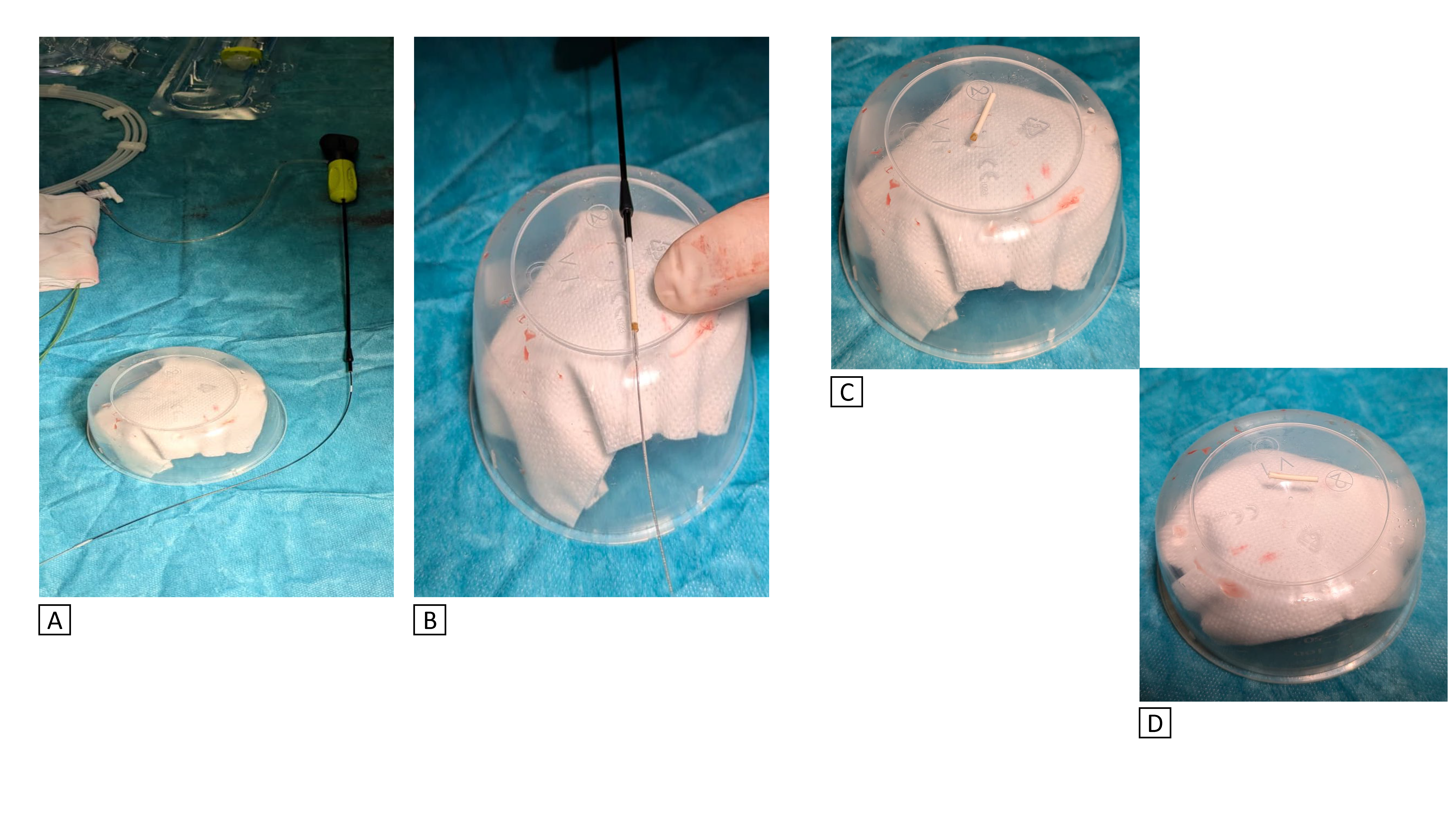
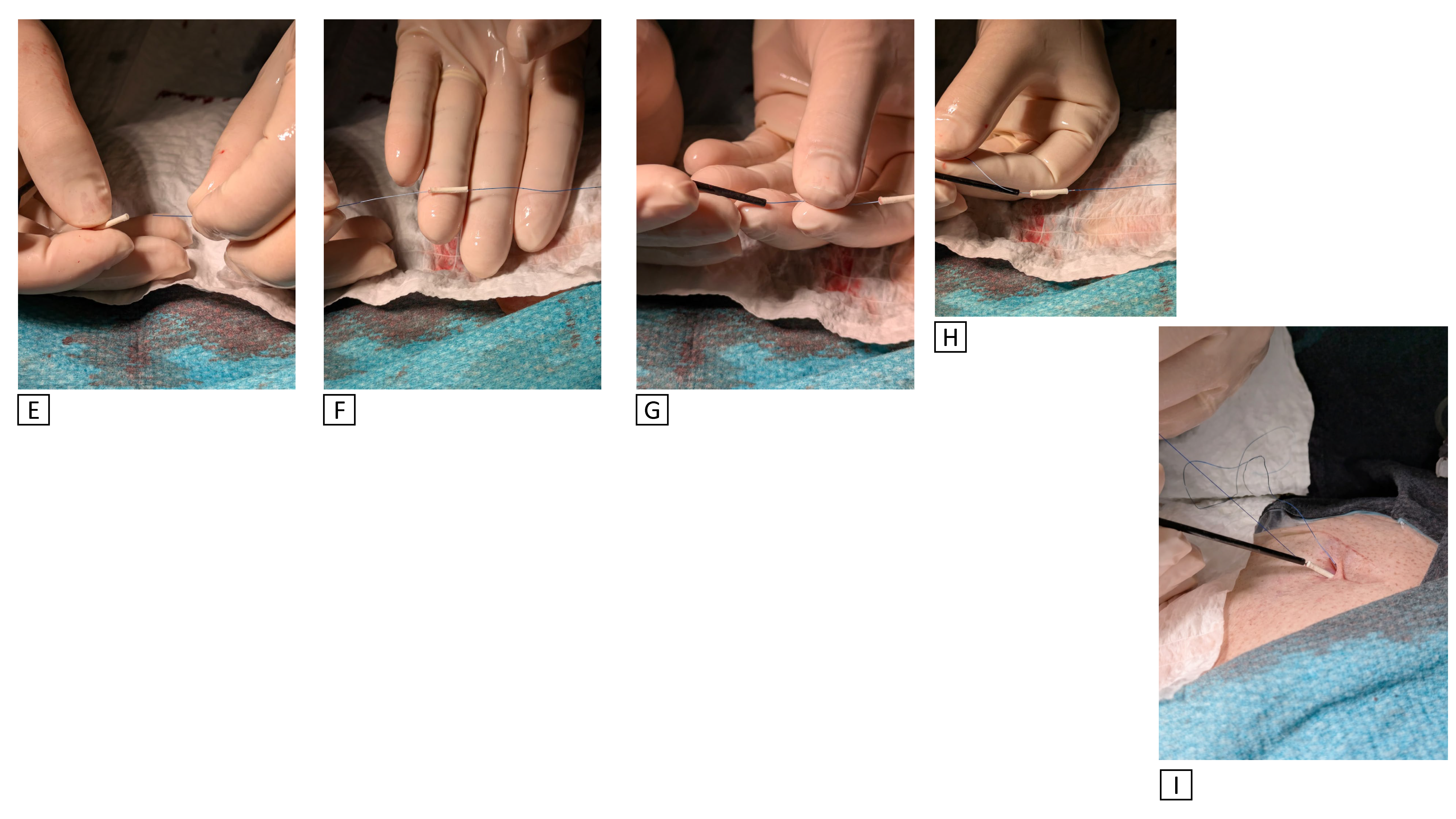
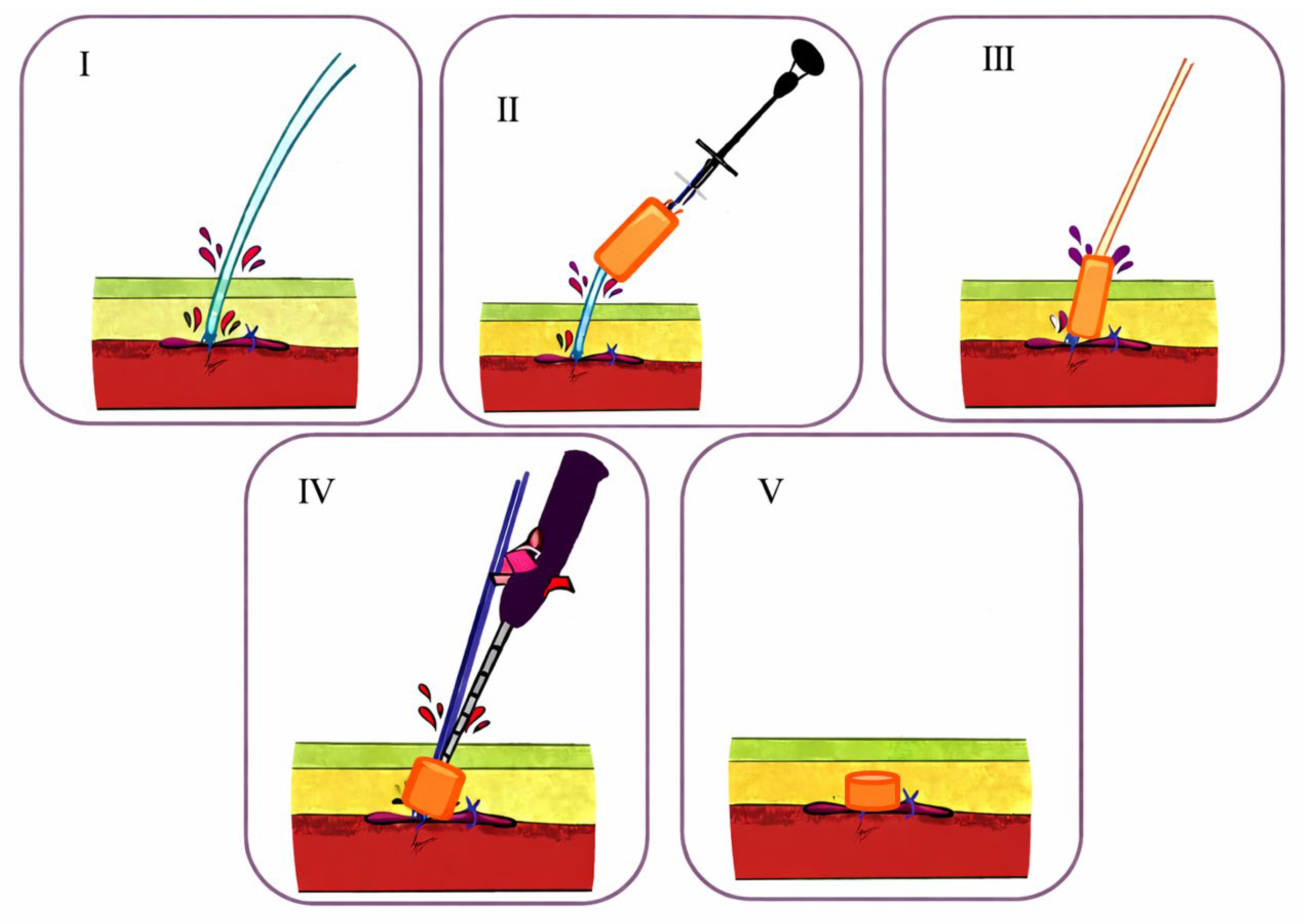
Given persistent bleeding, a percutaneous bail-out closure was performed using the SAFE-SEAL technique. A MYNX CONTROL vascular closure device (Cordis), which incorporates a fully bioresorbable polyethylene glycol extravascular sealant, was selected. The sealant column was isolated from the delivery system. The sealant has a cylindrical configuration with a central lumen, allowing it to be adapted for alternative delivery (Figure 1). The isolated sealant column was loaded onto the retained suture limbs of the previously deployed ProGlide device. Using the ProGlide knot pusher, the sealant column was advanced gently along the suture and positioned immediately external to the arterial wall, effectively replacing the dislodged external disc of the failed plug-based device (Figure 2). Careful advancement is essential to avoid inadvertent intravascular displacement of the sealant. Gentle tension was maintained on the suture for approximately 20 seconds to allow controlled extravascular compression. Complete hemostasis was achieved. Final angiography confirmed successful closure of the femoral arteriotomy, with no residual bleeding, vessel stenosis, or flow limitation (Video 3). A schematic overview of the technique is provided in the Central Illustration.
Discussion
Vascular access-site bleeding remains a relevant complication of large-bore percutaneous procedures, particularly in TAVI. Hybrid closure strategies combining suture- and plug-based devices have gained popularity because of their favorable safety profile; however, failure of the plug-based component represents a critical and underreported limitation of this approach. Loss of guidewire access during plug-device deployment significantly restricts bailout options and often necessitates additional vascular access and endovascular interventions, increasing procedural complexity and potential risk.
A combined ProGlide-FemoSeal strategy has been described in a large TAVI cohort without routine use of an intermediate small-bore sheath step.3 Conversely, the recently described MultiCLOSE algorithm deliberately reinserts a 6F to 8F sheath after initial suture-mediated closure to permit ipsilateral angiographic assessment and tailor subsequent closure.4 Thus, small-bore sheath reinsertion represents a valuable alternative closure algorithm, particularly when angiographic assessment before definitive closure is desired. In our approach, the undeployed FemoSeal system remained removable while the ProGlide suture was tightened, thereby preserving the option of an alternative closure strategy if clinically relevant bleeding persisted.
Despite growing evidence supporting hybrid suture- and plug-based closure strategies, management options remain limited in the event of plug-based device failure after guidewire removal, particularly when endovascular access has been lost.1 The SAFE-SEAL technique addresses this specific failure mechanism by leveraging the retained suture-based closure system to deliver a bioresorbable extravascular sealant directly to the arteriotomy site; this approach effectively recreates the external sealing component of a plug-based device without the need to reestablish intravascular access. SAFE-SEAL may be particularly advantageous in patients with limited subcutaneous tissue depth, a recognized risk factor for plug-device dislocation and failure. Bailout strategies for femoral access-site complications remain limited, particularly when guidewire access is lost, and currently rely on prolonged balloon tamponade, covered stent implantation, or surgical repair.
Compared with alternative bailout strategies, SAFE-SEAL avoids additional femoral punctures, balloon angioplasty, or covered stent implantation, potentially reducing vascular trauma and preserving future access-site options. The technique can be performed using materials readily available in most catheterization laboratories, and the use of a fully bioresorbable extravascular sealant may further support long-term vessel integrity. A potential concern is inadvertent intravascular displacement of the sealant column during advancement. To mitigate this risk, the sealant should be advanced gently along the retained suture until it reaches the external arterial wall. When secondary vascular access is available, temporary inflation of an intravascular balloon across the arteriotomy during sealant advancement may provide an additional safety measure by acting as a mechanical barrier against intraluminal migration. This procedural refinement was not used during the index SAFE-SEAL deployment and should be considered a proposed safety adjunct requiring further evaluation.
Limitations
This report is limited by its single-case nature and by the off-label adaptation of an existing vascular closure device. While angiographic confirmation demonstrated effective hemostasis without acute complications, further experience is required to assess reproducibility, safety, and long-term outcomes. To the best of our knowledge, this is the first clinical report describing the use of a suture-assisted extravascular sealant technique as a percutaneous bail-out strategy after failure of the plug-based component of a hybrid femoral closure approach with loss of guidewire access.
Conclusions
SAFE-SEAL is a novel percutaneous bail-out technique for femoral access closure following failure of hybrid suture- and plug-based strategies during TAVI. By exploiting a retained suture-based closure system to deliver a bioresorbable extravascular sealant, SAFE-SEAL enables effective hemostasis without renewed endovascular access. This technique may represent a valuable option in select high-risk scenarios and warrants further evaluation.
Affiliations and Disclosures
Marco Angelillis, MD, PhD1; Leonardo Misuraca, MD1; Paolo Calabria, MD2; Cristina Giannini, MD, PhD1; Paolo Spontoni, MD1; Laura Stazzoni, MD1; Alessandro Sticchi, MD, PhD1; Giulia Costa, MD, PhD1; Marco De Carlo, MD, PhD3
From 1S.D. Laboratorio di Emodinamica, Azienda Ospedaliero Universitaria Pisana, Pisa, Italy; 2Ospedale Misericordia, Grosseto, Italy; 3Department of Cardiology, University of Pisa.
Disclosures: The authors report no relationships relevant to the contents of this paper to disclose.
Address for correspondence: Marco Angelillis, MD, PhD, S.D. Laboratorio di Emodinamica, Azienda Ospedaliero Universitaria Pisana, Via Paradisa, 2, Pisa 56124, Italy. Email: angelillismarco@gmail.com
References
1. Rheude T, Ruge H, Altaner N, et al. Comparison of strategies for vascular ACCESS closure after transcatheter aortic valve implantation: the ACCESS-TAVI randomized trial. Eur Heart J. 2025;46(7):635-645. doi:10.1093/eurheartj/ehae784
2. Megantara HP, Dakota I, Taofan T, Indriani S, Aurora RG, Adiarto S. A comparison of two vascular closure strategies in transcatheter aortic valve replacement: suture and plug versus suture alone - a systematic review and meta-analysis. Cardiology. 2025:1-12. doi:10.1159/000548359
3. Gmeiner JMD, Linnemann M, Steffen J, et al. Dual ProGlide versus ProGlide and FemoSeal for vascular access haemostasis after transcatheter aortic valve implantation. EuroIntervention. 2022;18(10):812-819. doi:10.4244/EIJ-D-22-00311
4. Rosseel L, Montarello NJ, Nuyens P, et al. A systematic algorithm for large-bore arterial access closure after TAVI: the TAVI-MultiCLOSE study. EuroIntervention. 2024;20(6):e354-e362. doi:10.4244/EIJ-D-23-00725