Antithrombotic Therapy and Device Healing After Left Atrial Appendage Occlusion With WATCHMAN FLX Pro: A Single-Center Real-World Cohort Study
© 2026 HMP Global. All Rights Reserved.
Any views and opinions expressed are those of the author(s) and/or participants and do not necessarily reflect the views, policy, or position of the Journal of Invasive Cardiology or HMP Global, their employees, and affiliates.
J INVASIVE CARDIOL 2026. doi:10.25270/jic/26.00212. Epub September 18, 2026.
Key Clinical Summary
- Among patients undergoing left atrial appendage closure (LAAC) with the WATCHMAN FLX Pro device, discharge on low-dose direct oral anticoagulant (DOAC) monotherapy was associated with a markedly lower rate of high-grade hypoattenuated thickening than dual antiplatelet therapy (DAPT).
- This association persisted after adjustment for age, diabetes, kidney function, bleeding risk, and prior stroke.
- Despite this imaging difference, stroke, bleeding, and mortality rates did not differ significantly between groups through 180 days.
Abstract
Objectives. The authors sought to determine whether discharge antithrombotic regimen (dual antiplatelet therapy [DAPT] vs low-dose direct oral anticoagulant [DOAC] monotherapy) is independently associated with computed tomography (CT)-detected high-grade hypoattenuated thickening (HAT), an imaging correlate of device-related thrombus, and with early clinical outcomes following WATCHMAN FLX Pro (Boston Scientific) implantation.
Methods. A single-center retrospective analysis of 427 consecutive patients undergoing attempted WATCHMAN FLX Pro implantation (July 2024-October 2025) was conducted. After excluding 10 patients with screen failure and 17 on alternative antithrombotic regimens, 400 patients (263 DAPT, 137 low-dose DOAC) were included. The primary endpoint was high-grade HAT on 4-month surveillance cardiac CT. Secondary endpoints were appendage patency, peridevice leak (PDL), incomplete neoendocardial coverage, and 180-day clinical outcomes.
Results. Surveillance CT was performed in 322 of 400 patients (80.5%). High-grade HAT occurred in 12/213 patients on DAPT (5.6%) vs 1/109 patients on DOAC (0.9%; P = .046); 92.3% of high-grade HAT cases were in the DAPT group. DAPT remained independently associated with high-grade HAT on multivariable analysis (adjusted odds ratio, 7.43; 95% CI, 1.01-54.44; P = .048). Appendage patency, PDL, and incomplete neoendocardial coverage were similar between groups. Through 180 days, stroke, bleeding, and mortality did not differ significantly by regimen.
Conclusions. In this real-world WATCHMAN FLX Pro cohort, low-dose DOAC monotherapy was associated with a markedly lower risk of CT-detected high-grade HAT than DAPT, without an observed increase in bleeding or stroke. Anticoagulation during the early post-implant healing period may mitigate thrombus formation more effectively than antiplatelet therapy. Randomized trials are needed to confirm these findings.
Introduction
Device-related thrombus (DRT) remains an important complication following left atrial appendage occlusion (LAAO), occurring in approximately 3% to 4% of patients on surveillance imaging and being associated with an increased risk of thromboembolic events and adverse clinical outcomes.1-3 Although LAAO with the WATCHMAN family of devices (Boston Scientific) is an established alternative to long-term oral anticoagulation for stroke prevention in patients with nonvalvular atrial fibrillation (AF), the risk of DRT continues to influence postprocedural management strategies.4
Postprocedural surveillance has increasingly shifted toward cardiac computed tomography (CT), which offers high spatial resolution for assessment of device position, peridevice leak (PDL), appendage patency, and device healing.5 High-grade hypoattenuated thickening (HAT) on cardiac CT (grade 2-3; protruding, irregular, or pedunculated thrombus) has emerged as a clinically relevant imaging correlate of DRT, whereas low-grade HAT is generally considered part of the normal healing response following device implantation.6,7 Despite the prognostic significance of high-grade HAT and DRT, the optimal post-LAAO antithrombotic regimen remains uncertain. Contemporary practice includes heterogeneous use of dual antiplatelet therapy (DAPT), direct oral anticoagulants (DOACs), and other antithrombotic strategies, with limited available comparative data.3,8 The SIMPLAAFY trial (WATCHMAN FLX Pro Left Atrial Appendage Closure Device With Alternative Post-Implant Monotherapy; NCT06521463) is an ongoing randomized study evaluating alternative post-implant antithrombotic monotherapy strategies following WATCHMAN FLX Pro implantation; primary results are anticipated in 2026 to 2027. In the absence of prospective randomized data, there remains no consensus-based antithrombotic regimen to guide post-LAAO decision-making, particularly with respect to reducing DRT risk.
The WATCHMAN FLX Pro device incorporates a fluoropolymer-coated membrane designed to enhance thromboresistance and facilitate neoendocardial coverage. Despite these design features, a prior cardiac CT analysis from our institution demonstrated that FLX Pro recipients discharged on DAPT exhibited more pronounced HAT and decreased appendage patency compared with recipients of the prior-generation WATCHMAN FLX device.9 Given the recognized association between high-grade HAT and adverse clinical outcomes, we sought to investigate the association between postprocedural antithrombotic regimen and CT-derived device healing following WATCHMAN FLX Pro implantation, with particular focus on high-grade HAT, appendage patency, PDL, and clinical outcomes.
Methods
Study population
We retrospectively identified consecutive patients who underwent attempted LAAO with the WATCHMAN FLX Pro device at University Hospitals Cleveland Medical Center (Cleveland, Ohio) between July 2024 and October 2025. Patients were referred for LAAO because of elevated thromboembolic risk (CHA₂DS₂-VASc ≥2) and either a history of significant bleeding, intolerance to oral anticoagulation, or other clinical factors favoring a non-pharmacologic stroke prevention strategy.10
Implantation was performed following multidisciplinary evaluation and confirmation of suitability for LAAO. During the study period, postprocedural antithrombotic management evolved from DAPT toward low-dose DOAC monotherapy based on institutional experience and evolving understanding of device healing following WATCHMAN FLX Pro implantation. A small number of patients were discharged on alternative regimens, including single antiplatelet therapy, warfarin, or other combinations; these patients were excluded from regimen-specific comparisons.
All consecutive patients undergoing attempted WATCHMAN FLX Pro implantation were included in analyses of procedural and clinical outcomes. Imaging-based analyses were restricted to patients who underwent standardized surveillance cardiac CT approximately 4 months following implantation. Patients with unfavorable left atrial appendage (LAA) anatomy or LAA thrombus identified during preprocedural evaluation were excluded from the procedural cohort. For imaging analyses, patients were additionally excluded if follow-up CT was technically inadequate for interpretation or unavailable. The study was approved by the institutional review board with a waiver of informed consent because of the retrospective nature of the study.
Procedural details
All patients underwent a preprocedural echocardiogram to evaluate for existing pericardial effusion and a preprocedural CT to evaluate for presence of LAA thrombus, transseptal planning, and device sizing. Size selection was based on 15% to 25% device compression using area-derived diameter measurements as per the TruPlan software system (Circle Cardiovascular Imaging). All patients were loaded with aspirin prior to the procedure. Those who took a P2Y12 inhibitor chronically were continued on it, while NOACs or warfarin were held for 1 dose prior to the procedure or until a normal international normalized ratio was achieved, respectively.
All procedures were performed under moderate sedation (intravenous midazolam and fentanyl) via transfemoral venous access with transseptal puncture (VersaCross system, Baylis Medical) under intracardiac echocardiography (8F ACUSON AcuNav probe, Siemens Healthineers) and fluoroscopic guidance. Device deployment followed manufacturer instructions and satisfaction of the PASS (Position, Anchor, Size, Seal) criteria. Device percent compression was calculated by the following formula: compression = [(intended device diameter – measured diameter)/intended device diameter] x 100.
A postprocedural echocardiogram was performed following the procedure to confirm absence of significant pericardial effusion, and most patients underwent same-day discharge. Patients to be discharged on DAPT who were not already taking a P2Y12 inhibitor received a 300-mg loading dose of clopidogrel immediately after the procedure. Patients discharged on low-dose DOAC were instructed to commence therapy the day following the procedure.
Discharge antithrombotic regimen
Patients were discharged following the antithrombotic regimen on either DAPT or low-dose DOAC. Patients who were discharged on DAPT were continued on the regimen for 6 months, which reflects the manufacturer's recommended post-implant antithrombotic protocol. The low-dose DOAC was prescribed for a duration of 3 to 4 months, a duration chosen on the basis of the methodology used in the CHAMPION-AF randomized trial and emerging data from the EWOLUTION sub-analysis.3,8 Also, the 3- to 4-month window was structured to align with the timing of routine surveillance CT imaging performed approximately 4 months following the procedure. The decision to discontinue low-dose DOAC and transition to aspirin monotherapy was made only after surveillance imaging confirmed the absence of HAT or DRT. Patients with high-grade HAT (identified on surveillance CT) were transitioned to full-dose oral anticoagulation with structured repeat imaging 3 months post-intensification of treatment.
Management of patients with high-grade HAT on surveillance imaging
Patients identified with high-grade HAT (grade 2-3) on surveillance cardiac CT were reviewed by treating structural heart cardiologists. Patients on DAPT or low-dose DOAC at the time of HAT identification were transitioned to full-dose oral anticoagulation (typically apixaban 5 mg twice daily, or an equivalent full-dose direct oral anticoagulant selected on the basis of kidney function and bleeding risk). Our current surveillance protocol includes cardiac CT approximately 4 months after LAAO. If high-grade HAT is identified and escalation is clinically acceptable, we repeat cardiac CT approximately every 3 months until resolution. Once HAT resolves, anticoagulation may be de-escalated to the lower-intensity regimen, with repeat CT at approximately 1 year to confirm sustained resolution.
Cardiac CT acquisition and analysis
All patients underwent contrast-enhanced, prospective electrocardiogram-gated cardiac CT at approximately 4 months post-implant using a dual-source Siemens Healthineers scanner (128 × 0.6-mm collimation) with a standardized LAAO protocol (coverage from the first rib to the diaphragm; intravenous contrast at 5 mL/sec for 80 mL extended bolus). Images were analyzed in a blinded fashion at 35% of the cardiac cycle. Using multiplanar reconstruction, en face views of the implanted WATCHMAN device were created by centering the crosshair on the device screw and aligning orthogonal planes with the screw and through the device shoulders at the level of the screw hub cove, as described previously.9,11 HAT was defined as hypoattenuation visualized from the atrial side to the bottom of the screw hub cove.
Each scan was assessed for the presence of high-grade HAT and patent LAA. Grades 2 and 3 HAT were considered high-grade. A patent appendage without concomitant PDL was deemed representative of incomplete neoendocardial coverage.9,11 HAT was graded using a previously validated CT-based classification system: grade 1, flat sessile hypoattenuation of less or equal to 3 mm in thickness (low-grade, consistent with normal neoendocardial coverage); grade 2, flat sessile hypoattenuation of greater than 3 mm or protruding sessile thickening (high-grade); and grade 3, pedunculated or irregular thrombus-like morphology (high-grade).2
Outcomes
The primary endpoint was the prevalence of high-grade hypoattenuated thickening (HAT; grade 2-3) on surveillance cardiac CT, stratified according to discharge antithrombotic regimen (DAPT vs low-dose DOAC monotherapy). High-grade HAT was selected as the primary imaging endpoint because it is considered the most clinically relevant CT correlate of DRT.
Secondary imaging endpoints included patent appendage, PDL, and incomplete neoendocardial coverage on follow-up cardiac CT. Secondary clinical endpoints included ischemic stroke, major and minor bleeding events classified according to Bleeding Academic Research Consortium (BARC) criteria, all-cause mortality, cardiovascular mortality. Clinical outcomes were assessed in the overall cohort, irrespective of follow-up imaging status.
Statistical analysis
Continuous variables are presented as mean ± standard deviation and were compared using the Student’s t-test or Mann-Whitney U test, as appropriate. Categorical variables are presented as counts and percentages and were compared using the chi-square test or Fisher’s exact test when expected cell counts were small. Logistic regression was used to estimate odds ratios (ORs) with 95% confidence intervals (CIs) for associations between discharge antithrombotic regimen and imaging outcomes. Multivariable logistic regression for high-grade HAT included prespecified covariates selected on the basis of biological plausibility and prior literature, including age, diabetes mellitus (DM), estimated glomerular filtration rate (eGFR), HAS-BLED score, and prior stroke.
Clinical outcomes were assessed through 180 days following WATCHMAN FLX Pro implantation. The 180-day follow-up window was selected a priori because it corresponded to the intended duration of the initial postprocedural antithrombotic regimen, after which most patients transitioned to aspirin monotherapy and the initial discharge regimen was no longer expected to meaningfully differentiate antithrombotic exposure. Patients without an event before 180 days were censored at the earliest of 180 days, last available follow-up, or death. Kaplan-Meier methods were used to estimate event-free survival for clinical outcomes, with between-group comparisons performed using the log-rank test. Given the relatively small number of clinical events, analyses of clinical outcomes were considered exploratory. All statistical tests were 2-sided, and a P-value of less than 0.05 was considered statistically significant. Statistical analyses were performed using SPSS version 19 (IBM Corp).
Results
Study population and baseline characteristics
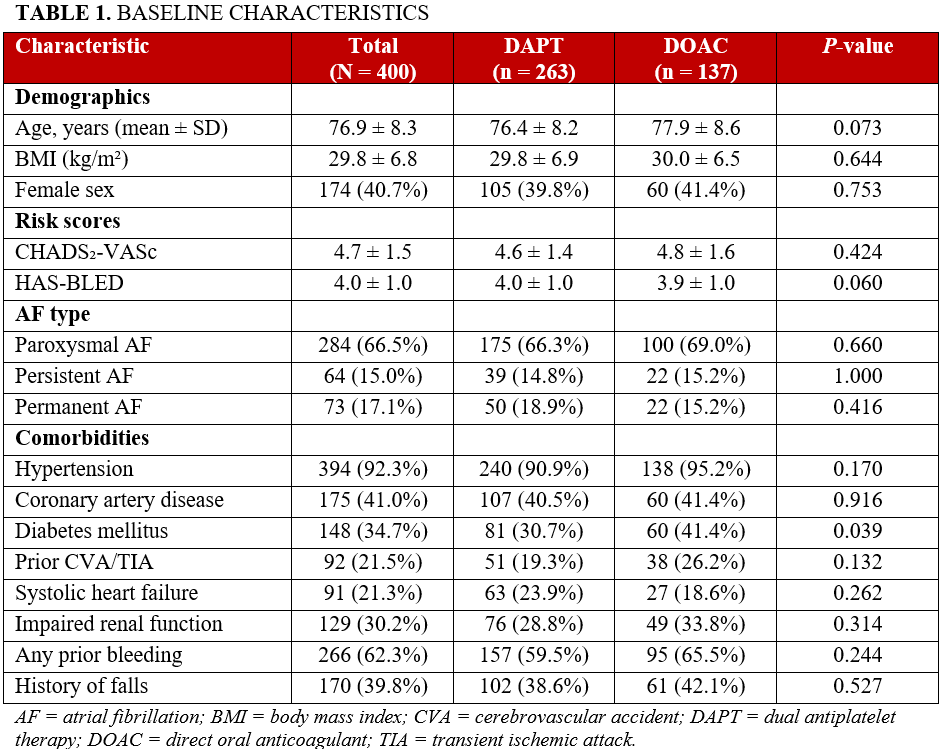
Between July 2024 and October 2025, 427 consecutive patients were evaluated for LAA occlusion. The mean age of the overall cohort was 76.9 ± 8.3 years, 174 patients (40.7%) were female, the mean CHA₂DS₂-VASc score was 4.7 ± 1.5, and the mean HAS-BLED score was 4.0 ± 1.0. Hypertension was present in 394 patients (92.3%), coronary artery disease in 175 (41.0%), DM in 148 (34.7%), prior stroke or transient ischemic attack (TIA) in 92 (21.5%), and impaired renal function in 129 (30.2%). History of prior bleeding was present in 266 patients (62.3%). Ten patients (2.3%) did not undergo device implantation because of unfavorable LAA anatomy or the presence of LAA thrombus on preprocedural imaging, leaving 417 patients with successful device implantation, as illustrated in Figure 1.
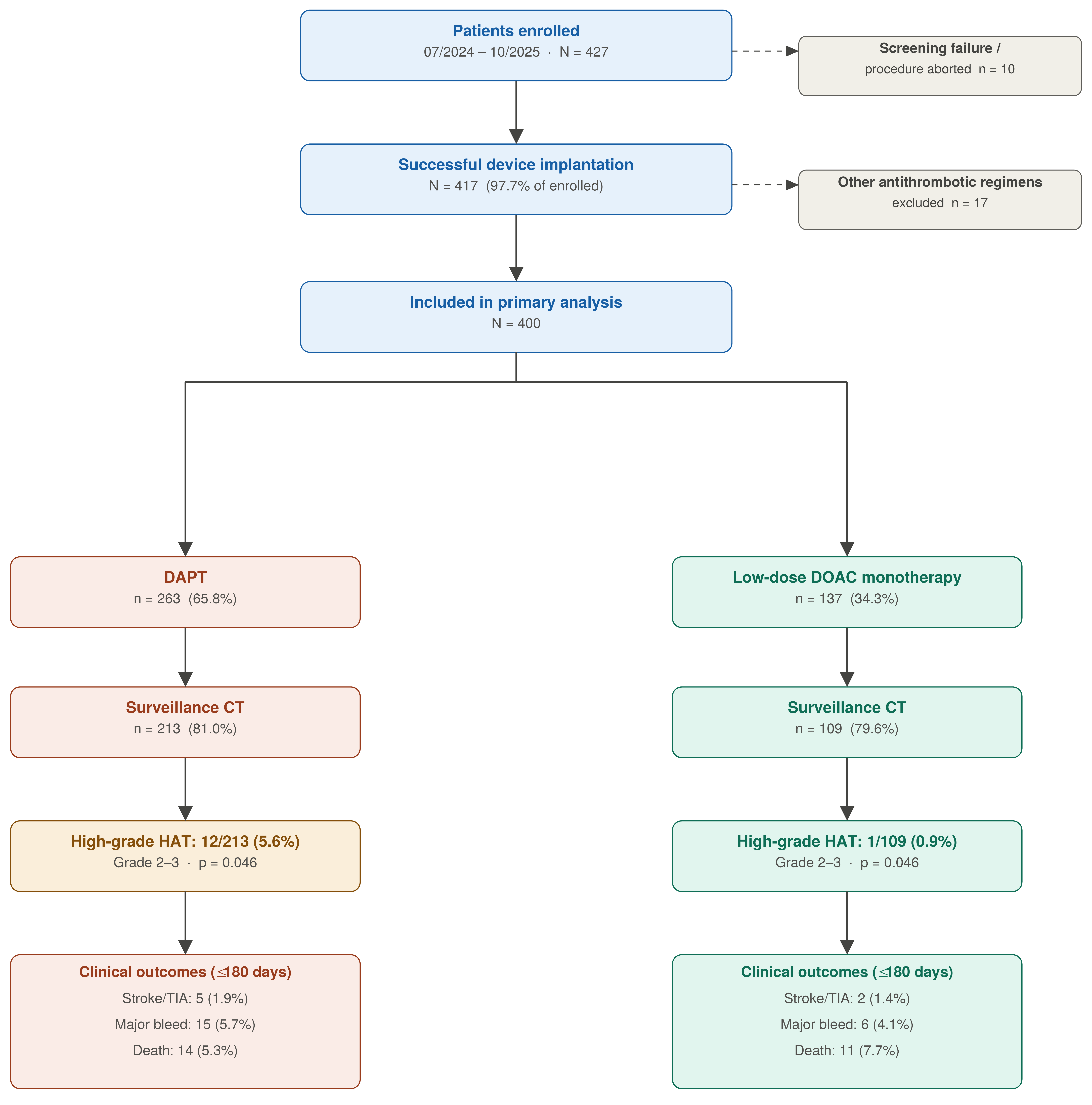
Among the 400 patients included in the primary analysis, 263 (65.8%) received DAPT and 137 (34.3%) received low-dose DOAC monotherapy. An additional 17 patients were discharged on alternative antithrombotic regimens and were excluded from regimen-specific comparisons.
Among the 137 patients discharged on low-dose DOAC monotherapy, the distribution of compounds was as follows: apixaban in 100 patients (73.0%), rivaroxaban in 14 patients (10.2%), and dabigatran in 2 patients (1.5%). An additional 21 patients (15.3%) were DOAC-naïve at the time of referral and were initiated de novo on a DOAC at discharge (predominantly on apixaban). Apixaban was the predominant compound because it was the most common prereferral chronic DOAC in patients that continued on the same compound at discharge and because it was the preferred compound for DOAC-naïve initiation.
Baseline demographic and clinical characteristics were generally well balanced between treatment groups. Patients discharged on low-dose DOAC monotherapy had a higher prevalence of DM compared with those discharged on DAPT (41.4% vs 30.7%, P = .039). No other clinically meaningful differences were observed in age, sex, CHA₂DS₂-VASc score, HAS-BLED score, AF type, prior stroke, renal dysfunction, history of bleeding, or history of falls (Table 1).
Procedural outcomes
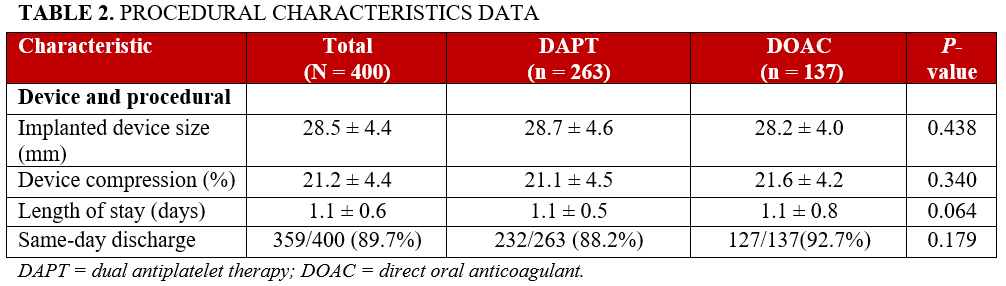
Among the 417 patients who underwent attempted WATCHMAN FLX Pro implantation, there were no in-hospital strokes or deaths. Vascular access complications occurred in 5 patients (1.2%), including 3 femoral hematomas and 2 femoral bleeding events. Small postprocedural pericardial effusions were identified in 27 patients (6.4%) and were managed conservatively without intervention. The mean implanted device size was 28.5 ± 4.4 mm, with a mean device compression of 21.2 ± 4.4%. Most patients underwent same-day discharge following implantation. Procedural characteristics are summarized in Table 2.
Surveillance cardiac CT findings
Surveillance cardiac CT was performed in 322 of 400 patients (80.5%) at approximately 4 months following WATCHMAN FLX Pro implantation, including 213 patients discharged on DAPT and 109 patients discharged on low-dose DOAC monotherapy.
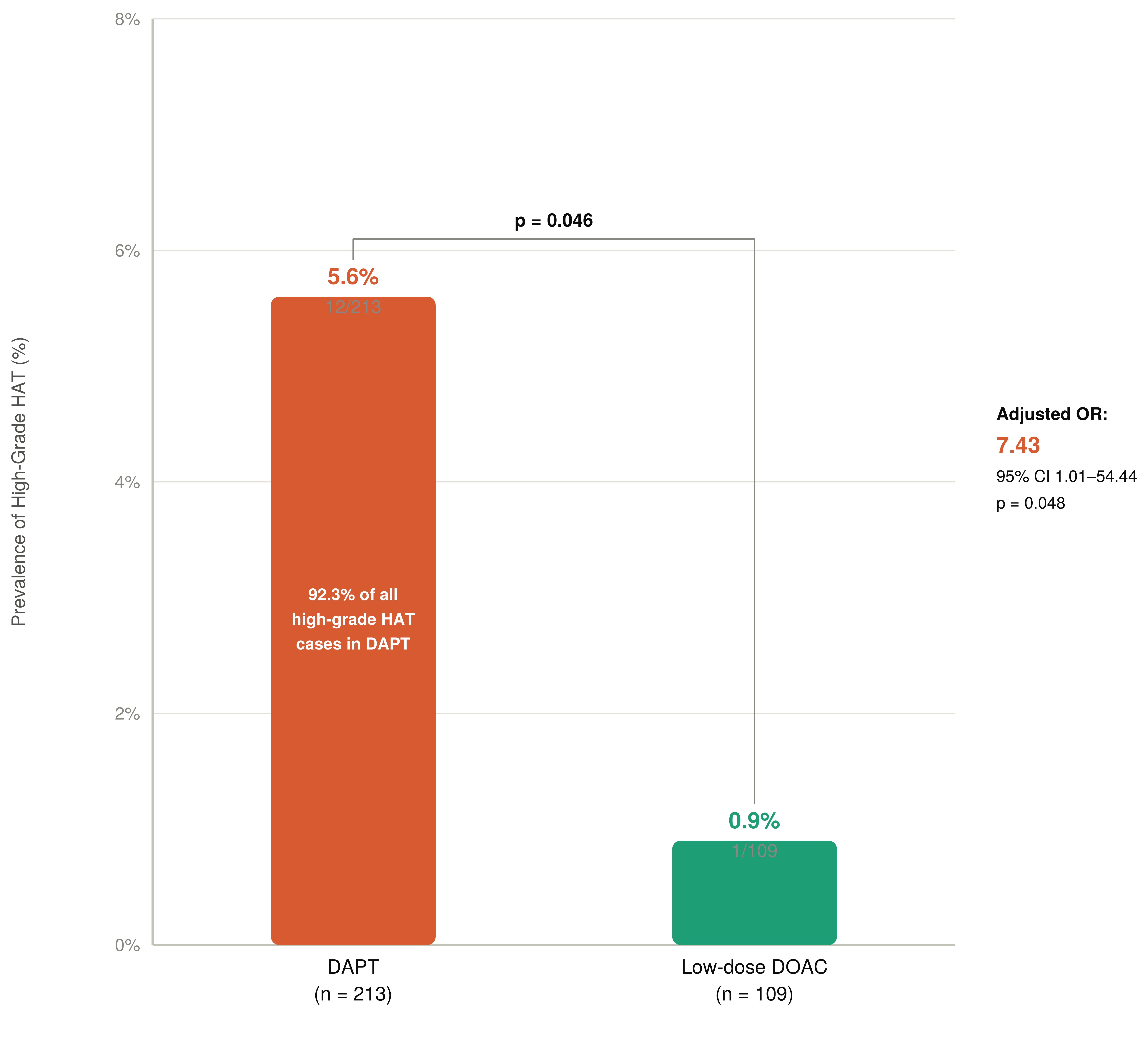
The primary endpoint, high-grade HAT, was identified in 13 of 322 patients (4.0%). High-grade HAT occurred significantly more frequently among patients discharged on DAPT than among those discharged on low-dose DOAC monotherapy (12/213 [5.6%] vs 1/109 [0.9%], P = .046). In multivariable logistic regression adjusting for age, DM, eGFR, HAS-BLED score, and prior stroke, discharge on DAPT remained independently associated with high-grade HAT (adjusted OR, 7.43; 95% CI, 1.01-54.44; P = .048). Among all patients with high-grade HAT, 92.3% were in the DAPT group, while 7.7% were in the low-dose DOAC group (Figure 2).
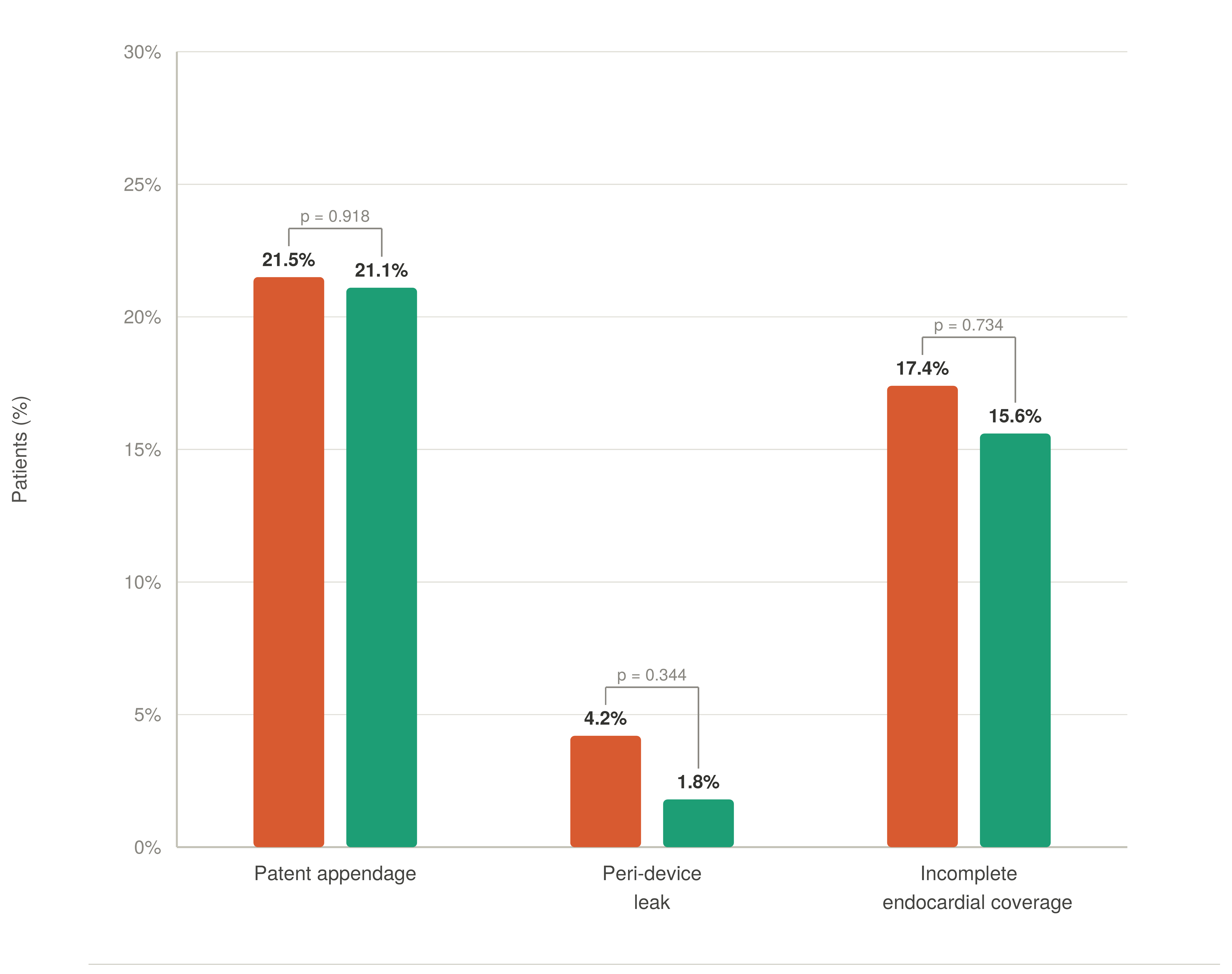
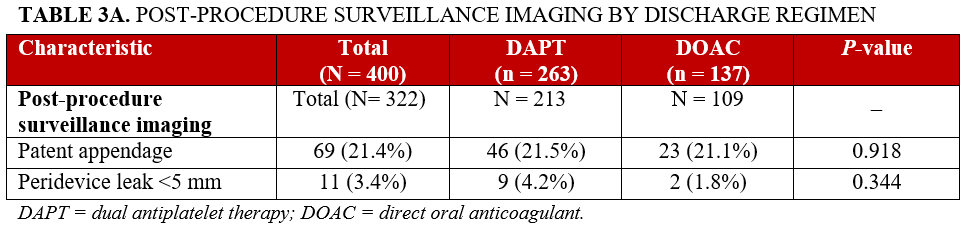
Appendage patency was observed in 69 of 322 patients (21.4%) and did not differ significantly according to discharge antithrombotic regimen (46/213 [21.5%] vs 23/109 [21.1%]; P = .918). PDL was identified in 11 of 322 patients (3.4%), with no significant difference between treatment groups (9/213 [4.2%] in the DAPT group vs 2/109 [1.8%] in the DOAC group; P = .344). Among patients with a patent appendage in the DAPT group, 19.6% (9/46) had a PDL, while the remaining 80.4% (37/46) were considered to have incomplete neoendocardial coverage. Similarly, among patients with a patent appendage in the low-dose DOAC group, 10.5% (2/19) had a PDL, while the remaining 89.5% (17/19) were considered to have incomplete neoendocardial coverage. The prevalence of incomplete neoendocardial coverage did not differ significantly between groups (37/213 [17.4%] DAPT vs 17/109 [15.6%] DOAC; P = .734), as illustrated in Figure 3. Notably, none of the 13 patients with high-grade HAT had a coexisting PDL or intradevice leak on surveillance imaging (0/13 [0%] vs 11/309 [3.6%] in the HAT-negative group; Fisher exact P = 1.000), indicating that, in the current cohort, HAT and PDL appear as independent imaging findings.
Overall, discharge antithrombotic regimen was associated with substantial differences in high-grade HAT prevalence but not appendage sealing. Detailed imaging findings are presented in Table 3A and B.

Follow-up of patients with high-grade HAT
Of the 13 patients with high-grade HAT, 12 had been discharged on DAPT and 1 on low-dose DOAC. The 12 patients on DAPT were transitioned to full-dose DOAC at the time of HAT identification on surveillance CT. All 12 patients had complete resolution of thrombus following treatment intensification: 11 on the first repeat cardiac CT at 3 months, and 1 in whom HAT persisted on the initial 3-month CT, with resolution documented on the second CT post-intensification, totaling approximately 6 months of treatment. No stroke, TIA, systemic embolic event, or major bleeding event occurred in any of these 12 patients during the surveillance and treatment window, including in the patient with delayed resolution.
Clinical outcomes
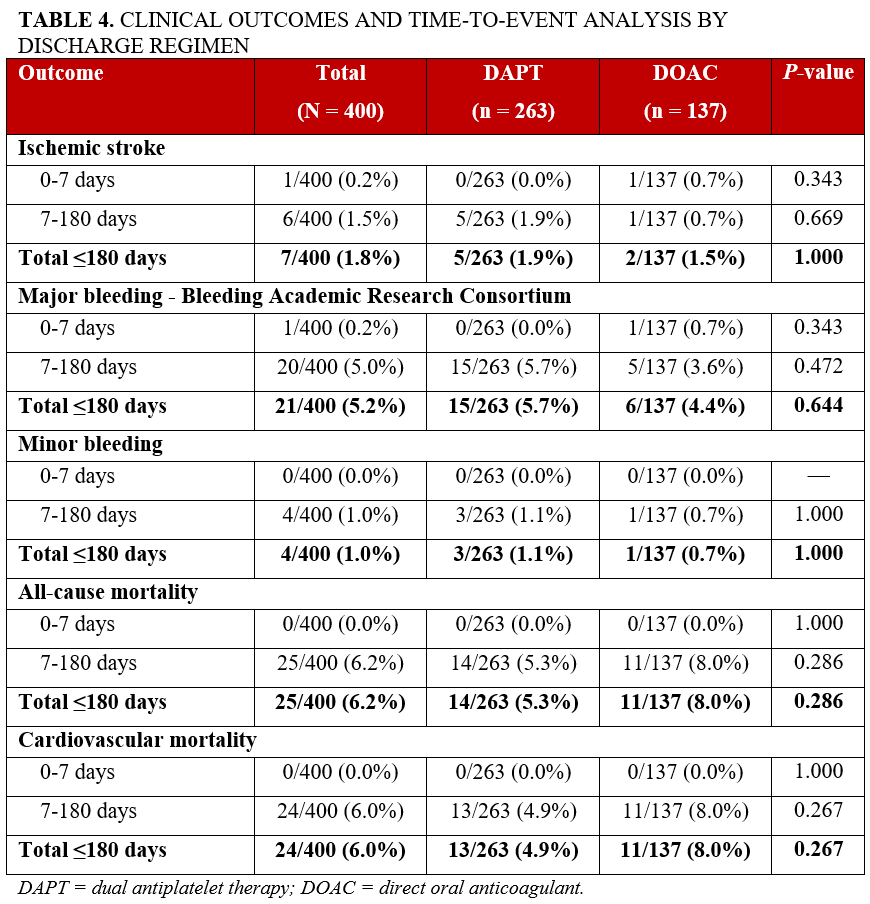
Clinical outcomes were assessed through 180 days following WATCHMAN FLX Pro implantation. Kaplan-Meier analyses demonstrated no significant differences between discharge antithrombotic regimens for ischemic stroke, major bleeding, or all-cause mortality during the study period.
Ischemic stroke occurred in 5 of 263 patients (1.9%) discharged on DAPT and 2 of 137 patients (1.5%) discharged on low-dose DOAC monotherapy (log-rank P =1.000). Major bleeding occurred in 15 (5.7%) and 6 (4.4%) patients, respectively (log-rank P = .644). Minor bleeding occurred in 3 (1.1%) and 1 (0.7%) patients, respectively (P =1.000). All-cause mortality occurred in 14 of 263 patients (5.3%) discharged on DAPT and 11 of 137 patients (8.0%) discharged on low-dose DOAC monotherapy (log-rank P = .286). Cardiovascular mortality occurred in 13 (4.9%) and 11 (8.0%) patients, respectively (P = .267).
Despite the significantly lower prevalence of high-grade HAT among patients discharged on low-dose DOAC monotherapy, this reduction did not translate into detectable differences in stroke, bleeding, or mortality within 180 days of implantation. Detailed clinical outcomes are presented in Table 4.
Discussion
In this single-center, real-world cohort of patients undergoing LAAO with the WATCHMAN FLX Pro device, we observed 3 principal findings. First, discharge on low-dose DOAC monotherapy was associated with a significantly lower prevalence of high-grade HAT on surveillance cardiac CT compared with DAPT. Second, this association remained significant after adjustment for clinically relevant baseline characteristics. Third, despite differences in HAT, early clinical outcomes through 180 days were similar between treatment groups.
The primary finding of the present study was the marked difference in high-grade HAT according to postprocedural antithrombotic regimen. High-grade HAT occurred more frequently among patients discharged on DAPT than among those receiving low-dose DOAC monotherapy. High-grade HAT is increasingly recognized as the CT correlate of clinically meaningful DRT and has been associated with an increased risk of thromboembolic events in prior studies.12,13 Therefore, our findings suggest that low-dose anticoagulation may provide more effective suppression of thrombus formation during the early post-implant healing period than antiplatelet therapy alone. Importantly, the observed association persisted following multivariable adjustment, although the relatively small number of events warrants cautious interpretation of the magnitude of the observed effect.
These findings build upon our prior cardiac CT analysis comparing WATCHMAN FLX Pro and WATCHMAN FLX recipients, in which patients discharged on DAPT following FLX Pro implantation demonstrated increased HAT burden and reduced appendage sealing despite the presence of a fluoropolymer-coated surface intended to enhance thromboresistance.9 Taken together, these observations suggest that postprocedural antithrombotic therapy may play a critical role in early device healing following WATCHMAN FLX Pro implantation.8 While device design modifications may influence thrombogenicity and neoendocardial healing, optimization of pharmacologic therapy during the healing phase may be equally important in minimizing thrombus formation.12,13
Several mechanisms may explain the observed reduction in high-grade HAT with low-dose DOAC therapy. Device implantation results in localized endothelial disruption, platelet activation, thrombin generation, and exposure of foreign material within the left atrium. While DAPT primarily targets platelet-mediated thrombosis, low-dose factor Xa inhibition may more effectively suppress thrombin generation and fibrin deposition on the device surface during the critical neoendocardial healing period.14 The present findings are consistent with emerging evidence suggesting that low-dose anticoagulation strategies may provide superior protection against DRT formation compared with antiplatelet therapy alone following LAAO.
Despite the significant reduction in high-grade HAT, we did not observe differences in stroke, bleeding, mortality, or rehospitalization through 180 days of follow-up. Patients identified with high-grade HAT or DRT on surveillance CT were managed with intensification of antithrombotic therapy, including transition to full-dose oral anticoagulation, with repeat imaging to confirm resolution. Importantly, although DRT occurred in approximately 4.8% of device-group patients in the CHAMPION-AF trial, the rate of cerebrovascular accidents attributable to DRT was only 0.2%, underscoring the relatively low conversion rate of imaging-detected thrombus to overt clinical embolic events.3 These data highlight that, while high-grade HAT warrants prompt management to mitigate thromboembolic risk, the majority of such findings may resolve with anticoagulation without progressing to stroke.
Several explanations are possible. First, overall event rates were relatively low, limiting statistical power to detect differences in clinical outcomes. Second, the duration of follow-up may have been insufficient to capture downstream consequences of DRT formation. Third, surveillance CT imaging enabled identification of high-grade HAT and subsequent clinical management, potentially mitigating the risk of thromboembolic complications. Accordingly, the absence of detectable differences in clinical outcomes should not be interpreted as evidence that CT-derived thrombus burden lacks clinical significance.15-17
Clinical implications for the anticoagulation-intolerant patient
Our current institutional strategy is stratified according to the patient’s tolerance of oral anticoagulation. In patients with absolute contraindications to any oral anticoagulation, including prior clinically significant spontaneous intracranial hemorrhage or those who refused anticoagulation therapy, our default strategy is DAPT with aspirin and clopidogrel for 6 months followed by a surveillance cardiac CT.
Limitations
The present study should be interpreted in the context of several limitations. First, this was a retrospective single-center analysis and is therefore subject to the inherent limitations of observational research. Second, treatment allocation was not randomized, and postprocedural antithrombotic practice evolved over time, introducing the potential for residual confounding despite multivariable adjustment. Third, surveillance cardiac CT was not available in all patients, creating the possibility of selection bias in imaging-based analyses. Fourth, the relatively small number of high-grade HAT events limited statistical precision and resulted in wide CIs for adjusted effect estimates. Finally, clinical event rates were low, and the study was not powered to detect differences in stroke, bleeding, or mortality between treatment strategies.
Conclusions
Among patients undergoing WATCHMAN FLX Pro implantation, low-dose DOAC monotherapy was associated with a significantly lower prevalence of high-grade HAT compared with DAPT. Although no differences in early clinical outcomes were observed, the findings suggest that postprocedural antithrombotic therapy may substantially influence early device healing and thrombus formation. The much-awaited SIMPLAAFY trial (NCT06521463) is expected to provide further clarification on the optimal antithrombotic regimen following LAAO.
Affiliations and Disclosures
Maedeh Zokaei Nikoo, MD1; Rafey Feroze, MD2; Luis Augusto Palma Dallan, MD, PhD2; Yusef Saeed, MD1; Alexander Cove, MD1; Abdullah Altorbag, MD1; Andreas A. Towers, MD1; Syed R. Nabi, MD1; Harsh Amin, MD1; Sabin Lama, MD1; Christopher Mishreky, MD1; Kareem Fanous, MD1; Justin M. Dunn, MD2; Vinicius Esteves, MD2; Steven J. Filby, MD2
From the 1Department of Medicine, University Hospitals Cleveland Medical Center, Cleveland, Ohio; 2Division of Cardiology, Harrington Heart & Vascular Institute, University Hospitals Cleveland Medical Center, Cleveland, Ohio.
Disclosures: Dr Filby is a consultant for Boston Scientific. The remaining authors report no financial relationships or conflicts of interest regarding the content herein.
Address for correspondence: Steven J. Filby, MD, 11100 Euclid Avenue M.L. 5038, Cleveland, OH 44106, USA. Email: Steven.Filby@UHHospitals.org; X: Maedezkn
References
1. Dukkipati SR, Kar S, Holmes DR, et al. Device-related thrombus after left atrial appendage closure: incidence, predictors, and outcomes. Circulation. 2018;138(9):874-885. doi:10.1161/CIRCULATIONAHA.118.035090
2. Alkhouli M, Busu T, Shah K, Osman M, Alqahtani F, Raybuck B. Incidence and clinical impact of device-related thrombus following percutaneous left atrial appendage occlusion: a meta-analysis. JACC Clin Electrophysiol. 2018;4(12):1629-1637. doi:10.1016/j.jacep.2018.09.007
3. Doshi SK, Kar S, Nair DG, et al; CHAMPION-AF Investigators. Left atrial appendage closure or anticoagulation for atrial fibrillation. N Engl J Med. 2026;394(21):2083-2094. doi:10.1056/NEJMoa2517213
4. Freeman JV, Varosy P, Price MJ, et al. The NCDR left atrial appendage occlusion registry. J Am Coll Cardiol. 2020;75(13):1503-1518. doi:10.1016/j.jacc.2019.12.040
5. Korsholm K, Jensen JM, Nørgaard BL, Nielsen-Kudsk JE. Detection of device-related thrombosis following left atrial appendage occlusion: a comparison between cardiac computed tomography and transesophageal echocardiography. Circ Cardiovasc Interv. 2019;12(9):e008112. doi:10.1161/CIRCINTERVENTIONS.119.008112
6. Kramer AD, Korsholm K, Jensen JM, et al. Cardiac computed tomography following Watchman FLX implantation: device-related thrombus or device healing? Eur Heart J Cardiovasc Imaging. 2023;24(2):250-259. doi:10.1093/ehjci/jeac222
7. Iriart X, Blanc G, Bouteiller XP, et al. Clinical implications of CT-detected hypoattenuation thickening on left atrial appendage occlusion devices. Radiology. 2023;308(3):e230462. doi:10.1148/radiol.230462
8. Bergmann MW, Betts TR, Sievert H, et al. Safety and efficacy of early anticoagulation drug regimens after WATCHMAN left atrial appendage closure: three-month data from the EWOLUTION prospective, multicentre, monitored international WATCHMAN LAA closure registry. EuroIntervention. 2017;13(7):877-884. doi:10.4244/EIJ-D-17-00042
9. Feroze R, Frazzetto M, Dallan LAP, et al. Imaging insights into endothelial response: cardiac computed tomography assessment of WATCHMAN FLX and FLX Pro. J Invasive Cardiol. 2026;38(9). doi:10.25270/jic/26.00003
10. Lip GY, Nieuwlaat R, Pisters R, Lane DA, Crijns HJ. Refining clinical risk stratification for predicting stroke and thromboembolism in atrial fibrillation using a novel risk factor-based approach: the euro heart survey on atrial fibrillation. Chest. 2010;137(2):263-272. doi:10.1378/chest.09-1584
11. Korsholm K, Iriart X, Saw J, et al. Position statement on cardiac computed tomography following left atrial appendage occlusion. JACC Cardiovasc Interv. 2024;17(15):1747-1764. doi:10.1016/j.jcin.2024.04.050
12. Granier M, Laugaudin G, Massin F, et al. Occurrence of incomplete endothelialization causing residual permeability after left atrial appendage closure. J Invasive Cardiol. 2018;30(7):245-250.
13. Ellis CR, Alkhouli M, Anderson JA, Swarup V. Comparative endothelialization of Amulet LAA occluder and Watchman 2.5 LAA device: observations from explanted hearts. JACC Clin Electrophysiol. 2022;8(6):828-829. doi:10.1016/j.jacep.2022.01.024
14. Saliba WI, Kawai K, Sato Y, et al. Enhanced thromboresistance and endothelialization of a novel fluoropolymer-coated left atrial appendage closure device. JACC Clin Electrophysiol. 2023;9(8 Pt 2):1555-1567. doi:10.1016/j.jacep.2023.04.013
15. Holmes DR, Reddy VY, Turi ZG, et al; PROTECT AF Investigators. Percutaneous closure of the left atrial appendage versus warfarin therapy for prevention of stroke in patients with atrial fibrillation: a randomised non-inferiority trial. Lancet. 2009;374(9689):534-542. doi:10.1016/S0140-6736(09)61343-X
16. Holmes DR Jr, Kar S, Price MJ, et al. Prospective randomized evaluation of the Watchman left atrial appendage closure device in patients with atrial fibrillation versus long-term warfarin therapy: the PREVAIL trial. J Am Coll Cardiol. 2014;64(1):1-12. doi:10.1016/j.jacc.2014.04.029
17. Boersma LV, Schmidt B, Betts TR, et al; EWOLUTION investigators. Implant success and safety of left atrial appendage closure with the WATCHMAN device: peri-procedural outcomes from the EWOLUTION registry. Eur Heart J. 2016;37(31):2465-74. doi:10.1093/eurheartj/ehv730