Chronic Total Occlusion Percutaneous Coronary Interventions in Dialysis Patients
© 2026 HMP Global. All Rights Reserved.
Any views and opinions expressed are those of the author(s) and/or participants and do not necessarily reflect the views, policy, or position of the Journal of Invasive Cardiology or HMP Global, their employees, and affiliates.
J INVASIVE CARDIOL 2026. doi:10.25270/jic/26.00260. Epub October 9, 2026.
Key Clinical Summary
- Among patients undergoing chronic total occlusion percutaneous coronary intervention (CTO-PCI), those receiving dialysis had more comorbidities and greater lesion complexity than patients not receiving dialysis.
- Technical success, procedural success, and in-hospital major adverse cardiac events did not differ significantly between groups.
- In-hospital mortality was higher among dialysis patients; this association persisted after propensity score weighting but not after multivariable analysis.
Abstract
Objectives. To compare characteristics and in-hospital outcomes of dialysis vs non-dialysis patients undergoing chronic total occlusion percutaneous coronary intervention (CTO PCI).
Methods. The authors analyzed 18 572 patients undergoing CTO PCI between 2012 and 2026. Outcomes were compared using multivariable logistic regression and propensity score-matching weights. Mortality was evaluated by cumulative center-enrollment category.
Results. Overall, 447 patients (2.4%) were receiving dialysis. Compared with non-dialysis patients, they more often had diabetes mellitus (70.5% vs 43.1%), hypertension (93.5% vs 87.1%), heart failure (52.7% vs 27.0%), cerebrovascular disease (17.9% vs 9.1%), peripheral arterial disease (29.1% vs 12.7%), and moderately or severely calcified CTOs (68.2% vs 47.0%; all P < .001). Technical success (85.2% vs 87.4%; P = .190) and procedural success (83.9% vs 86.2%, P = .192) were similar. Retrograde approach (31.1% vs 31.3%; P = .90) and antegrade dissection re-entry (21.3% vs 19.8%; P = .40) were used similarly. In-hospital major adverse cardiac events (MACE) did not differ (2.9% vs 1.9%; P = .11), whereas in-hospital mortality was higher (1.8% vs 0.5%; P = .001) in dialysis patients. The mortality odds ratio (OR) was 2.36 (95% confidence interval [CI], 0.70-5.90; P = .106) in multivariable analysis and 2.42 (95% CI, 1.13-5.16; P = .022) after propensity score weighting. The dialysis-mortality association did not vary across center-enrollment categories (interaction P = .522).
Conclusions. Despite greater clinical and angiographic complexity, dialysis patients had no significant differences in procedural success or MACE but had higher in-hospital mortality. The mortality association remained imprecise, and residual confounding cannot be excluded.
Introduction
Chronic total occlusion (CTO) percutaneous coronary intervention (PCI) in dialysis patients can be challenging to perform because of highly complex anatomy and more comorbidities.1,2 Patients undergoing maintenance dialysis carry a high burden of coronary artery disease (CAD), and cardiovascular events are the leading cause of death in this population.3 In this setting, CAD is characterized by diffuse, heavily calcified lesions, and the risks associated with revascularization are increased relative to the general population.1,4 In a large dedicated analysis from the Japanese Multicenter Registry, dialysis patients undergoing CTO PCI accounted for 6.6% of the patients in the registry and had significantly lower technical success compared with non-dialysis patients (78.0% vs 89.1%, P = .001), whereas in-hospital major adverse cardiac events (MACE) and cerebrovascular event rates were similar between groups.4 We evaluated the clinical characteristics and procedural outcomes of dialysis patients undergoing CTO PCI in a large, multicenter, CTO PCI registry.
Methods
We examined the baseline clinical and angiographic features, along with procedural outcomes, of 18 572 patients who underwent CTO PCI procedures between 2012 and 2026 across 70 centers in both the United States and internationally.
Data were entered into the dedicated online Prospective Global Registry for the Study of Chronic Total Occlusion Intervention (PROGRESS-CTO; ClinicalTrials.gov identifier: NCT02061436). Study information was collected and managed using REDCap (Research Electronic Data Capture), an electronic data capture platform hosted by the Minneapolis Heart Institute Foundation. Institutional review board approval was obtained from each participating center, and the study was conducted in accordance with the Declaration of Helsinki. Given the retrospective, registry-based design, the requirement for written informed consent was waived at participating sites in accordance with institutional review board policies.
Definitions
Dialysis was defined as ongoing treatment with either hemodialysis or peritoneal dialysis due to renal failure. Coronary CTOs were characterized as coronary lesions demonstrating Thrombolysis in Myocardial Infarction (TIMI) grade 0 flow with an estimated duration of at least 3 months. The duration of the occlusion was determined clinically, based on the initial presentation of angina, documented history of myocardial infarction (MI) in the target vessel territory, or by comparison with a previous angiogram. Moderate proximal vessel tortuosity was identified as the presence of at least 2 bends greater than 70° or 1 bend greater than 90°, whereas severe tortuosity was defined as 2 bends greater than 90° or 1 bend greater than 120° within the CTO vessel.
Calcification was evaluated angiographically and categorized as mild (spot calcifications), moderate (involving ≤50% of the reference lesion diameter), or severe (>50%). Technical success was defined as effective CTO revascularization with a residual diameter stenosis of less than 30% in the treated segment and restoration of TIMI grade 3 antegrade flow. Procedural success referred to technical success achieved without any in-hospital MACE. In-hospital MACE consisted of any of the following complications occurring before hospital discharge: in-hospital mortality, MI, recurrent symptoms requiring urgent repeat target-vessel revascularization through PCI or coronary artery bypass grafting (CABG), tamponade requiring pericardiocentesis or surgical intervention, and stroke. MI was classified according to the Third Universal Definition of Myocardial Infarction (type 4a MI).5
Good distal landing zone was defined as a distal vessel segment immediately beyond the CTO measuring at least 2.0 mm in diameter and free of diffuse disease. Interventional collaterals were defined as collateral vessels to the target vessel, distal to the occlusion, that the operator deemed crossable with a guidewire and microcatheter before any attempt to cross them. The Japanese CTO (J-CTO) score was determined as outlined by Morino et al,6 the PROGRESS-CTO score according to Christopoulos et al,7 the CASTLE (Coronary artery bypass grafting history, Age, Stump anatomy, Tortuosity degree, Length of occlusion, and Extent of calcification) score based on Szijgyarto et al,8 and the updated PROGRESS-CTO complication scores (acute MI, MACE, mortality, and pericardiocentesis) as described by Simsek et al and Kostantinis et al.9,10
Statistical analysis
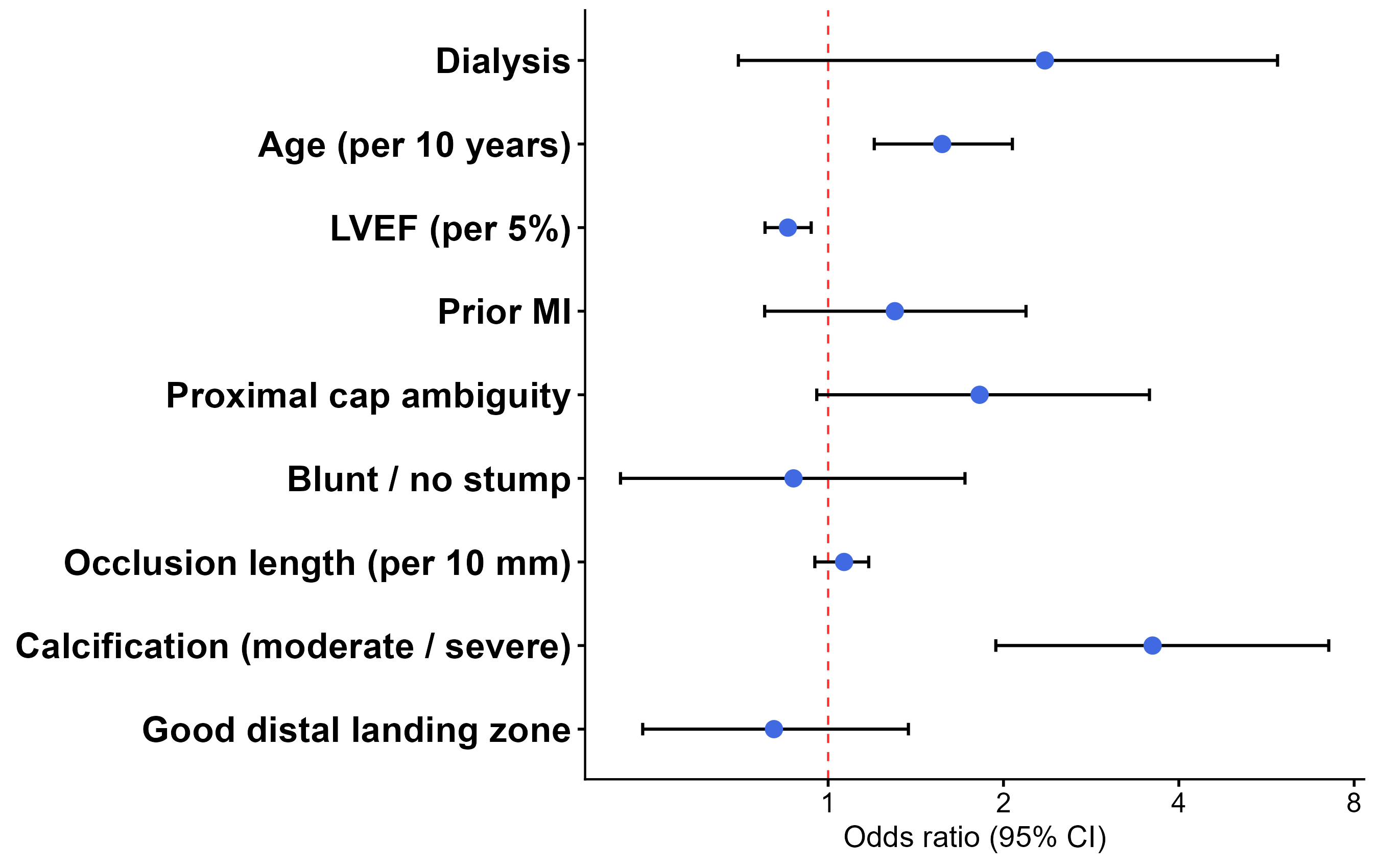
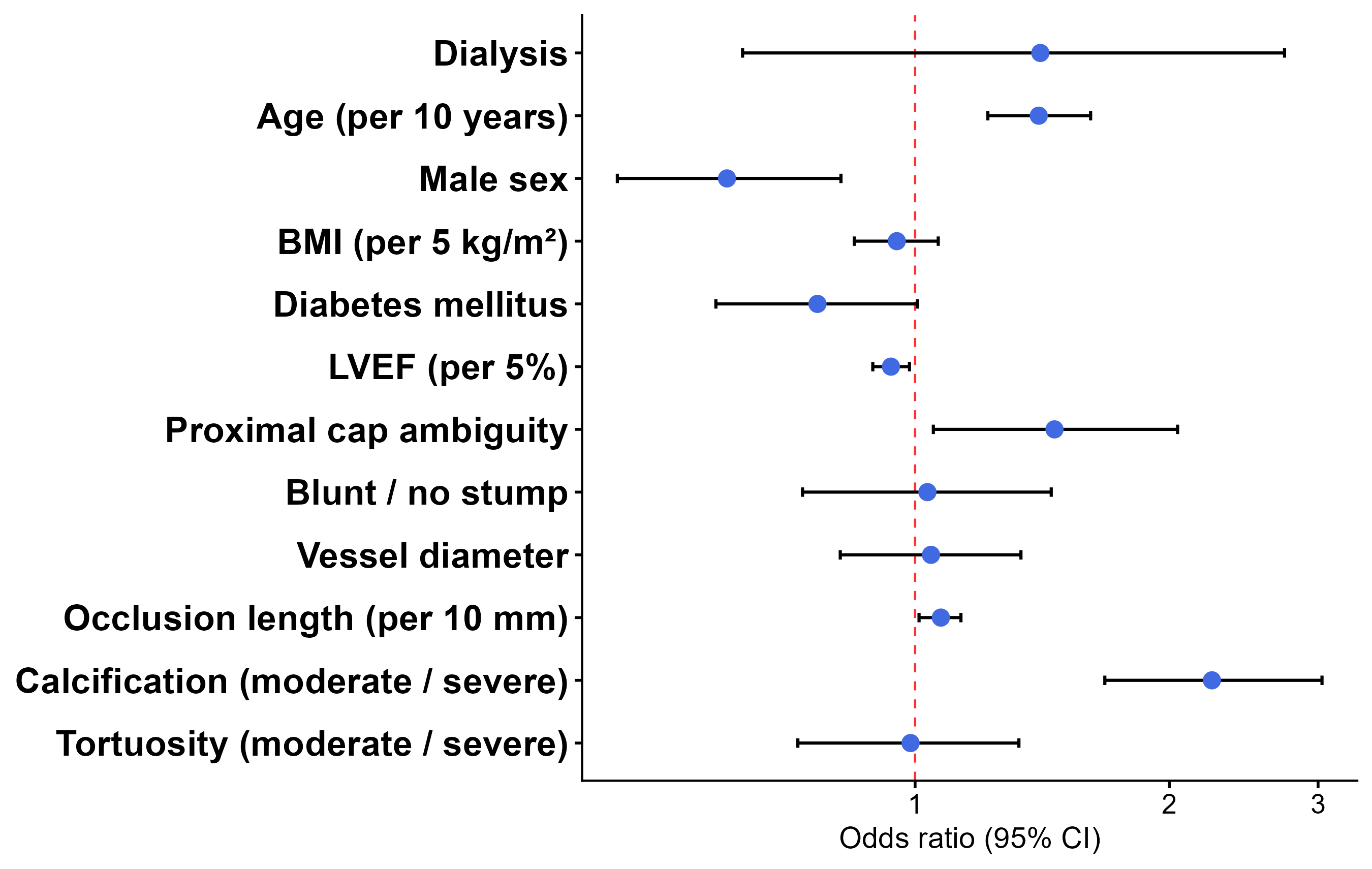
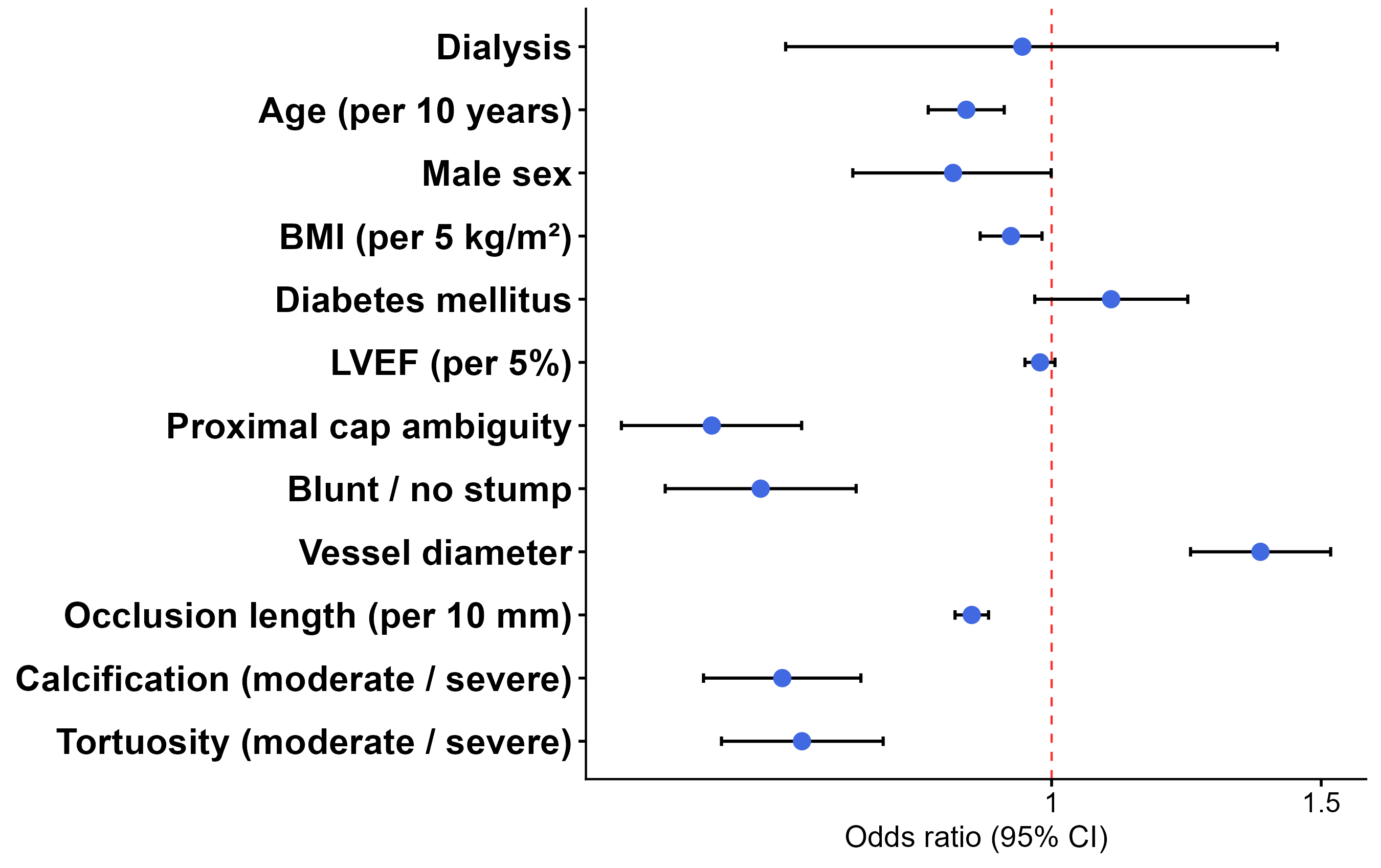
Categorical variables were reported as percentages and analyzed using Pearson’s chi-square test. Continuous variables were expressed as mean ± standard deviation or median (interquartile range), unless otherwise noted, and comparisons were performed using the independent-samples t-test for normally distributed variables and the Mann-Whitney U test for variables that were not normally distributed, when appropriate. Multivariable logistic regression analysis was used to identify independent predictors of in-hospital MACE, in-hospital mortality, and technical success, after adjustment for clinically relevant covariates. Statistical analyses were conducted using R Statistical Software, version 4.4 (R Foundation for Statistical Computing). A P-value of less than 0.05 was considered to indicate statistical significance. Adjustment covariates for each multivariable model were selected based on an association with the corresponding outcome at a P-value of less than 0.05 in univariable analysis. For in-hospital mortality, these were age, left ventricular ejection fraction (LVEF), prior MI, proximal cap ambiguity, blunt or absent stump, occlusion length, calcification severity, and good distal landing zone. For in-hospital MACE and technical success, the selected covariates were age, sex, body mass index (BMI), diabetes mellitus, LVEF, proximal cap ambiguity, blunt or absent stump, vessel diameter, occlusion length, calcification severity, and tortuosity severity.
To account for baseline differences between groups, we additionally balanced 15 baseline clinical and angiographic characteristics between dialysis and non-dialysis patients using propensity score matching weights before comparing in-hospital outcomes. Missing baseline covariates were imputed using multiple imputation by chained equations (5 datasets). Weights were estimated within each imputed dataset, and balance was assessed using absolute standardized mean differences (threshold <0.10). Technical success, MACE, and in-hospital mortality were compared using weighted logistic regression with robust standard errors, and estimates were combined across imputations using Rubin’s rules. P-values were not adjusted for multiple comparisons.
To evaluate whether outcomes varied by center enrollment, we grouped centers by cumulative registry enrollment (≤400, 401-800, or >800 patients), retaining centers with at least one documented dialysis patient. Using logistic regression with a center random intercept, we assessed mortality differences across categories among dialysis patients with a joint Wald test (2 df) and performed pairwise category comparisons among dialysis patients and dialysis vs non-dialysis comparisons within each category using Wald z tests. Variation in the association between dialysis and mortality across categories was tested with an interaction likelihood-ratio test (2 df), with Holm adjustment applied separately to each set of pairwise comparisons.
Results
Baseline characteristics
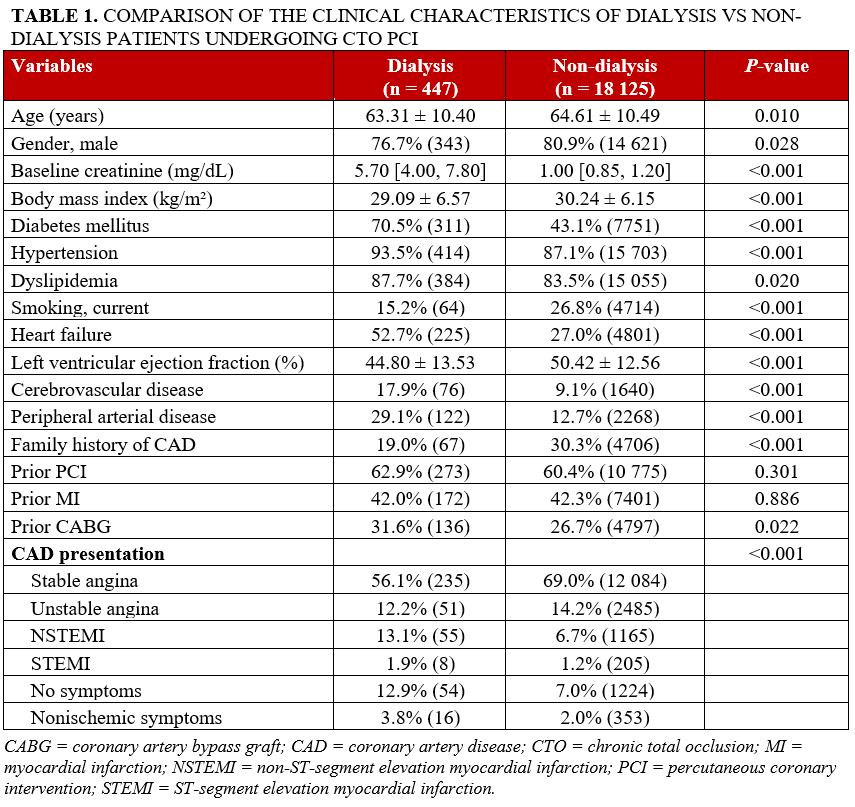
Of 18 572 patients who underwent CTO PCI during the study period, 447 (2.4%) were on dialysis prior to PCI. Compared with non-dialysis patients, dialysis patients more often had diabetes mellitus (70.5% [311] vs 43.1% [7751], P < .001), hypertension (93.5% [414] vs 87.1% [15 703], P < .001), dyslipidemia (87.7% [384] vs 83.5% [15 055], P = .020), heart failure (52.7% [225] vs 27.0% [4801], P < .001), cerebrovascular disease (17.9% [76] vs 9.1% [1640], P < .001), peripheral arterial disease (29.1% [122] vs 12.7% [2268], P < .001), and prior CABG (31.6% [136] vs 26.7% [4797], P = .022) (Table 1).
CAD presentation differed between groups (P < .001). Dialysis patients presented less often with stable angina (56.1% [235] vs 69.0% [12 084]) and more often with non-ST-segment elevation myocardial infarction (13.1% [8] vs 6.7% [205]) or no symptoms (12.9% [54] vs 7.0% [1224]) (Table 1).
Angiographic and procedural characteristics
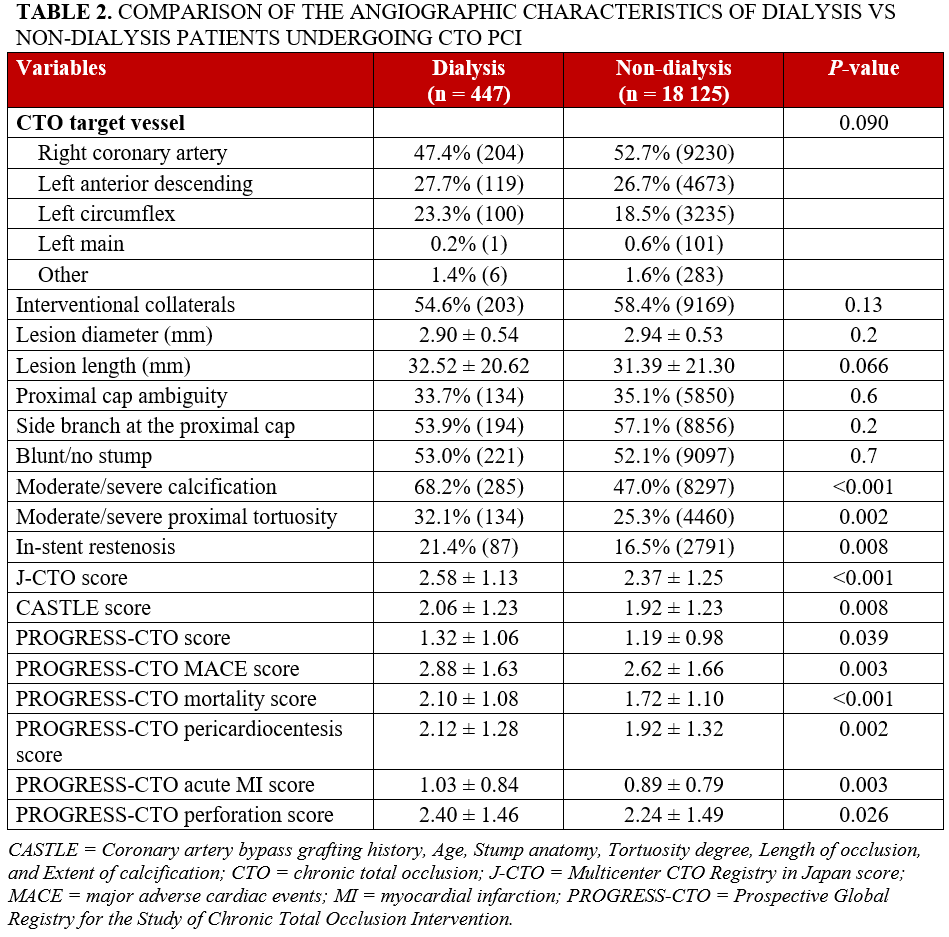
CTO lesions of dialysis patients were more likely to have moderate or severe calcification (68.2% [285] vs 47.0% [8297], P < .001) and moderate or severe proximal vessel tortuosity (32.1% [134] vs 25.3% [4460], P = .002). In-stent restenosis (ISR) was more prevalent in dialysis patients (21.4% [87] vs 16.5% [2791], P = .008). Dialysis patients had higher J-CTO, CASTLE, PROGRESS-CTO, and PROGRESS-CTO complication scores (Table 2).
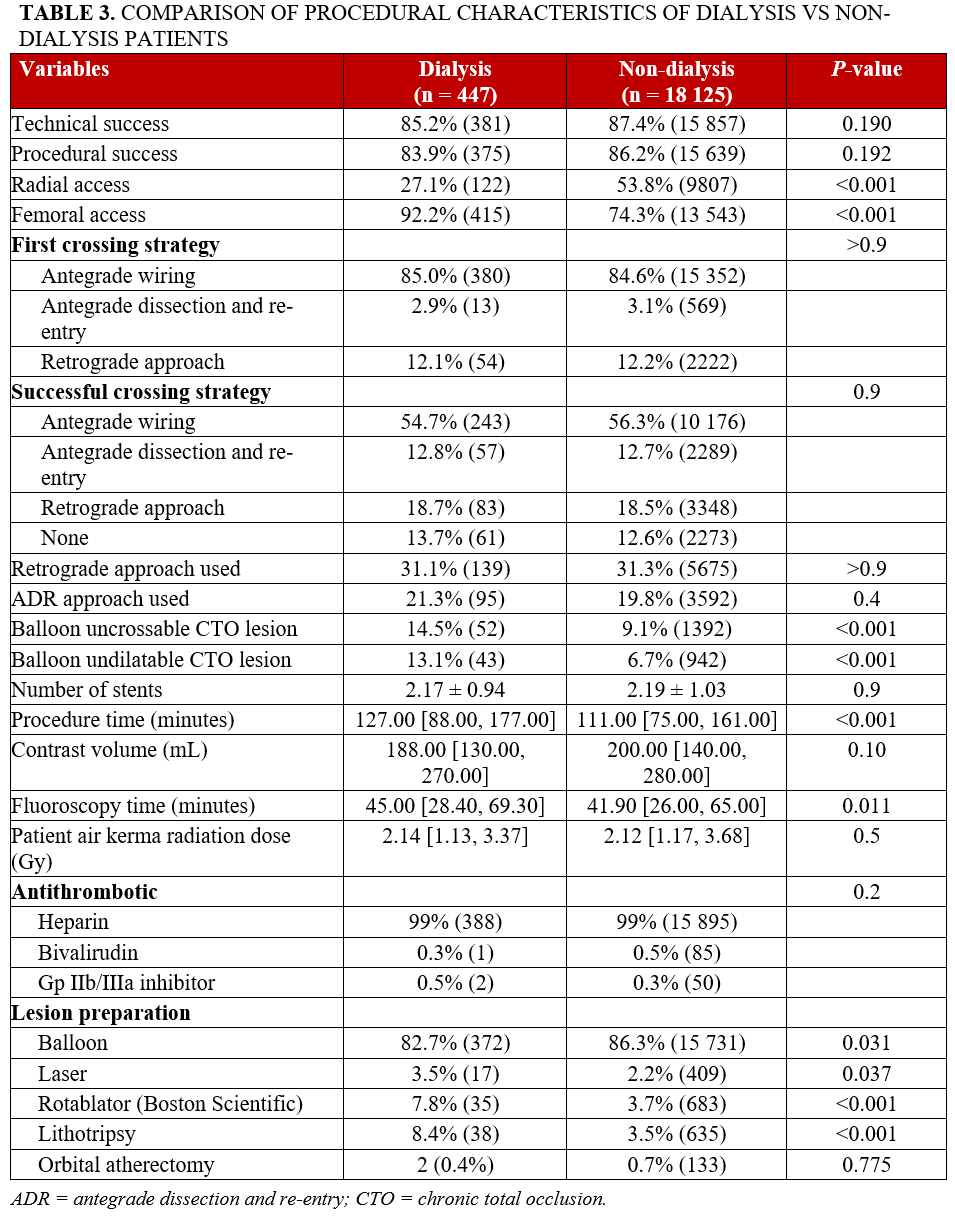
Dialysis patients had lower radial access use (27.1% [122] vs 53.8% [9807], P < .001) and higher femoral access use (92.2% [415] vs 74.3% [13 543], P < .001). Antegrade wiring was the most common first and successful crossing strategy. The use of the retrograde approach (31.1% [139] vs 31.3% [5675], P > .9) and antegrade dissection and re-entry (ADR) (21.3% [95] vs 19.8% [3592], P = .40) was similar between the 2 groups. Dialysis CTO lesions were more likely to be balloon uncrossable (14.5% [52] vs 9.1% [1392], P < .001) and balloon undilatable (13.1% [43] vs 6.7% [942], P < .001). Procedure time (127.0 vs 111.0 min, P < .001) and fluoroscopy time (45.0 vs 41.9 min, P = .011) were significantly longer in dialysis patients. Antithrombotic strategy did not differ between dialysis and non-dialysis patients (P = .20). Heparin was used in nearly all procedures (99% [388] vs 99% [15 895]), with infrequent use of bivalirudin (0.3% [1] vs 0.5% [85]) and glycoprotein IIb/IIIa inhibitors (0.5% [2] vs 0.3% [50]). Balloon-based preparation was used less often in dialysis patients (82.7% [372] vs 86.3% [15 731], P = .031). Laser (3.5% [17] vs 2.2% [409], P = .037), rotational atherectomy (7.8% [35] vs 3.7% [683], P < .001), and intravascular lithotripsy (8.4% [38] vs 3.5% [635], P < .001) were all used more frequently in dialysis patients, whereas orbital atherectomy use was similar between groups (0.4% [2] vs 0.7% [133], P = .775) (Table 3).
Outcomes
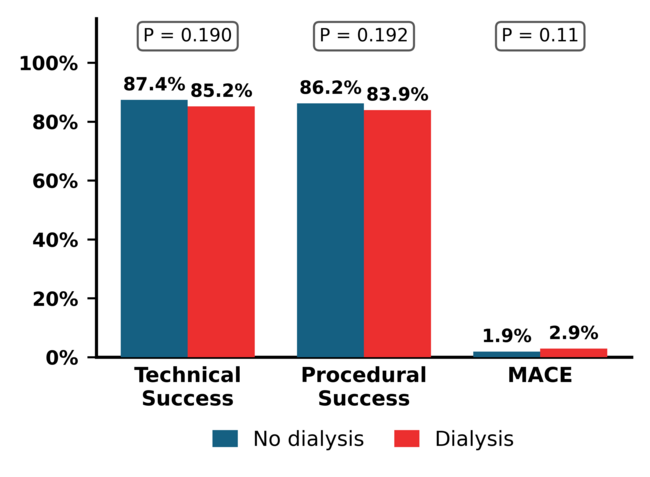
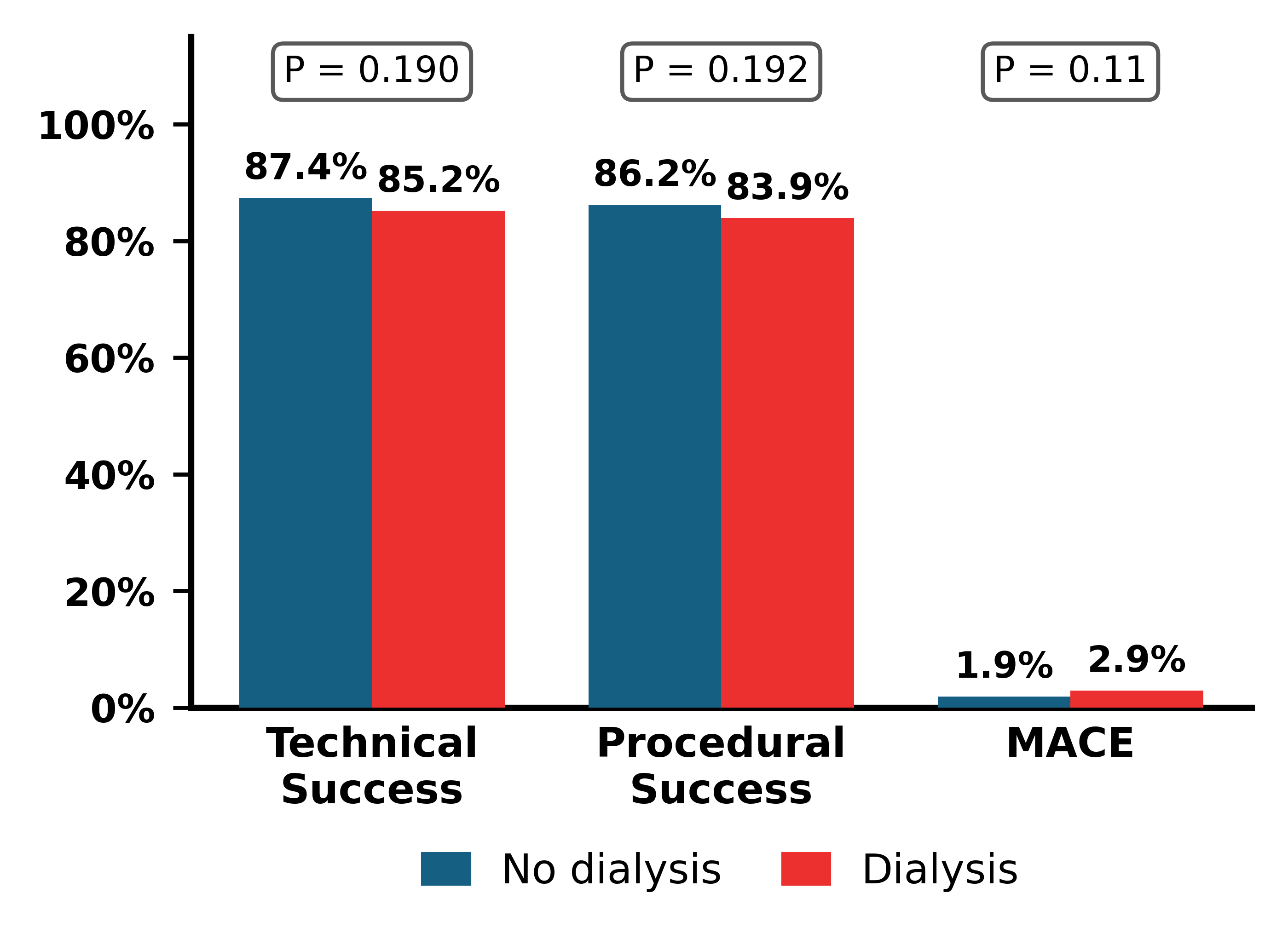
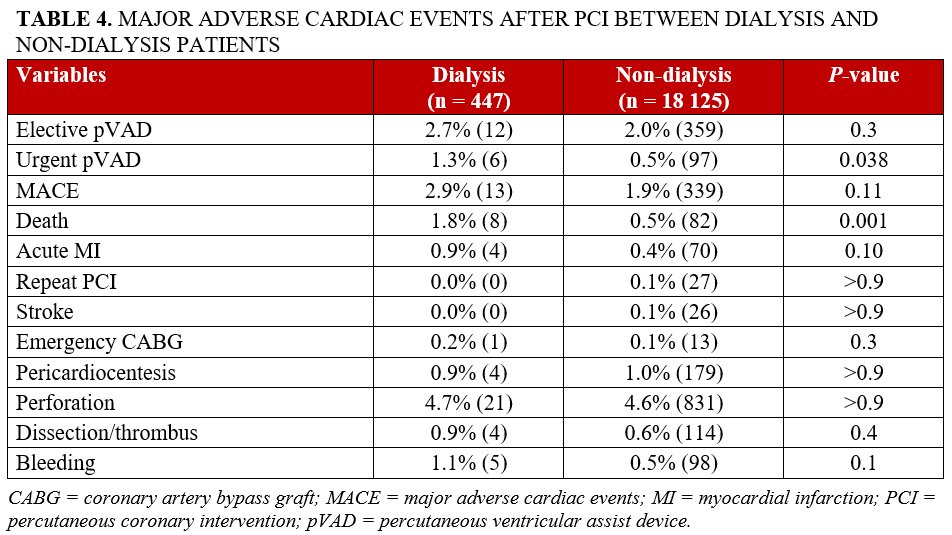
Technical (85.2% [381] vs 87.4% [15 857], P = .190) and procedural (83.9% [375] vs 86.2% [15 639], P = .192) success were similar between groups (Figure 1). The incidence of MACE (2.9% [13] vs 1.9% [339], P = .11) was similar between groups (Figure 1), but in-hospital mortality (1.8% [8] vs 0.5% [82], P = .001) was higher in the dialysis group. Urgent use of ventricular assist devices (1.3% [6] vs 0.5% [97], P = .038) was more common in dialysis patients. Bleeding complications did not differ between groups (1.1% [5] vs 0.5% [98], P = .1) (Table 4).
Multivariable analysis
In multivariable analysis, dialysis was not independently associated with in-hospital mortality (odds ratio [OR], 2.36; 95% confidence interval [CI], 0.70-5.90; P = .106) (Figure 2), MACE (OR, 1.41; 95% CI, 0.62-2.74; P = .359) (Figure 3), or technical success (OR, 0.96; 95% CI, 0.67-1.40; P = .810) (Figure 4).
Propensity score-weighted analysis
After propensity score weighting, all 15 baseline covariates had absolute standardized mean differences below 0.01 across imputations (Supplemental Figure). Dialysis was associated with higher in-hospital mortality (OR, 2.42; 95% CI, 1.13-5.16; P = .022), whereas technical success (OR, 0.89; 95% CI, 0.68-1.17; P = .411) and MACE (OR, 1.32; 95% CI, 0.75-2.35; P = .340) did not differ significantly between groups.
Between-center comparison
After excluding 16 centers without a documented dialysis patient, 54 centers remained (36, 12, and 6 in the ≤400, 401-800, and >800 enrollment categories, respectively). In-hospital mortality among dialysis patients was 0.7% (1), 1.8% (3), and 2.9% (4), respectively (overall P = .350). Compared with non-dialysis patients, dialysis patients had higher mortality odds in the 401-to-800 category (OR, 5.37; 95% CI, 1.51-19.14; Holm-adjusted P = .019) and the greater-than-800 category (OR, 4.70; 95% CI, 1.64-13.47; Holm-adjusted P = .012), whereas the 400-or-fewer comparison was not significant (OR, 1.59; 95% CI, 0.18-13.81; Holm-adjusted P = .673) (Supplemental Table 1). The dialysis-by-category interaction was not significant (P = .522), and no pairwise category comparison among dialysis patients was significant after Holm adjustment (all P ≥ .455).
MACE vs non-MACE
Among dialysis patients, those who experienced in-hospital MACE (n=13) were compared with those who did not (n=434). Baseline clinical characteristics were largely similar between the 2 groups, except for prior PCI, which was less frequent in dialysis patients with MACE (30.8% [4] vs 63.9% [269], P = .020). BMI (25.26 vs 29.20 kg/m², P = .038) was lower in the MACE group (Supplemental Table 2).
MACE patients had higher prevalence of interventional collaterals (91.7% [11] vs 53.3% [192], P = .009), proximal cap ambiguity (66.7% [8] vs 32.6% [126], P = .025), side branch at the proximal cap (90.0% [9] vs 52.9% [182], P = .023), and blunt or absent stump (91.7% [11] vs 51.9% [210], P = .006). The PROGRESS-CTO MACE score (P = .003), PROGRESS-CTO pericardiocentesis score (P = .007), and PROGRESS-CTO perforation score (P = .002) were significantly higher in the MACE group (Supplemental Table 3).
Among dialysis patients, those who developed MACE had significantly lower rates of technical success (46.2% [6] vs 86.4% [375], P < .001). The retrograde approach was used as the first crossing strategy in 46.2% (6) of MACE patients vs 11.1% (48) of non-MACE patients, and overall retrograde use was significantly higher in the MACE group (84.6% [11] vs 29.5% [128], P < .001). Antegrade wiring was the successful crossing strategy in only 15.4% (7) of MACE cases compared with 55.9% (241) in the non-MACE group (P = .007), and unsuccessful crossing was more frequent in the MACE group (30.8% [4] vs 13.2% [57]). Procedure time (249 vs 124 min, P < .001), contrast volume (350 vs 185 mL, P < .001), and fluoroscopy time (102.8 vs 44.1 min, P < .001) were significantly longer in MACE patients (Supplemental Table 4).
Urgent placement of a percutaneous ventricular assist device was observed more often in the MACE group (23.1% [3] vs 0.7% [3], P < .001). Perforation was also significantly more frequent in the MACE group (30.8% [4] vs 3.9% [17], P = .002). In-hospital mortality occurred in 61.5% (8) of MACE patients, acute MI in 30.8% (4), pericardiocentesis in 30.8% (4), and emergency CABG in 7.7% (4) (Supplemental Table 5).
Discussion
The main findings of our study are that, among patients undergoing CTO PCI, dialysis patients (a) represent a small proportion of the cohort (2.4%), (b) have more comorbidities and greater lesion complexity, and (c) have higher in-hospital mortality, whereas overall MACE and technical and procedural success rates do not differ significantly from those of non-dialysis patients.
Dialysis patients accounted for 2.4% of our cohort, a lower proportion than in other CTO-PCI registries (6.6% in the Japanese Retrograde Summit registry,4 6.9% in the Japanese CTO-PCI Expert Registry,11 5.9% in a single-center US registry12). The lower prevalence in our cohort may reflect differences in referral and selection for CTO PCI. Dialysis patients nevertheless had more comorbidities and greater lesion complexity than non-dialysis patients, consistent with previous reports. However, selection bias within the dialysis population cannot be excluded.
Dialysis patients in our cohort were more likely to have diabetes, hypertension, heart failure, cerebrovascular disease, and peripheral arterial disease, reflecting the systemic vascular burden that characterizes this population.13-17
From a lesion complexity standpoint, dialysis patients had significantly higher rates of moderate or severe calcification, proximal tortuosity, and ISR, translating into higher J-CTO, CASTLE, and PROGRESS-CTO complication scores. Calcification in dialysis patients is driven by disordered calcium-phosphate metabolism and accelerated vascular aging18-20 and is a well-recognized predictor of technical failure and equipment-related complications in CTO PCI.21-24 The higher severity of calcification in dialysis patients at least in part accounts for the higher prevalence of balloon-uncrossable and -undilatable lesions and the longer procedure and fluoroscopy times observed.25 This lesion complexity warrants particular attention during CTO PCI in dialysis patients.
Calcification may require more extensive lesion preparation, including atherectomy, even when it is not severe angiographically, as reported in the Japanese CTO-PCI Expert Registry.11 This is in accordance with our cohort, in which lesion preparation was more frequently used in the dialysis patients with the exception of orbital atherectomy use, which was comparable. In our cohort, dialysis patients more often underwent femoral access and less often radial access than non-dialysis patients. This may reflect efforts to preserve vessels used for dialysis access. Reports of more frequent puncture-site complications in dialysis patients also underscore the importance of careful vascular access and hemostasis.11 In dialysis patients undergoing PCI, careful weight-based unfractionated heparin dosing (50-70 U/kg), together with avoidance of routine glycoprotein IIb/IIIa inhibitor use, may help balance thrombotic protection against their increased bleeding risk.26 Bleeding events in our cohort were comparable between dialysis and non-dialysis patients, and the anticoagulation strategy was similar in terms of preferred drug among operator, although the exact dosing was not captured, nor was the timing of administration relative to dialysis sessions.
Despite their unfavorable clinical and angiographic characteristics, dialysis patients had numerically similar technical and procedural success rates, consistent with previous reports that CTO PCI can achieve acceptable procedural outcomes in selected patients with renal dysfunction, including those receiving dialysis.2,4 Dialysis was associated with higher in-hospital mortality after propensity score weighting, whereas multivariable regression yielded a similar mortality OR with greater uncertainty. The excess mortality may partly reflect the underlying frailty and cardiovascular vulnerability of dialysis patients; however, these observational analyses cannot determine the relative contributions of these factors and procedural risk.
In analyses stratified by cumulative center enrollment, dialysis was associated with higher in-hospital mortality in the 401-to-800 and greater-than-800 enrollment categories, whereas the comparison in the 400-or-fewer category was inconclusive. However, there was insufficient evidence of mortality differences across categories among dialysis patients or of variation in the dialysis-associated mortality OR across categories. These findings do not demonstrate that center enrollment or operator experience is unrelated to mortality because only 8 dialysis deaths occurred and cumulative registry enrollment does not measure annual procedural volume or operator experience.
A recent analysis of the Nationwide Inpatient Sample reported a graded increase in in-hospital mortality across chronic kidney disease (CKD) severity in single-vessel CTO PCI, with dialysis-dependent patients as the highest-risk stratum (OR, 1.74 per category; 95% CI, 1.14-2.65).27 In that cohort, periprocedural MI was more frequent in patients with than without CKD (14.3% vs 10.7%, P = .010).27 Prior CTO-PCI studies likewise reported numerically higher periprocedural MI in patients with renal impairment without reaching statistical significance.2,28,29 In our cohort, acute MI did not differ between groups and the events were infrequent in both subgroups, although the proportion of acute MI was numerically higher in the dialysis group.
Our subanalysis identified several features that distinguished patients who developed MACE from those who did not. Patients with MACE had greater lesion complexity and higher rates of blunt stump, proximal cap ambiguity, and interventional collaterals, as well as higher PROGRESS-CTO MACE, pericardiocentesis, and perforation scores. The small number of events precluded formal assessment of the discrimination of these scores within the dialysis population. As observed in other studies, the retrograde approach was more frequent among patients with MACE, likely reflecting its use in patients with more complex clinical and angiographic characteristics.30,31
Limitations
First, there was no core laboratory for angiograms or independent event adjudication. Second, the PROGRESS-CTO registry captures data from high-volume, specialized centers with established CTO expertise, which may limit the generalizability of our findings to lower-volume institutions. Third, although this represents, to our knowledge, one of the largest dedicated analyses of dialysis patients undergoing CTO PCI to date, the small number of MACE events (n=13) and deaths (n=8) within this subgroup limits statistical power, increases the risk of overfitting in multivariable analyses, and prevents definitive conclusions from the within-dialysis analysis. Fourth, interpretation of the center-stratified analysis is limited by the small number of events and by the use of cumulative enrollment, which does not measure annual procedural volume or operator experience directly. Thus, generalizing results to operator experience and annual procedural volume should be done with caution. Fifth, propensity score weighting cannot address unmeasured confounding.
Conclusions
Dialysis patients undergoing CTO PCI had more comorbidities and greater lesion complexity than non-dialysis patients. Technical and procedural success and MACE did not differ significantly, but dialysis patients had higher in-hospital mortality. Mortality ORs were similar in multivariable and propensity score-weighted analyses, although only the weighted estimate reached statistical significance.
Affiliations and Disclosures
Marios Tsourous, MD1; Dimitrios Strepkos, MD1; Theodoros Vichos, MD1; Michaella Alexandrou, MD1; Pedro E.P. Carvalho, MD1; Ahmet Akyel, MD1; Parth Desai, MD1; Ayman Fath, MD1; Sophie Macy, BS1; James W. Choi, MD2; Sevket Gorgulu, MD3; Farouc A. Jaffer, MD4, PhD; Raj Chandwaney, MD5; Khaldoon Alaswad, MD6; Mir B. Basir, MD6; Lorenzo Azzalini, MD, PhD, MSc7; Dmitrii Khelimskii, MD8; Oleg Krestyaninov, MD8; Laura Young, MD9; Omer Goktekin, MD10; Konstantinos Voudris, MD1; Noah N. Williford, MD1; Angie S. Lobo, MD11; Yader Sandoval, MD1; Emmanouil S. Brilakis, MD, PhD1
From the 1Minneapolis Heart Institute and Minneapolis Heart Institute Foundation, Abbott Northwestern Hospital, Minneapolis, Minnesota; 2Texas Health Presbyterian Hospital, Dallas, Texas; 3Biruni University Medical School, Istanbul, Turkey; 4Massachusetts General Hospital, Boston, Massachusetts; 5Oklahoma Heart Institute, Tulsa, Oklahoma; 6Henry Ford Cardiovascular Division, Detroit, Michigan; 7University of Washington Medical Center, Washington; 8Meshalkin Novosibirsk Research Institute, Novosibirsk, Russia; 9Cleveland Clinic, Cleveland, Ohio; 10Memorial Bahcelievler Hospital, Istanbul, Turkey; 11Division of Nephrology and Hypertension, University of Minnesota, Minneapolis, Minnesota.
Acknowledgments: The authors are grateful for the philanthropic support of our generous anonymous donors, and the philanthropic support of Drs Mary Ann and Donald A Sens; Mr Raymond Ames and Ms Barbara Thorndike; the Frank J. and Eleanor A. Maslowski Charitable Trust; the Joseph F. and Mary M. Fleischhacker Family Foundation; Mrs Diane and Dr Cline Hickok; Mrs Marilyn and Mr William Ryerse; Mr Greg and Mrs Rhoda Olsen; Mrs Wilma and Mr Dale Johnson; Mrs Charlotte and Mr Jerry Golinvaux Family Fund; the Roehl Family Foundation; the Joseph Durda Foundation. The generous gifts of these donors to the Minneapolis Heart Institute Foundation’s Science Center for Coronary Artery Disease (CCAD) helped support this research project.
Disclosures: Dr Jaffer has received research sponsorship from Canon, Siemens, Shockwave Medical, Teleflex, Mercator, Boston Scientific, HeartFlow, and Neovasc; has received consultant/speaker fees from Boston Scientific, Siemens, Magenta Medical, Philips, Biotronik, Mercator, Terumo, Abiomed, Shockwave Medical, DurVena, Intravascular Imaging, Inc., Medtronic, and FastWave; holds equity interest in Intravascular Imaging, Inc., DurVena, and FastWave; has licensing arrangements with Massachusetts General Hospital; and has the right to receive royalties from Terumo, Canon, and SpectraWAVE. Dr Alaswad is a consultant and speaker for Boston Scientific and Teleflex and reports intellectual property in TrueVue, Inc. Dr Basir is a consultant for Abiomed, Boston Scientific, Chiesi, Saranas, and Zoll. Dr Azzalini receives consulting fees from Teleflex, Abiomed, GE Healthcare, Reflow Medical, Shockwave Medical, and Cardiovascular Systems, Inc.; has received a research grant from Abiomed; serves on the advisory board of Abiomed and GE Healthcare; and owns equity in Reflow Medical. Dr Sandoval serves as a consultant for and is on the advisory board of Abbott and GE Healthcare; serves as a consultant for, on the advisory board of, and as a speaker for Roche Diagnostics and Philips, serves on the advisory board of Zoll; serves as a consultant for CathWorks, is a speaker for HeartFlow; serves as a speaker for and has received a research grant from Cleerly Health; is an associate editor for JACC Advances; and he and others hold patent 20,210,401,347. Dr Brilakis reports consulting/speaker honoraria from Abbott Vascular, the American Heart Association (associate editor, Circulation), Boston Scientific, the Cardiovascular Innovations Foundation (Board of Directors), Cordis, Elsevier, GE Healthcare, HeartFlow, IMDS, Medtronic, Recor Medical, Shockwave Medical, SIS Medical, Teleflex, and Terumo; receives research support from AngioWave, Boston Scientific, and GE Healthcare; is the owner of Hippocrates LLC, and Systole LLC; and is a shareholder in Cleerly Health, LifeLens Technologies, Inc, MHI Ventures, Stallion Medical, and TrueVue, Inc. The remaining authors report no financial relationships or conflicts of interest regarding the content herein.
Address for correspondence: Emmanouil S. Brilakis, MD, PhD, Minneapolis Heart Institute, 920 E 28th Street #300, Minneapolis, MN 55407, USA. Email: esbrilakis@gmail.com
References
- Lee WC, Wu PJ, Fang CY, Chen HC, Wu CJ, Fang HY. Impact of chronic kidney disease on chronic total occlusion revascularization outcomes: a meta-analysis. J Clin Med. 2021;10(3):440. doi:10.3390/jcm10030440
- Malik AO, Spertus JA, Grantham JA, et al. Outcomes of chronic total occlusion percutaneous coronary intervention in patients with renal dysfunction. Am J Cardiol. 2020;125(7):1046-1053. doi:10.1016/j.amjcard.2019.12.045
- de Jager DJ, Grootendorst DC, Jager KJ, et al. Cardiovascular and noncardiovascular mortality among patients starting dialysis. JAMA. 2009;302(16):1782-1789. doi:10.1001/jama.2009.1488
- Nakachi T, Kohsaka S, Yamane M, et al. Impact of hemodialysis on procedural outcomes of percutaneous coronary intervention for chronic total occlusion: insights from the Japanese multicenter registry. J Am Heart Assoc. 2017;6(10):e006431. doi:10.1161/JAHA.117.006431
- Thygesen K, Alpert JS, Jaffe AS, Simoons ML, Chaitman BR, White HD; Joint ESC/ACCF/AHA/WHF Task Force for the Universal Definition of Myocardial Infarction. Third universal definition of myocardial infarction. Circulation. 2012;126(16):2020-2035. doi:10.1161/CIR.0b013e31826e1058
- Morino Y, Abe M, Morimoto T, et al; J-CTO Registry Investigators. Predicting successful guidewire crossing through chronic total occlusion of native coronary lesions within 30 minutes: the J-CTO (Multicenter CTO Registry in Japan) score as a difficulty grading and time assessment tool. JACC Cardiovasc Interv. 2011;4(2):213-221. doi:10.1016/j.jcin.2010.09.024
- Christopoulos G, Kandzari DE, Yeh RW, et al. Development and validation of a novel scoring system for predicting technical success of chronic total occlusion percutaneous coronary interventions: the PROGRESS CTO (Prospective Global Registry for the Study of Chronic Total Occlusion Intervention) score. JACC Cardiovasc Interv. 2016;9(1):1-9. doi:10.1016/j.jcin.2015.09.022
- Szijgyarto Z, Rampat R, Werner GS, et al. Derivation and validation of a chronic total coronary occlusion intervention procedural success score from the 20,000-patient EuroCTO registry: The EuroCTO (CASTLE) score. JACC Cardiovasc Interv. 2019;12(4):335-342. doi:10.1016/j.jcin.2018.11.020
- Kostantinis S, Simsek B, Karacsonyi J, et al. Development and validation of a scoring system for predicting clinical coronary artery perforation during percutaneous coronary intervention of chronic total occlusions: the PROGRESS-CTO perforation score. EuroIntervention. 2023;18(12):1022-1030. doi:10.4244/EIJ-D-22-00593
- Simsek B, Kostantinis S, Karacsonyi J, et al. Predicting periprocedural complications in chronic total occlusion percutaneous coronary intervention: the PROGRESS-CTO complication scores. JACC Cardiovasc Interv. 2022;15(14):1413-1422. doi:10.1016/j.jcin.2022.06.007
- Sakuma M, Oikawa Y, Kishi K, et al. Percutaneous coronary intervention outcomes for chronic total occlusion in patients on dialysis: analysis of the Japanese CTO-PCI expert registry. Catheter Cardiovasc Interv. 2025;106(2):908-917. doi:10.1002/ccd.31622
- Kharsa C, Sella G, Sammour YM, et al. Impact of chronic kidney disease on outcomes of percutaneous coronary interventions for chronic total occlusions: insights from Houston Methodist chronic total occlusion registry. J Am Heart Assoc. 2026;15(4):e044022. doi:10.1161/JAHA.125.044022
- Al-Ghamdi SMG, Bieber B, AlRukhaimi M, et al; GCC-DOPPS Study Group. Diabetes prevalence, treatment, control, and outcomes among hemodialysis patients in the gulf cooperation council countries. Kidney Int Rep. 2022;7(5):1093-1102. doi:10.1016/j.ekir.2022.02.012
- Bansal N, Artinian NT, Bakris G, et al; American Heart Association Council on the Kidney in Cardiovascular Disease; Council on Cardiovascular and Stroke Nursing; and Council on Epidemiology and Prevention. Hypertension in patients treated with in-center maintenance hemodialysis: current evidence and future opportunities: a scientific statement from the American Heart Association. Hypertension. 2023 ;80(6):e112-e122. doi:10.1161/HYP.0000000000000230
- Burmeister JE, Mosmann CB, Costa VB, et al. Prevalence of cardiovascular risk factors in hemodialysis patients - The CORDIAL study. Arq Bras Cardiol. 2014;102(5):473-480. doi:10.5935/abc.20140048
- Ratiu IA, Babes VV, Hocopan O, et al. The burden of heart failure in end-stage renal disease: insights from a retrospective cohort of hemodialysis patients. J Clin Med. 2025;14(23):8556. doi:10.3390/jcm14238556
- van der Sande FM, Hermans MM, Leunissen KM, Kooman JP. Noncardiac consequences of hypertension in hemodialysis patients. Semin Dial. 2004;17(4):304-306. doi:10.1111/j.0894-0959.2004.17332.x
- Kakani E, Elyamny M, Ayach T, El-Husseini A. Pathogenesis and management of vascular calcification in CKD and dialysis patients. Semin Dial. 2019;32(6):553-561. doi:10.1111/sdi.12840
- Kaur R, Singh R. Mechanistic insights into CKD-MBD-related vascular calcification and its clinical implications. Life Sci. 2022;311(Pt B):121148. doi:10.1016/j.lfs.2022.121148
- Shanahan CM, Crouthamel MH, Kapustin A, Giachelli CM. Arterial calcification in chronic kidney disease: key roles for calcium and phosphate. Circ Res. 2011;109(6):697-711. doi:10.1161/CIRCRESAHA.110.234914
- Azzalini L, Karmpaliotis D, Santiago R, et al. Contemporary issues in chronic total occlusion percutaneous coronary intervention. JACC Cardiovasc Interv. 2022;15(1):1-21. doi:10.1016/j.jcin.2021.09.027
- Kostantinis S, Rempakos A, Simsek B, et al. Impact of calcium on the procedural techniques and outcomes of chronic total occlusion percutaneous coronary intervention. Int J Cardiol. 2023;390:131254. doi:10.1016/j.ijcard.2023.131254
- Riley RF, Patel MP, Abbott JD, et al. SCAI expert consensus statement on the management of calcified coronary lesions. J Soc Cardiovasc Angiogr Interv. 2024;3(2):101259. doi:10.1016/j.jscai.2023.101259
- Simsek B, Rempakos A, Kostantinis S, et al. A systematic review of periprocedural risk prediction scores in chronic total occlusion percutaneous coronary intervention. Am J Cardiol. 2023;193:118-125. doi:10.1016/j.amjcard.2023.01.044
- Simsek B, Kostantinis S, Karacsonyi J, et al. Prevalence and outcomes of balloon undilatable chronic total occlusions: insights from the PROGRESS-CTO. Int J Cardiol. 2022;362:42-46. doi:10.1016/j.ijcard.2022.04.057
- Belardi JA, Albertal M. Anticoagulation with heparin the art of simplicity even in patients on dialysis. Catheter Cardiovasc Interv. 2017;90(5):733-734. doi:10.1002/ccd.27358
- Šarenac D, Doknić I, Binder RK, Banović M. Impact of chronic kidney disease on in-hospital outcomes among patients undergoing percutaneous coronary intervention for chronic total occlusions. Cardiovasc Revasc Med. 2026;90:47-53. doi:10.1016/j.carrev.2025.12.022
- Azzalini L, Ojeda S, Demir OM, et al. Recanalization of chronic total occlusions in patients with vs without chronic kidney disease: the impact of contrast-induced acute kidney injury. Can J Cardiol. 2018;34(10):1275-1282. doi:10.1016/j.cjca.2018.07.012
- Tajti P, Karatasakis A, Danek BA, et al. In-hospital outcomes of chronic total occlusion percutaneous coronary intervention in patients with chronic kidney disease. J Invasive Cardiol. 2018;30(11):E113-E121. doi:10.25270/jic/18.3011.E113
- Tajti P, Xenogiannis I, Gargoulas F, et al; Collaborators. Technical and procedural outcomes of the retrograde approach to chronic total occlusion interventions. EuroIntervention. 2020;16(11):e891-e899. doi:10.4244/EIJ-D-19-00441
Vichos T, Strepkos D, Alexandrou M, et al. Temporal trends in retrograde crossing of epicardial collaterals in chronic total occlusion percutaneous coronary intervention. Int J Cardiol. 2026;459:134586. doi:10.1016/j.ijcard.2026.134586