Post-Traumatic Total Ankle Arthroplasty in a 46-Year-Old Female Patient: A Case Report
This case report highlights successful total ankle arthroplasty in a 46-year-old patient with post-traumatic arthritis, demonstrating excellent functional recovery and rapid return to activity. The case adds to growing evidence that modern implants may make TAA a viable alternative to arthrodesis in younger, active patients.
Key Takeaways
- TAA can be effective in younger patients: Despite historical concerns, this case demonstrates strong functional outcomes, pain reduction, and return to full activity within six months in a patient under 50.
- Modern implants are changing the risk-benefit profile: Advances in fourth and fifth generation implants have improved survivorship and narrowed revision rate differences between TAA and arthrodesis.
- Procedure selection should be individualized: For active, working patients, TAA may offer faster recovery, preserved joint motion, and potential protection against adjacent joint degeneration compared to fusion.
We present a case report of a 46-year-old female with no significant past medical history for whom we performed a total ankle arthroplasty (TAA) 5 years following ankle trauma that had led to advanced post-traumatic arthritis of the ankle joint. The patient has a history of a right open trimalleolar ankle fracture with a large medial skin laceration in 2020 that subsequently underwent external fixation followed by traditional open reduction and internal fixation (ORIF) with plates and screws in a staged technique. She reported no history of tobacco use or any other social history.
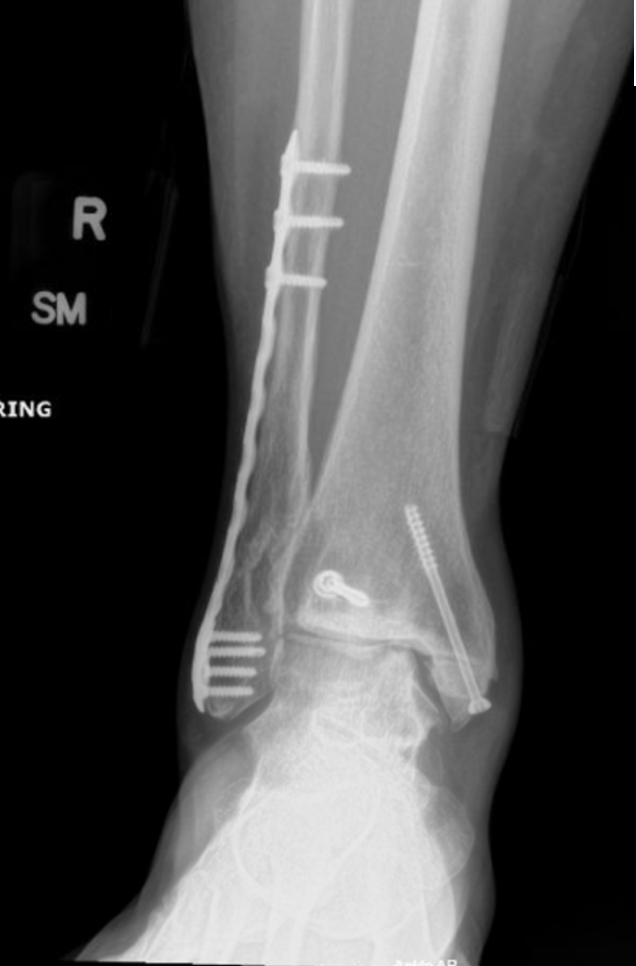
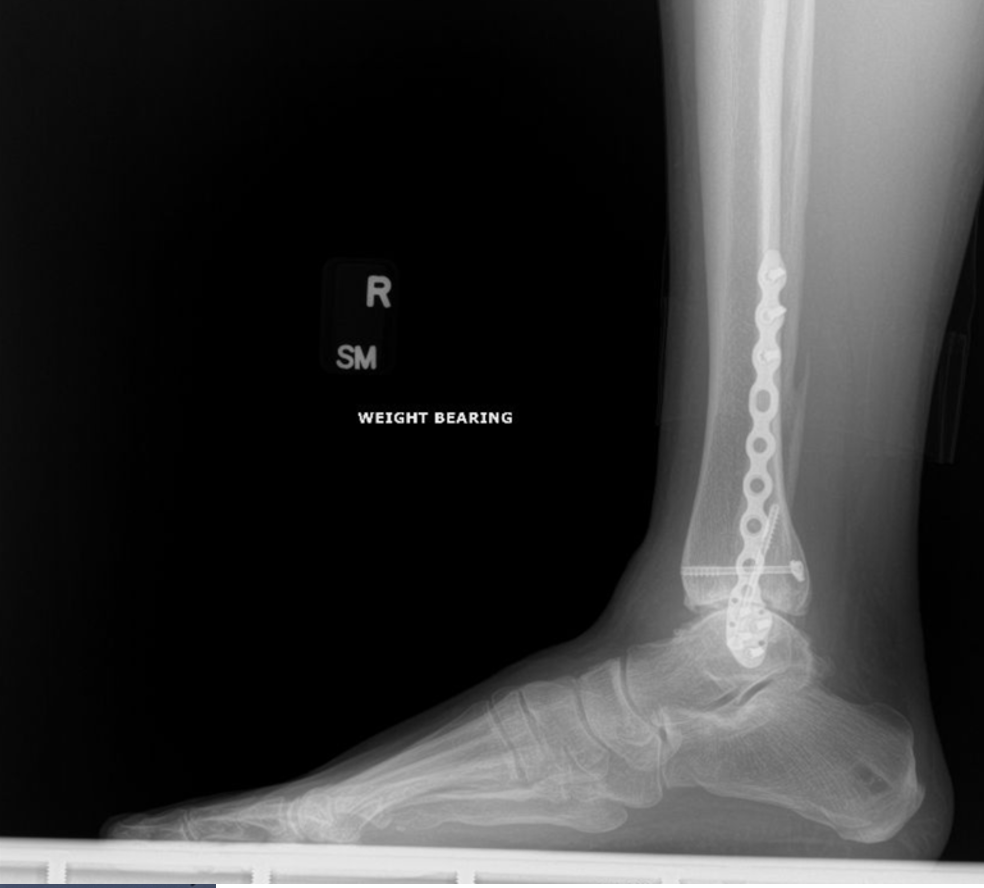
Five years later, she presented with ankle pain secondary to post-traumatic arthritis and functional ankylosis of the joint (Figures 1, 2). Preoperatively, the patient demonstrated an antalgic gait with significant tenderness along the anterior ankle joint line with a positive Malloy sign. The patient exhibited about 40 degrees of ankle range of motion in total with a positive grind sign. She subsequently underwent an arthroscopic debridement and synovectomy. The joint was otherwise congruous, without instability, and under a plantigrade normal foot. The patient’s pain worsened after arthroscopy. Zong and colleagues reported a stark difference in success rates in such arthroscopic intervention of the ankle joint: 93% in nonarthritic joints versus only 53% in joints with moderate osteoarthritis.1 While rare, patients may experience worse outcomes following anterior ankle arthroscopy for exostosis due to instability caused by suddenly increased range of motion, which "uncouples" the joint from the protective, albeit restricting bony block that previously stabilized it. Removing this exostosis may increase dorsiflexion but can expose underlying joint disease, damaged cartilage, or cause arthrofibrosis that limits functionality.
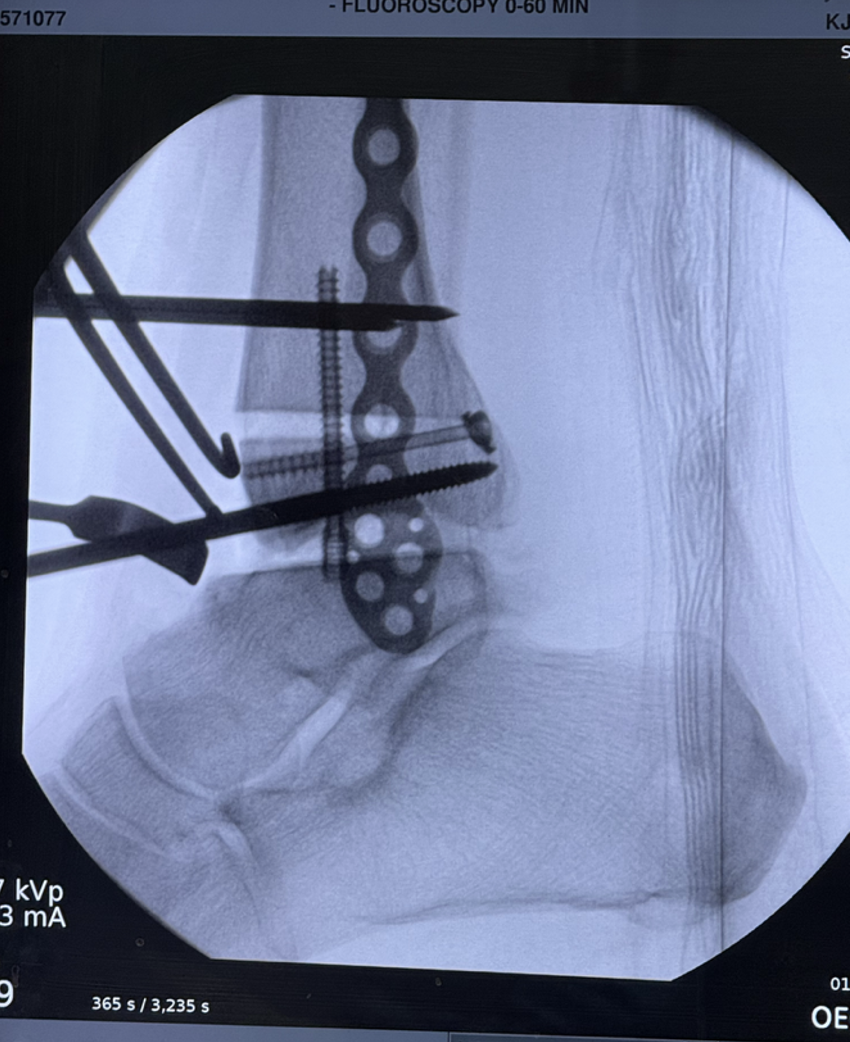
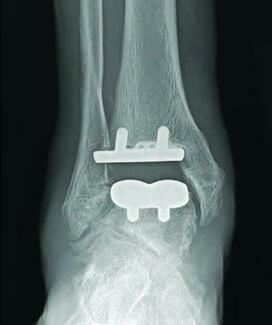
After failing all conservative and minimally invasive treatment options, the patient elected to undergo a peg-type Infinity (Stryker) total ankle arthroplasty with hardware removal and gutter debridement by our team (Figures 3, 4). The patient understood the risk of potential need for revision in the future prior to electing to surgery given her age. The postoperative protocol consisted of non-weight-bearing for 3 weeks followed by weight-bearing as tolerated in a locked hinge style brace along with a pronation control sneaker.
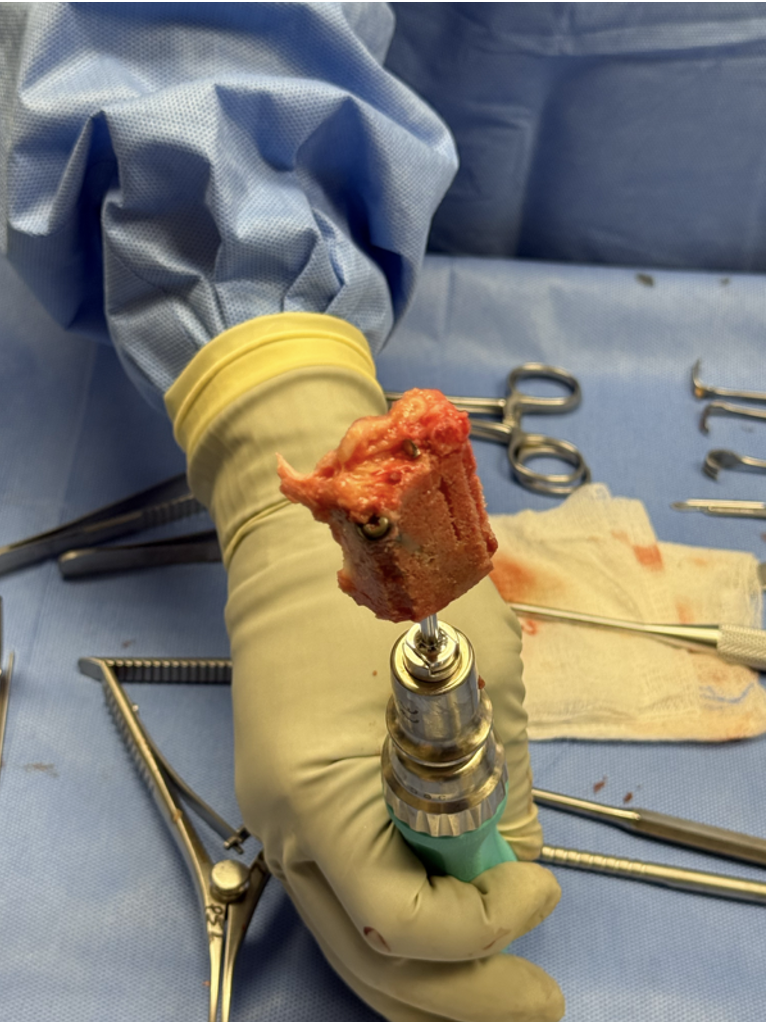
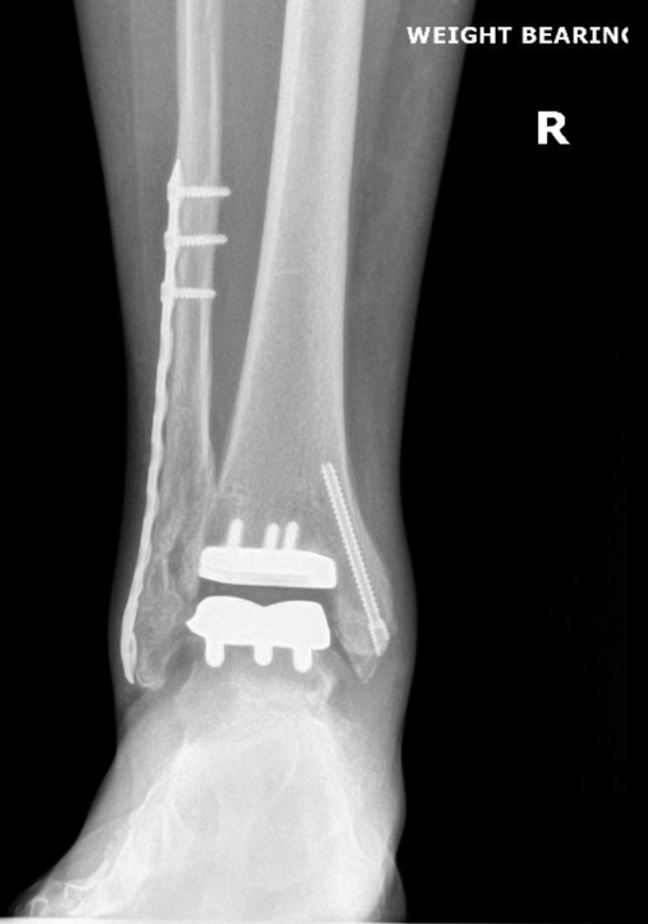
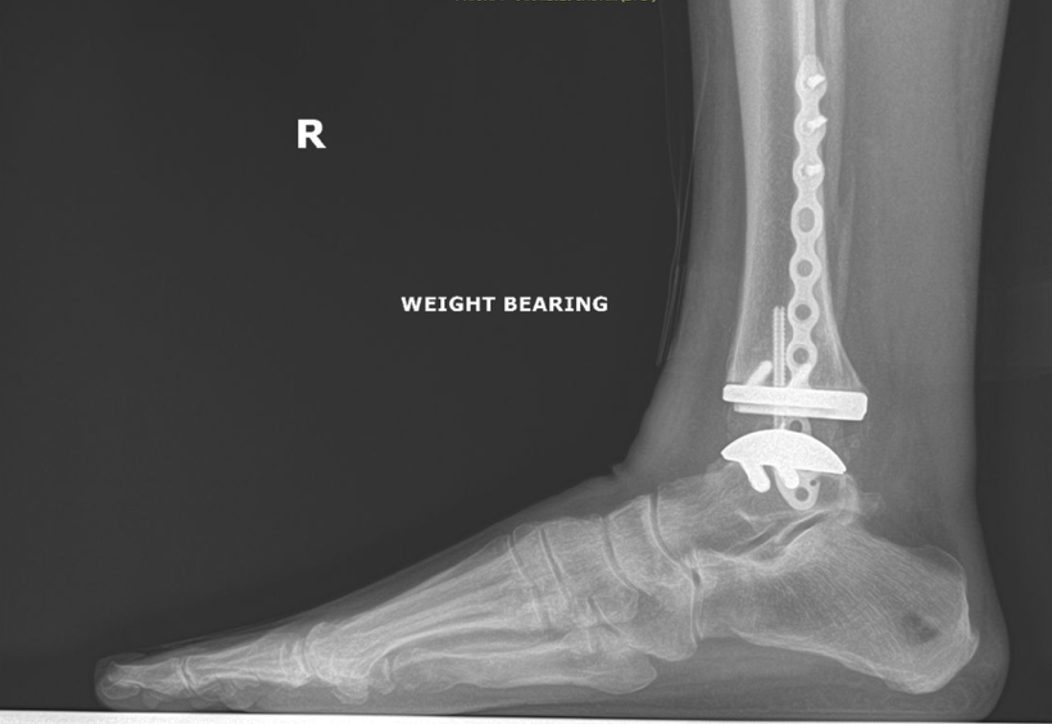
At 6 weeks, we unlocked the brace hinge, allowing more normal kinematic sagittal plane motion, and the patient began physical therapy. At 10 weeks, she transitioned out of the brace into standard shoe gear as tolerated. This is a significantly shorter return to her activities of daily living in comparison to that typical for ankle arthrodesis. At 6 months postoperatively, the patient demonstrated excellent outcomes with 7 degrees of ankle dorsiflexion and 35 degrees of plantarflexion and had returned to full activity without restrictions with substantial improvements in function as well as decreased pain (Figures 5, 6). She is working to improve the subtle equinus present, however, is unlikely to have normal dorsal motion due to implant position, and adaptive adhesions and scar tissue formation from her previous open ankle trauma.
Despite this imperfection in her joint, major functional improvements, decreases in visual analog scale (VAS) pain score, and return to function without deficits in her activities of daily living make her arthroplasty outcomes superior over those expected with arthrodesis in her case.
Discussion
In this case study, we aim to challenge previous literature regarding the relative contraindication to performing TAA in patients less than 50 years of age. Much of this literature is based on second and third generation implants, while current implant usage in the US market largely is with fourth and now even fifth generation implants. In our experience, there are appropriate patients less than 50 years of age who would greatly benefit from this procedure versus a primary ankle arthrodesis (AA) due to their physical demands and the expected quicker return to activity. There is also the potential to protect against degenerative arthritis in neighboring joints by roughly 10% in comparison to AA.2 TAA in patients less than 50 years old have similar survivorship rates, with reports of 85% at 8.8 years of follow up3 but have a higher satisfaction score in comparison to primary arthrodesis.4
Although historically TAAs have slightly higher major revision rates,5 modern implant technology and surgical techniques have narrowed this gap in longevity, with more recent literature showing comparable revision rates between procedures.1 Additionally, those active, working, middle-aged adults very often are unable to dedicate the longer recovery times which arthrodesis typically requires. Arthroplasty, in our observation, very frequently allows patients to return to ambulation, and their work and family requirements more easily and quickly.
Ultimately, the decision to undergo TAA versus AA in patients under the age of 50 should be made on a case-by-case basis with careful patient selection and goals, However, the absolute contraindications of avoidance of “middle aged ankle arthroplasty" is likely no longer the standard of care. With added research continuing to suggest the protective nature of arthroplasty on adjacent joint interventions, arthroplasty in the younger active patient may well be an excellent choice and the new gold standard in the post traumatic ankle.
Dr. Thompson is the Chief Resident at HCA JFK Foot and Ankle Residency Program.
Dr. Sebag is the Vice President SE Regions for ACFAS, Co-Director of the Treasure Coast Reconstructive Foot & Ankle Fellowship, and Attending Faculty at HCA JFK Foot and Ankle Residency Program.
Conflicts of Interest: None of the authors have any financial interests, relationships or affiliations relevant to the subject of this manuscript.
This research was supported (in whole or in part) by HCA Healthcare and/or an HCA Healthcare affiliated entity. The views expressed in this publication represent those of the author(s) and do not necessarily represent the official views of HCA Healthcare or any of its affiliated entities.
References
1. Zong LZ, Feng Y, Bai DY. A perspective on arthroscopic treatment for anterior ankle impingement syndrome: clinical research insights. Front Surg. 2026;12:1613472. doi: 10.3389/fsurg.2025.1613472. PMID: 41646647; PMCID: PMC12869312.
2. Siddique M, Qasim S, Trew CA, Chambers S, Ramaskandhan J. Further hindfoot procedures following ankle arthrodesis versus total ankle arthroplasty: does arthroplasty really protect the hindfoot?. Bone Joint J. 2026;108-B(4):533–537. https://doi.org/10.1302/0301-620X.108B4.BJJ-2025-0437.R2
3. Samaila EM, Bissoli A, Argentini E, Negri S, Colò G, Magnan B. Total ankle replacement in young patients. Acta Biomed. 2020;91(4-S):31-35. doi: 10.23750/abm.v91i4-S.9725. PMID: 32555074; PMCID: PMC7944830.
4. Giambelluca L, Umbel B, Nunley JA. Outcomes after total ankle arthroplasty in patients aged ≤50 years at midterm follow-up. Foot Ankle Int. 2024;45(4), 323–331.
5. Lawton CD, Butler BA, Dekker RG, et al. Total ankle arthroplasty versus ankle arthrodesis—a comparison of outcomes over the last decade. J Orthop Surg Res. 2017;12:76 https://doi.org/10.1186/s13018-017-0576-1
© 2026 HMP Global. All Rights Reserved.
Any views and opinions expressed are those of the author(s) and/or participants and do not necessarily reflect the views, policy, or position of Podiatry Today or HMP Global, their employees, and affiliates.