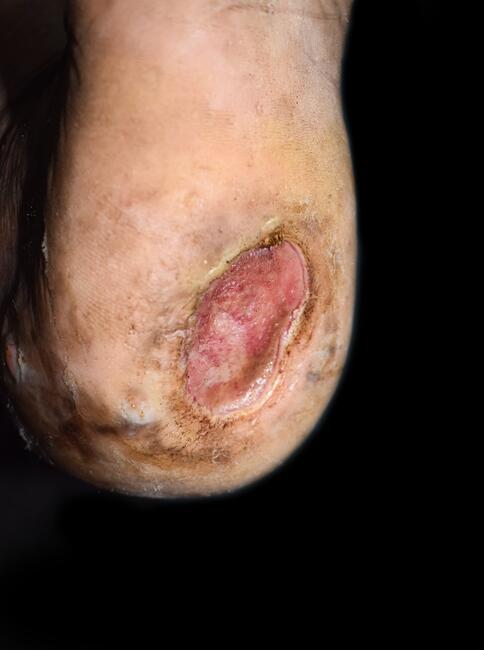
SGLT2 Inhibitors and Amputation Risk: David Armstrong, DPM, Separates Evidence From Myth
Early concerns from the CANVAS trial linked canagliflozin to an increased risk of lower-extremity amputation, but nearly a decade of additional evidence has reshaped the conversation. David G. Armstrong, DPM, MD, PhD, discusses what podiatrists should know about today's evidence, identifying truly high-risk patients, and balancing limb preservation with the proven cardiovascular and renal benefits of SGLT2 inhibitors.
Key Takeaways
1. Current evidence does not support a class-wide amputation risk.
While CANVAS raised concerns about canagliflozin, subsequent randomized trials, observational studies, and FDA review have not demonstrated a consistent amputation signal across the SGLT2 inhibitor class.
2. Patient selection—not medication alone—drives limb risk.
Patients with prior amputation, active ulceration, significant PAD/CLTI, infection, neuropathy, or chronic kidney disease warrant individualized assessment and close multidisciplinary monitoring when treated with SGLT2 inhibitors.
3. Collaboration—not automatic discontinuation—is the best approach.
For most patients, the cardiovascular and renal benefits of SGLT2 inhibitors outweigh potential limb risks. Rather than reflexively stopping therapy, podiatrists should coordinate with prescribing clinicians, document objective limb perfusion, and temporarily pause treatment only in select situations such as severe infection, major surgery, or significant volume depletion.
The Evidence Has Evolved—Where Do We Stand Now?
Early data, particularly from CANVAS, raised concerns about increased amputation risk with sodium-glucose cotransporter-2 (SGLT2) inhibitors. Subsequent trials and real-world studies have been more mixed.
How should podiatrists interpret the current body of evidence on SGLT2 inhibitors and amputation risk? Do you believe the signal is drug-specific, class-wide, or largely resolved?
When CANVAS dropped in 20171, it gave us all a real jolt—a roughly doubled amputation signal with canagliflozin was not something anyone expected, and the United States Food and Drug Administration’s (FDA's) boxed warning followed soon after.2 What has happened since then is almost a case study in how a signal evolves.
CREDENCE did not replicate the finding in the same drug.3 EMPA-REG, DECLARE-TIMI 58, VERTIS CV, EMPEROR, and DAPA-HF did not see a class-wide signal.4-8 The FDA removed the canagliflozin boxed warning in August 2020 when the totality of data suggested the risk, while still present, was smaller and more context-dependent than originally described.9 More recent observational work—including Hodgson's 2024 meta-analysis in Diabetes, Obesity and Metabolism focused on people with PAD—has actually suggested lower amputation risk with SGLT2 inhibitors compared with DPP-4 inhibitors.10
My read is that the signal appears to be canagliflozin-leaning rather than class-wide, and even that residual signal is small, heterogeneous, and heavily mediated by patient selection and volume status. We should neither pretend CANVAS never happened nor let a 7-year-old scare keep our highest-risk patients off drugs that are, in 2026, among the most important cardiometabolic tools we have.
Risk Stratification in the Real World
In your view, which patients with diabetes are at meaningfully increased risk of amputation when on SGLT2 inhibitors? Are there specific clinical red flags that should prompt caution or avoidance?
The people who keep me cautious are the ones who live in our clinics already. Prior amputation is the single strongest predictor of future amputation—period—with or without SGLT2 exposure.9,11 Add to that active or recent ulceration, hemodynamically significant peripheral arterial disease (PAD) or frank chronic limb-threatening ischemia (CLTI), significant neuropathy with deformity, prior deep-space infection, and chronic kidney disease (CKD) with a tendency to pre-renal hits. That "diabetic foot in remission" patient on a loop diuretic and an aggressive antihypertensive regimen, with a low body mass index (BMI) and a history of euvolemic instability, is the one I would flag for conversation. Not veto, but conversation.
What I try not to do is assume every patient with garden-variety neuropathy or a well-perfused, healed ulcer from 5 years ago carries the same risk profile as someone with a recent minor amputation and a compromised profunda. The risk is not binary; it is a gradient, and the gradient maps onto the same variables we already use for Wound, Ischemia, foot Infection) WIfI and SINBAD (site, ischemia, neuropathy, bacterial infection, area, depth) scoring.
Balancing Limb Risk Versus Cardiometabolic Benefit
How should podiatrists weigh the potential limb-related risks against the well-established cardiovascular and renal benefits of SGLT2 inhibitors—especially in patients with existing diabetic foot disease?
For most patients with T2DM and cardiovascular or renal disease, I feel that the SGLT2 inhibitors represent one of the clearest risk–benefit wins we have had in a generation. Heart failure hospitalization, CKD progression, cardiovascular mortality—the number needed to treat is small and the effect size is large. The number needed to harm for limb events, even using the most alarmist estimates, is an order of magnitude larger for most patients.
So, the calculus is not "limb vs. heart." It is: which patient is at the margin where a small absolute increase in a rare event might tip the scale? That is a small population—largely the high-risk foot patient—and for that group the right answer is almost never "no SGLT2," but rather "yes, with eyes open, and with a foot specialist in the loop." For the rest, our job in the foot and ankle world is to not be the reason a patient misses out on a cardiorenal-sparing therapy.
Practical Guidance for the Foot and Ankle Specialist
When a podiatrist is managing a patient on an SGLT2 inhibitor who presents with an active ulcer, infection, or ischemia, what is your practical approach? Should these medications be held, continued, or coordinated with the prescribing physician?
A few practical principles I try to hold:
- The default is continue. I feel that reflex discontinuation of an SGLT2 inhibitor in a patient with a DFU is rarely the right call, and it can create a cardiometabolic vacuum that is arguably more dangerous than the foot.
- Pause—don't stop—in specific contexts. Active deep-space infection with sepsis or early sepsis, severe ischemia awaiting revascularization, significant volume depletion, or the perioperative window around major foot surgery all warrant a temporary hold because of euglycemic diabetic ketoacidosis (DKA) and hemodynamic risk, not amputation risk per se. Reinstitution after source control and revascularization is usually appropriate, in coordination with the prescriber.
- Mind the volume status. A lot of what made CANVAS noisy, in my view, was dehydration physiology superimposed on already marginal perfusion. Talking to patients about hydration, monitoring weight and blood pressure trends, and being alert to acute kidney injury (AKI) are all cheap, high-yield interventions.
- Document the foot. A WIFI Score, a toe pressure, a skin perfusion pressure (SPP)—these are the lingua franca that lets the endocrinologist or cardiologist understand what you are seeing.
Interdisciplinary Communication
What role should podiatrists play in communicating with endocrinologists, cardiologists, and primary care providers about SGLT2 inhibitor use in high-risk foot patients? What key points should be emphasized?
Podiatrists and foot and ankle surgeons are, to borrow a phrase, the boots on the ground. Endocrinologists and cardiologists see labs and echoes; we see the foot. That asymmetry is our responsibility.
Our role is not to override the prescriber. It is to inform the prescriber with data they do not have—perfusion, infection burden, ulcer status, offloading status, ambulatory capacity. A note that reads "severe CLTI, toe pressure 28, pending revascularization, recommend hold SGLT2 until post-revasc and infection cleared, will coordinate reinstitution" is infinitely more useful than "please stop the Invokana."
Key points I try to emphasize to colleagues: most of our patients benefit from SGLT2 therapy; the high-risk foot is a distinct population that warrants shared decision-making, not blanket avoidance; and the podiatry clinic is a barometer for when to pause, resume, or adjust—not a court of appeal.
Looking Ahead: What Data Do We Still Need?
What unanswered questions remain regarding SGLT2 inhibitors and limb outcomes, and what type of future research would help definitively guide podiatric practice? Bottom line—should podiatrists be reassured, cautious, or concerned?”
Several gaps remain. We need pragmatic, adequately powered RCTs that deliberately enroll high-risk foot patients rather than exclude them—the very population for whom we most need answers has been systematically underrepresented. We need better mechanistic work on whether any residual signal is mediated by volume depletion, hematocrit rise, weight loss in already-sarcopenic patients, or something else entirely. We need registry-level linkages between SGLT2 exposure and granular limb outcomes (toe vs. transmetatarsal vs. major), because lumping them as "amputation" has obscured more than it has revealed. And we need validated risk scores that incorporate podiatric variables—WIfI, ADA Risk Score, prior amputation — into the endocrinologist's prescribing decision.
Bottom line: podiatrists should be reassured about the class, thoughtfully cautious in the high-risk foot, and genuinely concerned only about the patient in front of them who meets that specific profile. Reflex avoidance of SGLT2 inhibitors across the board would be a disservice to the vast majority of our patients. Selective vigilance, shared with the prescriber, is exactly the right posture.
Dr. Armstrong is a Distinguished Professor of Surgery and Neurological Surgery and the Director of the Limb Preservation Program at the University of Southern California (USC). He is the Director of the Southwestern Academic Limb Salvage Alliance (SALSA) and the USC Center to Stream Healthcare in Place. He is also a member of the Podiatry Today Editorial Board.
References
- Neal B, Perkovic V, Mahaffey KW, et al; CANVAS Program Collaborative Group. Canagliflozin and cardiovascular and renal events in type 2 diabetes. N Engl J Med. 2017;377(7):644-657. doi:10.1056/NEJMoa1611925.
- FDA Drug Safety Communication. FDA confirms increased risk of leg and foot amputations with the diabetes medicine canagliflozin (Invokana, Invokamet); to be included in Boxed Warning. Published May 16, 2017. Accessed August 6, 2026. www.fda.gov/drugs/drug-safety-and-availability/fda-drug-safety-communication-fda-confirms-increased-risk-leg-and-foot-amputations-diabetes-medicine
- Perkovic V, Jardine MJ, Neal B, et al; CREDENCE Trial Investigators. Canagliflozin and renal outcomes in type 2 diabetes and nephropathy. N Engl J Med. 2019;380(24):2295-2306. doi:10.1056/NEJMoa1811744.
- Zinman B, Wanner C, Lachin JM, et al. Empagliflozin, cardiovascular outcomes, and mortality in type 2 diabetes. N Engl J Med. 2015;373(22):2117-2128. doi:10.1056/NEJMoa1504720.
- Wiviott SD, Raz I, Bonaca MP, et al. Dapagliflozin and cardiovascular outcomes in type 2 diabetes. N Engl J Med. 2019;380(4):347-357. doi:10.1056/NEJMoa1812389.
- Cannon CP, Pratley R, Dagogo-Jack S, et al. Cardiovascular outcomes with ertugliflozin in type 2 diabetes. N Engl J Med. 2020;383(15):1425-1435. doi:10.1056/NEJMoa2004967.
- McMurray JJV, Solomon SD, Inzucchi SE, et al. Dapagliflozin in patients with heart failure and reduced ejection fraction. N Engl J Med. 2019;381(21):1995-2008. doi:10.1056/NEJMoa1911303.
- Packer M, Anker SD, Butler J, et al. Cardiovascular and renal outcomes with empagliflozin in heart failure. N Engl J Med. 2020;383(15):1413-1424. doi:10.1056/NEJMoa2022190.
- U.S. Food and Drug Administration. FDA removes Boxed Warning about risk of leg and foot amputations for the diabetes medicine canagliflozin (Invokana, Invokamet, Invokamet XR). Published August 26, 2020. Accessed August 6, 2026. https://www.fda.gov/drugs/drug-safety-and-availability/fda-removes-boxed-warning-about-risk-leg-and-foot-amputations-diabetes-medicine-canagliflozin
- Hodgson A, Gillies CL, Highton P, Haddon L, et al. Risk of lower extremity amputation in patients with type 2 diabetes mellitus and peripheral arterial disease receiving sodium-glucose cotransporter-2 inhibitors versus other medications: A systematic review and meta-analysis of observational cohort studies. Diabetes Obes Metab. 2024;26. doi:10.1111/dom.15571.
- Ponukumati AS, Columbo JA, Jarmel I, Mulley AG, Suckow BD, Goodney PP, Scali ST, Stone DH. The contemporary natural history of minor amputation among diabetic patients with peripheral arterial disease. J Vasc Surg. 2025;81(6):1430-1439.e8. doi:10.1016/j.jvs.2025.01.215.
© 2026 HMP Global. All Rights Reserved.
Any views and opinions expressed are those of the author(s) and/or participants and do not necessarily reflect the views, policy, or position of Podiatry Today or HMP Global, their employees, and affiliates.