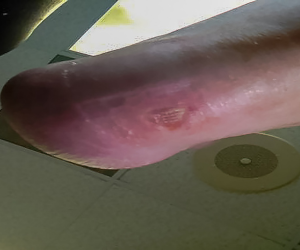
The Intersection of Dermatology and Biomechanics
Key Takeaways
- Hyperkeratosis/calluses and fissuring: Symmetric lesions over bony prominences may indicate biomechanical factors, including bunions, hammertoes, arch structure, gait abnormalities, or footwear friction; friction blisters may also reflect shoe fit or support.
- Suspicious skin lesions: Consider ABCDE features—asymmetry, irregular borders, inconsistent color, diameter >6 mm, and elevation. Abnormal lesions may warrant biopsy; scaling or interdigital findings may reflect tinea pedis, fungal infection, or psoriasis.
- Diabetes/foot wounds: Callus may conceal PAD, reduced skin integrity, or ulceration. Consider debridement and appropriate imaging/circulation testing; lesions unresponsive to typical treatment may require biopsy, laboratory testing, or specialist referral.
Please note: This content is a direct transcript, capturing the authentic conversation without edits. Some language may reflect the flow of live discussion rather than polished text.
Transcript
Jennifer Spector, DPM: Welcome back to Podiatry Today Podcasts, where we bring you the latest in foot and ankle medicine and surgery from leaders in the field. I'm Dr. Jennifer Spector, the Associate Editorial Director for Podiatry Today, and I am so honored to have Dr. Aabha Suchak back with us again from the American Association for Women Podiatrists to talk a little bit more with us about a really important topic. Well, welcome back. We're so glad that you're here again speaking with us about another topic.
This time, we're going to talk a little bit about two areas of podiatry that may not seem like they go together all that much, but they really do, and that's dermatology and biomechanics. So let's get into it by talking about how we can read the skin almost as a biomechanical map. How can changes in the skin from your standpoint, like hyperkeratosis or fissuring, serve as clues to underlying biomechanical dysfunction?
Aabha Suchak, DPM: The skin tells us so much about our patients. We always want to check the position of the skin as clues for biomechanics dysfunction. So anything that looks symmetric or is prominent under a bony area or a bony prominence is going to have a biomechanics component to it. So you have to look at the osseous structures. Are there bunion deformities? Are there hammer toes? Does the patient have a high arch, a low arch? Is there shoe friction? All of these things can lead to skin issues that we need to be cognizant about.
Jennifer Spector, DPM: For sure. And I think this is something we're probably doing a lot without realizing it, but we might be able to even bring it into conversations with our patients when we're teaching them about what's going on with their skin too. So something we see a lot are calluses obviously, but as we know, not all calluses are simple pressure lesions. From your experience, what are some warning signs that should prompt clinicians to look beyond biomechanics and then consider a dermatologic or a systemic process?
Aabha Suchak, DPM: So the first thing that comes to mind when we talk about this is the ABCDEs of skin cancer and melanoma. So if a lesion is asymmetric, if the borders are irregular, if the color of the lesion is not consistent throughout, if the diameter of the lesion is greater than the size of a pencil eraser, which is usually about six millimeters, if the area is elevated, all of these things are warning signs that there may be an underlying melanoma or other skin cancers. So you really want to take that into account. And the more we see calluses and the more we see warts, we know what looks normal and what doesn't. And if you have that gut instinct, you've been in practice long enough or maybe you haven't, maybe you're in residency, but trust that gut instinct. If something looks abnormal, doing a biopsy is absolutely appropriate.
It's better to know that, listen, we didn't miss anything. This really is just a callus. It just looked abnormal. But that is the first thing that comes to mind. And I also think about scaling and interdigital issues, which can be caused from tinia pedis or other types of fungal infections or psoriasis, which can cause scaling on the bottom of the feet. These are other systemic conditions that we definitely wanted to look for in our podiatric patients.
Jennifer Spector, DPM: And another example that comes to mind for me too is in the limb preservation and wound care world. How many times do we see what appears to us and especially appears to the patient as a standard garden variety callus, but we know underneath the surface is lurking signs of PAD or decreased skin integrity and that open wound that could be underneath what appears to be a callus from the outside?
Aabha Suchak, DPM: Absolutely. And diabetic foot ulcers are such a huge part of our practice and something that we really can use to save patients' limbs and prevent really awful things from happening with amputations. So definitely debride that callus if it doesn't look right. Make sure that you're getting appropriate workup. If you need to get x-rays, you need to get circulation testing. All that stuff is really important. And again, there's an underlying systemic process to that. So be very mindful in your diabetic patients.
Jennifer Spector, DPM: So conversely, we just spoke about mechanical stress and pressure and how that may actually be a skin condition or a systemic condition, but are there skin conditions that we often are treating when the true driver is mechanical stress, gait abnormalities, or footwear?
Aabha Suchak, DPM: Yes. So definitely a true callus is the biggest component of this. So if it is symmetrical, if it is present under a bony prominence, there is very likely an underlying biomechanical issue. So friction blisters are another thing that's also very common that can be caused by footwear. So if you have a narrow tight toe box shoe, if there is a shoe that does not have enough stability or support, it can rub against the arch and then the tight toe box can rub against the toes and these can cause friction blisters, which are also common and have an underlying gait abnormality component or a biomechanical stress component to it.
Jennifer Spector, DPM: For sure. And sometimes I feel like we as clinicians have to be detectives almost to a certain point when it comes to this because sometimes it's a matter of matching up that lesion to a seam on the shoe or a changing contour of the shoe or even a contact dermatitis situation with shoe or sock materials. So I think sometimes really probing beneath the surface will help us learn even more about these cases.
Aabha Suchak, DPM: Absolutely. And you'll get these patients, especially in the summertime who will come in sandals or flip-flops and then you start talking to them and they wear construction boots to work 12 hours a day or they're working on their feet and they're on concrete or they're working retail or in a hospital and they're in a shoe that hasn't been replaced in one or two or three years and that can really cause issues also. So definitely being a detective, really asking the appropriate questions and understanding what their shoes look like outside of the office is really important. And even what they're wearing or not wearing around the house.
Jennifer Spector, DPM: No, that's a really good point because sometimes we don't get the whole picture on that. So one more question for you today. Let's try to bring this all together and leave our audience with some thoughts on how we integrate these skin findings into our treatment planning. Throughout your training and throughout your experience in practice, has that changed the way that you evaluate and treat foot and ankle patients specifically when you're trying to decide whether the primary etiology is biomechanical, dermatologic or combination?
Aabha Suchak, DPM: So I think once you learn to evaluate the biomechanical issues when you're evaluating a dermatologic condition, it tends to become second nature. I think sometimes we do it without even realizing that we're doing it, but once you rule out any underlying osseous abnormality, you can then focus on the dermatologic condition and appropriately treat the area. And then the other big thing that I want to mention is that when conditions don't improve with your normal or typical treatment options, you really need to start considering more systemic or abnormal conditions which may require biopsy or lab work or a referral to a dermatologist or another specialist. And there's nothing wrong with that. Sometimes we need other specialists to help us do what's best for the patient.
Jennifer Spector, DPM: Well, thank you so much again, Dr. Suchak, for your thoughts and pearls in this area. I think it'll all help us to examine our own practices and the relationship between these two areas as well. Again, thank you to the American Association for Women Podiatrists for which this episode has been published in partnership. And we thank the audience for joining us today. Be sure to catch this and other episodes of Podiatry Today Podcasts on your favorite podcast platforms, and we'll see you next time.
© 2026 HMP Global. All Rights Reserved.
Any views and opinions expressed are those of the author(s) and/or participants and do not necessarily reflect the views, policy, or position of Podiatry Today or HMP Global, their employees, and affiliates.