Bone Regeneration in the MIS Era
As minimally invasive foot and ankle surgery continues to evolve, regenerative technologies are becoming an increasingly important part of optimizing bone healing. In this episode, Dr. Bradley Abicht discusses the biologic principles behind bone regeneration, the unique demands of MIS, and how injectable regenerative implants may support precise, predictable healing.
This podcast is supported by TheraMicro and was produced under the editorial control of HMP Global. The views and opinions expressed in this program are those of the speakers and do not necessarily reflect those of HMP Global or the sponsor.
Key Takeaways
- MIS requires regenerative solutions designed for precision. Smaller incisions and limited visualization create new challenges for bone graft delivery, making handling characteristics, precise placement, and material stability especially important in minimally invasive procedures.
- Successful bone healing depends on initiating the biologic cascade. Dr. Abicht emphasizes that effective regeneration begins with an osteoinductive signal, supported by an osteomimetic scaffold and controlled delivery to create an optimal environment for new bone formation.
- Injectable regenerative implants may offer workflow advantages in MIS. Drawing on his clinical experience, Dr. Abicht describes how injectable technology can fill bone voids, resist washout, and be delivered through very small incisions, making it a practical option for procedures such as minimally invasive bunion surgery as well as selected high-risk fracture and fusion cases.
Transcript
Please note: This content is a direct transcript, capturing the authentic conversation without edits. Some language may reflect the flow of live discussion rather than polished text.
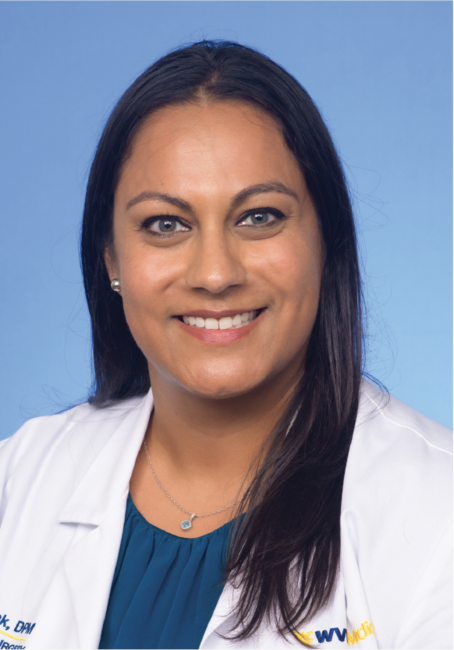
Jennifer Spector, DPM: Hello and welcome to Podiatry Today Podcasts. I'm your host, Dr. Jennifer Spector, Associate Editorial Director of Podiatry Today. Over the past decade, minimally invasive surgery has transformed foot and ankle practice. Smaller incisions, less soft tissue disruption, and faster recovery have made MIS an increasingly important part of many surgeons' treatment algorithms. But while our surgical techniques have evolved, the biology of bone healing has not.
Today's conversation explores an important question, how can regenerative technologies support predictable bone healing while fitting the unique demands of minimally invasive procedures? Joining me today is Dr. Bradley Abicht, a board-certified foot and ankle surgeon at Emplify Health by Gunderson in La Crosse, Wisconsin. Highlighting his leadership, he serves as chair of the Department of Podiatric Medicine and Surgery and holds medical director, editor, and editorial board positions throughout the field, including being part of Podiatry Today's editorial advisory board. Dr. Abicht is widely recognized for his work in minimally invasive and percutaneous foot and ankle surgery, and he lectures nationally and internationally on these techniques.
This episode is supported by TheraMicro for which Dr. Abicht discloses that he serves as a consultant. Dr. Abicht, thank you for joining us today.
Bradley Abicht, DPM: Absolutely. Thanks, Jennifer, for having me. Super excited to have this discussion.
Jennifer Spector, DPM: I think it's a really important one because as we stated over the last several years, we've seen a major shift towards minimally invasive foot and ankle procedures. Bone healing is part of the equation in the success of these cases. From your experience, has the MIS evolution changed how you look at bone grafts or regenerative technologies?
Bradley Abicht, DPM: I think it really has. As more surgeons adopt MIS techniques, I think it'll be extremely important to have different bone regenerative technologies that we can use at our disposal. The bones that we're trying to get to heal have not really changed, but at the same time, the way we approach them, whether it's through an osteotomy that we're making or trying to get a successful arthrodesis or fusion, we have to have tools at our disposal that are kind of modern day tools and allow us to approach the bone healing through these minimally invasive techniques and just create an optimal environment for bone healing. So it definitely has changed my practice and certainly happy to discuss how that looks regarding these new classes of bone regenerative products.
Jennifer Spector, DPM: Yes, it seems like MIS really has changed how we may operate, but it really hasn't changed what the bone itself needs to physically heal. So that being said, what are some of the challenges or tensions that you've noticed when it comes to integrating regenerative technology in MIS?
Bradley Abicht, DPM: I think if you look traditionally at a lot of the previous products that were developed and the previous bone grafts, they were really developed to be used through an open approach. And so we have to modernize the technologies behind these grafts and develop new products or new regenerative capabilities. So you need something that is going to be very precise, that's easy to use for the surgeon, and that can obviously fit through these small incisions that we're making for minimally invasive surgery.
You have to know where it goes, you have to be able to control it, and it has to be able to give you confidence that you are actually inducing a signal to start that bone healing cascade because it is kind of a full process. It's a cascade that happens with the bone healing, and it always starts with signaling the bone to regenerate new bone and try and get it to heal. So I think especially with this new product, this really is going to give a lot of advantages and give, I guess, minimally invasive surgeons and modern day surgeons new opportunity to elevate their bone healing capability.
Jennifer Spector, DPM: Right, because as we get better and better at MIS and more efficient and precise, we don't want to compromise bone healing as a result.
Bradley Abicht, DPM: Correct. Yeah. You don't want to just create tiny incisions and then do a poor job at preparing the bone or not have the appropriate products to help it heal. It's really about setting up the entire structure around that bone, preserving the soft tissues, preserving the blood supply. We still have to do a good job with our osteotomies or preparing the joint for a fusion, but these bone regenerative implants can really help signal the bone to create new bone and heal appropriately and start that bone healing cascade.
Jennifer Spector, DPM: Well, speaking of, let's get a little bit into the science. Surgeons often know what their grafts or what their regenerative technologies are made of, but they may not focus as much on the how. So delving into the core biology, what are some of the key drivers of bone healing to remind our audience?
Bradley Abicht, DPM: I think for this implant in particular, there's really three factors that are extremely important for the success of bone healing. It always starts with that signal that I mentioned. So this is a verified osteoinductive signal that this product transmits to the bone. And that's really where the bone healing cascade is going to start for all our patients, no matter if we're doing this through an open approach or MIS. But I think in MIS situations, even more important to have that signal. Structure is extremely important, the structure of the implant that you're putting in there. And this particular implant has bone-like osteomimetic structure. So its architecture is very similar to bone and gives that matrix or that kind of structure that the bone needs to infiltrate with cells and turn it into new bone. And then finally, just the control and the ability to deliver this type of implant and know where it goes, precisely place it in the area that you need it.
That is extremely important in minimally invasive surgery, just because oftentimes these spaces are so small to work in and we're not always visualizing it like an open approach or procedure. And a lot of times we're relying on either fluoroscopy or just very precise techniques. So these components are extremely important, especially with this implant.
Jennifer Spector, DPM: So it seems like it's important for us as surgeons to have confidence in a given technology about whether it's initiating bone formation since it's not just that single event. Like you said, you want that biologic cascade to happen, and it's not about just putting a ton of bone technology in there. It's about actually making sure that that healing process is happening.
Bradley Abicht, DPM: Absolutely. And I think surgeons can have confidence with that osteoinductivity with ZOrigin because it is a verified product. We know that it does give that signal. And again, that's where the whole bone healing cascade happens or starts, I guess. So if you've done a good job at making your osteotomy or preparing your joint, this is another thing that you can now put in there and it gives you that confidence that your bone is being jump-started with that signal.
Jennifer Spector, DPM: You alluded a little bit to this before, but I'd be curious to get a little more detail. Any of these technologies have to be able to be delivered effectively. So in an MIS setting, what kind of handling characteristics are influencing the way that you're evaluating and selecting your graft technologies? You talked a little bit about needing to precisely place them, but why is that important?
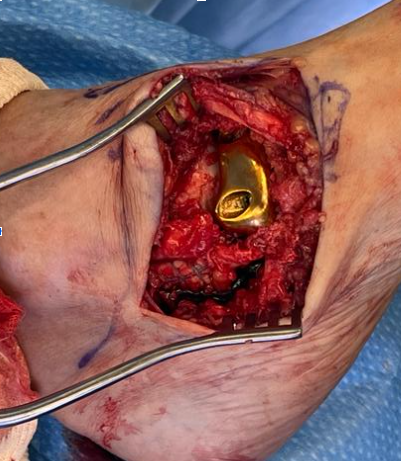
Bradley Abicht, DPM: Yeah, with minimally invasive surgery, again, we're accessing the bone or the joint through very small incisions, whether that's sometimes a two millimeter incision or it could be even up to a centimeter incision. But typically you don't have visualization of the joint or the bone that you are actually delivering this to. So we need to be very precise with how this is delivered. ZOrigin allows you the capability to deliver this through these tiny incisions. The viscosity of the material is very easy to use and handle, and it also is non-water soluble. So it resists being washed out by irrigation or even bleeding and gives you the confidence that it's staying where you're putting it. I've used it in both minimally invasive and open procedures, and so I've gotten a little bit used to seeing it. It's easy to inject this as an injectable implant and flowable, meaning that it can kind of mold into different little crevices.
And oftentimes when we're putting two bone surfaces together, sometimes we don't get the entire bone to match up, and there might be little voids here and there, but having an injectable flowable product now allows us to fill those little voids and again, give that signal to jumpstart the bone healing cascade.
Jennifer Spector, DPM: That makes sense. So I wonder if there are particular patient populations or procedure types where you place a greater emphasis on biological support.
Bradley Abicht, DPM: There are. And quite honestly, I think I'm going to optimize my patient's bone healing preoperatively, intraoperatively, and postoperatively. And this is one component intraoperatively that just allows me to optimize it, whether it's a primary procedure or a revision procedure. I think it's indicated in either. But there are some procedures we do as foot and ankle surgeons that have a little bit higher risk for either delayed or non-unions. In particular, Jones fractures can be a challenging fracture to address, and I've used it a number of times to address Jones fractures. Certain joints have a little higher potential for non-unions such as the ankle, the TN joint. So I've definitely employed it in those joints, just again, to try and optimize my patient's bone healing. Certainly if you're in any revision situations such as a nonunion or a patient that's had a previous surgery, I mean, these are all situations where I'm going to try and throw the kitchen sink at that bone and try and get it to heal as best I can. And I think we're doing that with our surgical technique and the minimally invasive approach, but also this type of regenerative bone implant can really help you in your desire to try and get that bone to heal successfully.
Jennifer Spector, DPM: Well, let's talk a little more about that. As you mentioned, this one particular technology called ZOrigin, it's an FDA class two regenerative implant technology. When you started using this injectable, what stood out to you?
Bradley Abicht, DPM: Yeah, a couple things. I think just the ease of use, first of all, it's very easy to open, to prepare very quick. It does not have to come out of a freezer. There's not a lot of preparation time for it like some other grafts have had. Like I mentioned before, it's injectable, it's a flowable material, so it's very easy to access it through a two millimeter, a five millimeter incision, whatever your incision size is. And it's very precise. So you can see where the tip of your cannula is or even an 18-gauge needle, and you can inject it into the precise spot that you want it. I think I had mentioned too, I've used it in open procedures and it's very easy to handle. And that non-water soluble structure that it has, it doesn't get washed away by irrigation or bleeding. So once you put it somewhere, you know it's going to stay there, which I think is also very important for a lot of these grafts that traditionally have been used that might get kind of washed out after you put it in.
So you don't know whether or not you're even getting the benefit of the graft. But this particular type of bone regenerative implant stays put and gives you that confidence that it's going to stay there and do its job.
Jennifer Spector, DPM: You mentioned before about being able to verify the osteoinductive signal. Does that happen with this option as well?
Bradley Abicht, DPM: It does. The way that they prepare this product is a process that preserves that and verifies that there is an osteoinductive signal that's happening, and it's based on each lot that they prepare. So you can have a confidence as a surgeon that you're getting that osteoinductive signal, which is, again, that kind of beginning component of making sure we have a successful bone regenerative cascade that happens.
Jennifer Spector, DPM: Is there anything special about the structure of this technology that helps support regeneration of bone?
Bradley Abicht, DPM: Well, other than the osteoinductive signal, I mean, I think the structure on a microscopic level is made in such a way that it does mimic bone structure. So that's extremely important with a lot of our implants where we're trying to get bone to not only ingrow, but to replace the implant over time. There is a controlled resorption that happens with it where this product will then turn into the patient's native bone and it eventually goes away over time. So these are, to me, at least, extremely important components to have in a bone regenerative implant that we're trying to use to get bone to successfully heal.
Jennifer Spector, DPM: So if a colleague asked you about injectable biologics in MIS, what would you tell them about ZOrigin in particular?
Bradley Abicht, DPM: I think right now this has got to be the leading product that's out there, and that's what I would tell them. And for a lot of the components that we've already discussed here today, it is definitely something that's easy to use. It can be used in both minimally invasive and open procedures, but in particular, I think it's going to excel in minimally invasive surgical procedures and gives us kind of a modern day option for a regenerative bone implant. And so if you're looking to utilize minimally invasive surgical techniques in your practice and you use bone graft to augment those procedures, I think this is a perfect match between the two.
Jennifer Spector, DPM: And before we close out today, do you have any examples of where an injectable delivery provided a meaningful advantage for you intraoperatively?
Bradley Abicht, DPM: Yeah, so as I think most people know, I do quite a bit of minimally invasive bunion surgeries, and I've been using it there. And minimally invasive bunion surgery with a distal osteotomy, there's oftentimes quite a large shift that we do with that osteotomy, which does leave a pretty significant bone void. And so I've been using it in that bone void to fill that space. And again, it allows me to be very precise with where I'm placing that bone regenerative implant. And I've seen it really excel there, easy to use, and I'm excited to see what that bone healing looks like. But the early timeframe here with the use of this ZOrigin product so far has been really positive. So I think there'll be definitely other procedures that this will be indicated for, but I've really seen it excel there.
Jennifer Spector, DPM: Well, Dr. Abicht, thank you so much for sharing your experience and insights on this today.
Bradley Abicht, DPM: Absolutely. Thanks for having me. Appreciate it.
Jennifer Spector, DPM: Well, we're always glad to. And one of the themes that stood out for me throughout today's discussion is that successful bone regeneration isn't simply about what a regenerative technology is made of, rather it's about whether it can initiate that biologic cascade of bone healing, support the regenerative process, and be delivered with the precision that modern MIS surgery demands. As these techniques continue to evolve, understanding how regenerative implant technologies fit into that workflow will remain an important part of optimizing patient outcomes. Thank you to TheraMicro for supporting this episode of the Podiatry Today Podcast, and thanks to all of you for listening. If you enjoyed today's discussion, be sure to subscribe wherever you get your podcasts and visit podiatrytoday.com for more episodes, clinical insights, research updates, and practical education for foot and ankle specialists. We'll see you next time.
© 2026 HMP Global. All Rights Reserved.
Any views and opinions expressed are those of the author(s) and/or participants and do not necessarily reflect the views, policy, or position of Podiatry Today or HMP Global, their employees, and affiliates.