End-Stage Renal Disease for the Podiatric Professional
Learn from Dr. La Fontaine's insights on lower extremity care for this vulnerable population.
Key Highlights
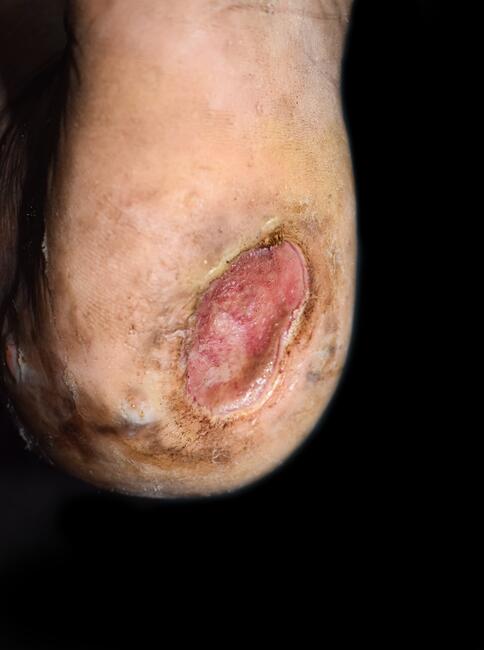
- End-stage renal disease (ESRD) and diabetes: Dialysis patients face elevated risks of foot ulceration, amputation, hospitalization, and impaired healing, often compounded by neuropathy, vascular disease, and foot deformities.
- Surgical considerations: ESRD complicates wound healing despite palpable pulses or bleeding during debridement. Assess vascular perfusion, nutrition, anemia, and glycemic control; earlier surgical intervention may be appropriate for selected patients.
- Multidisciplinary management: Coordinate podiatry, nephrology, and dialysis teams for same-day evaluation of new ulcers or concerning findings. Encourage 30-second foot inspections during dialysis visits, staff education, and rapid referral pathways.
Please note: This content is a direct transcript, capturing the authentic conversation without edits. Some language may reflect the flow of live discussion rather than polished text.
Transcript
Jennifer Spector, DPM: Welcome back to Podiatry Today Podcasts, where we bring you the latest in foot and ankle medicine and surgery from leaders in the field. I'm Dr. Jennifer Spector, the Associate Editorial Director for Podiatry Today. And our topic today is one that I think we definitely need to dive deeper into, and that is end stage renal disease and what the unique aspects of this that podiatric physicians need to know about. We have with us today our guest, Dr. Javier La Fontaine. He is the School of Podiatric Medicine's inaugural dean at the University of Texas Rio Grande Valley School of Podiatric Medicine. Previously, he served as the School of Podiatric Medicine's Associate Dean of Academic Affairs, and he had previous roles at the University of Texas Southwestern Medical Center and as a fellowship director in limb preservation. His experience is deep, and especially in this area which he gave a talk on at a conference with the American College of Podiatric Medicine.
The American College of Podiatric Medicine is publishing this in partnership with us today, and therefore we welcome Dr. LaFontaine. Welcome, Dr. La Fontaine. We're so happy to have you here with us today.
Javier La Fontaine, DPM: Thank you so much for the opportunity.
Jennifer Spector, DPM: So you gave a talk back at the ACPM conference earlier this year that really struck a chord for me that I think is so important for our colleagues to hear more about, and that's talking a little bit about end-stage renal disease from a podiatric perspective. From your experience, how should we be thinking about ESRD as a risk multiplier? Are there red flags in dialysis patients that we should maybe look at differently as far as how we approach their at-risk foot care?
Javier La Fontaine, DPM: Yes, yes. I mean, that is a very good question. Yeah, I think end-stage renal disease in patient with diabetes, as it's been published before, it's really an independent risk factor for development of ulceration, amputations, hospitalization, and so forth. And I think every time I see a patient with end-stage renal disease, those patients to me goes on top of my queue. To me, it is the patient that is urgent by any definition, meaning they need to be seen. And I think these patients often, even the fact that they're exposed to healthcare providers three times a week and things like that, they're often fall through the cracks. Many of these patients end up tired after dialysis, so usually you set an appointment the day of the dialysis, they're really tired, they skip the appointment. So for many, many reasons, these patients are sometimes very hard to target, even though they are with a foot care team.
And I think for those same reasons are why we need to make such a big effort to have them involved in our care. But also, as you know, dialysis patient from the physiological perspective, usually they have the recipe that involve everything. So you got the stage renal disease, they're most likely going to have neuropathy, they're going to have vascular disease, most likely already have the deformity in the foot that will lead to ulceration. So yeah, these patients are by definition just probably the highest group of risk spectrum for patients with diabetes and foot ulcers.
Jennifer Spector, DPM: Absolutely. And I know that it's so important for us to intervene for these patients because sometimes their DFU status can actually interfere with potential transplant status. But thinking about the converse there, do you see any misconceptions around wound healing and podiatric surgical candidacy such as thresholds for debridement or reconstruction in this population?
Javier La Fontaine, DPM: Yeah, I mean I think yes, definitely. I think there are certain misconceptions and often they have to do with how we're being trained. So I'll give you an example. Some of these patients, we think can this patient come in with an infection or an ulcer and you're thinking and says, "Well, if this patient is really sick to have surgery, but we probably should be thinking about can this limb really tolerate conservative management?" So some people's going to see dialysis, (and think) we need to postpone surgery as much as we can. We try different products, we debride, we do wound care, we try this, we try that, (and it never seems to) work. But some people might think, you know what, this patient, even though it's a high risk, is the patient that we should intervene sooner because we know if we decrease pressure on the toe, we decrease pressure on the bottom of the foot, most likely the also will eventually go to heal.
So you can see those two school of thoughts. I personally think that we need to be careful, but I think we need to be aggressive with this patient. We need to make sure to make sure the patient has good nutrition, the status of the anemia, obviously the vascular flow, the diabetes control, just what we do with other patients. But there's one, that's one misconception how quick we can intervene. Now the other thing too, a lot of these patients, because anticoagulation medicines and all that stuff, they tend to heal quite a bit, but they're not good healers. So a lot of the times, and also, I'm sorry, also typically they have calcified vessels.
You debride the wound, they bleed, you got palpable pulses, you say, "Oh, this patient is good." And then all of a sudden you do the amputation and it takes nine months to heal, if that. So that's another misconception, the fact that because you see a lot of good bleeding in a lot of them, not all of them, but a lot of them, you might think these patients might heal uneventfully. And I think lastly, these patients, just because they go to dialysis doesn't mean everything is hemodynamically stable. I mean, a lot of them, once they go into dialysis, everything else start kind of falling in place, their A1c drops and all that, but that doesn't mean they have already prolonged complication from the end-stage renal disease that is still going to be troublesome or make them still high risk whenever you perform any surgical procedure.
Jennifer Spector, DPM: Definitely. And as we know, patients undergoing dialysis, especially those on hemodialysis, interact with the healthcare system multiple times each week, yet sometimes lower extremity issues are missed despite this. How can we as podiatrists better integrate with nephrology and dialysis teams to help catch problems earlier and impact these outcomes?
Javier La Fontaine, DPM: Yes. I mean, that's an excellent question because I think you and I were being already long enough where we can see the evolution of technology from paper charts to now your computer getting loaded within basket messages and all this. I think I like to look at things two ways. I like to see what I would like to know or what I would like to teach the nephrology and the dialysis team. And two, what do I need from them? And I think looking at that way, you can establish this communication. I like to tell the nephrologist, whenever you see something that is unusual in a patient with stage renal disease in the foot, something unusual in the foot, I like to say, "You need to see this as CPR, ‘consult podiatry rapidly.’ There's no reason to wait on anything."
But on my end, I need to have a practice set up where when the nephrologist call and say, "I think this patient has a superficial ulcer and because it's a dialysis patient, this patient needs to come in today." So I have to have a practice set up that if the patient have an ulcer and is on dialysis, he essentially needs to be seen today. He’s got the ingredients to fail, to get infected faster or to poorly heal quicker. So I like to do that. The other thing I like to do with the communication perspective is a lot of the dialysis patients, they're not necessarily exposed to the doctor every day, but they are exposed to the nurse every day. They are exposed to medical assistants every day. So you need to communicate and teach those (professionals) too to recognize ischemic events, cellulitis, a blister, an ulcer, because they're going to be the one that's going to probably text the nephrologist that is not there, and say, "I think this patient has a blister or an ulcer.”
They're going to be the one able to recognize sooner. So I think that's very important. And I think I like to communicate to them and tell them, "Listen, just like you draw blood every day, just have them take off the shoe, their socks every day and just take a 30 second look between the toes, the bottom of the foot, make sure everything is okay." I make sure they have my telephone number, my email to communicate things with me. If you work in a big system, we use a lot of the in-basket where someone can put a picture of the foot, send it to you in in basket, but then if you're not in the office, your nurse can see it, your medical assistant can see it and then trigger a chain of answering when it comes to this patient. So I think communication among the team is essential for the successful management of these patients.
Jennifer Spector, DPM: It's almost like having their own unique rapid response pathway.
Javier La Fontaine, DPM: Yes, exactly. Exactly. You have those set orders … that should trigger these five things that needs to happen and to get the patient right away into your practice.
Jennifer Spector, DPM: It also strikes me that with the patients noticing that you're asking them to remove their shoes and socks each dialysis session, they're going to ask why and they're going to want to know what they're looking at. And they may be more likely to bring something up when they get to dialysis. They may say, "Hey, can you look at this spot? I can't see it. It's on the back of my toe." And that way you're engaging the patients in the process too.
Javier La Fontaine, DPM: Oh, absolutely. And trust me, they will do that. Once they go to the dialysis and they talk to the RN, the LPN, the medical assistant and say, "You know what? I'm checking the foot for you every day because you can get a sore and not even feel it. So I want to check your feet." Once they do that, few weeks, few months, the patient's going to come back and tell you. They're going to come back and say, "Hey, you know what? I saw some blood in my socks the other day. Would you mind checking?" Or they might tell you, "I haven't had my shoe taken off for the past week. Can you take them off and take a look?" They will remind you for sure or absolutely they will do so.
Jennifer Spector, DPM: Well, that's great. And you shared so many wonderful points today, but for busy clinicians like yourself who are listening to this podcast today, what do you feel are the top two or three practical changes they could implement tomorrow when they're treating patients with end stage renal disease, whether it's in their office, in the wound care center or the hospital itself, what can we do as first steps to contributing to better outcomes?
Javier La Fontaine, DPM: Yeah. I mean, I think a couple of those things we mentioned earlier, but maybe I can maybe emphasize it a little bit better. Interestingly, dialysis centers almost work like a skilled nursing facilities, even if they're detached from the hospital. They work like skilled nursing facilities, nursing homes, step-down hospitals where you actually need to be privileged there. So I think you should be credentialed. I think they should have your contact information, your nurse information, your office telephone number, the person that will receive that call first. And I would either always give them the come and see me, send the patient to me, give them a for sure we'll do this within the same day if it comes obviously a reasonable time. And then you always have the option to say, "You know what? We are about to close the office.
I'll go there because then you'll be credentialed to see that location." So I think accessibility is probably the most important thing that we should do when it comes to the dialysis patient. I think the other thing that I would do, I would be very clear to the nephrologist and say, "I will need from you fairly often their nutrition status, their anemia status, their compliance with dialysis. A lot of that really give you a lot of idea of how the patient's going to do with your management." And I would tell them, "Listen, I can give you this, which is going to help you make your practice better." When the patient got hospitalized, the infection they had, what type of infection, did they heal poorly? Did they heal uneventfully? Some of the complications we have while the patient was admitted or during surgery. And then you can create that importance of this communication between that.
So I think in summary, those three things be accessible same day, either by referring the patient to you or you going to the center and then establishing this is what I can do for the nephrologist and then tell them what they can do for you to improve the patient care. And I think if you establish that, I think everything else going to flow normally.
Jennifer Spector, DPM: Great. Thank you. Is there anything else that you would like to add?
Javier La Fontaine, DPM: Yeah. I mean, I think it's good to emphasize the importance of educating the nephrology or dialysis center staff. I think that is very important because they will be the first eyes on the problem and you want them to recognize it. So making sure to do maybe later lunch and learn for them or something along those lines. So you can create that, like you say, that urgency flow or that first response flow to you.
Jennifer Spector, DPM: Well, thank you so much for sharing your insights with us today on this very important topic, and thank you to the audience for joining us. You can listen to this and other episodes of Podiatry Today Podcasts on your favorite podcast platforms.
© 2026 HMP Global. All Rights Reserved.
Any views and opinions expressed are those of the author(s) and/or participants and do not necessarily reflect the views, policy, or position of Podiatry Today or HMP Global, their employees, and affiliates.