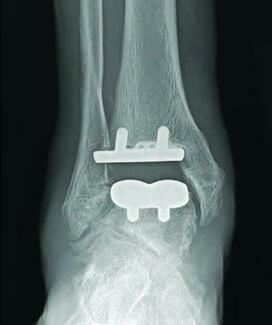
Preoperative Dorsiflexion Predicts Postoperative Motion After Total Ankle Arthroplasty
A new retrospective study suggests that preoperative ankle dorsiflexion may be the strongest predictor of postoperative weight-bearing dorsiflexion following total ankle arthroplasty (TAA). The findings may help foot and ankle surgeons better counsel patients about expected postoperative motion and functional outcomes.
Key Takeaways
- Preoperative clinical dorsiflexion was the only independent predictor of postoperative weight-bearing dorsiflexion after total ankle arthroplasty.
- Most patients demonstrated limited postoperative dorsiflexion, despite undergoing TAA, underscoring the importance of setting realistic expectations.
- Adjunctive procedures, including gastrocnemius recession and tendo-Achilles lengthening, were not associated with improved postoperative dorsiflexion in this cohort.
Study Examined Factors Associated With Postoperative Dorsiflexion
Restoring ankle motion is one of the primary goals of total ankle arthroplasty (TAA), yet many patients continue to experience limited dorsiflexion after surgery. Because reduced postoperative dorsiflexion has been linked to poorer functional outcomes and lower patient satisfaction, investigators sought to identify factors that predict which patients are most likely to regain functional ankle motion following TAA.
The researchers conducted a retrospective cohort study of patients who underwent elective primary TAA performed by a single surgeon between 2013 and 2023.1 Postoperative ankle range of motion was measured using weight-bearing lateral radiographs obtained in maximal dorsiflexion and plantarflexion. Limited dorsiflexion was defined as less than 20 degrees, while preoperative dorsiflexion was assessed clinically. Demographic characteristics, medical comorbidities, prior surgical history, implant variables, and adjunctive procedures—including gastrocnemius recession and tendo-Achilles lengthening (TAL)—were evaluated for potential associations with postoperative dorsiflexion. Patient-reported outcomes included the Foot and Ankle Ability Measure–Activities of Daily Living (FAAM-ADL) and visual analog scale (VAS) scores.1
Most Patients Had Limited Postoperative Dorsiflexion
The study included 175 patients, with a mean follow-up of 3.3 years. Overall, 111 patients (63.4%) had limited postoperative dorsiflexion, while 64 patients (36.6%) achieved full dorsiflexion according to the study definition.1
Patients who achieved full postoperative dorsiflexion were significantly older than those with limited dorsiflexion (65.5 versus 61.5 years). They also reported better postoperative functional outcomes, with higher FAAM-ADL scores compared with patients who had limited postoperative motion.1
Preoperative Motion Was the Strongest Predictor
After accounting for multiple clinical variables, the investigators found that preoperative clinical dorsiflexion was the only significant independent predictor of improved postoperative dorsiflexion.
In contrast, several commonly considered patient and surgical factors were not associated with postoperative dorsiflexion. These included body mass index, body weight, tobacco use, diabetes, sex, medical comorbidities, polyethylene insert size, and adjunctive procedures such as gastrocnemius recession or tendo-Achilles lengthening.1
The authors did observe that a history of prior open reduction and internal fixation (ORIF) was more common among patients who ultimately experienced limited postoperative dorsiflexion, suggesting that previous ankle trauma may influence postoperative motion, although it did not emerge as an independent predictor in multivariable analysis.1
Clinical Implications for Foot and Ankle Surgeons
For surgeons performing total ankle arthroplasty, the findings emphasize the importance of thoroughly evaluating preoperative ankle motion during surgical planning.
Because preoperative clinical dorsiflexion appears to be the strongest predictor of postoperative motion, patients with restricted dorsiflexion before surgery may benefit from realistic counseling regarding expected postoperative range of motion. The authors suggest that setting appropriate expectations before surgery could improve patient satisfaction, particularly given that nearly two-thirds of patients in this series did not achieve full postoperative dorsiflexion.1
The lack of association between adjunctive soft-tissue procedures and postoperative dorsiflexion also suggests that these interventions alone may not reliably improve final ankle motion, at least within the population studied.
As presented in the published abstract, the study was retrospective and reflected the experience of a single surgeon, which may limit generalizability.
Reference
- Thomas GM, McCahon JAS, Dulitzki Y, et al. Predictors of limited weight-bearing dorsiflexion following total ankle arthroplasty. Foot Ankle Int. Published online July 6, 2026. doi:10.1177/10711007261457413.
© 2026 HMP Global. All Rights Reserved.
Any views and opinions expressed are those of the author(s) and/or participants and do not necessarily reflect the views, policy, or position of Podiatry Today or HMP Global, their employees, and affiliates.