Improving Quality of Life for Patients With Chronic Spontaneous Urticaria
In this interview, Dr Mona Shahriari discusses how an evolving understanding of chronic spontaneous urticaria (CSU) is transforming the way clinicians diagnose, manage, and treat this complex inflammatory skin disease. She explores the shift from symptom-based management toward mechanism-driven care, highlighting the growing role of targeted therapies, the importance of recognizing disease heterogeneity, and the significant quality-of-life burden experienced by patients. Dr Shahriari also shares insights on treatment escalation, common diagnostic pitfalls, emerging therapeutic targets, and the future of precision medicine in CSU.
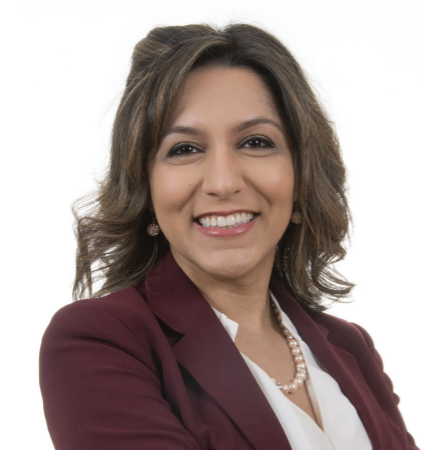
The Dermatologist: How has our evolving understanding of CSU pathophysiology shaped the current treatment paradigm?
Dr Shahriari: One of the biggest shifts in CSU has been realizing that it is not just hives. For years as dermatologists, we treated CSU like the allergist’s problem, but our evolving understanding of mast cell biology and the different CSU endotypes has completely changed that conversation. We now recognize CSU for what it truly is—a chronic mast cell-driven inflammatory skin disease. And importantly, there is not just 1 pathway driving it. Some patients may have more IgE-mediated disease, others may have more autoimmune or non-IG-driven disease, and that distinction matters because it helps explain why some patients do beautifully with 1 treatment while another treatment may not necessarily work for them. Our growing understanding of the underlying biology has shifted us away from the old “throw antihistamines at it and hope for the best” mindset toward a far more targeted mechanism-driven approach. We are not simply suppressing symptoms; we are increasingly interrupting the actual signaling pathways that drive mast cell activation. This should empower dermatologists to reclaim ownership of CSU. At the end of the day, it is an inflammatory skin disease, and inflammation in the skin is our job as dermatologists to manage.
The Dermatologist: Where do targeted therapies t into management today, particularly for patients who are refractory to antihistamines?
Dr Shahriari: They fit in much earlier than many clinicians realize. One of the biggest misconceptions in CSU is that patients should cycle through endless antihistamines for months before escalating care. And the reality is that fewer than half of our patients achieve adequate control even with 4 times standard dosing of the second generation antihistamines. So, if a patient is still flaring, still miserable, still losing sleep, and still anxious about when the next episode of hives will happen, this is the patient for whom I am starting to think about a targeted therapy. Omalizumab has really changed the landscape because it showed us how dramatically disease control could improve when we directly target IgE signaling. Now with newer options like dupilumab and remibrutinib, we are expanding beyond a single pathway and recognizing that CSU heterogeneity matters. The other thing I emphasize is that quality of life matters. We would never tell a patient with psoriasis to just live with it for years while they suffer; CSU deserves that same level of urgency.
The Dermatologist: Are we moving toward a more mechanism-driven approach in CSU similar to other chronic inflammatory skin diseases?
Dr Shahriari: Absolutely. I think CSU is finally catching up to where we are already at with diseases like psoriasis and atopic dermatitis. For a long time, CSU management was nonspecific, but now we are beginning to understand the underlying immunology and recognize that not every patient with CSU is biologically identical. We are learning that some patients have more IgE-mediated disease, some more autoimmune driven, and potentially others we have not even fully characterized yet. That opens the door to precision medicine approaches where treatment selection may eventually be guided by biomarkers, endotypes, and clinical phenotypes. I think we are only in the infancy stages of our experience with this disease. The pipeline in CSU is incredibly exciting because it is not just more drugs, it is different mechanisms targeting different parts of the mast cell signaling pathway.
The Dermatologist: CSU can significantly impact quality of life. What aspects of the disease are most burdensome for patients?
Dr Shahriari: Without question, the unpredictability. Many of my patients live in fear of the next fl are because CSU does not operate on anyone’s schedule. Your eye can swell shut the morning of a wedding, a presentation, or an important family event, and that psychological burden is enormous. And because the lesions are transient, I think clinicians sometimes underestimate how disruptive the disease really is. These patients are often exhausted from the itch, sleep deprivation, anxiety, social embarrassment, and the constant feeling like they have no control over their body. What I always tell my patients is the only thing predictable about CSU is that it is unpredictable. There is also the emotional exhaustion that comes from not feeling believed. Patients bounce between providers. They go through all this testing and are often told everything is normal. Meanwhile, they are still suffering. So, when we finally diagnose CSU and explain that it is a real chronic inflammatory condition, many patients feel validated for the first time.
The Dermatologist: Are there comorbidities or systemic associations that clinicians should be screening for or managing alongside CSU?
Dr Shahriari: Definitely. The strongest associations that we see are with autoimmune conditions, particularly thyroid disease. Women with CSU have a significantly increased risk of autoimmune hypothyroidism and rheumatoid arthritis over time. This does not mean every patient with CSU needs a massive laboratory workup. In fact, extensive testing is often low yield. So, what I do instead is let the history and the review of systems guide me. For example, if a patient has hair loss, dry skin, fatigue, and joint pain, I may investigate thyroid disease or other autoimmune conditions further. The key is being thoughtful rather than reflexively ordering pages and pages of testing that ultimately will not change management.
The Dermatologist: Many patients cycle through therapies with suboptimal control. What factors should clinicians consider when escalating therapy beyond first-line treatments?
Dr Shahriari: The biggest thing is to not wait too long. If a patient is still symptomatic despite optimized antihistamines, especially if their quality of life is significantly impacted, we do need to have a low threshold to escalate. And when I say optimized in terms of antihistamines, I mean 2 to 4 weeks of a second-generation H1 antihistamine like cetirizine at 4 times the daily dose. If they are not getting to where they need to be after that trial, do not waste time with other antihistamines or cycling through and adding something to the regimen. The data suggest that this trial works for less than 50% of patients, so we should not delay therapy escalation. I also think understanding the disease heterogeneity matters. If someone partially responds to omalizumab but never fully clears, that may suggest a different inflammatory driver and influence what mechanism you can consider next. And importantly, steroids should not become the chronic management plan for CSU. I always say steroids should be a bridge to somewhere, not the destination, so if you are constantly reaching for steroids, it is time to move on.
The Dermatologist: What are the most common pitfalls in diagnosing and managing CSU?
Dr Shahriari: One major pitfall is overcomplicating the diagnosis. CSU is fundamentally a clinical diagnosis. If the lesions are transient, recurring for more than 6 weeks, and there is no clear trigger, you should absolutely be thinking CSU. Another pitfall is assuming everything must be allergy driven. Most patients with CSU do not have an identifiable trigger. This is why the extensive allergy testing that we have done before in the “million-dollar workup” is often unrevealing and can sometimes prolong diagnostic delays. In fact, there are recent guidelines from this year that advise against extensive testing. And finally, I think we underestimate how difficult CSU can be to diagnose in patients with melanin-rich skin. The erythema can be less visible. Lesions may not photograph well. For patients with skin of color, a more intentional examination asking for videos instead of photos is going to be key. I call CSU the rash that ghosts you because for many of our patients, it is not going to be present on the day of the visit and we need to keep that in mind.
The Dermatologist: How can clinicians better individualize care for patients with varying disease severity and response patterns?
Dr Shahriari:The first step is recognizing that CSU is heterogeneous. Not every patient responds the same way because not every patient’s disease is being driven by the exact same pathway. So, instead of viewing treatment failure as the patient is difficult, we should start asking what biology we might be missing. I also individualize based on the patient sitting in front of me. Some patients prioritize rapid itch relief. Others are needle averse. Some have concomitant atopic dermatitis or asthma that may infl uence therapeutic choice. Listening matters. Patients with CSU are often frustrated by the time they reach us. Sometimes the most impactful thing that we can do as clinicians is to just simply validate that this is a real inflammatory disease and effective treatments do exist.
The Dermatologist: How do you set expectations with patients regarding disease course and treatment response?
Dr Shahriari: I am very honest with patients because uncertainty is part of CSU. I explain that it is a chronic disease. It may eventually remit, but we cannot reliably predict when. Historically, we used to say it burns itself out in 3 to 5 years, but newer data suggest that patients can still have disease even at the 10-year mark. At the same time, I reassure patients that our treatment landscape is dramatically better than it was even a few years ago. There are a multitude of treatments, so if one therapy does not work, we do have options. And finally, I tell them that not every therapy is going to work immediately or perfectly for every patient and sometimes finding the right mechanism takes time and a bit of trial and error, but our goal is not partial control. Our goal is getting patients back to living their lives without the constant reminder of their skin disease.
The Dermatologist: What emerging therapies or novel targets in CSU are you most excited about?
Dr Shahriari: There is so much innovation happening in the CSU space, but what really excites me most is that the CSU pipeline is finally reflecting how biologically complex this disease really is. We are not just blocking histamine; we are targeting mast cell biology at its core. BTK inhibitors are particularly exciting because they work downstream of the Fc epsilon receptor; regardless of whether the disease is more IgE-driven or autoimmune driven, they can still work. Clinically, the speed of response with BTK inhibitors has been impressive, with some of my patients improving within days. I am also interested in the c-KIT space. These therapies are pushing us beyond mast cell stabilization toward potentially reducing mast cell survival itself. The efficacy data with agents like barzolvolimab have been compelling, although we are also seeing some important side effects like hair depigmentation, reminding us that mast cells are central to a lot of other aspects of normal physiology, which we must keep in mind. But overall, I think the most exciting part is that CSU treatment is becoming far more mechanism based and personalized than ever before and our patients have options.
The Dermatologist: What key research questions remain unanswered in this space?
Dr Shahriari:One of the biggest unanswered questions is how to better predict treatment response. Who is going to respond beautifully to an anti-IgE therapy? Who may need an alternate mechanism? Which biomarkers are clinically meaningful? We also need a better understanding of the heterogeneity of CSU across diverse patient populations. Our patients with skin of color remain underrepresented in both recognition and research. And finally, we need more data around long-term disease modification. Are we simply suppressing symptoms or can certain therapies alter the trajectory of the disease over time, and can we take these drugs away after a period of time? Patients often ask, “How long do I have to be on this therapeutic?” We just do not have all those answers yet.
The Dermatologist: If you could shift 1 aspect of how clinicians approach CSU today, what would it be?
Dr Shahriari: I would really shift the mindset that CSU is just hives. This disease can profoundly impact sleep, mental health, work productivity, relationships, and overall quality of life. Because the rash is transient, I think the patient burden is often minimized by clinicians, employers, and even family members. I want clinicians to approach CSU the same way we approach other chronic inflammatory diseases—with urgency, empathy, and a willingness to escalate appropriately when patients are not controlled—because patients do not want just fewer hives, they want control of their skin and their lives back.