Identifying and Managing Tardive Dyskinesia in Clinical Practice
Please see Important Safety Information, including Boxed Warning, below and full Prescribing Information.
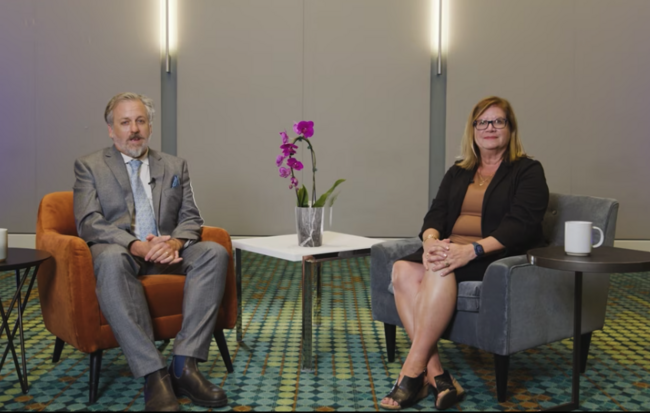
In this episode, Melissa Moody, MD, and Kevin Williams, MS, MPAS, PA-C, discuss practical strategies for identifying and managing tardive dyskinesia (TD) in clinical practice. They review how to recognize risk factors and subtle presentations, incorporate routine screening tools such as AIMS, differentiate TD from other drug-induced movement disorders, and engage patients and care partners in early conversations. The discussion also covers clinical management considerations and FDA-approved treatment options for adults with TD, including INGREZZA® (valbenazine) capsules, with insights drawn from real-world experience.
Transcript
Kevin Williams: One thing that I've recognized and seen with my patients is that when they recognize that their well-being goes beyond only treating their mental health symptoms, that I care about their day-to-day functionality, they're more likely to actually share those concerns much earlier. So by proactively discussing these movements, I have definitely seen that we can help minimize the possible impact on a patient's life while really continuing those necessary psychiatric treatments.
Moderator: Welcome, everyone, to this podcast on identifying and managing tardive dyskinesia, or TD, an involuntary movement disorder. During this podcast, we'll hear perspectives from two health care providers regarding clinical practices on assessing, diagnosing, and treating this condition to help improve patients' overall function and well-being. Joining me are Dr Melissa Moody, a psychiatrist with expertise in diagnosing and treating tardive dyskinesia, and Kevin Williams, an advanced practice provider who has extensive experience managing psychiatric patients in neurology and psychiatry settings. Both Dr Moody and Mr Williams have been compensated by Neurocrine Biosciences for their time today. Welcome to you both!
Dr Moody: Thank you for having us. It's great to be here.
Kevin Williams: Yes, it is amazing to be here today.
Chapter 1: TD at a Glance
Moderator: Let's get right into it. TD is a serious but frequently overlooked condition. In the United States, it's estimated that at least 800,000 adults are living with TD, and approximately 60% remain undiagnosed. That's a striking statistic, especially considering the impact TD can have on patients' physical, social, and emotional well-being. Before we dive deeper, Dr Moody, can you remind us what TD is?
Dr Moody: Of course. Tardive dyskinesia is an involuntary movement disorder characterized by abnormal and repetitive, often uncontrolled movements. TD is most often associated with the use of antipsychotic medications. These are essential in treating conditions like bipolar disorder, major depressive disorder, schizophrenia, and schizoaffective disorder. It's important when talking about medications with patients that we inform them that tardive dyskinesia is a possible risk, and part of the conversation I have with them is what to look for when I go through the risks, benefits, and possible adverse events they might experience while taking medication.
Moderator: Kevin, how does TD present? What do you look for?
Kevin Williams: So, when I'm sharing and talking with my fellow colleagues, sometimes it’s an expectancy that we're going to see severe movements, but I've really learned with TD that it comes in a variety of ways. It can be mild in severity, moderate or even severe, and those movements can occur in different parts of the body. They're often seen in the face, torso, limbs, fingers, or even the toes. And these movements, they may be rapid and jerky or even slow and writhing, and may present as lip smacking, lip puckering, or pursing. I've even seen things such as tongue darting or protrusion, excessive eye blinking, jaw chewing or clenching, or even side-to-side movements, or twisting or dancing fingers and toes. So, it doesn't always look textbook, and sometimes these movements are subtle.
Chapter 2: Which Patients Are Most Vulnerable?
Moderator: Great. Now that we've reviewed what TD is, let's talk about identifying who's most at risk for TD. Kevin, why don't you start us off here?
Kevin Williams: Oh, thank you. So, when I started out in psychiatry, now over 10 years ago, when discussing tardive dyskinesia, I really thought of this condition more for just individuals who were diagnosed with schizophrenia or schizoaffective disorder. When I'm really beginning to consider who's at risk, it goes beyond just taking antipsychotic medications. There are other factors that may actually increase that risk for developing TD, which include being 55 years or older, having a substance use disorder, being post-menopausal, having a mood disorder, or even any long-term exposure to antipsychotics. So, it's so important to get that thorough review of a patient's medical history.
Moderator: Dr Moody, how do you evaluate which of your patients are at the highest risk?
Dr Moody: As Kevin mentioned, there's so much more than just the fact that they're currently taking an antipsychotic medication that can increase the risk for patients for tardive dyskinesia. We like to keep a checklist attached to the patient's electronic medical record that allows us to continually evaluate and keep track of all the risk factors Kevin mentioned. By keeping all that information in one place, it kind of reminds us to continually evaluate that, because that does change over time.
The other thing is that we really need to do a deep dive into their medical history and their psychiatric history, because the cumulative risk of being on antipsychotic medications over the long term can also be a risk factor.
Chapter 3: Recognizing Subtle TD Movements & Routine Screening
Moderator: Moving on from those who are at risk to those who are symptomatic, Dr Moody, can you talk about how clinicians can identify patients experiencing TD, particularly knowing some patients may not even notice or openly talk about their movements? How do you approach this in your practice?
Dr Moody: That's a great question. You know, early recognition and treatment for our patients is one of the most important things that we can do to try to help patients with their tardive dyskinesia. That starts with making sure our patients understand what tardive dyskinesia is. As we mentioned earlier, going through the process of educating patients of what to look for and including caregivers and other family members who are around them and spend time with them can really help bring forward when a patient develops involuntary movements. We really like to involve caregivers in those conversations because, as you mentioned, sometimes patients don't recognize that they develop the movement. The movement doesn't just start overnight, right? It usually comes on rather gradually over time, and patients can often just make subtle adjustments in their daily routines and in the way that they manage things where they kind of don't even notice that that movement has developed. So, not just asking about involuntary movements, but asking if they've noticed any changes in things they normally do, or if they've developed some new movements that prevents them from doing their daily routines, can be really helpful in identifying those symptoms for them.
Moderator: Kevin, what insights can you share on identifying possible TD movements among patients in your practice?
Kevin Williams: Yeah, I think Dr Moody brought up some great points. Another way that I use in practice is that I'm a believer that everyone on the treatment team — the nursing staff, medical assistants, clinicians, and front office staff — that everyone is a part of that care team, so everyone should be able to assess if potential movements are there. And my belief is that the screening for TD should start the moment a patient walks in the front door, for our patients who come in person, because assessing a patient's gait and their movement, even in the waiting room, can be so informative and revealing to me as a clinician, and be able to identify those possible TD movements.
Moderator: Making sure the office team members are educated on TD is critical. Dr Moody, how often should patients be assessed for TD, and what tools are available to help practitioners efficiently and routinely screen for the condition?
Dr Moody: We should be routinely screening patients for tardive dyskinesia and all types of drug-induced movement disorders, really at every visit. That doesn't necessarily mean we have to do a formal evaluation at every visit, but, as mentioned earlier, we should be laying eyes on our patients and really looking for changes and subtle things, not just movement. So, at every visit, patients on antipsychotic medications should really be monitored for any sort of new movements, especially ones that could be associated with tardive dyskinesia. Now, we often use the AIMS as a way of formally evaluating patients for tardive dyskinesia. The American Psychiatric Association's 2020 clinical guidelines for the treatment of schizophrenia recommend screening for TD at least every six months in our high-risk patients, and at least every 12 months for others at risk for developing TD, which would include all patients who are currently taking antipsychotic medications. The AIMS, or the Abnormal Involuntary Movement Scale, is a standard, structured instrument that can support TD diagnosis and establish severity. It's a way of finding a baseline of movement and also a way for us to continue to follow to see if we’re having any improvement in treatment for our patients.
Moderator: Kevin, how have you integrated screening practices to help identify patients experiencing TD?
Kevin Williams: I agree with Dr Moody in her thoughts in regards to screening. We, as well, have to find a way to integrate our screening for TD into the psychiatric evaluation. I know I can imagine to the individual who's listening right now is like, "Well, do I have time?" But I think it's important that we not only assess for the possible presence, but also that patients are aware, or that their care partners are even aware, of these abnormal or involuntary movements and how they can impact the overall wellness and the function. So, I just integrate it into the visit and tell my patients that the TD assessment is just as important as the psychiatric assessment that I'm completing. And, I've seen that this really helps patients to understand that while I'm caring about the medications that they're on, that I actually value their quality of life while they're on their psychiatric medication, because it's a part of their overall care.
Dr Moody: And if I may add, Kevin? You mentioned how important it is for patients to know you care about that aspect of their lives. I often think that our patients don't always realize when they develop physical symptoms that their mental health provider is the person they need to inform of those symptoms that they've developed. So, building that rapport, making sure that they're educated about it, and doing those appropriate reassurances and evaluations can really help patients understand that we're the ones they need to come talk to when they develop those sorts of symptoms, and it helps them get treatment that much sooner.
Kevin Williams: So true. I've seen some patients who even have trouble with performing their normal job functions or things at home that they normally are able to do. So being able to really have that conversation that I'm not just caring about your mood disorder or, again, your psychiatric disorder, but these mild, these moderate or even severe symptoms that they may present with, whether it's physical or whether it's social or emotional, that these impacts can affect them, and we as clinicians care enough to have those conversations on a continual basis.
Chapter 4: Evaluating TD During Telehealth Visits
Moderator: How do each of you approach TD screening during telehealth or virtual appointments? Kevin, let's start with you.
Kevin Williams: So, making TD assessments during telehealth appointments can sometimes feel to be another daunting task for clinicians, but I've actually been able to find a way to embed those even into my telehealth visits. Really, it's by having a conversation at first. So yes, reviewing their history. Understanding the patient's medical history and potential symptoms and really note if there's been any uncontrolled movements. Then, if they have it or are noticing, and you’re suspecting there to be TD, then I'm able to do a more thorough evaluation with the patient to ensure their movements are actually due to tardive dyskinesia.
Moderator: Dr Moody, Kevin mentioned involving care partners in a discussion of uncontrolled movements. Can you tell us how you bring care partners into conversations about TD movements, particularly during virtual appointments?
Dr Moody: I really make an effort to involve those care partners that are assisting our patients, sometimes with just the visit, or even assisting them at home, or who are involved in their care. You know, when they come to us in our clinics, sometimes patients work really hard to hide their involuntary movements because they're embarrassed by it or uncomfortable by it. So, when they're in their home and relaxed around their care partners is often when those movements will become unmasked and more obvious. Sometimes patients aren't even aware of the movement. As we mentioned earlier, they may not even notice that they have developed this involuntary movement. So, I make a lot of effort to ask a partner or other persons involved in their life or their care if they've noticed that the patient has had any changes in the way that they move, in the things that they do. Have they had any changes in their day-to-day activities? Patients sometimes will stop doing things they normally do or love to do because they've developed movement. For example, patients who love to go get manicures sometimes will stop going to get those because they have involuntary movement of their hands. And patients sometimes won't even recognize that that's why they've stopped.
Chapter 5: Distinguishing TD From Other DIMDs & Treatment for Patients with TD
Moderator: Dr Moody, now that we have heard more about screening practices, how can health care providers differentiate TD from other drug-induced movement disorders or DIMDs?
Dr Moody: Absolutely. I think one of the most important things we can do is making sure that we're diagnosing tardive dyskinesia appropriately and early on. There are other drug-induced movement disorders that we need to be aware of and know how to identify. If we don't identify them correctly, we may not treat them appropriately, and not every drug-induced movement disorder is treated the same. Not all medications are approved to treat tardive dyskinesia. For example, anticholinergics are not FDA-approved to treat tardive dyskinesia and often can make movement worse. But we use anticholinergic medications to treat other drug-induced movement disorders. So, it's really important that we evaluate the patient for the movement when it presents, and we look at all the different things that could develop because of an antipsychotic medication. TD is clinically distinct in both its mechanism of what causes it and in how we treat it. It can also coexist with other drug-induced movement disorders and can often be confused with them. I really encourage listeners to go to MIND-TD.com, where they can find educational resources on screening and differential diagnosis. It's a very helpful tool in getting a great, well-rounded, well-understood list of what to look for for our patients who have TD and other drug-induced movement disorders.
Moderator: It sounds like TD can be mistaken for some other conditions. So once TD is identified, how can it be treated?
Dr Moody: I think the most important thing to know about TD is that patients do not need to stop their current psychiatric medication in order for us to treat tardive dyskinesia. I think there's been some misconception out there in the past that we need to discontinue or dose-reduce the medication that might be the cause of a patient's tardive dyskinesia. But the truth is, we do not need to change those medications, nor do we need to reduce the dose for our patients if they're currently stable on their antipsychotic medication.
Chapter 6: Understanding VMAT2 Inhibitors and INGREZZA®
Moderator: Dr Moody, can you tell us about FDA-approved treatments for tardive dyskinesia, such as INGREZZA® or valbenazine capsules?
Dr Moody: Of course. So, currently, the FDA has approved treatment for TD with vesicular monoamine transporter 2 (VMAT2) inhibitors that help reduce involuntary movements with consistent treatment. INGREZZA is FDA-approved to treat tardive dyskinesia and has been available since 2017, which again makes timely recognition and diagnosis really important and critical because we have options now to treat our patients. VMAT2 inhibitors are recommended as first-line treatment by the American Psychiatric Association for patients with TD movements considered moderate to severe. VMAT2 inhibitors may also be considered, though for those whose TD movements are mild if there’s an associated impact. INGREZZA was approved by the FDA as the first treatment for adults with tardive dyskinesia. It was later approved for chorea associated with Huntington's disease in adults as well. It is important to note that INGREZZA has a boxed warning for depression and suicidality in patients with Huntington's disease. I want everyone listening to refer to the full Important Safety Information and the full Prescribing Information, including that boxed warning, which is available to you on this webpage.
See Important Safety Information below, including Boxed Warning.
Moderator: Thanks, Dr Moody. What more can you tell us about INGREZZA?
Dr Moody: INGREZZA is the only VMAT2 inhibitor that allows patients to immediately begin treatment with an effective therapeutic dose, without the need for titration. So INGREZZA is therapeutic on day one. Patients begin therapy on the 40-milligram dose of INGREZZA and have the option to adjust to 60 milligrams or increase to the recommended 80 milligram dose once daily based on individual response and tolerability. INGREZZA is taken as one capsule, once daily, with or without food. In the six-week studies, there were no discontinuations due to somnolence, sedation, or fatigue.
Moderator: Kevin, what do the clinical studies tell us about INGREZZA?
Kevin Williams: Certainly. So first, INGREZZA is highly effective, based on the robust clinical studies that have been performed. In fact, it's been studied across the widest range of patients. Then, three main points that I want to share. First in the KINECT-3 pivotal study, INGREZZA reduced TD movements in adults at 6 weeks. Participants that were taking 80 milligrams of INGREZZA once daily saw significant reductions in AIMS total scoring versus the placebo control group. Secondly, and importantly, most people saw a response as early as two weeks; about 52% of the participants saw at least a 2-point AIMS reduction with INGREZZA 80 milligrams. And I think a third point in regards to the clinical studies is in a post-hoc analysis of the KINECT4, which is a long-term study, 59% of the 103 study completers achieved symptomatic remission at Week 48. And remission was defined as a zero or one on each AIMS item one through seven, indicating no or minimal movements across all assessed body regions. So early TD diagnosis paired with a proven treatment option, such as INGREZZA, can reduce TD symptoms of uncontrolled movements and their potential impact. INGREZZA has given us a reliable option to help patients living with TD.
Moderator: Can you both share any case examples from your practices on what it's like for patients to see their movements improve following treatment with INGREZZA?
Kevin Williams: I recall one of my patients who was experiencing TD movements in her face and mouth, that caused her embarrassment when engaging with coworkers during Zoom meetings. She was offered a promotion to a position where she would lead meetings, increasing her visibility. This is where she felt self-conscious due to her TD movements. So, we had discussed her TD movements and we also discussed treatment with INGREZZA, including the possible side effects. Together, we decided the treatment was right for her. Following treatment with INGREZZA, her movements were reduced, and she felt more confident pursuing the promotion since she was no longer experiencing those uncontrolled movements.
Dr Moody: Similar to actually the case that Kevin discussed, I had a patient who was referred by their primary care doctor for possible tardive dyskinesia. And when the person came in, she was wearing a mask because it was during COVID times. We sat down, got to know each other some, and went through her history. When we moved on to doing an exam, I asked her to remove her mask, which is part of the AIMS when we evaluate tongue, mouth, and jaw movement. And one of the first things that the patient said when taking off her mask was she actually apologized and felt very self-conscious because she wears dentures but hadn't been able to wear them recently because she had so much involuntary tongue movement. And on exam, I realized that she had really severe tongue movement that was disrupting her speech, and on further discussion, realized it had disrupted her ability to eat and drink and talk to people in the way that she used to. She was really self-conscious and very embarrassed by the movement and the fact that she wasn't able to wear her dentures. She told me that she was going to be the only person after COVID to continued wearing a mask because she felt more confident with the mask on than without the mask. It was determined that she had tardive dyskinesia, and we discussed treatment with INGREZZA, including possible side effects, and decided together that it would be the right choice for her to treat her tardive dyskinesia. When she returned for subsequent visits, her tongue movement had reduced significantly. She actually came in and took her mask off, was wearing her dentures, had a big smile on her face, was wearing lipstick. She wanted to visit with people again. She felt more confident in being able to going out and doing the things she loved.
Chapter 7: Putting It All Into Practice
Moderator: As we wrap up, I'd love to hear one key takeaway from each of you. Dr Moody?
Dr Moody: I'd say be proactive and timely. Ask the patients on antipsychotics that you see this week about involuntary movements and screen them during their visit. Build that habit of action and open, honest communication so they know they can come to you if something feels different.
Moderator: Kevin, what about you?
Kevin Williams: For me, education is everything. We have FDA-approved treatments, such as INGREZZA, that can help reduce uncontrolled body movements that are caused by TD. But we need collective awareness of TD to really help make that a reality for more patients.
Moderator: Well said. Thank you both for joining. And to our listeners, you can learn more about tardive dyskinesia and evidence-based treatments, such as INGREZZA, at www.ingrezza.com/tardive-dyskinesia
Sponsored and developed by Neurocrine Biosciences, Inc.
©️ 2026 Neurocrine Biosciences, Inc. All Rights Reserved. CP-VBZ-US-4667 09/2026