Addressing Malingering and Factitious Disorders With Confidence and Compassion
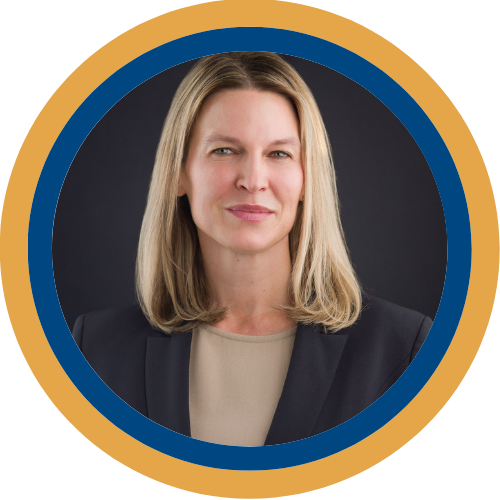
“Patients who feign are still patients,” says Ashley VanDercar, MD, JD, an assistant professor of psychiatry at Case Western Reserve University School of Medicine and the Associate Program Director for the Forensic Psychiatry Fellowship at University Hospitals Cleveland Medical Center. Ahead of Psych Congress 2026, Psych Congress Network connected with VanDercar to explore key takeaways from her session, “When Symptoms Are Questioned: Assessing Malingering and Factitious Disorders.”
In this insightful Q&A, VanDercar offers clinicians an overview of important considerations for detecting when a patient may be feigning or exaggerating psychiatric symptoms in a clinical setting. She outlines the main distinctions between malingering and factitious disorder, discusses the role that bias may play in accurately identifying deception, and underscores the importance of practicing with compassion to ensure stigma does not prevent patients from receiving the care they need.
For more insights from Psych Congress 2026, visit the Psych Congress newsroom.
Key Takeaways for Clinical Practice:
- Malingering involves intentional feigning or exaggeration for an external incentive, whereas factitious disorder involves intentional falsification without an obvious external reward; noncredible symptoms alone do not establish deception.
- Inconsistencies over time, across presentations, between subjective reports and objective observations, or with expected diagnostic manifestations may warrant consideration of malingering but do not confirm it.
- Clinicians should document objective data and clinical reasoning rather than labels, recognize anchoring and confirmation biases, and maintain compassion while avoiding accusations and unnecessary interventions.
Psych Congress Network: What distinctions are most important when differentiating malingering from factitious disorder and genuine psychiatric illness? What are some key clinical features that should prompt clinicians to consider that psychiatric symptoms may be feigned or exaggerated?
Ashley VanDercar, MD, JD: Just because symptoms do not seem credible does not mean they are malingered. The real question is whether there is deception, and if so, whether the entire symptom constellation is a deception, or just an exaggeration.
Consider for example functional neurological symptom disorder (conversion disorder). Patients have real distress, with symptoms that are incompatible with a recognized neurological disorder. There is no deception.
In comparison, with a factitious disorder, the patient intentionally falsifies symptoms. There is deception. But there is no obvious external reward. Deception may be due to their own need for a caregiver’s attention, or to take on the sick role. That too is a diagnosable disorder.
Malingering, which is not a mental disorder, is defined by intentionally feigned or exaggerated symptoms – portrayed to seek an external incentive or avoid external negative consequences. Examples include obtaining controlled substances, housing, money, or avoiding incarceration. Malingering is not all-or-nothing. It often coexists with diagnosable psychiatric conditions.
Clinicians do not have special skills in lie detection. Instead, we are diagnosticians. In clinical settings, the key clinical feature to be aware of when considering malingering is inconsistency. Specifically, inconsistencies over time, between presentations, between subjective reports and objective observations, or as compared to the expected manifestation of a diagnosis. Crucially, inconsistencies do not denote malingering. Rather, they are a factor to be considered as to whether malingering is in the differential.
PCN: What common diagnostic or cognitive biases can lead clinicians to incorrectly conclude that a patient is malingering, or to overlook possible symptom fabrication?
Dr VanDercar: The human brain uses cognitive short-cuts, including when making psychiatric diagnoses. These short-cuts (or heuristics) can lead to biases. Biases can then lead clinicians to over-call or miss malingering. Two relevant biases are anchoring and confirmation bias. Anchoring bias can occur when a clinician sees a psychiatric diagnosis, or malingering label, in a chart. Merely seeing that can skew their perception.
Anchoring bias can then be compounded by confirmation bias. Once we come up with a preliminary hypothesis, we are more likely to preferentially seek evidence that supports it. This can either lead us to over-perceive malingering or over-rely on a patient’s self-report – and miss actual deception.
PCN: What information should clinicians include in the medical record to clearly document inconsistencies, clinical reasoning, and recommendations when they suspect inaccurate patient reporting? How can they avoid stigmatizing or overly accusatory language?
Dr VanDercar: Chart the data, not the label. In clinical settings, unlike forensic ones, time is scarce. Collateral is limited. It is impractical to conduct the type of malingering assessment done in forensic contexts. The label of malingering is sticky. It can remain on a patient’s chart and impact their future ability to access care. Even if present, it does not determine risk.
When documenting concerns as to noncredible psychiatric symptoms, record the patient’s statements, information as to perceived incentives, objective observations, and their underlying clinical needs. Rather than labeling a patient as feigning, or malingering, show the juxtaposition of the patient’s subjective complaints and objective observations.
Document in a compassionate fashion, realizing that there are genuine underlying needs of some sort, whether that be a need for housing, food, or to relieve anxiety associated with impending incarceration. The goal in documenting inconsistencies is to show how they factored into our clinical decision making and help future clinicians pick up where we left off – not to label the patient.
PCN: How can psychiatric clinicians balance appropriate clinical skepticism with compassion during encounters with the patient, particularly when both genuine psychiatric symptoms and external incentives to exaggerate them may be present?
Dr VanDercar: Try to identify with the patient. In cases of malingering, I tell trainees to think back to childhood, when they had a cold. I ask if they ever pretended to be sicker than they were, to make sure their parents would let them stay home from school. Most trainees remember doing this as a child.
We must view feigned symptoms with the same level of empathy that we view real ones. Mistruths do not negate underlying needs. Consider the patient who feigns “well.” That presentation does not erode our empathy. Neither should the patient who feigns ill. Regardless of deception, it is important to maintain professionalism and compassion.
Notably, a lack of skepticism can also result in harm, either to the patient themselves (through unnecessary interventions), or the system as a whole (through a misuse of resources). A good way to balance skepticism and compassion is to be aware of your own biases. Also, where possible, delay decision-making until there is adequate information. Avoid accusations and offer patients a way to share their needs without having to admit to exaggerating or feigning.
PCN: What is one takeaway from your session that you’d like to share with our audience of practicing clinicians?
Dr VanDercar: Patients who feign are still patients. Treat them as such.
Ashley VanDercar, MD, JD, is an Assistant Professor of Psychiatry and the Associate Program Director for the Forensic Psychiatry Fellowship at Case Western Reserve University School of Medicine / University Hospitals Cleveland Medical Center.
Dr VanDercar began her professional career as an attorney, working in the healthcare field. In 2012, she enrolled in medical school at the University of Miami Miller School of Medicine. After obtaining her medical degree, she completed an adult psychiatry residency and forensic psychiatry fellowship at University Hospitals Cleveland Medical Center. She is board certified in adult and forensic psychiatry. Her scholarly work spans a range of forensic subjects, including school shootings, terrorism, and malingering.
© 2026 HMP Global. All Rights Reserved.
Any views and opinions expressed above are those of the author(s) and do not necessarily reflect the views, policy, or position of the Psych Congress Network or HMP Global, their employees, and affiliates.