Exploring the Biological Role of Nutrition in Mental Health Care
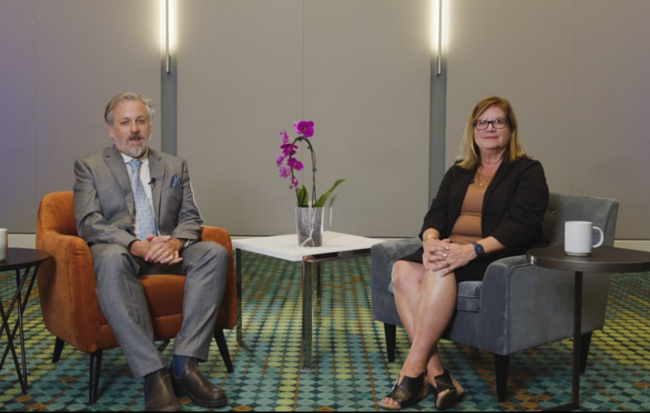
While lifestyle interventions are sometimes classified as optional additions to standard psychiatric treatment, clinical practice is shifting to recognize nutrition as a foundational component of mental health care. In this video, Psychiatry Redefined clinician and Psych Congress faculty member Mariela Podolski, MD, and Psych Congress PA Institute Co-Chair James Somers, PA-C, DHSc, DFAAPA, discuss the relationship between nutrition and psychiatric outcomes. The clinicians review current evidence supporting nutritional interventions and highlight the role of micronutrients in the biological processes that influence mental health. They also explore how objective nutritional measures may inform clinical decision-making and support more individualized approaches to patient care.
Key Clinical Summary:
- Lifestyle and nutritional interventions affect biological processes relevant to psychiatric care, including inflammation, brain health, neurotransmitter synthesis, and circadian regulation.
- In the 2017 SMILES trial, a structured dietary intervention with social support was associated with 32% remission vs 8% among controls, with participants also receiving usual treatments such as psychotherapy and, for many, medication.
- Zinc, vitamin D, and magnesium may all be measurable nutritional factors relevant to psychiatric outcomes, as demonstrated by an Australian cohort associating better zinc levels with a 30% to 50% lower risk of depression.
Read the Transcript:
Mariela Podolski, MD: Hi, my name is Mariela Podolski, and I am a child and adolescent psychiatrist and also an adult psychiatrist. I live in Connecticut, and I have a private practice in Connecticut, and I'm also on faculty for Psychiatry Redefined.
James Somers, PA-C, DHSc, DFAAPA: My name is James Somers. I'm a physician associate in Las Vegas, Nevada. I'm an associate professor at the Arkansas Colleges of Health Education, and I also have a private practice in Las Vegas, Nevada called Nevada Family Psychiatry.
Psych Congress Network: Why should lifestyle and nutritional interventions be considered biological treatments rather than optional additions to psychiatric care? Can you walk us through some of the evidence that supports this perspective?
Somers: That's a great question. I think that the idea of lifestyle factors as being biological is that they affect biological mechanisms, right? We’re talking about inflammation, we're talking about brain health, we're talking about inflammatory markers. These things affect biology, and as a result, we need to think about them in biological terms.
Even when we talk about the stakes of this, the National Institutes of Mental Health say that patients with schizophrenia lose 28.5 years of their life due to chronic diseases like heart disease, diabetes, and liver disease. These are really, really important. Clearly, there are lots of psychiatric studies that support those too, but I'll let you explore that.
Podolski: Absolutely. For me, when we think about micronutrients, really the importance of micronutrients is that they're essential for brain functioning.
We cannot separate biology from nutrition in any way. These micronutrients are going to be key elements to neurotransmitter production and synthesis, but also to a lot of the regulatory mechanisms that our brain has to control inflammation, our circadian rhythm, and other things, so they're essential for good mental health support.
Somers: Absolutely, and when we think about the role that sleep and nutrition and activity play, data supports that those things play huge factors. There was a study done with Felice Jacka in 2017, the SMILES trial, which is the quintessential lifestyle trial that talked about depression. They found that 32% of people got remission [with dietary intervention] in comparison with 8% of controls.
Now, this was a regimented study. This isn't, “Here’s a handout, eat better, why don't you exercise every once in a while?”
These things are really regimented. They involved a lot of social support. But we can see that these things actually make a difference. And we're seeing the movement of these things.
These people were on regular treatments, too. They were doing psychotherapy and a lot of them were taking medications. But if we can incorporate [nutrition] as part of our treatment plan, I think we'll see huge, huge benefits.
Podolski: It is really important. For instance, there is this Australian cohort that says that if you have better zinc levels, the risk of depression is 30 to 50% less. Just by having good zinc levels. That's incredible.
And these are tools that are available for everybody. Whether you are a patient or a physician or somebody in in healthcare treating your patients, you absolutely can access these tools because they're simple and they're also really cheap. They're not costly at all and they make a huge difference.
Somers: You and I were talking earlier and that's what we've wanted in psychiatry. We'd love to be able to do a blood test or a scan or an x -ray or something like that and say, “Oh, look at this. This is your depression level. Your depression is 72 and it should be 24.”
What an amazing world that would be. But we can actually do that with some of the micronutrients, right? When you look at vitamin D levels or zinc levels or magnesium levels, we can see the connection that that has to real clinical outcomes. So that is so exciting, too, as a clinician. We get to actually change these things and think about things that maybe we didn't see before.
Mariela Podolski, MD, is a board‑certified Child, Adolescent, and Adult Psychiatrist whose career spans excellence in traditional, and functional psychiatric care. She earned her medical degree from the Universidad de Costa Rica in San José, Costa Rica, and completed her Psychiatry Residency at the Institute of Living in Hartford, Connecticut. She then pursued advanced subspecialty training through a Child and Adolescent Psychiatry Fellowship at the Medical College of Wisconsin in Milwaukee. Dr Podolski is an active educator and frequently lectures on eating disorders for psychiatry residents at the Institute of Living, the University of Connecticut, and Eastern Connecticut Health Network. She is regularly invited to speak at hospitals and professional programs throughout the state. In 2021, she completed the Psychiatry Redefined Fellowship, expanding her practice into functional psychiatry. She now serves as faculty for Psychiatry Redefined, contributing through national lectures and mentorship. She is also the founder and owner of Podolski Psychiatry PLLC, a private practice in West Hartford, Connecticut, where she provides evidence‑based, compassionate, and innovative psychiatric care.
James C. Somers, DHSc, PA-C, DFAAPA, has dedicated over 28 years to psychiatry, working with both adult and adolescent populations. A Distinguished Fellow of the AAPA, he earned his master’s degree from Rosalind Franklin University of Medicine and Science and a Doctor of Health Science from A.T. Still University. He has previously served as president of the National Association of PAs in Psychiatry and the Nevada Academy of Physician Assistants, and he recently completed a four-year term as the AAPA liaison to the American Psychiatric Association (APA). Based in Las Vegas, NV, Dr. Somers owns and operates an outpatient psychiatric clinic that has provided comprehensive, integrative, and lifestyle-focused mental health care for over 21 years. This past year, he accepted a full-time faculty position at the Arkansas Colleges of Health Education (ACHE), where he heads the Psychiatry and Behavioral Health Doctor of Medical Science curriculum. His clinical and research interests include nutritional psychiatry, professional fulfillment, and the role of AI in mental health.
© 2026 HMP Global. All Rights Reserved.
Any views and opinions expressed above are those of the author(s) and do not necessarily reflect the views, policy, or position of the Psych Congress Network or HMP Global, their employees, and affiliates.