Should We Really Be Taking an “Ex-Fix Holiday” in Charcot Reconstruction?
As staged reconstruction becomes increasingly common in the management of Charcot neuroarthropathy, the concept of an “ex-fix holiday” has emerged as a potential step between external and internal fixation. This commentary examines whether the practice—largely borrowed from trauma surgery—offers meaningful benefits in the biologically distinct population with Charcot or whether conversion timing should remain individualized and guided by patient-specific factors.
Key Takeaways
- The evidence supporting an ex-fix holiday is limited—even in trauma literature. There is no standardized definition, optimal duration, or consistent evidence demonstrating improved infection outcomes with a planned interval between external fixation removal and definitive internal fixation.
- Charcot neuroarthropathy presents unique biologic and mechanical challenges. Patients often have diabetes, peripheral neuropathy, impaired immune function, and compromised soft-tissue healing, making direct application of trauma-based fixation strategies potentially inappropriate.
- Conversion timing should be driven by clinical readiness rather than routine protocol. While delayed fixation may be appropriate in select circumstances such as infection, edema, or questionable soft-tissue viability, the authors argue that an ex-fix holiday should not be viewed as a default step in Charcot reconstruction without stronger evidence supporting its benefit.
Surgical management of Charcot neuroarthropathy continues to evolve as clinicians confront increasingly complex deformities, fragile soft tissues, and patients with significant medical comorbidities. While total contact casting remains the cornerstone of offloading in the acute phase, many patients ultimately require reconstructive intervention to restore alignment, reduce ulceration risk, and achieve a plantigrade, braceable foot. As a result, staged reconstruction, often beginning with external fixation and transitioning to internal fixation, has become an important tool in the limb salvage armamentarium.1,2
As these staged strategies gain traction, attention has shifted from whether external fixation should be used, to how and when surgeons should convert to definitive internal fixation. One concept now entering discussion is the external fixation (ex-fix) holiday, a planned interval between frame removal and internal fixation placement. Although frequently borrowed from orthopedic trauma practice, even trauma literature offers little consensus on this concept’s definition, timing, or true benefit.3,4
This raises an important question for foot and ankle surgeons: Does the ex-fix holiday make sense in Charcot reconstruction, or are we importing a trauma concept into a biologically distinct patient population without clear evidence of benefit? This commentary examines the origins of the holiday, explores its proposed rationale, and considers whether a deliberate interval between fixation stages meaningfully contributes to outcomes in Charcot neuroarthropathy.
The Ex-Fix Holiday: Where Did the Concept Originate?
Within orthopedic trauma literature, descriptions of the ex-fix holiday depict it as a means of allowing soft tissue recovery, pin site epithelialization, and reassessment of surgical planning prior to definitive fixation.3 However, even in this setting, the concept is marked by variability rather than standardization. Contemporary reviews emphasize the absence of consensus definitions, with reported holiday intervals ranging from 48–72 hours to several weeks and often guided by surgeon preference and perceived soft tissue readiness rather than objective criteria.4
Outcomes associated with the holiday are also inconsistent. One retrospective cohort study evaluating conversion timing in open extremity fractures demonstrated that prolonged duration of external fixation, particularly beyond 28 days, was associated with significantly higher infection rates, whereas shorter durations were associated with lower rates. Notably, the same study found no statistically significant difference in infection risk between immediate internal fixation following frame removal and fixation delayed by several days. These findings raise an important question: If prolonged staging may increase infection risk, and short delays offer no clear advantage, what constitutes a beneficial “holiday”?

Extrapolation to Charcot: Is the Biology Comparable?
As staged reconstruction strategies migrate into Charcot neuroarthropathy, it is reasonable to ask whether trauma-derived principles translate directly to this patient population. Charcot patients represent a biologically distinct host, often characterized by long standing diabetes, peripheral neuropathy, impaired immune response, and compromised soft tissue healing capacity. In contrast to many trauma patients, individuals with Charcot neuroarthropathy may tolerate prolonged instability poorly—even in the absence of weight-bearing—due to neuropathic microtrauma and diminished protective sensation.
In many Charcot reconstruction strategies, teams maintain external fixation through the period of coalescence or consolidation to preserve alignment and facilitate soft tissue healing, with relatively prompt conversion to internal fixation when additional stabilization is required to maintain functional anatomy.3 Although pin-tract infection is a recognized complication of external fixation, reported rates in Charcot reconstruction have generally been acceptable and manageable. Even within orthopedic trauma literature—where the concept of an external fixation holiday is most frequently discussed—there remains no standardized definition or consistent evidence demonstrating a clear infectious benefit associated with introducing an interval between fixation stages. Infection prevention in Charcot reconstruction is closely linked to early mechanical stability and durable soft tissue closure—goals that may be challenged by prolonged staged intervals.
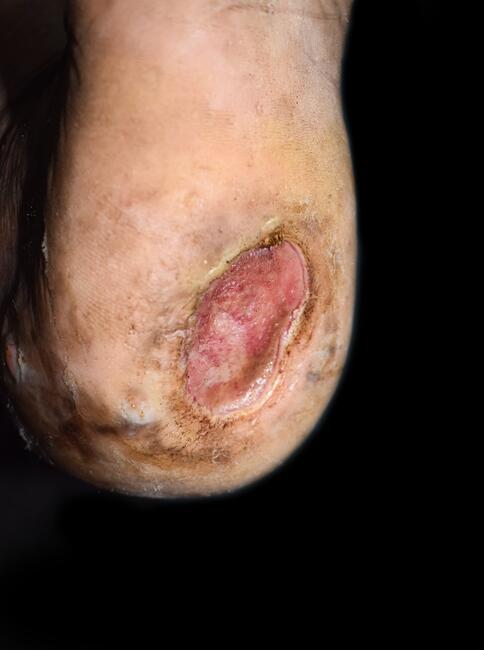
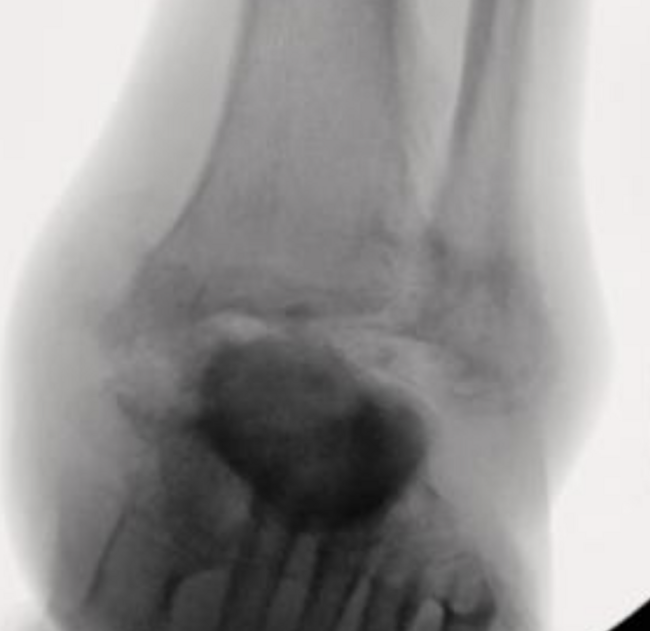
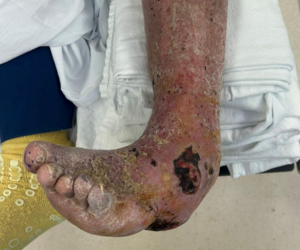
The question, therefore, is whether a deliberate interval between frame removal and definitive internal fixation should exist at all, and whether such an interval confers any meaningful benefit. Clinical scenarios often illustrate this variability in practice. In Figure 1, staged reconstruction proceeds from multiplanar external fixation to definitive internal arthrodesis without a deliberate interval beyond necessary soft-tissue readiness. In contrast, Figure 2 demonstrates frame removal driven by unrelated clinical considerations, followed by casting and subsequent internal fixation, also without complication. These examples underscore that conversion timing is frequently influenced by patient-specific factors rather than adherence to a standardized “holiday” protocol.

Is the Holiday Ever Beneficial in Charcot Reconstruction?
This perspective does not seek to dismiss the potential utility of an ex-fix holiday altogether. Selective use may be appropriate in specific clinical circumstances, such as active infection requiring serial debridement, severe edema precluding safe closure, or uncertain soft tissue viability requiring further demarcation. Indeed, several trauma and foot and ankle studies have demonstrated that delayed definitive fixation following clinical soft-tissue optimization can be performed safely in appropriately selected patients.6
However, the ability to perform delayed fixation safely does not necessarily establish that the interval itself confers independent benefit. What remains unclear is whether the holiday as a distinct step—particularly when prolonged—offers a meaningful advantage in Charcot neuroarthropathy, or whether its perceived benefits are largely theoretical. Prolonged external fixation has been associated with increased infection rates in some series, while immediate versus short, delayed conversion has not consistently demonstrated differences in infection risk, suggesting that the assumption that “more time is safer” warrants continued scrutiny.7
Where Do We Go from Here?
Rather than adopting the ex-fix holiday as a routine step, we contend that the foot and ankle community may benefit from a more deliberate approach.
Possible next steps include:
- Clearer terminology and reporting standards
- Consistent documentation of pin site management
- Better description of conversion criteria
- Multicenter registries capturing infection, alignment maintenance, and limb salvage outcomes
Charcot-specific comparative studies evaluating early definitive fixation versus delayed staged approaches may ultimately clarify whether host biology should influence timing decisions.
Until such data are available, we feel that the ex-fix holiday may be best viewed not as a default maneuver, but as a decision requiring thoughtful, patient-specific justification.
Conclusion
As staged reconstruction continues to evolve in the management of Charcot neuroarthropathy, the concept of an ex-fix holiday has entered discussion, though it remains incompletely characterized and unstandardized. Given the mixed evidence reported even within trauma literature and the biologic vulnerability of the population of patients with Charcot, careful consideration of its relevance is warranted. An individualized, biologically informed approach may assist clinicians in navigating these complex decisions.
Drs. Dei-Tumi and Barajas are both second-year residents in the Department of Podiatric Surgery, Cambridge Health Alliance, Cambridge, MA.
Dr. Theodoulou is an Attending Physician and the Chief of the Department of Orthopedics, Foot and Ankle Division, Cambridge Health Alliance, Cambridge, MA. He is also an Assistant Professor of Surgery at Harvard Medical School in Cambridge, MA.
The authors have no non-financial or commercial, proprietary, or financial interest in the products or companies described in the manuscript. The author(s) did not receive grants or a consultant honorarium to conduct the study, write the manuscript or otherwise assist in the development of the above-mentioned manuscript.
The authors disclose that AI assistance was used for language refinement and structural editing. The intellectual content, clinical concepts, interpretation of literature, and final manuscript revisions were independently developed and reviewed by the authors. The authors assume full responsibility for the content.
References
1. Lamm BM, Gottlieb HD. A two‑stage percutaneous approach to Charcot diabetic foot reconstruction. J Foot Ankle Surg. 2010;49(6):517‑522.
2. Khan O, Kavarthapu M, Edmonds M, Kavarthapu V. Surgical management of Charcot foot - The advancements over the past decade. J Clin Orthop Trauma. 2023 Dec 14;47:102317. doi: 10.1016/j.jcot.2023.102317. PMID: 38196500; PMCID: PMC10772398.
3. Murawski CD, Mittwede PN, Wawrose RA, Belayneh R, Tarkin IS. Management of high‑energy tibial pilon fractures. J Bone Joint Surg Am. 2023;105(14):1123‑1137.
4. Wynn MS, Jang Y, Ochenjele G, Natoli RM. External fixation before planned conversion to internal fixation in orthopaedic trauma: Controversies and current trends. J Am Acad Orthop Surg. 2024;32(19):873‑880. doi:10.5435/JAAOS-D-23-01256
5. Matsumura T, Takahashi T, Miyamoto O, Saito T, Kimura A, Takeshita K. Clinical outcome of conversion from external fixation to definitive internal fixation for open fracture of the lower limb. J Orthop Sci. 2019;24(5):888-893.
6. Ye Z, Zhao S, Zeng C, Luo Z, Yuan S, Li R. Study on the relationship between the timing of conversion from external fixation to internal fixation and infection in the treatment of open fractures of extremities. J Orthop Surg Res. 2021;16(1):662.
7. Frykberg RG, Zgonis T, Armstrong DG, et al. Diabetic foot disorders: A clinical practice guideline (2006 revision). J Foot Ankle Surg. 2006;45(5 Suppl):S1-S66.
8. Rogers LC, Frykberg RG, Armstrong DG, et al. The Charcot foot in diabetes. Diabetes Care. 2011;34(9):2123-9. doi: 10.2337/dc11-0844. PMID: 21868781; PMCID: PMC3161273.
9. Wukich DK, Schaper NC, Gooday C, et al. Guidelines on the diagnosis and treatment of active Charcot neuro osteoarthropathy in persons with diabetes mellitus (IWGDF 2023). Diabetes Metab Res Rev. 2024;40(3):e3646