Right Ventricular Perforation After Pericardial Drain Exchange: Percutaneous Closure With a Duct Occluder
© 2026 HMP Global. All Rights Reserved.
Any views and opinions expressed are those of the author(s) and/or participants and do not necessarily reflect the views, policy, or position of the Journal of Invasive Cardiology or HMP Global, their employees, and affiliates.
J INVASIVE CARDIOL 2026. doi:10.25270/jic/26.00308. Epub November 19, 2026.
A 63-year-old man underwent repeat atrial fibrillation ablation complicated by pericardial tamponade. A pericardial pigtail was correctly positioned and remained in the pericardial space on echocardiography immediately before exchange. When organized effusion and absent drainage prompted exchange, the pigtail was replaced over a guidewire with a 4F 3-lumen central venous catheter, under echocardiographic guidance. During exchange, the guidewire traversed the right ventricular (RV) free wall and the replacement catheter followed the tract. No immediate symptoms or hemodynamic change occurred.
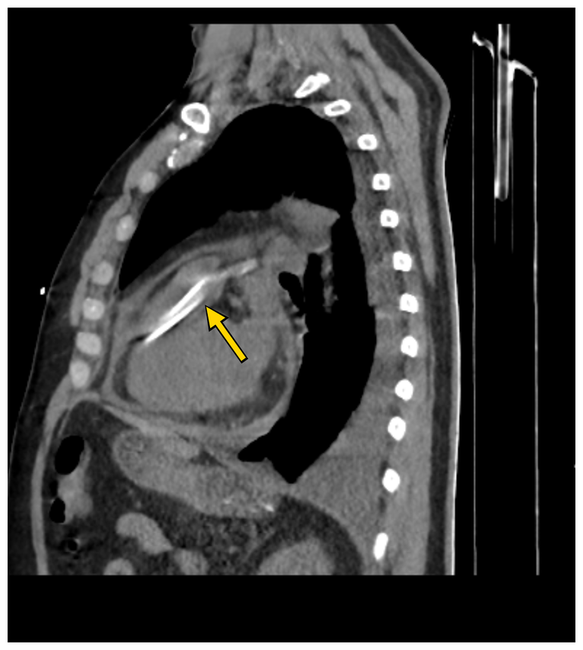
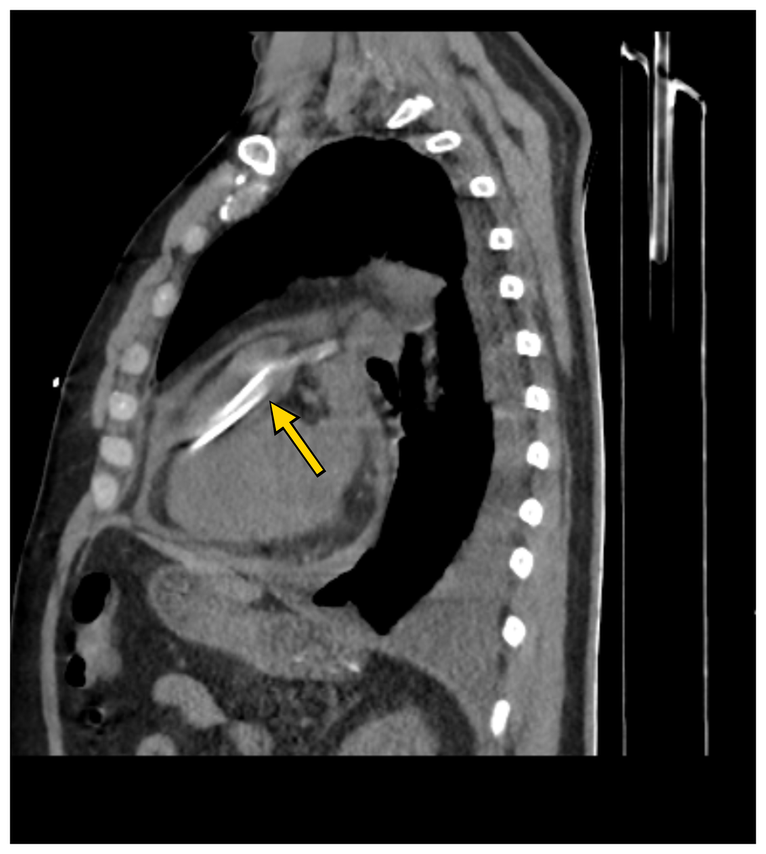
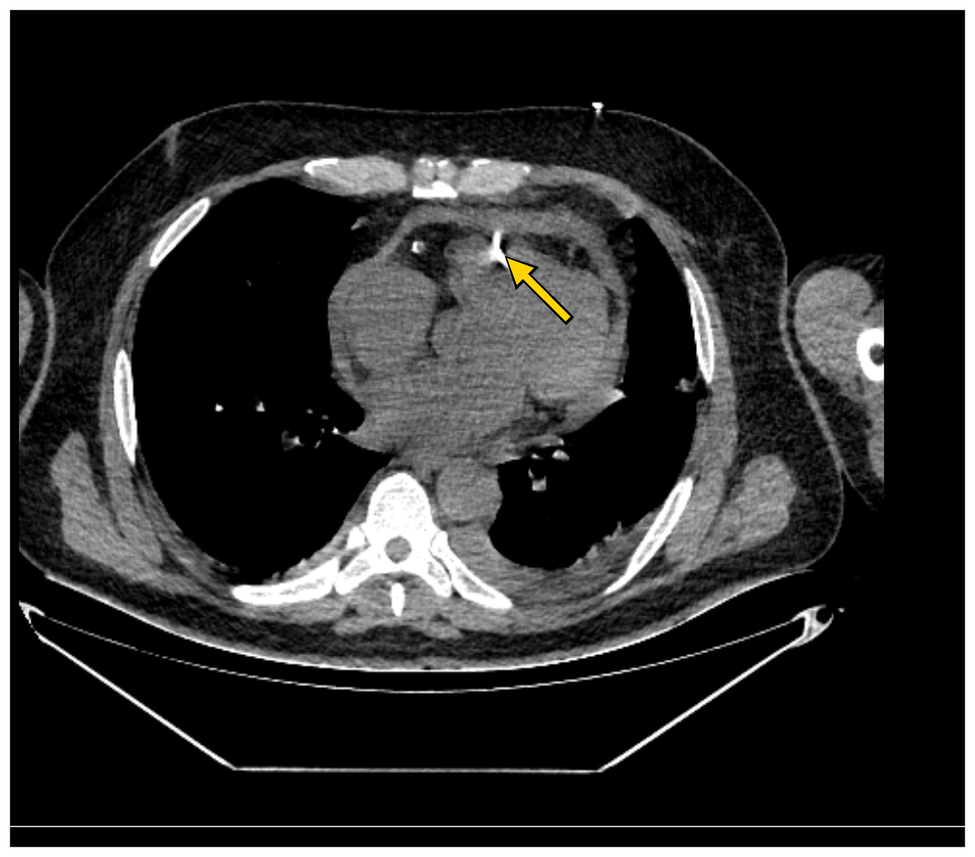
Approximately 1 hour later, hypotension developed and inotropic support was initiated. During the first 3 hours, 900 mL of bloody output was obtained. Repeat echocardiography at 3 hours showed the catheter within the RV; non-contrast computed tomography (CT) confirmed passage through the RV free wall and cavity into the pulmonary artery (PA) (Figures 1 and 2). Contrast injection through the catheter opacified the PA.
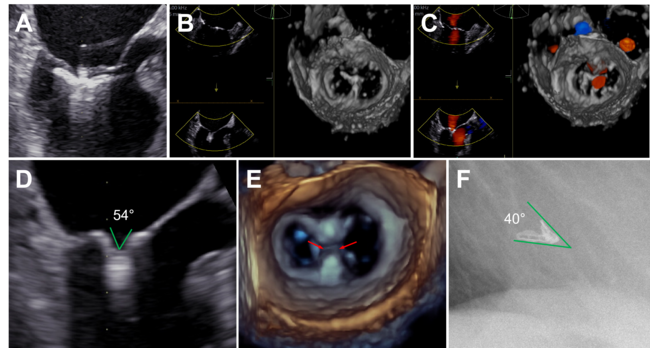
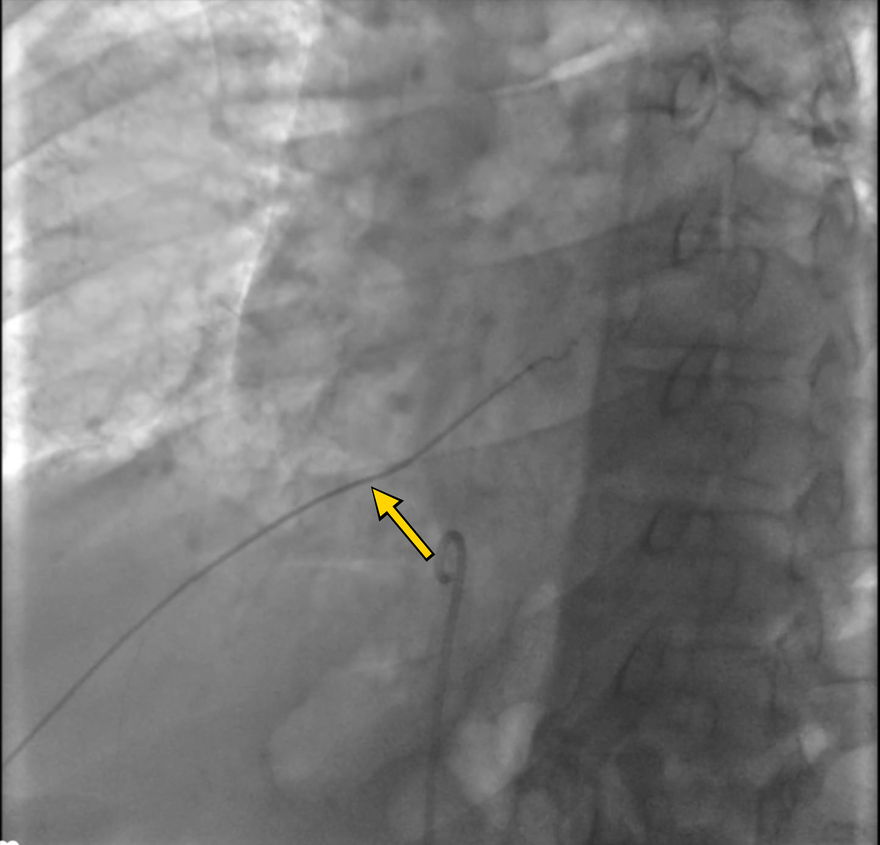
The catheter was secured in situ rather than withdrawn blindly, and a separate pericardial pigtail was inserted with surgical backup. A 0.032-inch guidewire was advanced through the catheter into the PA, followed by exchange to a 6F delivery sheath while preserving the tract. Under fluoroscopic and echocardiographic guidance, a 6/4-mm Amplatzer Duct Occluder II (ADO II) (Abbott) was deployed off-label across the tunnel-shaped tract (Figures 3 and 4; Video), and the patient’s hemodynamics improved. One-month CT showed stable device position with minimal residual effusion; 4-month echocardiography showed no residual effusion (Figures 5 and 6).
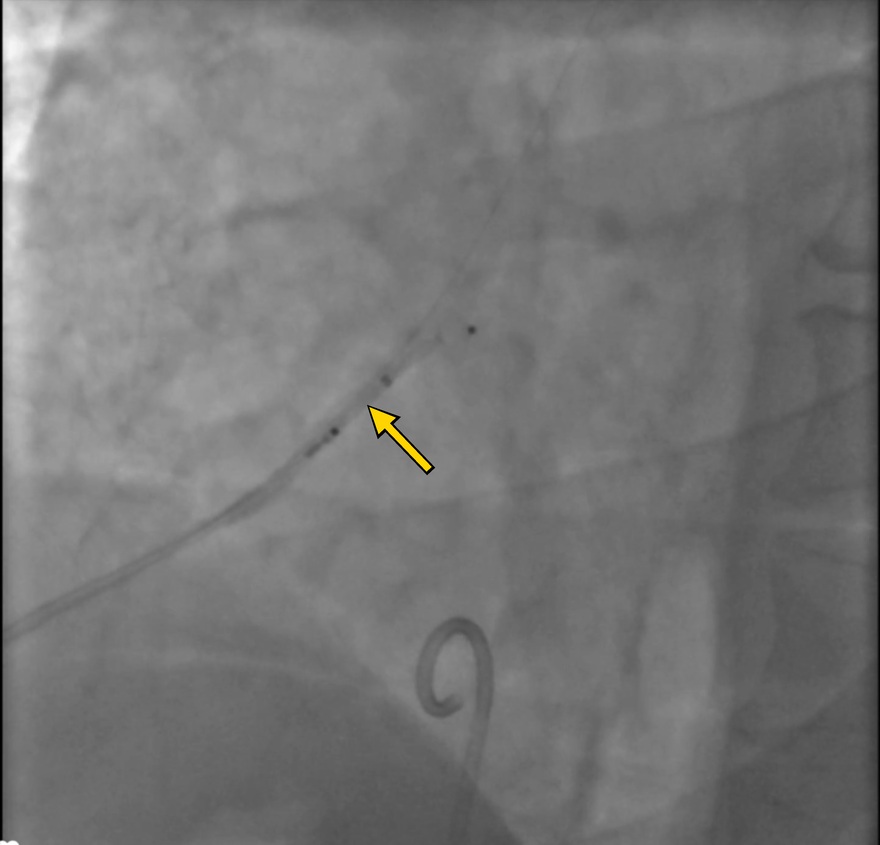
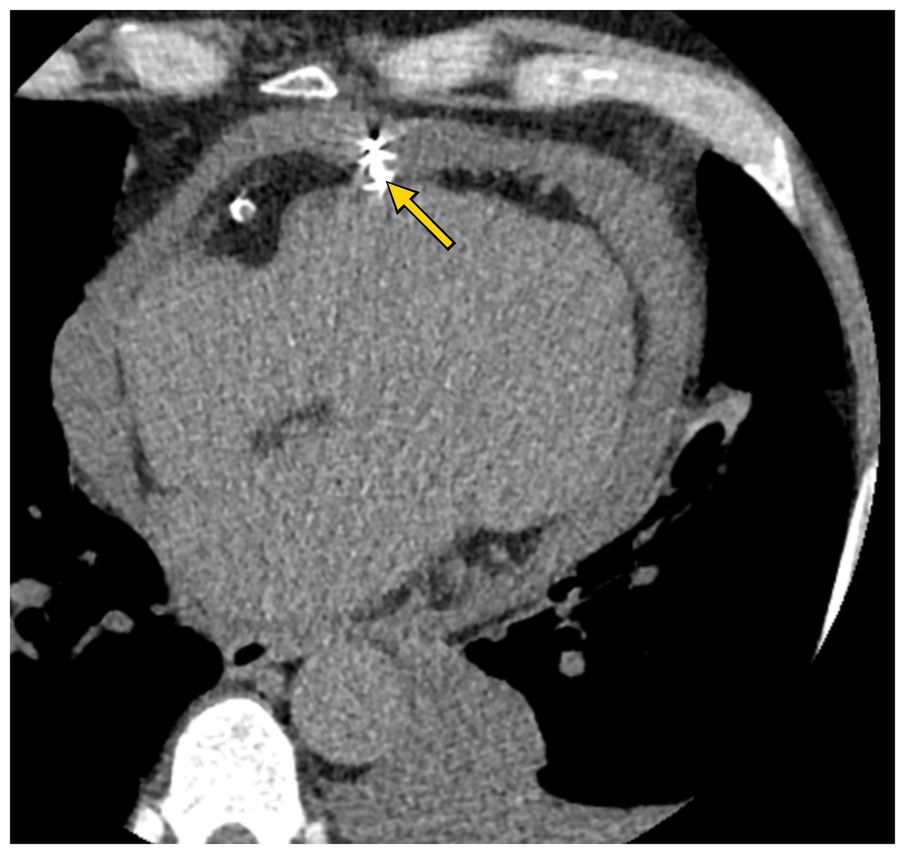
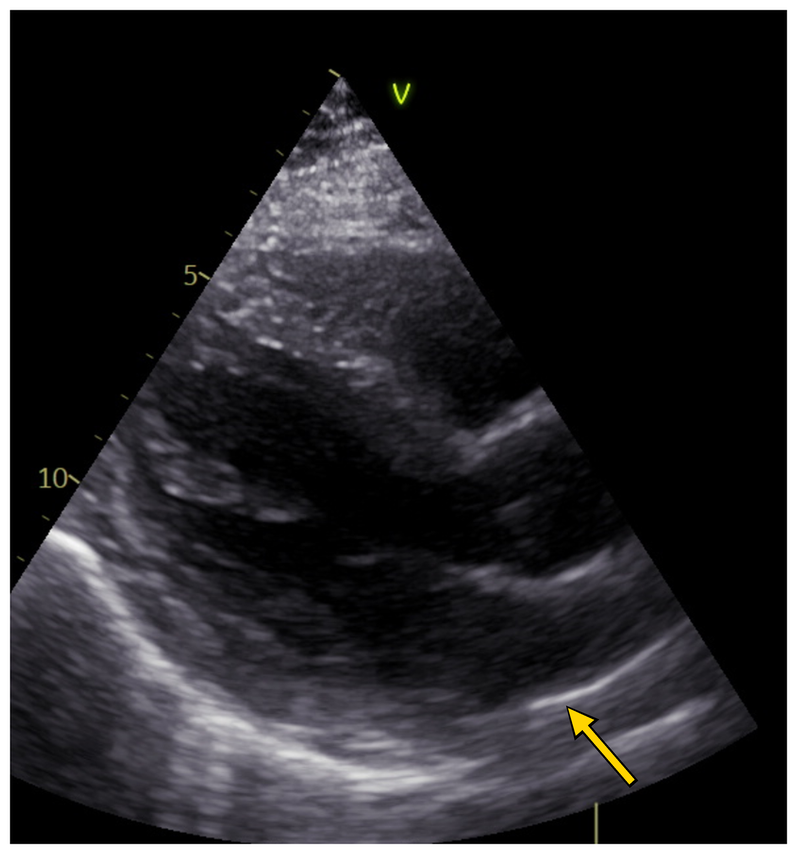
Prior reports describe duct-occluder closure after pericardiocentesis and pacing-wire injury.1-3 Here, delayed recognition followed exchange of an initially correctly positioned drain. Bloody output may falsely suggest continued drainage despite intracardiac malposition; preserving access may permit controlled percutaneous closure.
Affiliations and Disclosures
Samet Solmaz, MD; Ahmet Berk Duman, MD; Şadiye Nur Dalgıç, MD; Metin Çağdaş, MD; Tümer Erdem Güler, MD
From the Department of Cardiology, University of Health Sciences, Kocaeli City Hospital, Kocaeli, Türkiye.
Acknowledgments: The authors used Claude (Anthropic) for English language editing and for adding labels to the Video.
Disclosures: The authors report no financial relationships or conflicts of interest regarding the content herein.
Consent statement: The authors confirm that informed consent was obtained from the patient for the intervention described in the manuscript and to the publication thereof, including any and all images.
Address for correspondence: Ahmet Berk Duman, MD, Department of Cardiology, University of Health Sciences, Kocaeli City Hospital, Tavşantepe Mahallesi, Akif Sokak No: 72, İzmit 41060, Kocaeli, Türkiye. Email: dumanahmetberk@gmail.com; Instagram: @dumanberk; X: @berkdumn
References
1. Saxena A, Karmakar S, Narang R. Successful percutaneous device closure of right ventricular perforation during pericardiocentesis. JACC Cardiovasc Interv. 2016;9(22):e221-e222. doi:10.1016/j.jcin.2016.09.031
2. Alizade E, Yılmaz C, Balaban İ, Şimşek Z, Keten MF. Percutaneous treatment of right ventricular rupture with ADO II device via the subxiphoid pericardial window; after percutaneous treatment of cardiac tamponade. Anatol J Cardiol. 2021;25(5):360-362. doi:10.14744/AnatolJCardiol.2020.37863
3. Bhalgat PS, Kharche PP, Agrawal A. Transcatheter closure of iatrogenic right ventricular perforation with Amplatzer Duct Occlude II. JACC Case Rep. 2020;2(15):2344-2347. doi:10.1016/j.jaccas.2020.10.025