Sex-Based Differences in Acute and Long-Term Outcomes After Orbital Atherectomy for Severely Calcified Coronary Lesions: A Real-World Analysis
© 2026 HMP Global. All Rights Reserved.
Any views and opinions expressed are those of the author(s) and/or participants and do not necessarily reflect the views, policy, or position of the Journal of Invasive Cardiology or HMP Global, their employees, and affiliates.
J INVASIVE CARDIOL 2026. doi:10.25270/jic/26.00222. Epub November 9, 2026.
Key Clinical Summary
- Orbital atherectomy enabled successful treatment of severely calcified coronary lesions in a real-world population, with successful stent delivery in all patients and low rates of procedural complications.
- Clinical outcomes were comparable between females and males despite differences in age, cardiovascular history, and treated vessel characteristics.
- Orbital atherectomy was safe and effective in both sexes, with durable outcomes through 2 years; higher post-procedure heart failure in females warrants further investigation.
Abstract
Objectives. Severely calcified coronary lesions pose major challenges in percutaneous coronary intervention (PCI), often linked to procedural complexity and adverse outcomes. Females, historically underrepresented in trials, may face unique risks, yet sex-specific data are limited. Orbital atherectomy (OA) facilitates plaque modification in heavily calcified vessels, but outcomes by sex remain unclear. This study compared acute and long-term outcomes between females and males undergoing OA in a real-world, high-risk cohort.
Methods. The authors retrospectively analyzed consecutive patients treated with coronary OA for severely calcified lesions at a single, high-volume center. Baseline demographics, lesion characteristics, and procedural outcomes were assessed. The primary endpoint was in-hospital freedom from major adverse cardiac and cerebrovascular events (MACCE): cardiac death, myocardial infarction [MI], stroke). Secondary endpoints included successful stent placement, severe angiographic complications, bleeding, heart failure, and cardiogenic shock. One- and 2-year MACCE rates were evaluated.
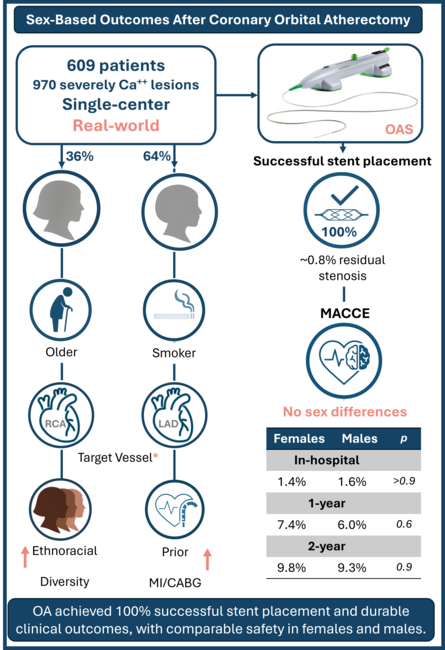
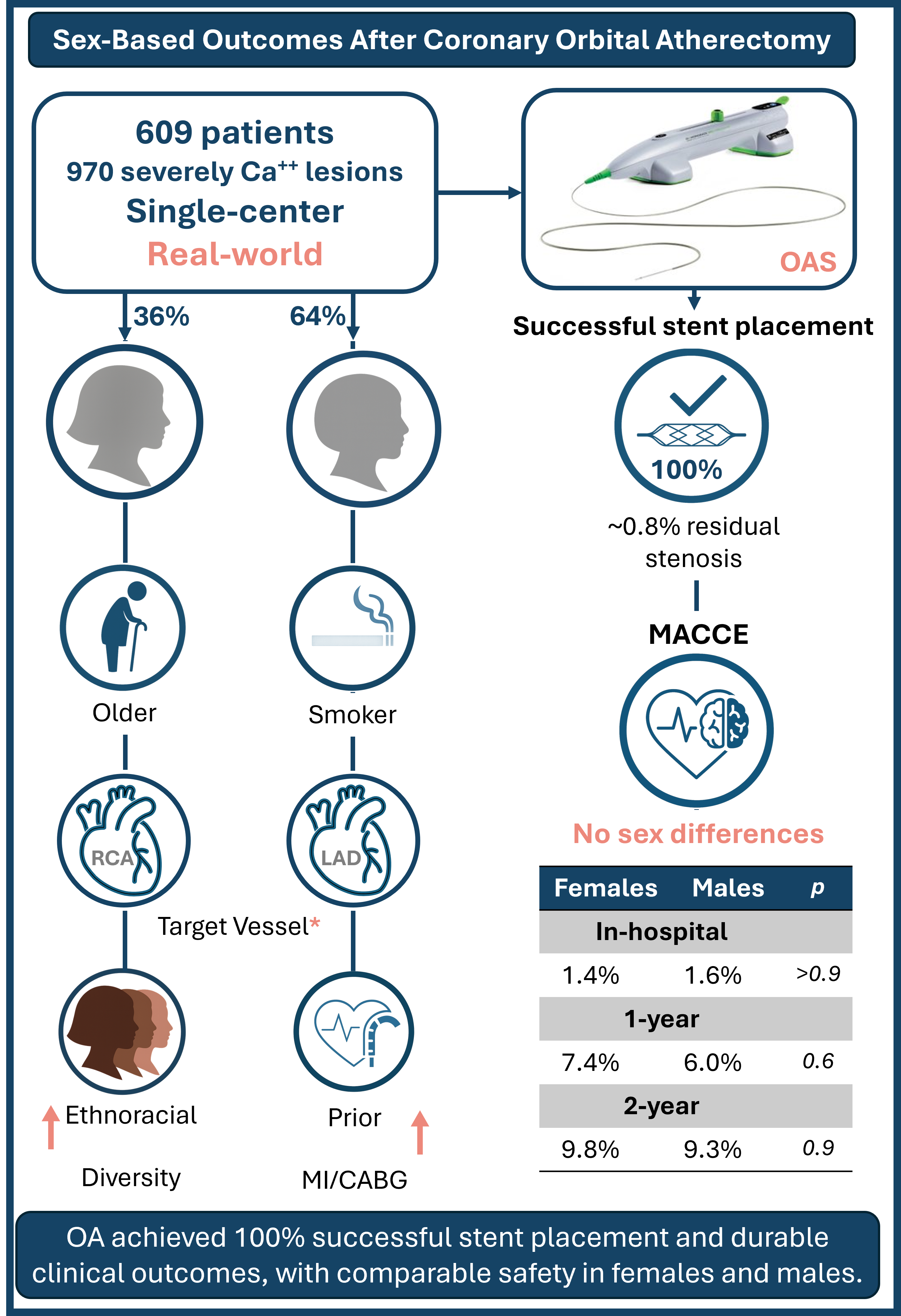
Results. Among 609 patients, 36% were females, with higher representation of Hispanic, Black, and Native American patients compared with males. Females were older (median 77 vs 73 years) with lower rates of prior MI, prior coronary artery bypass graft, and smoking. Lesion characteristics were similar between groups, with 100% successful stent placement. Females had more right coronary artery treatment (32.6% vs 19.3%), while males more often had left anterior descending artery interventions (56% vs 43.8%). In-hospital MACCE rates were low and comparable (1.4% vs 1.6%). Freedom from MACCE was 93.5% at 1 year and 90.5% at 2 years, with no significant sex-based differences.
Conclusions. OA achieved 100% successful stent placement, and safe and durable clinical outcomes in both sexes.
Introduction
Cardiovascular disease remains a leading cause of morbidity and mortality worldwide,1 with percutaneous coronary intervention (PCI) playing a central role in the management of coronary artery disease (CAD). Although advances in interventional cardiology have significantly improved patient outcomes, emerging evidence suggests that sex-based differences may influence the safety and effectiveness of PCI techniques.2,3 A greater understanding of sex-based outcomes following specific interventions is important for optimizing patient care.
Although women make up approximately 50% of the U.S. population,4 they account for only 30% of all patients undergoing PCI with or without atherectomy5-7 and often experience less favorable outcomes than men.3,8 Prior studies have also reported higher rates of periprocedural complications in women, attributed in part to advanced age, comorbidities, lesion complexity, and delayed presentation.3,9,10 Severely calcified coronary lesions are commonly associated with aging and comorbidities such as diabetes, hypertension, and renal disease, which may further contribute to poorer clinical outcomes,11,12 emphasizing the need for effective treatment strategies.
Over the last 3 decades, numerous studies have demonstrated the safety and effectiveness of coronary atherectomy devices, including rotational atherectomy (RA) and orbital atherectomy (OA), in the treatment of severely calcified coronary lesions.13,14 However, despite the high prevalence of such lesions in the general population (6% to 20% of cases),11,15 atherectomy is only employed in a small fraction of cases (up to 3%).5-7 Given the limited use of atherectomy in clinical practice and the underrepresentation of women in prior studies, there exists a significant knowledge gap regarding OA outcomes and potential sex-based differences. This real-world study aimed to address this gap by comparing acute and long-term outcomes following OA between females and males.
Methods
Study design
Patients with complex, severely calcified coronary lesions who underwent OA for lesion preparation before PCI at Mount Sinai Medical Center in Miami Beach, Florida (MSMCMB), were identified through electronic health records and the corresponding MSMCMB CathPCI National Cardiovascular Data Registry (NCDR) database; there were no exclusion criteria. CathPCI data were entered by trained hospital registry staff using standardized NCDR definitions. This retrospective analysis included consecutive patients treated between January 2014 and September 2020 and compared outcomes between female and male patients. The study was approved by the MSMCMB Institutional Review Board, and the requirement for informed consent was waived.
Sex and gender considerations
Consistent with the Sex and Gender Equity in Research (SAGER) guidelines, this study reports sex-based analyses. Sex was analyzed as a binary variable (female or male) based on clinical records. Gender identity, gender-related social determinants, and differences of sex development (DSD) were not collected in the source dataset and therefore were not evaluated. Accordingly, the term “sex” in this study refers to the classification recorded in the clinical records.
Study device
The coronary OA device (Diamondback 360 Coronary Orbital Atherectomy System [Abbott]) has been previously described.14,16 Briefly, the device is a percutaneous OA system that uses an orbiting, diamond-coated crown to sand away and fracture calcific plaques in order to treat severely calcified coronary lesions in preparation for stent delivery.16,17
Procedural and angiographic assessment
Procedural strategy was determined by the treating operator according to lesion characteristics and clinical judgment. Procedural and angiographic variables were retrospectively obtained from the source clinical and registry records and reflect the information systematically available in these datasets. PCI indication was based on the diagnosis recorded at the time of the procedure, and patients were retained in their originally recorded diagnostic categories. Pre- and post-intervention percent stenosis values were based on site-reported angiographic assessment. Contrast volume was recorded to the nearest 50-mL increment. Stent placement was defined as successful implantation of at least 1 drug-eluting stent following OA during the index procedure.
Study endpoints
The primary study outcome was in‐hospital freedom from major adverse cardiac and cerebrovascular events (MACCE), defined as a composite of cardiac death, periprocedural myocardial infarction (MI), and ischemic or hemorrhagic stroke. Secondary outcomes included successful stent placement, severe angiographic complications (severe dissection type C‐F, perforation, and persistent slow flow/no-reflow), bleeding events, heart failure (HF), and cardiogenic shock during hospitalization. All acute procedural and in-hospital outcomes were site-adjudicated according to NCDR CathPCI version 5 definitions. MACCE at 1- and 2-year follow-up was assessed through retrospective review of the available clinical records.
Statistical analysis
Baseline and procedural characteristics are presented as n (%) for binary variables or median and interquartile range for continuous variables. Missing baseline data were imputed using single imputation approach implemented with a Markov chain Monte Carlo-based algorithm. The starting value for the chain was computed from the expectation‐maximization algorithm. P-values for comparing females vs males were calculated using Fisher’s exact test (if theoretical frequencies were <5) and Pearson’s chi-square test for frequency variables or Wilcoxon rank sum test for continuous variables. A P-value of less than 0.05 was considered statistically significant. All statistical analyses were performed using RStudio (version 4.3.1, R Foundation for Statistical Computing).
Results
Demographics
The most common indication for PCI was acute coronary syndrome (ACS)-unstable angina, accounting for 59.1% (360/609) of cases, followed by stable ischemic heart disease (SIHD) at 26.9% (164/609) and ACS-non-ST-segment elevation myocardial infarction (NSTEMI) at 13.3% (81/609) of cases. The least common indication was ACS-ST-segment elevation myocardial infarction (STEMI), making up 0.7% (4/609) of the overall cohort.
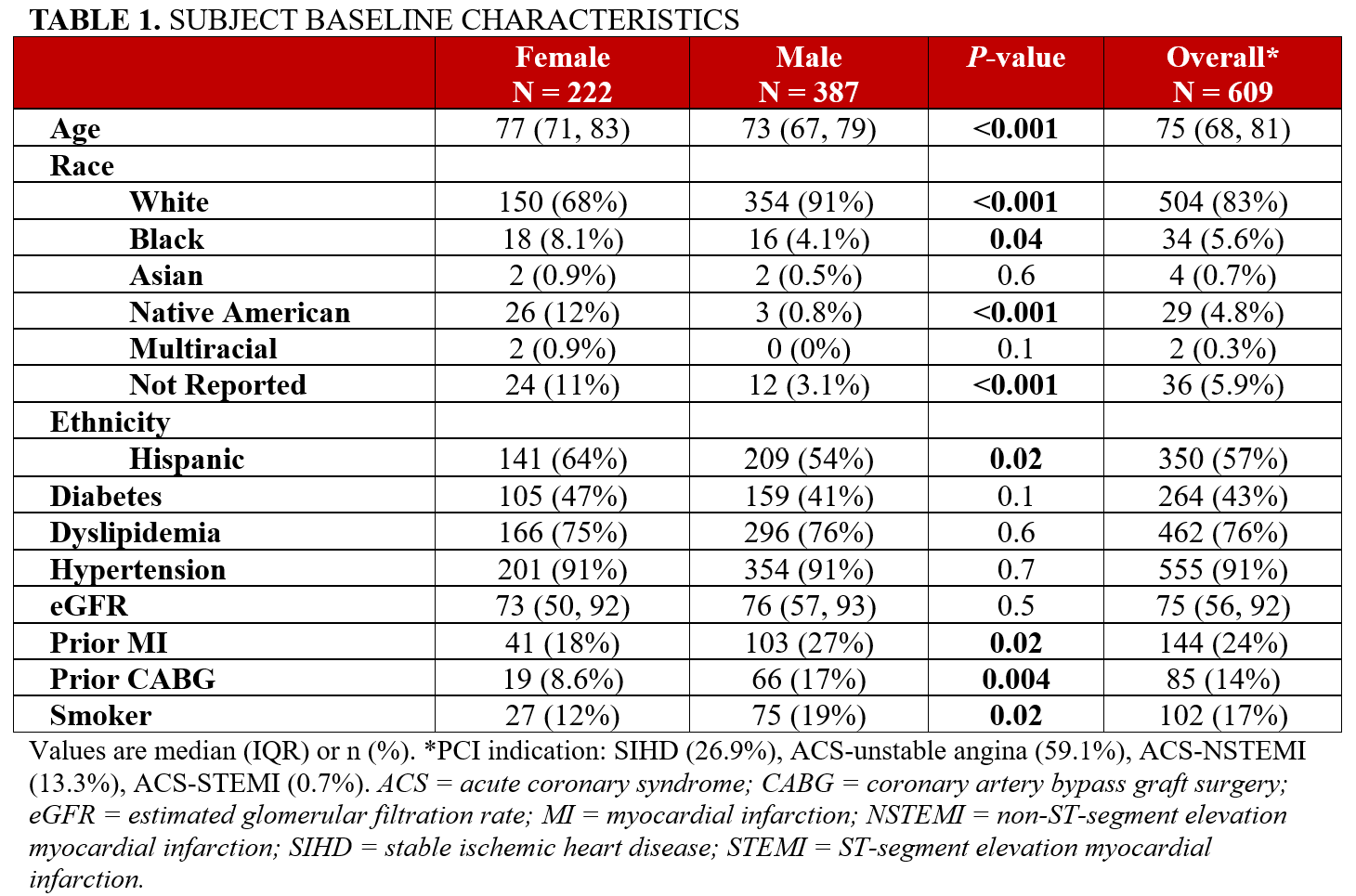
Table 1 presents the baseline characteristics of 609 patients undergoing PCI with OA, focusing on a sex comparison. Within this cohort, 36% (222/609) were females showing a significantly higher median age than males (77 vs 73, P < .001). While the majority of both sexes were White, notable differences appeared. A higher proportion of females were Black (8.1% [18/222] vs 4.1% [16/387], P = .040) and Native American (12% [26/222] vs 0.8% [3/387], P < .001). Ethnicity differences were also apparent (P = .022), with a greater percentage of females identifying as Hispanic (64% [141/222]) compared with males (54% [209/387]). In terms of comorbidities, comparable rates of diabetes, dyslipidemia, and hypertension were observed, along with similar median estimated glomerular filtration rates between females and males. However, disparities in cardiovascular history were noted, as prior MI was less prevalent in females (18% [41/222] vs 27% [103/387], P = .023), and a lower percentage of females had a history of coronary artery bypass grafting (CABG) compared with males (8.6% [19/222] vs 17% [66/387], P = .004). Additionally, fewer females were smokers compared with males (12% [27/222] vs 19% [75/387], P = .022).
Lesion and vessel characteristics
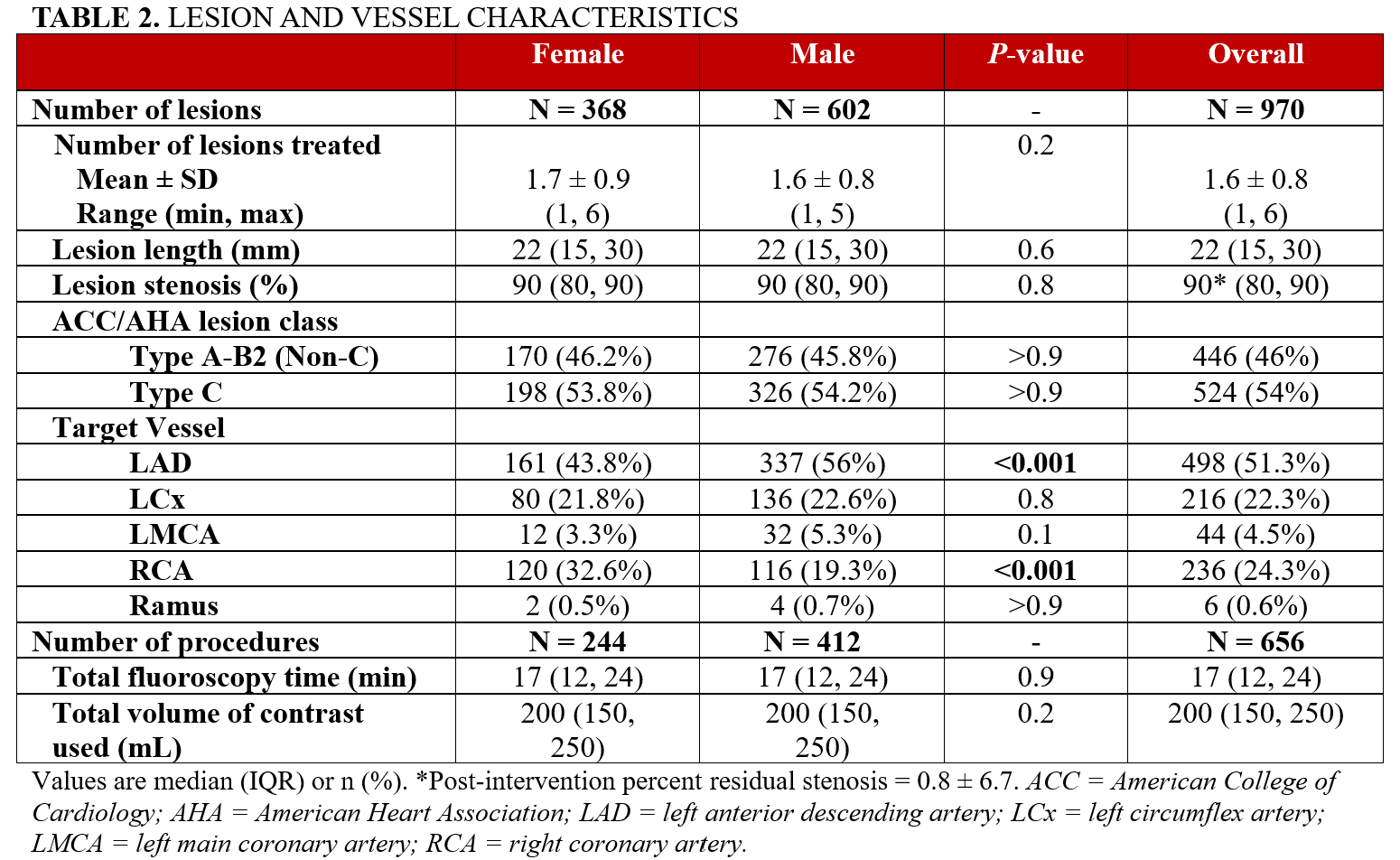
Table 2 summarizes the lesion and vessel characteristics within the study population. Among the 970 included lesions, over 50% (524/970) were classified as Type C lesions via the American College of Cardiology/American Heart Association (ACC/AHA) lesion classification system. The median lesion length was 22 mm, and the pre-intervention percent stenosis was 90%, with no noticeable differences between females and males. The mean number of lesions treated was 1.7 in females and 1.6 in males, with no statistically significant difference between groups. Regarding the target vessel, the left anterior descending artery (LAD) appeared as the most commonly treated vessel for both sexes. However, a notable disparity was observed in the distribution of treated vessels: males showed a significantly higher percentage of LAD treatment compared with females (56% [337/602] vs 43.8% [161/368], P < .001). Conversely, females had a higher proportion of right coronary artery (RCA) treatment compared with males (32.6% [120/368] vs 19.3% [116/602], P < .001).
Procedural results
In total, 656 procedures were performed, with both groups demonstrating a comparable median total fluoroscopy time of 17 minutes and a median total volume of contrast used of 200 mL (Table 2). The mean post-intervention percent residual stenosis was 0.8% (± 6.7).
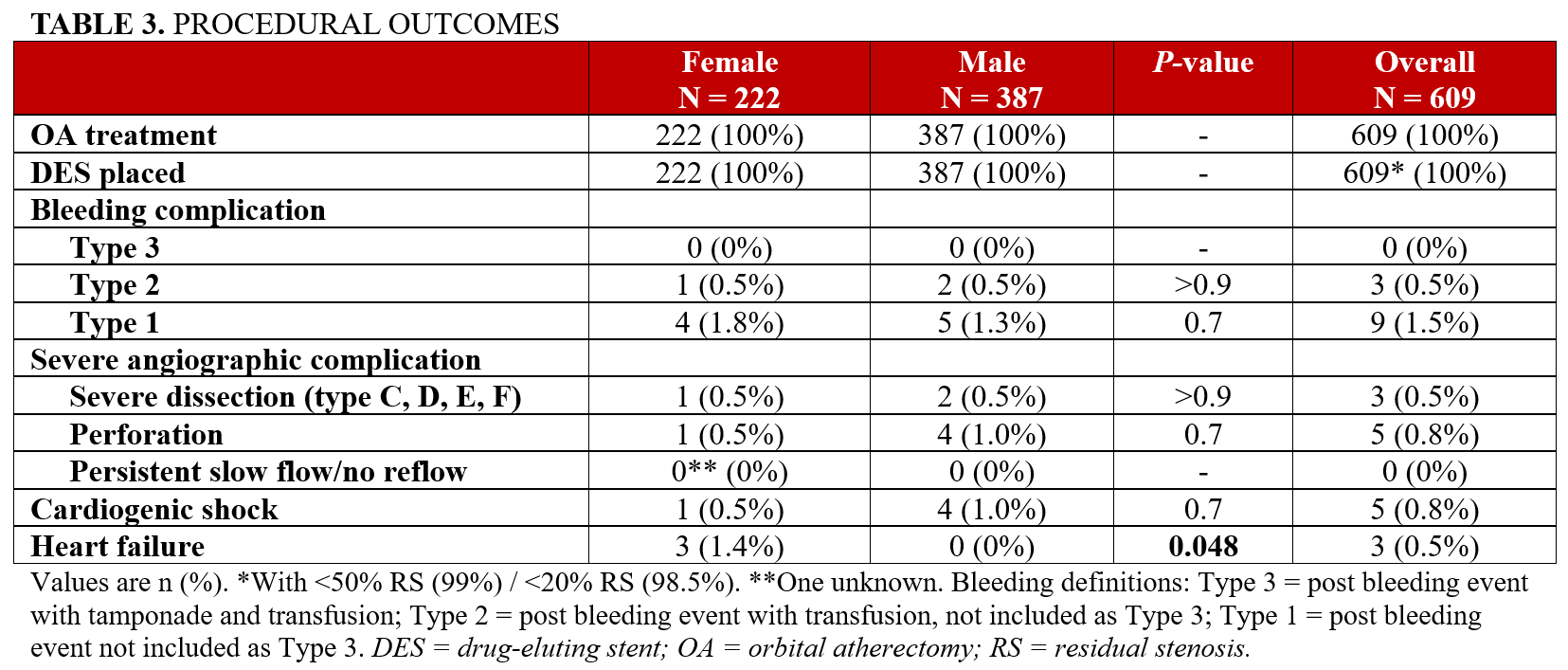
Table 3 summarizes the procedural outcomes. Successful stent placement was achieved in all patients. Bleeding events remained low, occurring in approximately 2% (12/609) of patients overall, with no Type 3 bleeding events and similar rates between females and males. No significant differences were observed between females and males concerning angiographic complications. Three severe dissections and 5 perforations were reported overall, with no instances of persistent slow flow/no reflow. Cardiogenic shock occurred in 5 patients (0.8% [5/609]) with no differences between females and males. Three patients experienced HF, and all of whom were female, resulting in a statistically significant between-group difference (1.4% [3/222] vs 0% [0/387], P = .048).
In-hospital MACCE
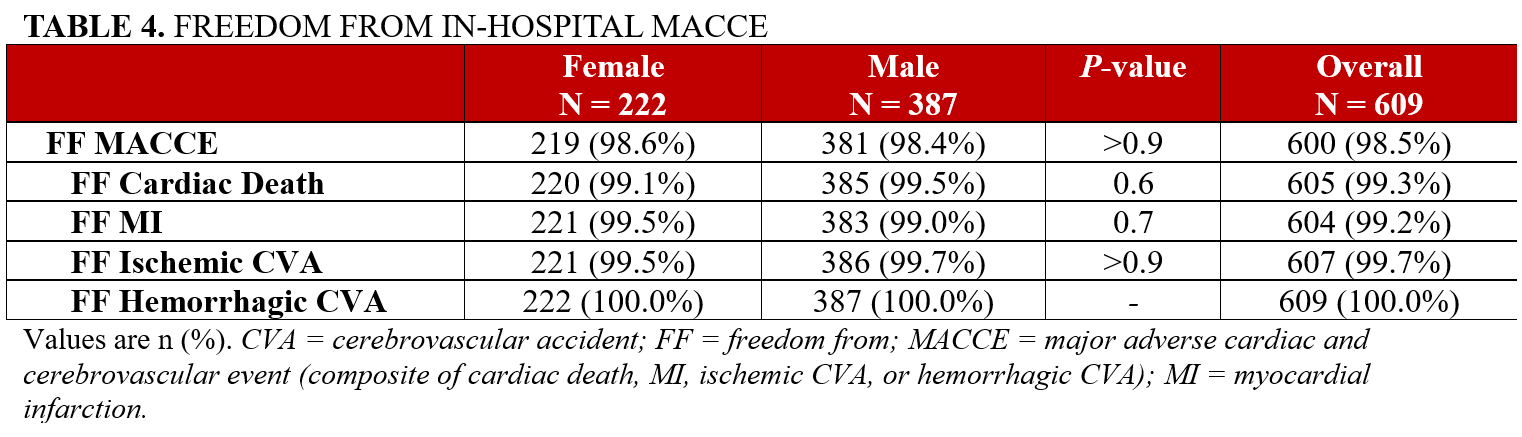
Table 4 shows that both female and male patients experienced low rates of MACCE. The overall freedom from MACCE, which includes cardiac death, MI, ischemic cerebrovascular accident (CVA), and hemorrhagic CVA, was 98.5% (600/609). There were no significant differences between females and males in overall MACCE or any of its components.
MACCE at 1- and 2-year follow-up
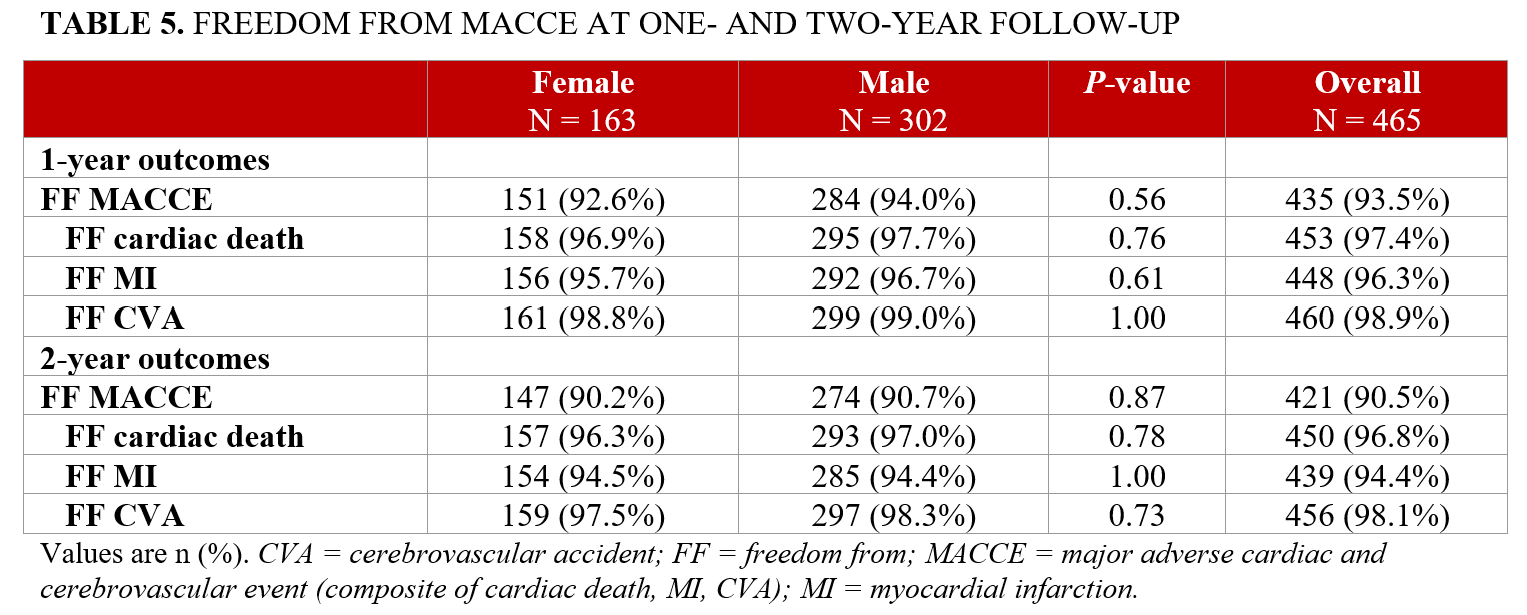
Two-year follow-up data were available for 465 patients (76.4% [465/609]). As shown in Table 5, the overall freedom from MACCE at 1- and 2-years post-discharge was 93.5% (435/465) and 90.5% (421/465), respectively. At 1-year follow-up, freedom from MACCE was high and comparable between females and males (92.6% [151/163] vs 94.0% [284/302], P = .56). Similarly, freedom from the individual components of cardiac death, MI, and CVA did not differ significantly by sex. At 2 years, rates remained consistent, with freedom from MACCE of 90.2% (147/163) in females and 90.7% (274/302) in males (P = .87), and no significant differences observed for cardiac death, MI, or CVA.
Discussion
This retrospective study highlights several key findings from the comparison of outcomes between females and males undergoing PCI with OA. Despite notable sex differences, including older age, fewer prior MIs and CABG procedures, a lower prevalence of smoking, and more frequent RCA treatment among females, successful stent placement was achieved in 100% of patients in both groups, with low rates of angiographic and bleeding complications and similarly low rates of in-hospital MACCE. Importantly, high freedom from MACCE was maintained at 1 and 2 years, with no significant sex-based differences. These findings add to the evidence regarding sex-based outcomes following OA and may help inform procedural risk assessment and patient counseling.
In our study, females and males exhibited baseline characteristics similar to those of populations described in prior investigations.3,10,18,19 Females were older than males, with comparable rates of diabetes, hypertension, and renal disease. Males, on the other hand, had a higher prevalence of prior cardiovascular events and smoking. The older age and lower prevalence of prior cardiac events among females could reflect physiologic sex-based differences or differences in the timing of presentation, diagnosis, and treatment of CAD. Females typically experience their first presentation of CAD as many as 10 years later than males, most commonly after menopause.20 In addition, females may present with symptoms that are not immediately recognized as cardiac-related, potentially contributing to delayed diagnosis and treatment.21 This underscores the importance of recognizing sex-specific symptoms and risk factors to facilitate timely diagnosis and treatment.
A distinctive aspect of our study is the composition of the female cohort, which included substantial racial and ethnic diversity. Notably, 12% of the females were identified as Native American, 8% as Black, and approximately two-thirds as Hispanic. Native American, Black, and Hispanic populations continue to be underrepresented in clinical trials, and may experience poorer outcomes than White patients following PCI.22 Together with the underrepresentation of females in clinical trials, the diversity of this cohort provides additional real-world outcome data in patients undergoing treatment of severely calcified coronary lesions.
Regarding the target vessel, our results align with previous studies identifying the LAD as the most frequently treated vessel in both sexes.18,19 Nonetheless, the distribution of treated vessels differed significantly between groups: LAD treatment was more frequent among males, whereas RCA treatment was more frequent among females. Some studies have hypothesized that calcium deposition occurs earlier in atherosclerotic lesions of the LAD than in lesions of other coronary arteries, including RCA, left circumflex artery, and left main coronary artery.23 One possible explanation for our findings is that delayed presentation or access to care among female patients may have contributed to more advanced coronary disease, including calcium deposition beyond the LAD; however, this hypothesis could not be evaluated in the present study.
Despite differences in baseline patient and vessel characteristics between females and males, 100% successful stent placement was achieved in all patients, with low observed rates of angiographic complications and bleeding events. The notable stent placement rate in this complex population highlights the potential importance of appropriate lesion preparation and may also reflect the experience of this high-volume center. The overall rate of angiographic complications was 1.3% with no instances of persistent slow flow/no reflow in either cohort, and the rate of bleeding events was around 2% overall with no occurrence of Type 3 bleeding events. The angiographic complications observed in our study are comparable to those reported in another real-world OA study.19 However, our findings differ from those of the ORBIT II study, which reported a higher rate of severe dissection in females,18 as well as from those of a multicenter registry, which documented a higher incidence of coronary artery perforation among females undergoing PCI with OA.24 Additionally, our analysis revealed a slightly elevated occurrence of cardiogenic shock among males compared with females, although this remained below 1% across all cases. Females had a higher observed incidence of postprocedural HF than males; however, only 3 HF events occurred in the overall cohort. Given the very small number of events, this exploratory finding should be interpreted with caution and does not permit conclusions regarding a sex-based difference or its potential underlying mechanisms.
Finally, despite the differences in baseline characteristics, comorbidities, and periprocedural outcomes, females and males exhibited similarly high freedom from MACCE during the index hospitalization and at 1- and 2-year follow-up. These findings are consistent with prior OA studies reporting sustained safety and effectiveness beyond the acute phase, including in patients with complex, calcified lesions.18,19 Our findings extend the available evidence by demonstrating comparable long-term outcomes between females and males in a large, real-world OA cohort. This observation is particularly relevant given reports of less favorable outcomes among females undergoing other atherectomy procedures, including RA.25 Further studies are needed to identify factors that may contribute to sex-based differences in outcomes and to determine whether these factors should inform procedural planning.
Limitations
This study has several limitations. Its retrospective design is subject to potential biases in data collection and interpretation. In addition, because the study was conducted at a single high-volume PCI center, the findings may not be generalizable to institutions with less experienced operators or different procedural practices. Although intravascular imaging is routinely used in our laboratory for complex, calcified coronary interventions, intravascular ultrasound and optical coherence tomography use were not tracked in this analysis. Acute procedural and in-hospital outcomes were site-adjudicated according to NCDR CathPCI version 5 definitions but were not independently adjudicated by a blinded clinical events committee. Lastly, although 1- and 2-year follow-up data were available for a substantial proportion of patients, loss to follow-up may introduce uncertainty into the long-term findings.
Conclusions
Although prior studies have reported a greater risk of adverse PCI outcomes in females than males, females remain underrepresented in clinical trials evaluating PCI. This study provides real-world evidence supporting the safety and effectiveness of OA for the preparation of severely calcified coronary lesions, with comparable outcomes between females and males despite differences in age and vessel characteristics.
Affiliations and Disclosures
Benjamin Klein, DO1; Sri Mandava, MD1; Amre Ghazzal, MD1; Karthik Vedantam, MD1; Zsuzsanna Igyarto, PhD2; Brad J. Martinsen, PhD2; Ajay J. Kirtane, MD3; Martin B. Leon, MD3; Nirat Beohar, MD1
From the 1Mount Sinai Medical Center, Miami Beach, Florida; 2Global Clinical Affairs, Abbott Vascular, Santa Clara, California; 3Columbia University Irving Medical Center, New York, New York.
An abstract reporting results from this study was presented at Cardiovascular Research Technologies (CRT) 2026 and subsequently published in JACC: Cardiovascular Interventions. Available at: https://www.jacc.org/doi/10.1016/j.jcin.2026.01.052.
Disclosures: Dr Igyarto and Dr Martinsen and are employed by and own stock in Abbott Vascular. Dr Kirtane, Dr Leon, and Dr Beohar report receiving consulting fees from Abbott Vascular. The remaining authors report no financial relationships or conflicts of interest regarding the content herein.
Address for correspondence: Nirat Beohar, MD, Mount Sinai Medical Center, 4300 Alton Rd, Miami Beach, FL 33140, USA. Email: nirat.beohar@msmc.com; X: @NiratBeoharMD
References
1. Vaduganathan M, Mensah GA, Turco JV, Fuster V, Roth GA. The global burden of cardiovascular diseases and risk: a compass for future health. J Am Coll Cardiol. 2022;80(25):2361-2371. doi:10.1016/j.jacc.2022.11.005
2. Sambola A, Del Blanco BG, Kunadian V, et al. Sex-based differences in percutaneous coronary intervention outcomes in patients with ischaemic heart disease. Eur Cardiol. 2023;18:e06. doi:10.15420/ecr.2022.24
3. Iwańczyk S, Dit Al Hakim SA, Skrzypińska M,. Sex-based differences in complex percutaneous coronary intervention-insights from the COMPLEX registry. Hellenic J Cardiol. 2024;80:107-111. doi:10.1016/j.hjc.2024.04.005
4. QuickFacts: United States. United States Census Bureau. Accessed January 12, 2024. https://www.census.gov/quickfacts/fact/table/US/PST045223
5. Kataruka A, Maynard CC, Kearney KE, et al. Temporal trends in percutaneous coronary intervention and coronary artery bypass grafting: insights from the Washington Cardiac Care Outcomes Assessment Program. J Am Heart Assoc. 2020;9(11):e015317. doi:10.1161/JAHA.119.015317
6. Beohar N, Kaltenbach LA, Wojdyla D, et al. Trends in usage and clinical outcomes of coronary atherectomy: a report from the National Cardiovascular Data registry CathPCI registry. Circ Cardiovasc Interv. 2020;13(2):e008239. doi:10.1161/CIRCINTERVENTIONS.119.008239
7. Darmoch F, Ullah W, Al-Khadra Y, Sattar Y, Pacha HM, Zghouzi M, Soud M, Bagur R, Naidu SS, Goldsweig AM, Mamas M, Brilakis ES, Alraies MC. Characteristics and hospital outcomes of coronary atherectomy within the United States: a multivariate and propensity-score matched analysis. Expert Rev Cardiovasc Ther. 2021;19(9):865-870. doi:10.1080/14779072.2021.1963233
8. Rao U, Buchanan GL, Hoye A. Outcomes after percutaneous coronary intervention in women: are there differences when compared with men? Interv Cardiol. 2019;14(2):70-75. doi:10.15420/icr.2019.09
9. Perdoncin E, Duvernoy C. Treatment of coronary artery disease in women. Methodist Debakey Cardiovasc J. 2017;13(4):201-208. doi:10.14797/mdcj-13-4-201
10. Potts J, Sirker A, Martinez SC, et al. Persistent sex disparities in clinical outcomes with percutaneous coronary intervention: insights from 6.6 million PCI procedures in the United States. PLoS One. 2018;13(9):e0203325. doi:10.1371/journal.pone.0203325
11. Généreux P, Madhavan MV, Mintz GS, et al. Ischemic outcomes after coronary intervention of calcified vessels in acute coronary syndromes. Pooled analysis from the HORIZONS-AMI (Harmonizing Outcomes With Revascularization and Stents in Acute Myocardial Infarction) and ACUITY (Acute Catheterization and Urgent Intervention Triage Strategy) TRIALS. J Am Coll Cardiol. 2014;63(18):1845-1854. doi:10.1016/j.jacc.2014.01.034
12. Sorini Dini C, Nardi G, Ristalli F, Mattesini A, Hamiti B, Di Mario C. Contemporary approach to heavily calcified coronary lesions. Interv Cardiol. 2019;14(3):154-163. doi:10.15420/icr.2019.19.R1
13. Sharma SK, Tomey MI, Teirstein PS, et al. North American expert review of rotational atherectomy. Circ Cardiovasc Interv. 2019;12(5):e007448. doi:10.1161/CIRCINTERVENTIONS.118.007448
14. Chambers JW, Feldman RL, Himmelstein SI, et al. Pivotal trial to evaluate the safety and efficacy of the orbital atherectomy system in treating de novo, severely calcified coronary lesions (ORBIT II). JACC Cardiovasc Interv. 2014;7(5):510-518. doi:10.1016/j.jcin.2014.01.158
15. Bourantas CV, Zhang YJ, Garg S, et al. Prognostic implications of coronary calcification in patients with obstructive coronary artery disease treated by percutaneous coronary intervention: a patient-level pooled analysis of 7 contemporary stent trials. Heart. 2014;100(15):1158-1164. doi:10.1136/heartjnl-2013-305180
16. Shlofmitz E, Martinsen BJ, Lee M, et al. Orbital atherectomy for the treatment of severely calcified coronary lesions: evidence, technique, and best practices. Expert Rev Med Devices. 2017;14(11):867-879. doi:10.1080/17434440.2017.1384695
17. Shlofmitz E, Shlofmitz R, Lee MS. Orbital atherectomy: a comprehensive review. Interv Cardiol Clin. 2019;8(2):161-171. doi:10.1016/j.iccl.2018.11.006
18. Kim CY, Lee AC, Wiedenbeck TL, Lee MS, Chambers JW. Gender differences in acute and 30-day outcomes after orbital atherectomy treatment of de novo, severely calcified coronary lesions. Catheter Cardiovasc Interv. 2016;87(4):671-677. doi:10.1002/ccd.26163
19. Lee MS, Shlofmitz E, Mansourian P, Sethi S, Shlofmitz RA. Gender-based differences in outcomes after orbital atherectomy for the treatment of de novo severely calcified coronary lesions. J Invasive Cardiol. 2016;28(11):440-443.
20. Keteepe-Arachi T, Sharma S. Cardiovascular disease in women: understanding symptoms and risk factors. Eur Cardiol. 2017;12(1):10-13. doi:10.15420/ecr.2016:32:1
21. Dey S, Flather MD, Devlin G, et al; Global Registry of Acute Coronary Events investigators. Sex-related differences in the presentation, treatment and outcomes among patients with acute coronary syndromes: the Global Registry of Acute Coronary Events. Heart. 2009;95(1):20-26. doi:10.1136/hrt.2007.138537
22. Olanisa OO, Parab P, Chaudhary P, et al. Racial disparities and outcomes of percutaneous coronary interventions in patients above 65 years in America: A Systematic Review. Cureus. 2023;15(7):e42457. doi:10.7759/cureus.42457
23. Alluri K, McEvoy JW, Dardari ZA, et al. Distribution and burden of newly detected coronary artery calcium: results from the Multi-Ethnic Study of Atherosclerosis. J Cardiovasc Comput Tomogr. 2015;9(4):337-344.e1. doi:10.1016/j.jcct.2015.03.015
24. Tiahnybik J, Upadhyay S, Elsner N, Kreutz RP, Revtyak GE. Orbital Atherectomy Clinical and Procedural Outcomes. Poster presented at: SCAI Scientific Sessions; May 18-20, 2023, Phoenix, AZ. Accessed May 10, 2024. https://scai.confex.com/scai/2023/meetingapp.cgi/Paper/24132
25. Ang SP, Krittanawong C, Usman MH, et al. Gender differences in the short and long-term outcomes following rotational atherectomy: a meta-analysis. Am J Cardiol. 2024;219:92-100. doi:10.1016/j.amjcard.2024.03.012