Real-World Analysis of Outcomes of Patients Undergoing Coronary Intravascular Lithotripsy Versus Atherectomy for Calcified Coronary Artery Disease: Findings From the TriNetX Database — An Interview With Arman Qamar, MD, MPH, FACC, FSCAI
Dr Arman Qamar shares background and insights on his article, “Real-World Analysis of Outcomes of Patients Undergoing Coronary Intravascular Lithotripsy Versus Atherectomy for Calcified Coronary Artery Disease: Findings From the TriNetX Database”.
My name is Dr Arman Qamar. I'm an interventional cardiologist and a vascular medicine physician at Endeavor Health, based in Chicagoland. I direct our cardiovascular outcomes research and cardiovascular personalized medicine efforts at Endeavor Health.
Could you please tell us what inspired your group to conduct this study?
Intravascular lithotripsy (IVL) is a novel innovation in addressing people who have calcified coronary artery disease. We know that treating calcified coronary artery disease in the cath lab is a major challenge. Previously, the tools that we had included mostly high-pressure balloon inflation or atherectomy. Those procedures have been incredibly helpful, but they come with their own risk.
Innovation with IVL provides us with a very easy, effective, and safe tool that almost anyone in the cardiac cath lab can use to tackle calcified coronary lesions so that the stent placement and the final results are excellent, which affects the downturn course.
After the FDA approval, there have been very limited data on the use of IVL across the United States. So, the main goal of our study was to first address the trends in the utilization of IVL during percutaneous coronary intervention (PCI) in the United States, and then also to do an observational registry-based analysis to compare the efficacy and safety of IVL as compared to atherectomy in patients who are undergoing PCI.
Your analysis found that IVL was associated with substantially lower mortality, major adverse cardiovascular events, and heart failure exacerbations than atherectomy. Were any of these results surprising to you, and what mechanisms might explain them?
I agree that the results were surprising to us. When we pursued this particular analysis, our main goal was to first address the trends in the uptake of IVL, and then to compare the outcomes of lithotripsy to atherectomy. Now, a randomized controlled trial is the most definitive tool for addressing safety or efficacy outcomes with one tool compared to another, because observational analysis, including ours, are prone to many biases.
First in our analysis, we were very impressed to see that the uptake of IVL for PCI has been incredible—there has been a significant increase since its FDA approval. Our analysis looks at close to 20 000 patients who have been treated with intravascular lithotripsy, and what we found overall is that even if we don’t compare it to atherectomy but just look at the use of IVL in 20 000 patients, it's effective, and it's very safe, and it's being used broadly across the United States. So that was a key finding.
Second, like I mentioned, it's a registry-based observational analysis, which is prone to biases, and propensity score matching is one way through which we try to address confounding. After propensity score matching, what we found was that IVL was associated with significantly lesser incidence or rates of cardiovascular events. We had not expected that. We had expected that we would find that the use of IVL is safe and overall has a comparable cardiovascular event rate compared to atherectomy—which, again, is a very effective tool, too, compared to lithotripsy. But what we found was, and what we were surprised about, was that IVL was associated with significantly lower risk of major adverse cardiovascular events.
Now, there are several explanations for that. One explanation, potentially, is that using IVL is very easy. Currently, for calcified coronary lesions, most operators are using IVL as the first approach. And, for patients in which a balloon cannot be crossed, or if IVL is not effective for those recalcitrant and very stubborn calcified lesions, operators may be pursuing atherectomy, such as orbital atherectomy, laser, or rotational atherectomy. Because of that, people who are in the atherectomy arm are people in whom lithotripsy may have already been used, or they had chronic total occlusion (CTO) for which, again, operators didn't want to use lithotripsy. So there is that potential for bias or confounding because people in the atherectomy arm may have very, very complex coronary anatomy, and as a result, they are prone to have a higher adverse cardiovascular events, and so we are seeing that the IVL arm had lower rates of events, and then it makes IVL look to be more effective.
That's one of the possibilities. Really, a randomized controlled trial is what is needed to effectively compare the efficacy outcomes of IVL compared to atherectomy.
Now, the other possibility is that perhaps IVL, as we know from the prior studies, is doing a great job in terms of modifying the lesion and preparing the lesion effectively, such as the stent placement, and subsequent cardiovascular outcomes are great. So those are the two main possible explanations for our findings.
If you could design it, what would the ideal randomized trial to confirm these findings look like?
Like I mentioned, a randomized trial would be the most definitive way of doing it.
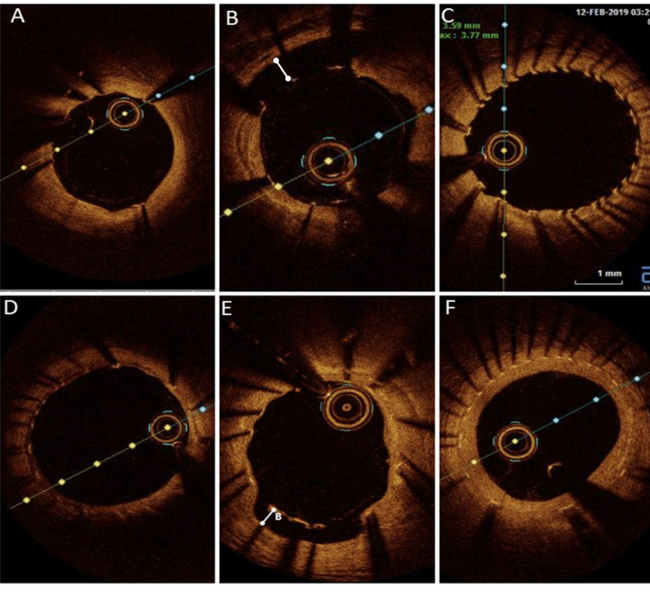
Patient selection is going to be the key, so if I had to design a trial, it would be for patients who are undergoing PCI, either for stable coronary artery disease or for acute coronary syndrome (ACS), and they must have calcified coronary lesions. The extent of calcification matters, too. I would like 100% mandatory use of intravascular imaging in those trials, so patients with ACS or stable coronary disease undergoing PCI, and who have had intravascular ultrasound or optical coherence tomography confirm a presence of severe coronary calcification, and then those patients then getting randomized to either use of IVL and use of atherectomy: either laser, orbital, or rotational atherectomy, based on the operator's convenience.
Also, I would like the trial to be enriched with a significant number of patients who have diabetes, reduced injection fraction, and bifurcation lesions. Additionally, it would be important to make sure that such a trial includes a good number of patients who have complex coronary disease, which would mean having more of a higher SYNTAX score, or if it's a CTO, probably have a high J-CTO score. That way, we are not dealing with only straightforward lesions, but we are looking at a variety of both straightforward calcified lesions confirmed on intravascular imaging as well as a decent or a good number of patients who have complex coronary disease.
What do you most hope clinicians will take away after reading your study?
The most important thing to note from our study is that coronary IVL is no longer a new tool on the block; thousands of patients across the United States have been treated with it. There have been other analyses from the NCDR database showing that IVL is effective and should be used in people who have calcified coronary lesions so that the stent placement and the final PCI result is excellent or outstanding. The other thing is that we are showing that IVL use in our data (for example, used in close to 20 000 patients) is safe, it can be easily used, but what we are seeing is, again, prone to confounding-related biases.
But you can at least get a comparable result to atherectomy which, again, has its own risk of having coronary and other complications. Based on this analysis, there is a potential for having even lesser cardiovascular events compared to the use of atherectomy, so our team is hoping that, based on these findings, operators are going to feel more excited about and feel more comfortable with using IVL for treating calcified coronary lesions.
Is there anything else you'd like to share?
One key thing that I would like to share is that our findings should be considered hypothesis-generating. They in no way definitively say that a one-treatment approach, IVL vs atherectomy, is superior or inferior to the others. But the findings should excite both industry and operators and the NIH to move forward with a randomized controlled trial that is well designed with a lot of use of intravascular imaging to compare lithotripsy with atherectomy.
The transcript has been lightly edited for clarity.
© 2026 HMP Global. All Rights Reserved.
Any views and opinions expressed are those of the author(s) and/or participants and do not necessarily reflect the views, policy, or position of the Journal of Invasive Cardiology or HMP Global, their employees, and affiliates.