Reduced Mortality With Low-Dose Rivaroxaban In Patients With Coronary Artery Disease: A Meta-Analysis
© 2026 HMP Global. All Rights Reserved.
Any views and opinions expressed are those of the author(s) and/or participants and do not necessarily reflect the views, policy, or position of the Journal of Invasive Cardiology or HMP Global, their employees, and affiliates.
J INVASIVE CARDIOL 2026. doi:10.25270/jic/26.00286. Epub November 20, 2026.
Key Clinical Summary
- Adding low-dose rivaroxaban to standard antithrombotic therapy reduces all-cause mortality, cardiovascular mortality, and major ischemic events across the coronary artery disease spectrum.
- The significant reduction in stroke is driven by fewer ischemic strokes, without an offsetting increase in hemorrhagic stroke.
- Low-dose rivaroxaban increases major bleeding but not fatal bleeding, supporting careful patient selection based on individual ischemic and bleeding risks.
Abstract
Objectives. The optimal antithrombotic therapy (ATT) for patients with coronary artery disease (CAD) is still a matter of debate. In this regard, the role of low-dose rivaroxaban remains controversial. The authors performed a meta-analysis of randomized controlled trials (RCT) comparing low-dose rivaroxaban vs standard ATT across the spectrum of CAD.
Methods. RCTs were searched through MEDLINE, EMBASE, and Cochrane databases, and international meeting proceedings. The primary endpoint was all-cause mortality. Results are reported as incidence rate ratio (IRR) of low-dose rivaroxaban vs standard ATT.
Results. Five trials including 37 709 randomized patients were identified. Low-dose rivaroxaban was associated with significantly lower rates of all-cause mortality (IRR = 0.83; 95% CI, 0.70-0.98; P = .02), driven by a significant reduction in cardiovascular mortality (IRR = 0.82; 95% CI, 0.69-0.97; P = .02). Low-dose rivaroxaban was also associated with a significant reduction in myocardial infarction (IRR = 0.88; 95% CI, 0.79-0.99; P = .04), major averse cardiovascular events (IRR = 0.85; 95% CI, 0.76-0.95; P < .01), and stroke (IRR = 0.71; 95% CI, 0.55-0.91; P < .01). Stoke reduction was driven by a significant reduction in ischemic strokes (IRR = 0.60; 95% CI, 0.49-0.74; P < .01), not offset by an increase in hemorrhagic strokes. In contrast, low-dose rivaroxaban increased major bleeding (IRR = 1.46; 95% CI, 0.99-2.17), but not fatal bleedings.
Conclusions. In patients with CAD, low-dose rivaroxaban significantly reduces all-cause mortality, cardiovascular mortality, and stroke, but increases major bleeding compared with standard ATT.
Introduction
Antiplatelet therapy remains the standard of care for managing patients with coronary artery disease (CAD).1 Despite its proven efficacy across a range of clinical settings, the residual ischemic risk remains substantial, and may be even greater in real-world practice than observed in randomized controlled trials (RCT).2 The primary benefit of antiplatelet therapy in patients with CAD is the reduction of recurrent myocardial infarction (MI) and stent thrombosis; however, this comes with limited or no impact on mortality or stroke prevention.3,4 This lack of mortality benefit has not been thoroughly investigated; however, it is likely attributable to several factors: the tendency of antiplatelet therapy to primarily prevent small MIs with limited impact on long-term mortality, the already low incidence of stent thrombosis with current generation drug-eluting stents,5 and the increased risk of bleeding, which may offset the gains achieved through a reduction in recurrent ischemic events. Several studies have in fact shown that bleeding is an independent predictor of mortality.6
Against this background, novel antithrombotic strategies have been developed to prevent recurrent ischemic events. One such approach is dual pathway inhibition (DPI), which combines antiplatelet agents with direct oral anticoagulant (DOAC) drugs targeting factor X or thrombin activity.7 This strategy offers the advantage of simultaneously inhibiting platelet aggregation and the coagulation cascade’s common pathway, potentially providing a broader antithrombotic effect.8,9 Several studies have compared DPI with standard antiplatelet or anticoagulant therapies, but they have considerably varied in design, patient population, clinical endpoints, the specific DOAC used, and the dosage administered.10-14 In addition, all these studies were powered for major adverse cardiovascular events (MACE) or bleeding events, leaving undetermined whether DPI could also have an impact on harder and less-frequent endpoints such as mortality or stroke. Therefore, we conducted an aggregate data-based meta-analysis including RCTs that compared low-dose rivaroxaban, the most widely investigated DOAC, vs standard antithrombotic therapy (ATT) in patients with CAD.
Methods
Study design and selection
Eligible studies for this meta-analysis were RCTs which compared low-dose rivaroxaban versus standard ATT across the spectrum of CAD. RCTs in which indication for DPI was not CAD were excluded. Relevant RCTs were searched through MEDLINE (National Institutes of Health), the Cochrane database (Wiley), the EMBASE database (Elsevier), TCT MD (https://www.tctmd.com/), ClinicalTrials.gov (https://www.clinicaltrials.gov/), ClinicalTrialResults.org (https://clinicaltrialresults.org), and abstracts and presentations from major cardiovascular meetings, using the keywords reported in the Supplemental Material. Two investigators (AGB and LL) independently reviewed the titles, abstracts and studies to determine whether they met the inclusion criteria. Conflicts between reviewers were resolved by consensus. No language, publication date, or publication status restrictions were imposed. The most updated or most inclusive data for a given study were chosen for abstraction. To mitigate the risk of heterogeneity and the small-study-effect, we included only clinical trials powered for hard clinical endpoints that had more than 2000 patients enrolled. The risk of bias was assessed using the revised Cochrane risk-of-bias tool.15
The protocol of the meta-analysis is registered in PROSPERO as ID CRD420251066467. The present review was performed according to the Preferred Reporting Items for Systematic review and Meta-Analysis (PRISMA) statement.16 Ethical approval and informed consent were not required because this meta-analysis used aggregate data from previously published studies.
Endpoints and definitions
The primary endpoint of the meta-analysis was all-cause mortality. Secondary prespecified endpoints were cardiovascular mortality, MI, stroke, major bleeding, fatal bleeding, and MACE. Stroke was stratified in ischemic and hemorrhagic. The endpoint definitions as applied in each trial were incorporated.
Statistical analysis
Continuous variables are displayed as means and standard deviations (SD), whereas categorical variables are displayed as count and percentages. To address for different follow up duration across trials, incidence rate ratios (IRR) with 95% confidence intervals (CI) were calculated using the function “metainc” of R statistical software package “meta” (R Foundation for Statistical Computing).17 Event counts were extracted from the main study publications. The analyses of IRR were performed using mixed-effect Poisson regression models with random study effects. Heterogeneity was assessed with the I2 statistic, with values of less than 25%, 25% to 50%, and greater than 50% representing mild, moderate, and severe heterogeneity, respectively. In case of moderate or severe heterogeneity, we considered results provided by the random effects model.
To explore whether a single RCT significantly affected the robustness of our findings, we performed a sensitivity analysis by sequentially removing each trial from the pooled effect estimates one at a time. Differences between subgroups were assessed using a chi-square test for subgroup differences based on the Q statistic. Absolute risk difference (ARD) was calculated by multiplying the pooled IRR from the random-effects meta-analysis by the incidence rate in the control group, using the following formula: ARD = IR_control × (1 − IRR). The number needed to treat (NNT) or harm (NNH) was then computed as the inverse of ARD (ie, 1/ARD), depending on the direction of effect. Extent of publication bias was assessed by visual inspection of funnel plots and Egger’s test. Two-sided P-values of less than 0.05 were considered statistically significant.
Results
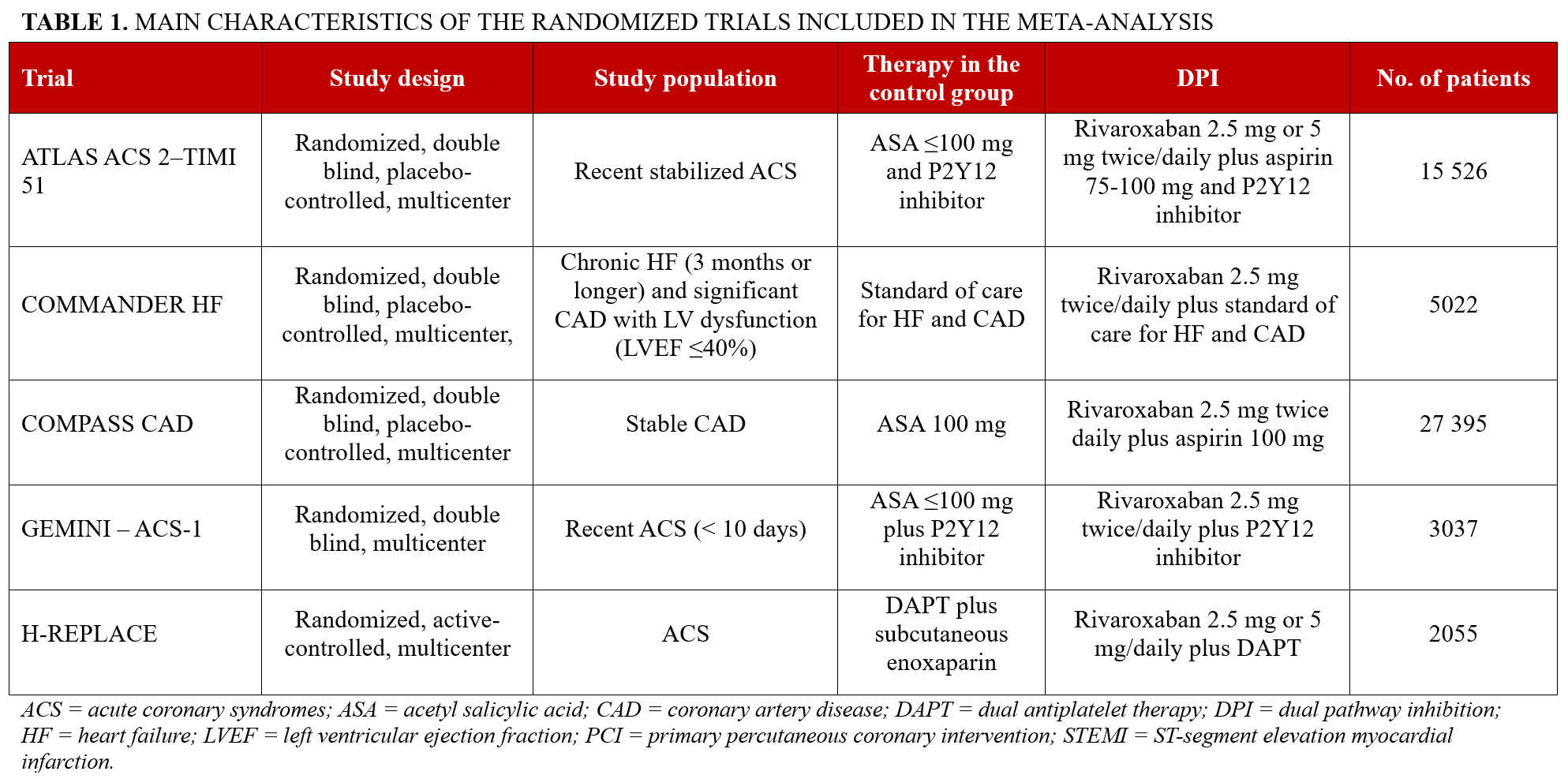
The flow diagram of the study analysis is shown in Supplemental Figure 1. Of 7697 potentially relevant articles initially screened, 5 trials met the inclusion criteria and were included in the final meta-analysis.11,18-21 Low-dose rivaroxaban included rivaroxaban 2.5 or 5 mg/daily. Three studies included patients with acute coronary syndrome,18,19,21 and 2 studies included patients with stable ischemic heart disease.11,20 Among 37 709 randomized patients, 18 879 were randomized to rivaroxaban and 18 830 to standard ATT. The major characteristics of the included trials appear in Table 1. The major inclusion and exclusion criteria and primary endpoints for each trial are reported in Supplemental Table 1. Definitions adopted in each trial are reported in Supplemental Tables 2 and 3. Clinical, angiographic, and procedural characteristics of patients stratified by treatment are reported in Supplemental Table 4. Risk of bias assessment for each trial using the revised Cochrane risk-of-bias tool is reported in Supplemental Figure 2.
Mortality
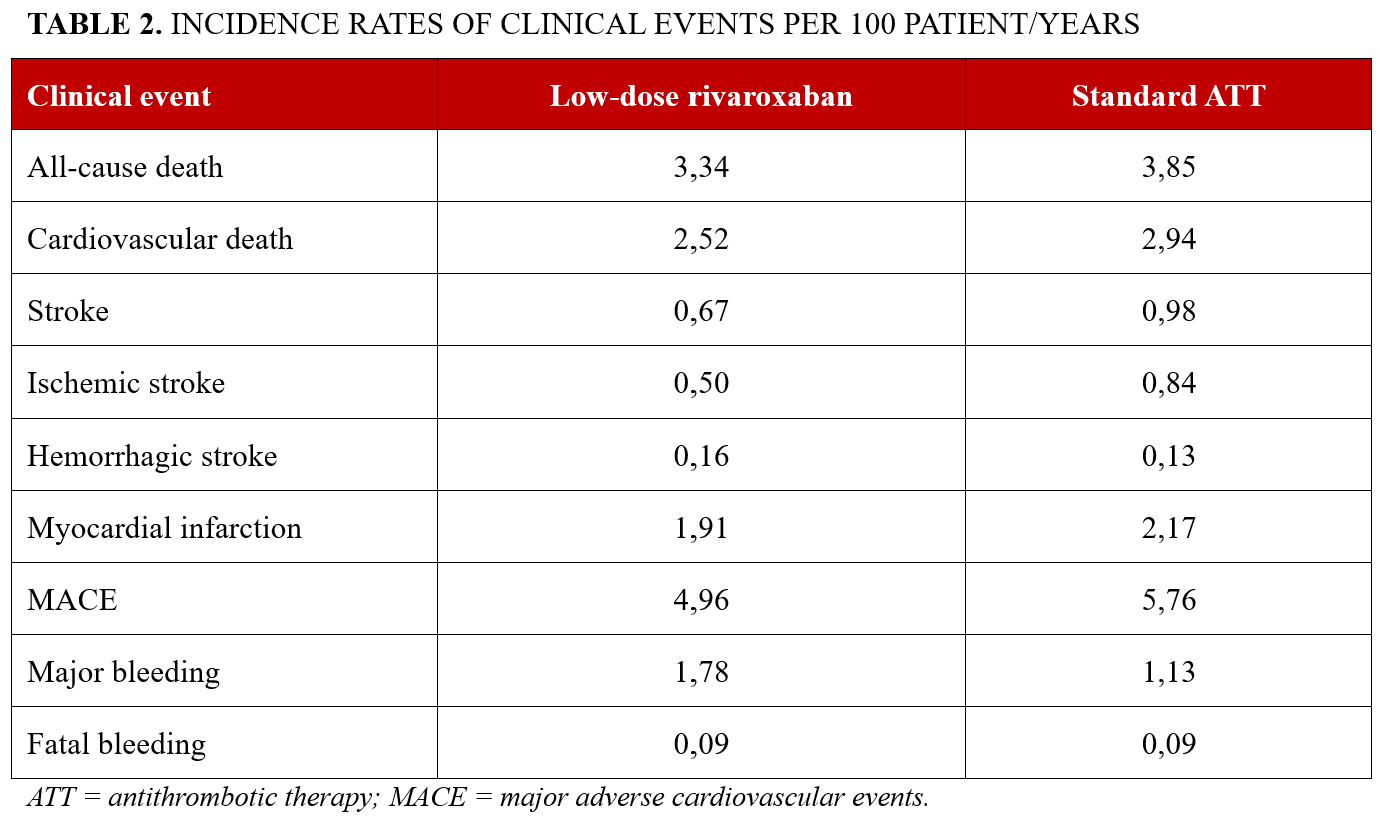
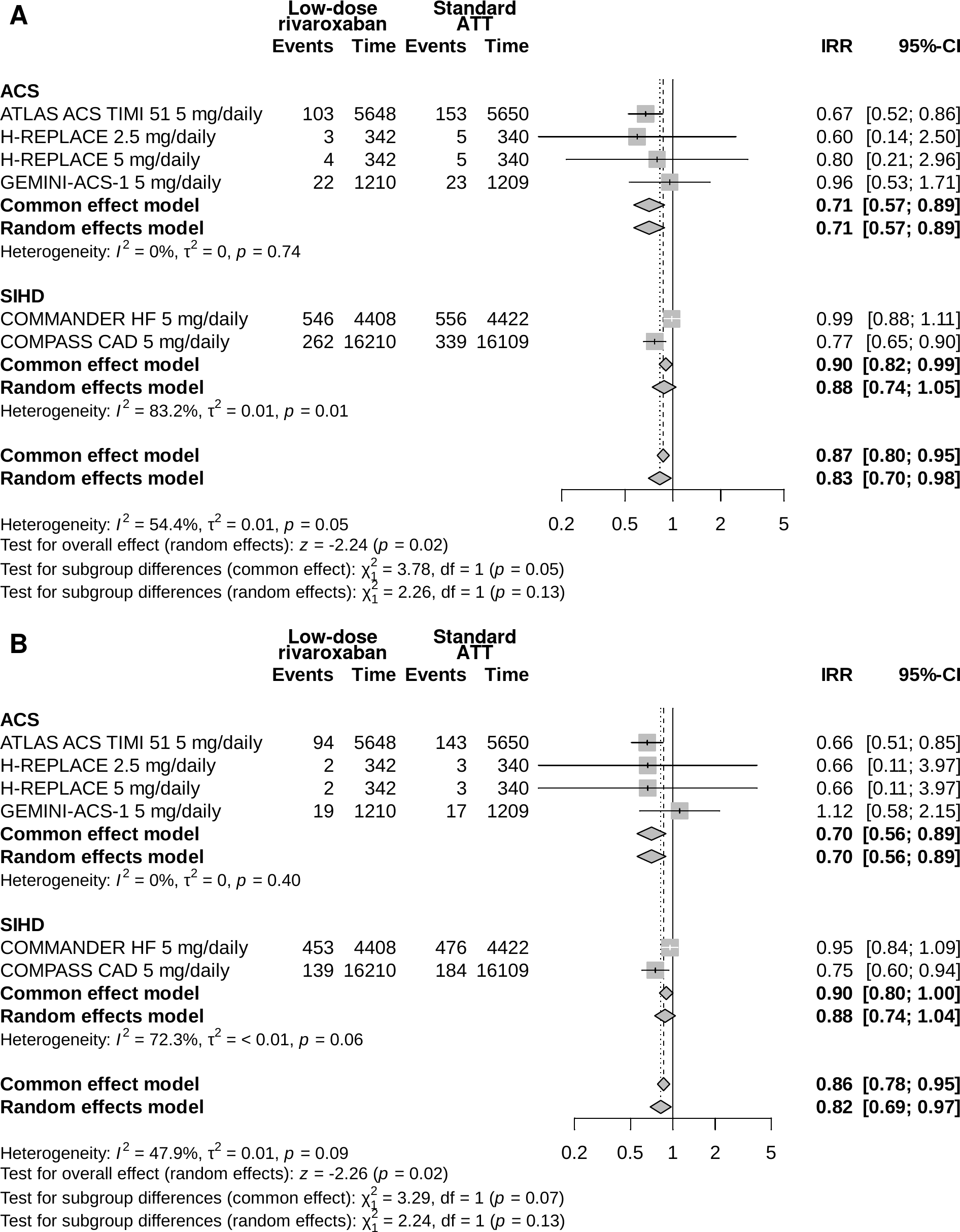
Among the 37 709 randomized patients, there were 2021 deaths, 1535 of which were cardiovascular (76%). Incidence rates of mortality and cardiovascular mortality per 100 patient/years in the 2 treatment groups are reported in Table 2. There were 940 deaths in patients treated with low-dose rivaroxaban vs 1081 in patients treated with standard ATT (IRR = 0.83; 95% CI, 0.70-0.98; P = .02) (Figure 1A). The NNT to avoid 1 death with low-dose rivaroxaban was 150. No significant interaction was apparent between treatment effect and clinical presentation (pinteraction=0.13). The significant reduction in all-cause mortality was driven by a significant reduction in cardiovascular mortality (IRR = 0.82; 95% CI, 0.69-0.97; P = .02), which was consistent across the spectrum of CAD (pinteraction=0.13; Figure 1B).
Stroke
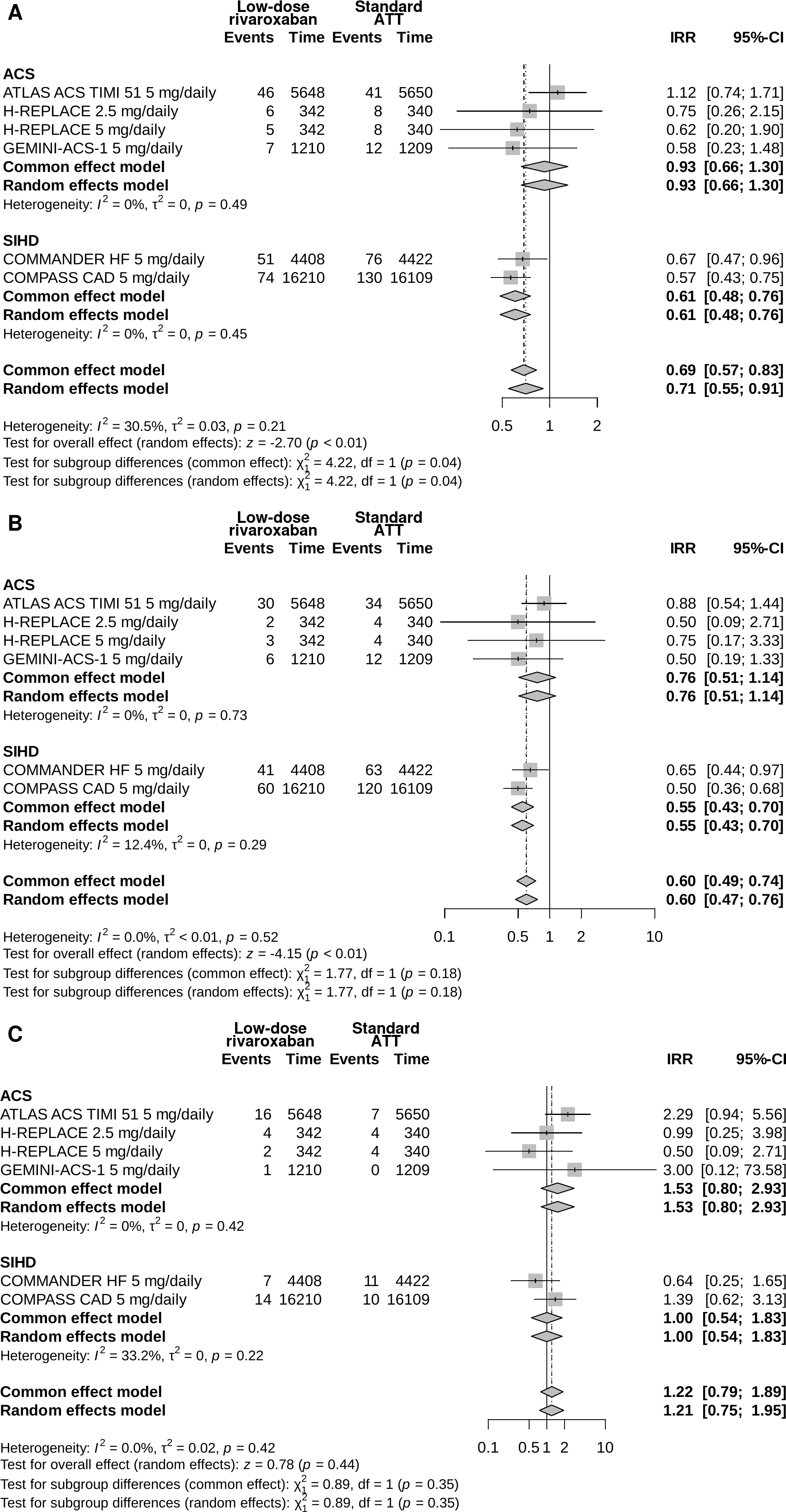
Among the 37 709 randomized patients, there were 464 strokes, 379 of which were ischemic (82%), 80 hemorrhagic (17%), and 5 undetermined (1%). Incidence rates of stroke per 100 patient/years in the 2 treatment groups are reported in Table 2. There were 189 strokes in patients treated with low-dose rivaroxaban vs 275 in patients treated with standard ATT (IRR = 0.71, 95% CI 0.55-0.91, P < .01) (Figure 2A). There was a significant interaction between treatment effect and clinical presentation (pinteraction= 0.04) such that rates of stroke were significantly lower with low-dose rivaroxaban compared with standard ATT in patients with stable ischemic heart disease, but not in those with ACS. The NNT to avoid 1 stroke with low-dose rivaroxaban was 324. The significant reduction in stroke was driven by a significant reduction in ischemic strokes (IRR = 0.69; 95% CI, 0.49-0.74; P < .01) (Figure 2B), not offset by a significant increase in hemorrhagic strokes (IRR = 1.22; 95% CI, 0.79-1.89; P = .44) (Figure 2C). The NNT to avoid 1 ischemic stroke with low-dose rivaroxaban was 294.
Additional analyses
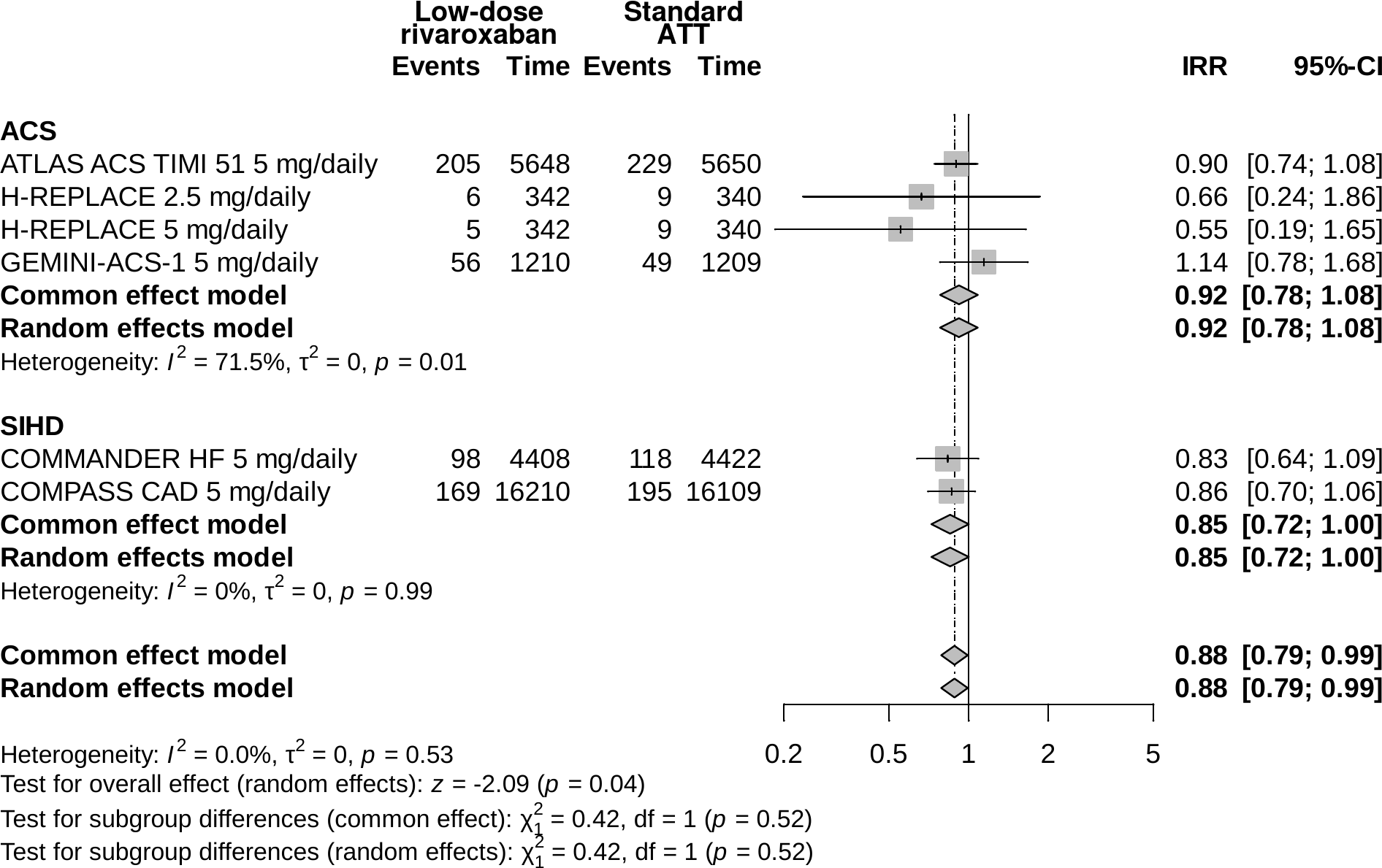
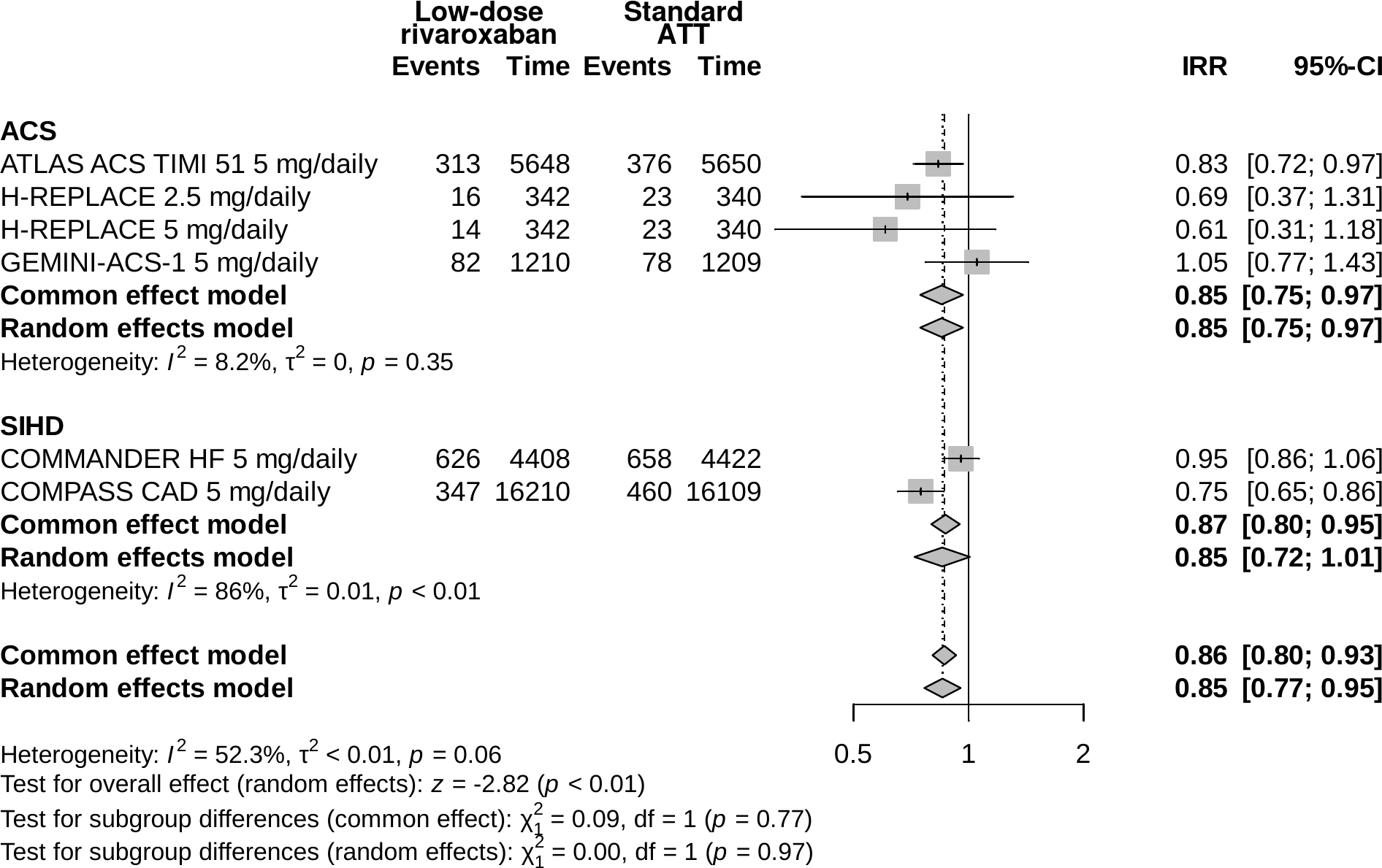
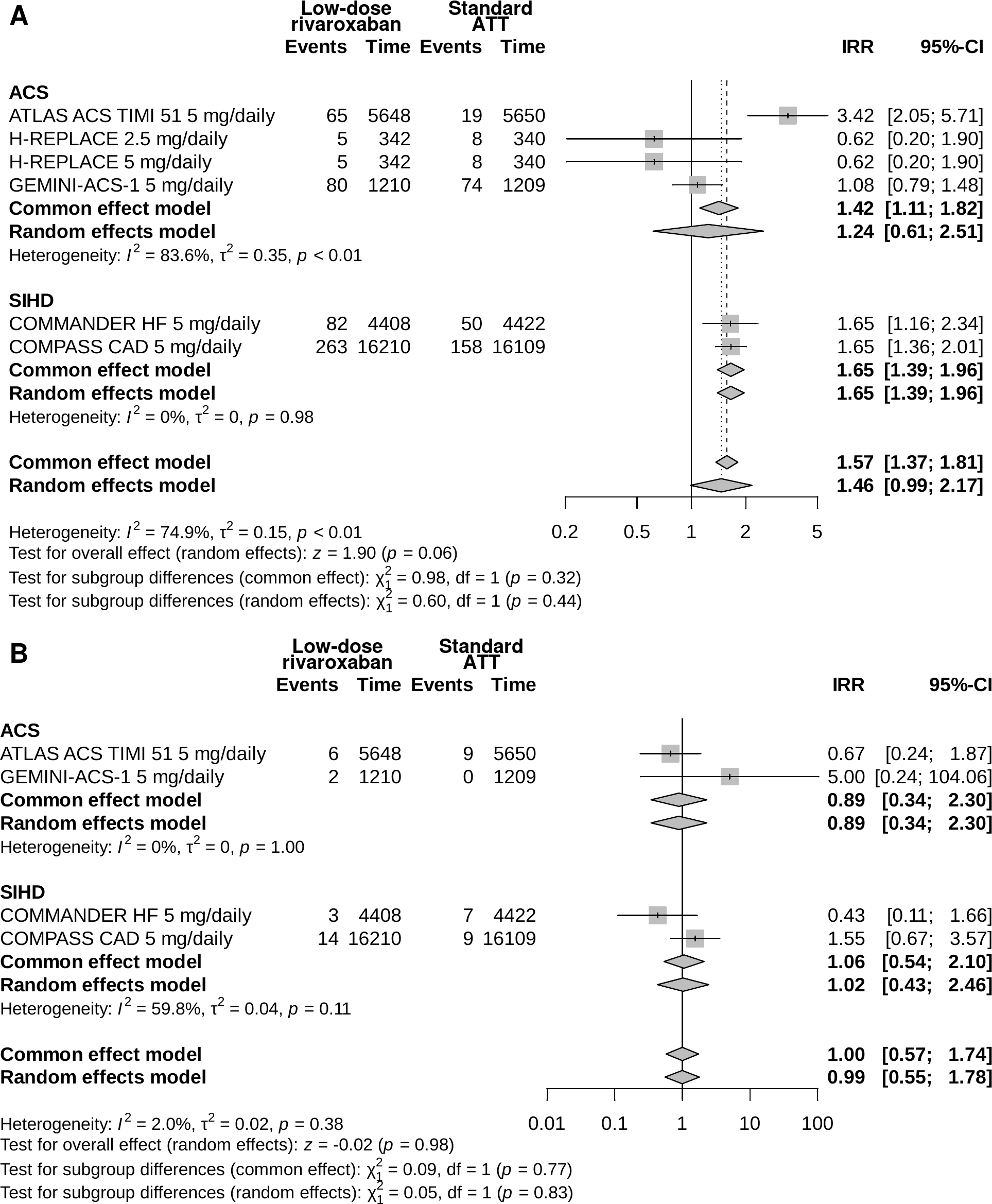
Compared with standard ATT, low-dose rivaroxaban was associated with significantly lower rates of MI (IRR = 0.88; 95% CI, 0.79-0.99; P = .04) (Figure 3) and MACE (IRR=0.85, 95% CI 0.77-0.95, P < .01) (Figure 4), but higher rates of major bleeding (IRR = 1.46; 95% CI, 0.99-2.17; P = .06; Figure 5A). The NNH to cause 1 major bleeding with low-dose rivaroxaban was 191. Fatal bleedings were similar between the 2 treatment groups (IRR = 1.00; 95% CI, 0.57-1.74; Figure 5B). The exclusion of each study one at a time from the pooled effect estimates did not alter the direction of treatment effect for all-cause mortality, although the precision of the point estimate was reduced when excluding ATLAS ACS TIMI 5118 and COMPASS CAD11 trials (Supplemental Figure 3). Of note, heterogeneity was completely resolved when removing the COMMANDER HF trial.20 Funnel plot inspection did not suggest publication bias (Egger’s test = 0.73) (Supplemental Figure 4). The PRISMA checklist is reported at the end of the Supplemental Material.
Discussion
This is the first meta-analysis of RCTs investigating the risk of mortality with low-dose rivaroxaban compared with standard ATT exclusively in patients with CAD. The main findings are that (1) low-dose rivaroxaban was associated with significantly lower rates of all-cause mortality, driven by a reduction of cardiovascular mortality; (2) there was a significant reduction in the risk of stroke with low-dose rivaroxaban driven by a significant reduction in ischemic stroke, not offset by an increased risk of hemorrhagic stroke; (3) there was a significant reduction of non-fatal MI and MACE, but an increase in major bleeding of borderline significance with low-dose rivaroxaban; (4) fatal bleeding were similar between treatment groups; and (5) heterogeneity in all-cause mortality across trials was entirely attributable to the COMMANDER-HF trial, suggesting that heart failure (HF)-related deaths may have diluted the treatment effect of low-dose rivaroxaban.
CAD is the leading cause of mortality in the western world, and ATT has long been a cornerstone of its management.22 Antiplatelet agents—particularly aspirin and P2Y12 inhibitors—have been the mainstay of treatment, with numerous trials exploring variation in potency, tailored strategies, and treatment durations for prognosis improvement.1,23,24 Despite these extensive efforts, no antiplatelet regimen has conclusively demonstrated a reduction in all-cause mortality. The benefit of antiplatelet therapy is in fact mainly related to a reduction in non-fatal MIs and stent thrombosis, but at the expense of an increased risk of bleeding. This underscores a critical limitation in the current paradigm of antithrombotic therapy for CAD: while reducing ischemic events, existing strategies have not translated into improved survival. Against this background, this is the first study showing a simultaneous reduction of both ischemic events and mortality associated with an antithrombotic regimen. The effect of low-dose rivaroxaban was consistent across the spectrum of CAD, suggesting a common pathophysiologic pathway for disease progression and fatal events in both patients with ACS and those with stable ischemic heart disease, and ultimately a common target for ATTs.
These results suggest that the full potential of ATT in patients with CAD lies not only in intensifying or prolonging platelet inhibition, but in targeting other effectors of atherothrombotic disease, redefining the strategy altogether. Thrombin is a key effector of coagulation, a potent mediator of platelet activation, endothelial dysfunction, and vascular inflammation, all of which contribute to recurrent ischemic events and ultimately mortality.25,26 Several studies have shown that thrombin generation plays a key role not only in acute coronary syndromes, but also in stable CAD, sustaining a prothrombotic and proinflammatory state.27,28 This persistent thrombin activity extending in the chronic phase may continue to stimulate platelet activation, vascular inflammation, and progression of coronary plaques. In this context, low-dose rivaroxaban may limit these processes more effectively than antiplatelet agents alone, potentially affecting the most prognostically relevant ischemic events significantly associated with mortality.
A key finding of our meta-analysis is that the reduction in mortality occurred despite an increase in major bleedings, which are established contributors to all-cause mortality.6 While the tradeoff between bleeding and ischemic events is a well-recognized challenge for any ATT, the ultimate clinical relevance of these 2 types of adverse events depends on their impact on mortality. Thus, net clinical benefit should not be merely judged by event counts alone, which may include less prognostically relevant events, but rather by the relative impact of ischemic vs bleeding events on life-threatening outcomes. Although we did not have individual patient data to determine event-related causes, it is likely that reduction in mortality with low-dose rivaroxaban was due to reduction in large MIs, fatal MIs, fatal strokes, sudden deaths, or other fatal thromboembolic events, not offset by an increase in major bleeding of similar prognostic value. Of note, although low-dose rivaroxaban increased major bleeding compared with standard ATT, fatal bleeding was similar between the 2 treatment groups, underscoring again the different prognostic value of various bleeding events.
Thus, despite the benefits in reducing all-cause mortality and stroke, major bleeding remains a major concern. In this context, factor XI/XIa inhibitors have emerged as a promising antithrombotic strategy with the potential to uncouple the antithrombotic efficacy from the bleeding risk. However, in the large LIBREXIA-ACS trial,29 the factor XI/XIa inhibitor milvexian failed to reduce ischemic events compared with placebo, with no significant increase in major bleeding. These findings highlight the challenge of translating the theoretical advantages of factor XI/XIa inhibition into improved clinical outcomes.
Patients with CAD often also have polyvascular disease, which may involve the cerebrovascular system, and they are at increased risk of atrial fibrillation.30 Together, these 2 conditions carry an increased risk of stroke, estimated at 1% to 2% among patients with CAD. Stroke is one of the most devastating complication affecting patients with CAD, leading to high rates of mortality, permanent disability and significant resource utilization for the health care system.31 Despite intensive investigation, antiplatelet agents have shown no effect in reducing stroke in patients with CAD, irrespective of their potency or duration.3,4,23 In contrast, some studies have reported lower rates of stroke with low-dose rivaroxaban compared with placebo, but they were underpowered for this clinical endpoint, leaving it unclear whether the finding reflected a true effect or was the play of chance.11 Other trials have reported similar results, but they included patients with HF, raising uncertainty about whether the observed benefit was specific to that patient population.20
With data from more than 35 000 patients, our meta-analysis had sufficient statistical power to demonstrate a significant reduction in stroke with low-dose rivaroxaban compared with standard ATT across the spectrum of CAD. The reduction in stroke with low-dose rivaroxaban was driven by a significant difference in ischemic stroke not offset by an increase in hemorrhagic stroke, and it was consistent across all trials. Once again, the pleiotropic effect of low-dose rivaroxaban affecting multiple targets including coagulation, platelet aggregation, and inflammation may be responsible for this observed benefit.
Despite the observed reduction in mortality and stroke, the uptake of low-dose rivaroxaban in clinical practice has remained limited among patients with CAD. This may reflect concerns regarding the bleeding risk, the need for careful patient selection, and the complexity of adding anticoagulation to established antiplatelet regimens. Furthermore, despite evidence of efficacy in ACS, rivaroxaban has not received US Food and Drug Administration approval for this indication, reflecting regulatory concerns regarding the completeness of trial data and the overall benefit-risk assessment.
As a study level-based meta-analysis, we were unable to examine the timing of the differences in survival between groups or identify patient subgroups that might particularly benefit (or be harmed) by low-dose rivaroxaban. Definitions of some clinical endpoints differed across trials, potentially introducing effect modifiers; however, our primary endpoint was all-cause mortality, which is not affected by these issues. Some endpoints were affected by moderate to severe heterogeneity. This may depend on the heterogeneity in definitions of clinical endpoints, differences in clinical presentation, and variability in treatments in the standard ATT group. However, there was no significant interaction between clinical presentation and treatment effect, suggesting a commonality of the rivaroxaban effect across the spectrum of CAD.
In addition, we identified the COMMANDER HF as the only source of heterogeneity for all-cause mortality; in sensitivity analysis, heterogeneity was completely resolved when removing that trial. COMMANDER HF included patients with CAD and congestive HF, and therefore the effect of low-dose rivaroxaban on mortality may have been diluted by deaths due to congestive HF. In addition, the main reason for heterogeneity across trials was the magnitude and not the direction of treatment effect, which was consistent across trials. Finally, although background antithrombotic regimens and control treatments varied across trials, all studies evaluated the incremental effect of adding low-dose rivaroxaban to the respective standard of care therapy. Therefore, the pooled estimate should be interpreted as the average relative effect of this treatment strategy across different clinical settings, rather than as the effect of a single standardized therapeutic regimen.
Conclusions
In patients with CAD, low-dose rivaroxaban significantly reduced all-cause mortality, cardiovascular mortality, MI, and stroke, at the expense of an increased risk of major bleeding. These findings suggest that the benefit of low-dose rivaroxaban is not merely a reflection of reduced ischemic event counts, but rather the consequence of targeting events with differential prognostic weight where the prevention of severe ischemic events potentially leading to mortality is not offset by the increased risk of major bleeding with similar prognostic value. This analysis may reframe the value of ATT, placing mortality benefit at the forefront of clinical decision-making.
Affiliations and Disclosures
Tullio Palmerini, MD, PhD1,2; Elena Nardi, MStat, PhD3; Matteo Lezzi, MD1,2; Antonio G. Bruno, MD, PhD1,2; Laura Lombardi, MD1,2; Gerald Chi, MD4; Nevio Taglieri, MD, PhD1,2; Gabriele Ghetti, MD, PhD1,2; Mateusz Orzalkiewicz, MD, PhD1,2; Francesco Saia, MD, PhD1,2; Mattia Galli, MD, PhD5,6; C. Michael Gibson, MD4
From the 1Interventional Cardiology Unit, Cardiac Thoracic and Vascular Department, IRCCS Azienda Ospedaliero-Universitaria di Bologna, Italy; 2Department of Medical and Surgical Sciences (DIMEC), Alma Mater Studiorum University of Bologna, Bologna, Italy; 3Epidemiology and Statistics, IRCCS Azienda Ospedaliero-Universitaria di Bologna; 4Baim Institute, Harvard Medical School, Boston, Massachusetts; 5Department of Medical-Surgical Sciences and Biotechnologies, Sapienza University of Rome, Latina, Italy; 6GVM Care & Research, Maria Cecilia Hospital, Cotignola, Italy.
Disclosures: The authors report no financial relationships or conflicts of interest regarding the content herein.
Address for correspondence: Tullio Palmerini, MD, Alma Mater Studiorum, University of Bologna, Policlinico S. Orsola, Via Massarenti 9, Bologna 40138, Italy. Email: tulliopalmerini@hotmail.com
References
1. Angiolillo DJ, Galli M, Collet JP, Kastrati A, O'Donoghue ML. Antiplatelet therapy after percutaneous coronary intervention. EuroIntervention. 2022;17(17):e1371-e1396. doi:10.4244/EIJ-D-21-00904
2. Steg PG, Bhatt DL, Wilson PW, et al; REACH Registry Investigators. One-year cardiovascular event rates in outpatients with atherothrombosis. JAMA. 2007;297(11):1197-1206. doi:10.1001/jama.297.11.1197
3. Wallentin L, Becker RC, Budaj A, et al; PLATO Investigators. Ticagrelor versus clopidogrel in patients with acute coronary syndromes. N Engl J Med. 2009;361(11):1045-1057. doi:10.1056/NEJMoa0904327
4. Wiviott SD, Braunwald E, McCabe CH, et al; TRITON-TIMI 38 Investigators. Prasugrel versus clopidogrel in patients with acute coronary syndromes. N Engl J Med. 2007;357(20):2001-2015. doi:10.1056/NEJMoa0706482
5. Palmerini T, Biondi-Zoccai G, Della Riva D, et al. Stent thrombosis with drug-eluting and bare-metal stents: evidence from a comprehensive network meta-analysis. Lancet. 2012;379(9824):1393-1402. doi:10.1016/S0140-6736(12)60324-9
6. Palmerini T, Bacchi Reggiani L, Della Riva D, et al. Bleeding-related deaths in relation to the duration of dual-antiplatelet therapy after coronary stenting. J Am Coll Cardiol. 2017;69(16):2011-2022. doi:10.1016/j.jacc.2017.02.029
7. Galli M, Capodanno D, Benenati S, et al. Efficacy and safety of dual-pathway inhibition in patients with cardiovascular disease: a meta-analysis of 49 802 patients from 7 randomized trials. Eur Heart J Cardiovasc Pharmacother. 2022;8(5):519-528. doi:10.1093/ehjcvp/pvab043
8. Galli M, Franchi F, Rollini F, et al. Platelet P2Y12 inhibiting therapy in adjunct to vascular dose of rivaroxaban or aspirin: a pharmacodynamic study of dual pathway inhibition vs. dual antiplatelet therapy. Eur Heart J Cardiovasc Pharmacother. 2022;8(7):728-737. doi:10.1093/ehjcvp/pvac022
9. Galli M, Franchi F, Rollini F, et al. Pharmacodynamic profiles of dual-pathway inhibition with or without clopidogrel versus dual antiplatelet therapy in patients with atherosclerotic disease. Thromb Haemost. 2022;122(8):1341-1351. doi:10.1055/a-1730-8725
10. Bonaca MP, Bauersachs RM, Anand SS, et al. rivaroxaban in peripheral artery disease after revascularization. N Engl J Med. 2020;382(21):1994-2004. doi:10.1056/NEJMoa2000052
11. Connolly SJ, Eikelboom JW, Bosch J, et al. COMPASS investigators. Rivaroxaban with or without aspirin in patients with stable coronary artery disease: an international, randomised, double-blind, placebo-controlled trial. Lancet. 2018;391(10117):205-218. doi:10.1016/S0140-6736(17)32458-3
12. Mega JL, Braunwald E, Mohanavelu S, et al; ATLAS ACS-TIMI 46 study group. Rivaroxaban versus placebo in patients with acute coronary syndromes (ATLAS ACS-TIMI 46): a randomised, double-blind, phase II trial. Lancet. 2009;374(9683):29-38. doi:10.1016/S0140-6736(09)60738-8
13. Okumura K, Akao M, Yoshida T, et al; ELDERCARE-AF Committees and Investigators. Low-dose edoxaban in very elderly patients with atrial fibrillation. N Engl J Med. 2020;383(18):1735-1745. doi:10.1056/NEJMoa2012883
14. Oldgren J, Budaj A, Granger CB, et al; RE-DEEM Investigators. Dabigatran vs. placebo in patients with acute coronary syndromes on dual antiplatelet therapy: a randomized, double-blind, phase II trial. Eur Heart J. 2011;32(22):2781-2789. doi:10.1093/eurheartj/ehr113
15. Sterne JAC, Savović J, Page MJ, et al. RoB 2: a revised tool for assessing risk of bias in randomised trials. BMJ. 2019;366:l4898. doi:10.1136/bmj.l4898
16. Liberati A, Altman DG, Tetzlaff J, et al. The PRISMA statement for reporting systematic reviews and meta-analyses of studies that evaluate healthcare interventions: explanation and elaboration. BMJ. 2009;339:b2700. doi:10.1136/bmj.b2700
17. Balduzzi S, Rücker G, Schwarzer G. How to perform a meta-analysis with R: a practical tutorial. Evid Based Ment Health. 2019;22(4):153-160. doi:10.1136/ebmental-2019-300117
18. Mega JL, Braunwald E, Wiviott SD, et al; ATLAS ACS 2–TIMI 51 Investigators. Rivaroxaban in patients with a recent acute coronary syndrome. N Engl J Med. 2012;366(1):9-19. doi:10.1056/NEJMoa1112277
19. Ohman EM, Roe MT, Steg PG, et al. Clinically significant bleeding with low-dose rivaroxaban versus aspirin, in addition to P2Y12 inhibition, in acute coronary syndromes (GEMINI-ACS-1): a double-blind, multicentre, randomised trial. Lancet. 2017;389(10081):1799-1808. doi:10.1016/S0140-6736(17)30751-1
20. Zannad F, Anker SD, Byra WM, et al; COMMANDER HF Investigators. Rivaroxaban in patients with heart failure, sinus rhythm, and coronary disease. N Engl J Med. 2018;379(14):1332-1342. doi:10.1056/NEJMoa1808848
21. Zhou S, Xiao Y, Zhou C, et al; H-REPLACE Investigators. Effect of rivaroxaban vs enoxaparin on major cardiac adverse events and bleeding risk in the acute phase of acute coronary syndrome: the H-REPLACE randomized equivalence and noninferiority trial. JAMA Netw Open. 2023;6(2):e2255709. doi:10.1001/jamanetworkopen.2022.55709
22. Brown JR, O'Connor GT. Coronary heart disease and prevention in the United States. N Engl J Med. 2010;362(23):2150-2153. doi:10.1056/NEJMp1003880
23. Palmerini T, Benedetto U, Bacchi-Reggiani L, et al. Mortality in patients treated with extended duration dual antiplatelet therapy after drug-eluting stent implantation: a pairwise and Bayesian network meta-analysis of randomised trials. Lancet. 2015;385(9985):2371-2382. doi:10.1016/S0140-6736(15)60263-X
24. Palmerini T, Sangiorgi D, Valgimigli M, et al. Short- versus long-term dual antiplatelet therapy after drug-eluting stent implantation: an individual patient data pairwise and network meta-analysis. J Am Coll Cardiol. 2015;65(11):1092-1102. doi:10.1016/j.jacc.2014.12.046
25. Capodanno D, Bhatt DL, Eikelboom JW, et al. Dual-pathway inhibition for secondary and tertiary antithrombotic prevention in cardiovascular disease. Nat Rev Cardiol. 2020;17(4):242-257. doi:10.1038/s41569-019-0314-y
26. Galli M, Franchi F, Rollini F, et al. Dual pathway inhibition in patients with atherosclerotic disease: pharmacodynamic considerations and clinical implications. Expert Rev Clin Pharmacol. 2023;16(1):27-38. doi:10.1080/17512433.2023.2154651
27. Merlini PA, Ardissino D, Bauer KA, et al. Persistent thrombin generation during heparin therapy in patients with acute coronary syndromes. Arterioscler Thromb Vasc Biol. 1997;17(7):1325-1330. doi:10.1161/01.atv.17.7.1325
28. Valente-Acosta B, Baños-González MA, Peña-Duque MA, et al. Association between stable coronary artery disease and in vivo thrombin generation. Cardiol Res Pract. 2016;2016:5149825. doi:10.1155/2016/5149825
29. Gibson CM, Steg PG, Bahit MC, et al; LIBREXIA ACS Committees and Investigators. Milvexian with antiplatelet therapy after acute coronary syndrome event. N Engl J Med. 2026;395(16):1575-1584. doi:10.1056/NEJMoa2608717
30. Przewłocki T, Kabłak-Ziembicka A, Kozanecki A, et al. Polyvascular extracoronary atherosclerotic disease in patients with coronary artery disease. Kardiol Pol. 2009;67(8A):978-984.
31. Palmerini T, Biondi-Zoccai G, Reggiani LB, et al. Risk of stroke with coronary artery bypass graft surgery compared with percutaneous coronary intervention. J Am Coll Cardiol. 2012;60(9):798-805. doi:10.1016/j.jacc.2011.10.912