Engaging Patients and Care Partners in Tardive Dyskinesia Assessment
Because many patients with tardive dyskinesia (TD) lack insight into their abnormal movements, care partners may offer valuable information to guide initial therapeutic approaches and monitor progress over time.
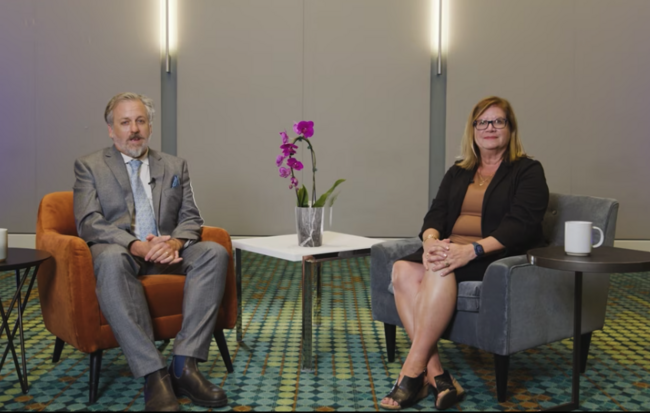
In this video, Psych Congress PA Institute Co-Chair Kevin Williams, MS, MPAS, PA-C, explores how clinicians may incorporate the caregiver perspective into TD treatment, particularly when patients are unaware of their symptoms. Williams offers practical strategies for improving patient awareness of abnormal movements and explains how input from care partners can support ongoing assessment. He also underscores the importance of keeping a patient’s perspective and preferences at the center of the care plan.
For more expert insights, visit the Tardive Dyskinesia Excellence Forum.
Key Clinical Summary:
- Patients may not recognize abnormal movements or may attribute them to other conditions, making targeted questions about movement patterns and their relationship to medications important for identifying potential TD or other movement disorders.
- Encouraging patients to observe their movements between visits and seek input from loved ones may increase awareness of movements they had not previously recognized.
- With patient permission, care partners can provide observations of movements outside the clinical setting while the patient’s experiences and treatment preferences remain central to assessment and care decisions.
Read the Transcript:
Kevin Williams, MS, MPAS, PA-C: Hello, my name is Kevin Williams. I'm a psychiatric PA located in Tampa, Florida, and serve on the Steering Committee for Psych Congress. I’m also the CEO and lead clinician for OnPoint Behavioral Health.
Psych Congress Network: How do you approach conversations with patients who might lack insight into their movements or are hesitant to attribute symptoms to their medications?
Williams: When I'm discussing with a patient what I perceive potentially as movements that I might be seeing as a clinician, there’s a way to ask questions to my patient because sometimes they may not even recognize or identify these abnormal movements to be related to a condition.
I've heard my patients who are tapping their foot call that foot-tapping their “anxiety”. I’ve found from my experience that patients are really attempting to associate these movements with what they know.
For the particular patient that shared that the foot tapping was related to their anxiety, I had to ask questions like, “What does it do when we prescribe medication for anxiety? It's still there. What happens when you don't take your anxiety medications? Does it get worse? No, it's still there.”
So being able to, one, help patients identify that the potential movements could be related to TD or some other form of movement disorder, but also in particular when they're not able to identify it.
There are times that I'll identify a patient's movements that they don't necessarily recognize. I feel it's important that they have a level of self-awareness. We’ll leave the visit with a homework assignment of, “Here is medication that we can use, but also I want you to be more aware of [the movements]. I want you to talk to your loved ones or if they're living alone, I want you to spend more time this month seeing if you can pick up or recognize the movement.”
I've seen an overwhelmingly positive response from patients where I'm identifying it for them and their ability to see it for themselves—they appreciate and value their journey of treatment with tardive dyskinesia and those dyskinetic symptoms that they have.
PCN: What role should caregivers play in both the identification and ongoing assessment of TD? How can clinicians better incorporate their observations into care?
Williams: When I consider my patients’ loved ones, or I consider them to be care partners, in the role that they play, they are the eyes and ears when the patient's not in the office.
But I always share with my patients that the care partner and myself, we're on the team, but that the patient remains the “quarterback” or the center of care. They help us to drive the direction of care based off of their preferences and what we as a team collectively are able to see.
Utilizing care partners' observations and their understanding and really their reports is so key to the visit. But I always allow for those observations to be received secondary to what my patient is expressing.
My visits generally start out with my patient first, and then I'll turn to the care partner and ask for their input second, because I always want to maintain true to the idea that my patient is my patient, and the care partner is an ally that's bringing in additional observations to help me as the clinician who's also on the team to drive outcomes in care.
Kevin N. Williams MS, MPAS, PA-C, is the CEO and Lead Clinician at OnPoint Behavioral Health. He is a Physician Associate that specializes in Psychiatry and has a mission to provide care that is experienced, holistic, and compassionate. He holds two master degrees in Interdisciplinary Medical Sciences and Physician Assistant Studies from the University of South Florida and South University respectively. He has gained experience treating children, adolescents, and adults for the past 11 years in the areas of inpatient, outpatient, and long-term care. Kevin has 10 years of experience teaching as an Adjunct Professor at several institutions around the country. Kevin also has over 10 years in executive leadership experience and maintains a passion of educating others to lead with effective influence.
© 2026 HMP Global. All Rights Reserved.
Any views and opinions expressed above are those of the author(s) and do not necessarily reflect the views, policy, or position of the Psych Congress Network or HMP Global, their employees, and affiliates.