Incorporating Integrative Approaches Into Psychiatric Care
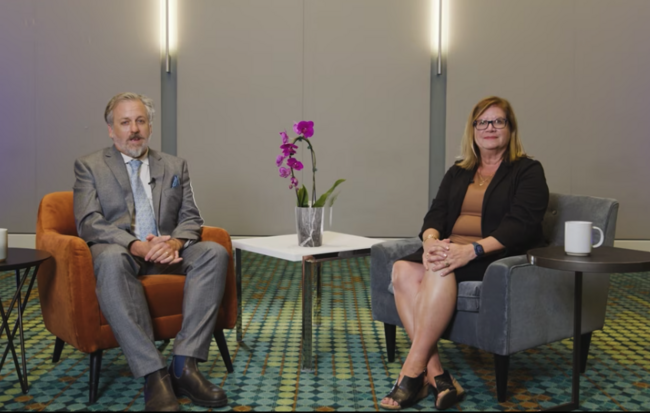
In this video, James Greenblatt, MD, Psych Congress steering committee member and founder and medical director of Psychiatry Redefined, discusses where lifestyle, nutritional, and functional medicine strategies may help address gaps in conventional psychiatric care. Greenblatt first highlights the value of integrative psychiatry for patients experiencing treatment-resistant illness. For clinicians looking to incorporate these approaches into practice, he also shares practical recommendations for building evidence-based knowledge, assessing nutritional deficiencies, and thoughtfully integrating nutritional interventions into individualized patient care.

Key Takeaways for Clinical Practice:
- Integrative psychiatry combines lifestyle strategies, including sleep, exercise, and diet, with conventional psychiatric care and may be particularly valuable for patients who remain symptomatic despite multiple medication trials and psychotherapy.
- Integrative psychiatry implementation can begin with focused education on vitamin D, magnesium, vitamin B12, and folate, emphasizing evidence-based learning from reputable sources rather than social media or other nonclinical resources.
- Clinicians should understand how to evaluate nutritional deficiencies through appropriate testing before recommending supplements and integrate those findings into individualized patient care.
Read the Transcript:
James Greenblatt, MD: My name is Dr James Greenblatt, board-certified child and adult psychiatrist. I've been practicing psychiatry for 35 years.
My career has spanned every aspect of psychiatry, inpatient, residential and outpatient. I've specialized in the treatment of eating disorders. and bridging the gap with clinicians on how to use integrative and functional medicine for psychiatry.
Psych Congress Network: What are some of the most common clinical scenarios where you find that a conventional psychiatric approach alone may not really address a patient's needs and integrative strategies can help with those gaps?
Greenblatt: I think integrative strategies in psychiatry could be utilized for every patient that walks in our offices. We're familiar with lifestyle modifications—sleep, exercise, diet—and integrative psychiatry just embraces all those modalities to improve patient outcomes. The research is extensive and many of us realize it's common sense.
What is particularly important is in our treatment refractory patients. Those patients that don't respond to multiple medication trials or multiple attempts at psychotherapy. For those individuals, as we look deeper at nutritional deficiencies and genetic vulnerabilities, we can see dramatic improvements in outcomes.
Again, every patient can benefit from improving diet, understanding sleep hygiene, the role of exercise. But many of our patients who are not responsive to our current models of symptomatic-based medication management can often dramatically respond to integrative and functional approaches to psychiatry.
PCN: For clinicians who are interested in incorporating integrative approaches but feel constrained by limited training, where would you recommend?
Greenblatt: Where do you get started? I think the information on nutrition now and health and lifestyle is a bit overwhelming, and, sometimes, clinicians have shared with me, embarrassing when their patients have done a lot more research and know more about a nutritional supplement than they do.
It's imperative that you get information from reputable sources. Social media, even AI and Google, have limited clinical experience with nutritional supplements.
My recommendation is to pick a couple of micronutrients that have profound implications for mental health.
Understand everything there is to know about vitamin D. It's a rate-limiting factor in serotonin synthesis with research demonstrating relationship between depression, anxiety, and suicide risk. Understand vitamin D. Understand magnesium. Understand vitamin B12, folate, and those are the places where you need to start.
There are educational programs. My educational platform, Psychiatry Redefined, offers webinars and courses and a year-long fellowship for those interested in more mentoring and supervision in looking at integrative and functional medicine for psychiatry.
The field can feel overwhelming and many individuals just kind of give up because they don't know where to start.
And then others I've spoken to just kind of dabble and they just add a supplement they read about.
I think it's best that you start with learning 3 or 4 basic nutrients, read everything there is to know about it, take courses and be able to utilize that in your practice.
And whenever I talk about nutritional supplements, it's just not simply handing out nutritional supplements to patients. It's understanding who needs them, which means how do you test for them? What is the test for B12 and vitamin D and zinc and magnesium and folate?
Understand the nutritional testing and understand a path towards integrating this into your practice.
Thank you for joining me. When we talk about nutrition and brain function, the most important thing that I've learned in my career is that everyone is different. Not everyone needs the same micronutrients. That's why understanding testing is critical to utilize. this augmentation strategy in your clinical practice.
Psych Congress is committed to helping clinicians understand the role of integrative and functional medicine. There'll be additional seminars and conferences incorporated into many of the Psych Congress events. Thank you.
A pioneer in the field of functional and integrative medicine, board-certified child and adult psychiatrist, James M. Greenblatt, MD, has treated patients since 1988. After receiving his medical degree and completing his psychiatry residency at George Washington University, Dr Greenblatt completed a fellowship in child and adolescent psychiatry at Johns Hopkins Medical School.
Dr Greenblatt has lectured internationally on the scientific evidence for nutritional interventions in psychiatry and mental illness. He is the author of several books including Finally Focused: The Breakthrough Natural Treatment Plan for ADHD, Finally Hopeful, and the upcoming book, The Lithium Revolution.
He is the founder of Psychiatry Redefined, an educational platform dedicated to the transformation of psychiatry, which offers online courses, educational webinars, and fellowships for professionals. He is also the founder of Finally Living, a precision functional psychiatry clinic for children and adults.
© 2026 HMP Global. All Rights Reserved.
Any views and opinions expressed above are those of the author(s) and do not necessarily reflect the views, policy, or position of the Psych Congress Network or HMP Global, their employees, and affiliates.