1.1 DCBs for De Novo Coronary Lesions: Which Lesions and Is the Provisional Approach to PCI Back?
Problem Presenter: Mitul Patel
Problem Presenter: Mitul Patel
These proceedings summarize the educational activity of the 18th Biennial Meeting of the International Andreas Gruentzig Society held January 27 to 30, 2026, in Puerto Ayora, Santa Cruz, Ecuador.
Faculty Disclosures Sponsors
2026 IAGS Summary Document
Statement of problem or issue
Percutaneous coronary interventions (PCI) began with balloon catheters. Stents were developed later, primarily to treat the problems of dissections, elastic recoil, and abrupt closure of the vessel. The original stents were made of bare metal with no coating, and while they helped solve the problems of balloon angioplasty, they too were associated with several problems. These included neointimal proliferation, with angiographic and clinical restenosis rates 10%-30%. Drug-eluting coatings were then added to the bare metal stents, thereby creating the drug-eluting stents (DES), and this helped reduce but not completely eliminate neointimal proliferation and restenosis. The success of drug elution has now led us back to the concept of a drug-coated balloon (DCB) that accomplishes dilatation while at the same time depositing the antiproliferative drug agent at the treatment site. This is the minimalist “leave nothing behind” approach.
Gaps in current knowledge
For certain lesions and for specific complications, DES will likely always be necessary. The question is whether noncomplex lesions can be adequately treated as a broad approach with DCBs, using a provisional stenting strategy should complications arise. This was tested in a large-scale randomized clinical trial, the SELUTION De Novo trial (NCT04859985), with over 3,200 patients enrolled, as reported at the TCT conference last year.[1,2] Results of this non-inferiority trial showed that a DCB strategy was not inferior to a standard DES strategy. The primary endpoint of target vessel failure (TVF) at 1 year was 5.3% in the DCB group versus 4.4% in the DES group (P=.02 for non-inferiority). While encouraging, the SELUTION De Novo trial excluded patients with STEMI, CTO, ISR, left main lesions, and surgical grafts, all groups for which dedicated trials will be required.
Possible solutions or future directions
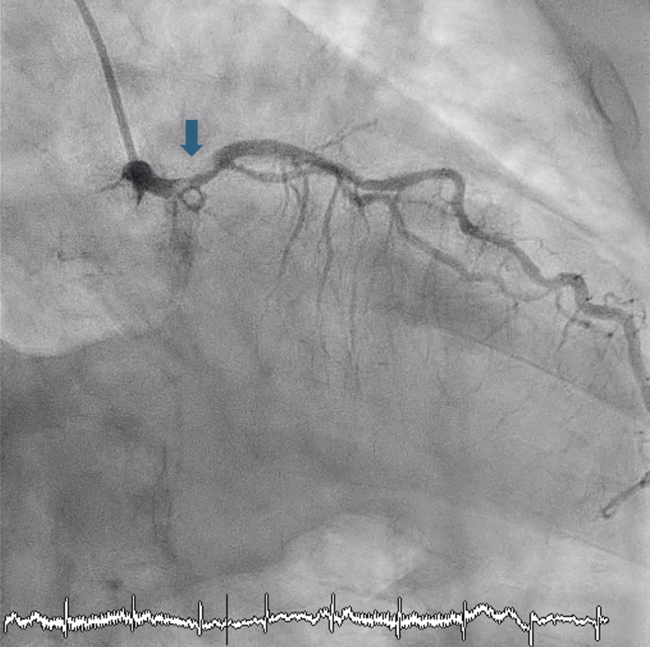
The 5-year results of the SELUTION trial are being collected and will be published. Additionally, there are other clinical trials of DCBs currently underway. An important one is the MAGICAL SV trial, which is testing the MagicTouch sirolimus-coated balloon versus DES in patients with target coronary lesions in small vessels (<2.75 mm). Finally, the provisional approach to stent deployment in PCI clearly is back, in fact, it never really left. This provisional stent question is especially critical in bifurcation PCI with complex anatomies, for example, Medina 1,1,1 with a sidebranch >2.5mm and >50% stenosis. Could DCBs have a role here in treatment of the sidebranch?
References
- Sirolimus-coated balloon meets mark in de novo lesions and ISR: SELUTION. Available online: https://www.tctmd.com/news/sirolimus-coated-balloon-meets-mark-de-novo-lesions-and-isr-selution (accessed on 29 November 2025).
- Gherasie F-A, et al. Paclitaxel- and sirolimus-coated balloons versus drug-eluting stents in coronary artery disease: A comprehensive narrative review. Life. 2026;16(1):63. DOI 10.3390/life16010063.
© 2026 HMP Global. All Rights Reserved.
Any views and opinions expressed are those of the author(s) and/or participants and do not necessarily reflect the views, policy, or position of the Journal of Invasive Cardiology or HMP Global, their employees, and affiliates.