SCAI Algorithm: In Need of a Refresh?
© 2026 HMP Global. All Rights Reserved.
Any views and opinions expressed are those of the author(s) and/or participants and do not necessarily reflect the views, policy, or position of the Journal of Invasive Cardiology or HMP Global, their employees, and affiliates.
The Journal of Invasive Cardiology speaks with Mitul P. Patel, MD, coauthor of the “Society for Cardiovascular Angiography & Interventions (SCAI) Expert Consensus on Management of Calcified Coronary Lesions Requiring Intervention.”
As an author of the SCAI Expert Consensus Algorithm, give us some background on why it was a needed addition to the discussion on treating coronary calcium, and what data impacted the creation of the algorithm?
The motivation for creating a coronary calcium algorithm was driven by the ever-increasing prevalence of coronary calcification we, as operators, are encountering in the cardiac catheterization lab. With the aging population and higher incidence of diabetes and chronic kidney disease, along with data clearly demonstrating suboptimal major adverse cardiovascular events outcomes for calcified coronary lesions, a group of us felt the need to provide evidence-based guidelines to manage coronary calcium during percutaneous coronary intervention (PCI). The addition of novel calcium modification tools such as intravascular lithotripsy (IVL) was also a driving force to develop an algorithm. When there are new tools that come to the forefront, we feel like we need to guide our operators on where they fit into the cath lab workflow for the management of coronary calcification.
Those were the major motivations behind coming up with an algorithm.
The other major motivation was to convince operators to incorporate intravascular imaging (IVI) into their workflow to optimize outcomes with percutaneous coronary revascularization, and I believe that's kind of a central theme to the algorithm that we have come up with.
What recent data would drive updates to the algorithm?
When we came up with the algorithm, it wasn't by any means meant to be etched in stone, like “this is the law of the land in terms of coronary calcification, and you should not veer away.” It was more of (1) a guideline and (2) meant to be adapted over time as new technology comes to the forefront.
More recently, the ShortCUT trial was presented this past year at Transcatheter Cardiovascular Therapeutics (TCT), which suggested that cutting balloon angioplasty may play a bigger role than we felt it had for coronary calcification; same with the VICTORY trial in terms of ultra-high pressure balloon angioplasty. Now, based on the results of those trials, I don't feel like the algorithm would need to be significantly changed, as both of those were considered specialty balloons and are in the algorithm as it stands. So, I'm not sure that a lot needs to be changed just yet.
That being said, we will soon be enlightened with data from the FORWARD CAD study, which is evaluating the efficacy and safety of the Javelin catheter (Shockwave Medical), and this may necessitate altering the algorithm to include a role for that particular device.
What devices or device changes have been launched since the inception of the SCAI Expert Consensus Algorithm that could prompt updates?
I think we'll see with the advent of newer, more deliverable IVL therapies, including improvements on the existing technology as we’ve seen with the C2 Aero catheter from Shockwave, as well as the aforementioned Javelin catheter. In situations where we can’t get an imaging catheter to cross a calcified lesion, we may be able to use these more deliverable devices to modify calcium prior to imaging and ultimate treatment. Additionally, competing devices will soon enter the market, which may allow for the treatment of longer lesions and suggest changes to the algorithm.
I don’t foresee anything new on the atherectomy front, however. There's drug-coated balloon (DCB) technology that's coming, though I'm not sure that it’s going to have a huge role, especially in terms of severe coronary calcification; it's difficult to get the drugs to penetrate through a lot of the calcification.
However, if we are able to show that [DCBs] have benefit in this space, then maybe we find a place in the algorithm to include DCB technology. That doesn't specifically address calcium modification, but, as a final treatment, that's something that we would certainly welcome if it's shown to be beneficial. But I don't foresee that in the near future.
What do you expect the future algorithm to look like, and why?
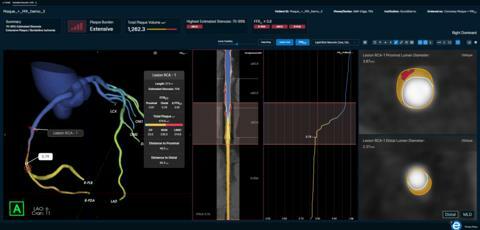
I think it will still be centered heavily around IVI, because that's the best way to guide what we do. I will say—and maybe this goes back to the question on technology and advancements—I think that coronary computed tomography (CT) scanning technology has improved significantly, and having pre-cath lab CT imaging, especially high-quality contemporary CT imaging, may certainly guide how we approach coronary revascularization. In other words, we may be armed with the information of where the calcium is, how dense the calcium is, how long of a calcified segment we are dealing with, and that may help inform us as to how we are going to approach revascularization from a toolbox perspective. Perhaps a short, calcified lesion noted on a pre-PCI CT angiography would lead us to upfront Javelin use, whereas a long, calcified lesion may have us prepared to employ atherectomy.
That technology is only going to get better, and it will only help improve our strategies. I could foresee CT coronary imaging as another addition to the algorithm; it would obviously be part of the preoperative or preprocedural workup, but having the results of that could really affect how we manage the patient. So, I see that in the near future.
The transcript has been lightly edited for clarity.