Vascular Intervention: BIOSOLVE-II Trial Establishes Safety and Clinical Performance of World`s First Clinically Proven Magnesium Bioresorbable Scaffold
BIOTRONIK Magnesium Scaffold Demonstrates Exceptional Safety, with No Scaffold Thrombosis at Six Months
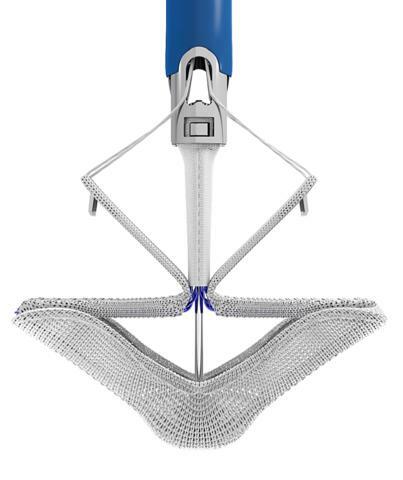
October 13, 2015 -- BIOTRONIK, a manufacturer of cardio- and endovascular medical technology, has announced results from the BIOSOLVE-II trial investigating the safety and clinical performance of the world’s first clinically proven magnesium-based bioresorbable scaffold at TCT 2015. The bioresorbable scaffold met its primary angiographic endpoint and demonstrated an outstanding safety profile. The announcement of clinical data from BIOSOLVE-II will be accompanied by publication in The Lancet.
"The results of BIOSOLVE-II confirm that the BIOTRONIK Magnesium Scaffold is both a safe and effective option for treating coronary artery disease (CAD), and establish it as the first clinically-proven magnesium-based bioresorbable scaffold," commented principal investigator of the study Dr. Michael Haude of the Lukaskrankenhaus, Neuss, Germany. "The device’s favorable safety profile, as demonstrated by the lack of any scaffold thrombosis (ST) at six months from implantation, was especially remarkable."
BIOSOLVE-II is a prospective, multi-center, first-in-man trial evaluating the safety and clinical performance of the BIOTRONIK Magnesium Scaffold; 123 patients were enrolled in Germany, Belgium, Denmark, the Netherlands, Switzerland, Spain, Brazil and Singapore. The trial’s primary endpoint was in-segment late lumen loss (LLL) at six months; a LLL of 0.27 ± 0.37 mm was associated with the device. Additionally, a low rate of target lesion failure (3.3%) and a very low rate of myocardial infarction (0.8%) were observed.
The results of BIOSOLVE-II will be used to obtain CE approval for the device.
"The BIOTRONIK Magnesium Scaffold shows advantages over synthetic polymer-based scaffolds as it can be inflated in a single step. It is based on a natural element widely present in the human body, and the magnesium-based properties promote a faster and simpler implantation procedure," commented Dr. Haude. "Additionally, the magnesium is absorbed within 12 months, faster than polymer-based bioresorbable scaffolds, while vasomotion is observed at 6 months. I look forward to this device attaining CE mark, so I can use it in my patients also outside of trials."