Why Early Augmentation Conversations Matter in MDD
In this podcast, Psych Congress Steering Committee Member Saundra Jain, MA, PsyD, LPC, moderates a Q&A session on major depressive disorder treatment (MDD) during the July Psych Congress Regional Online Series.
Expert Psych Congress faculty discuss how to respond when antidepressant treatment produces improvement without full remission in MDD; explore when to optimize, augment, or switch treatment; how side effects and patient preferences can guide decisions; and why augmentation should be introduced early. Listeners will also hear practical perspectives on shared decision-making, psychotherapy, wellness strategies, and screening for residual anhedonia, suicidal ideation, anxious distress, and emotional blunting symptoms.
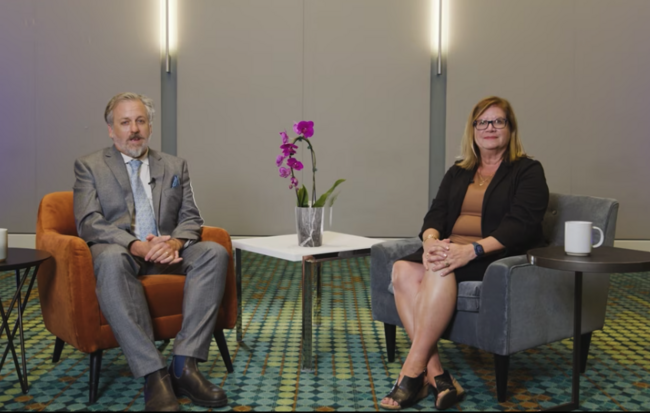
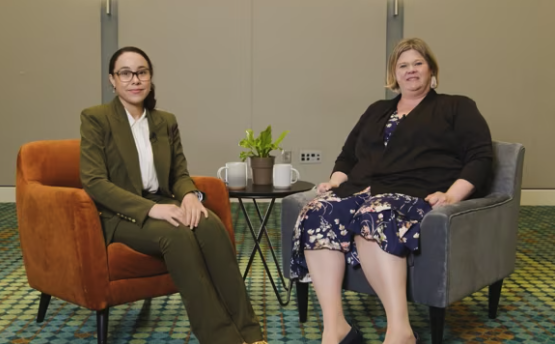
This Q&A panel features Brittany Albright, MD, MPH, Julie Carbray, PhD, PMHNP-BC, FAAN, Philip Gehrman, PhD, CBSM, FAAN, and Kevin Williams, MS, MPAS, PA-C.
Don't miss the second installment of this podcast series! Listen here: Balancing Efficacy and Tolerability in MDD Augmentation.
Key Takeaways for Clinical Practice
- MDD with partial antidepressant response should prompt ongoing assessment of remission goals, side effects, and patient experience rather than reliance on a fixed treatment timeline.
- After 6 weeks or more on a selective serotonin reuptake inhibitor (SSRI) or serotonin and norepinephrine reuptake inhibitor (SNRI), side effects may warrant a medication change, while partial benefit without remission may support augmentation.
- Adjunctive atypical antipsychotics, psychotherapy, and wellness strategies were discussed as options, alongside screening for residual anhedonia, suicidal ideation, anxious distress, and antidepressant-associated emotional blunting.
Read the Transcript
Saundra Jain, MA, PsyD, LPC: Well, hello everyone and welcome. I hope you're enjoying day two of this Psych Congress Regional Series as much as we all are. So glad that you've joined me and my colleagues for this afternoon's Q&A discussion. So good to see you, Julie, Brittany, Phil, Kevin, everybody coming in from different places. Welcome.
I'm just so excited about this conversation. We had some great presentations, and I know the Q&A is going to be rich.
Let's go back to the MDD talk. Kevin, I want to ask you this question because yesterday for our attendees who were here yesterday during Q&A, we had this really interesting conversation about being stuck as a prescriber, as the prescribing clinician with the medicine and just sticking with the medicine beyond—I was going to say the point of reason, but that might be seen as too harsh—But you know what I mean? We just get stuck, and this question kind of speaks to that.
So, when you see only a partial response to an antidepressant, how long do you typically optimize the current treatment before you decide to augment or even switch the medication class?
Kevin Williams, MS, MPAS, PA-C: Well, for me, I have the conversation of potentially needing to augment in the beginning of our conversation. I go through the list of what options we potentially have, so that we don't lend the patient to stay feeling like I'm okay, but still not good enough. So, they have an understanding that I want them to be in a place. We have evidence that their depression can get to remission. We have treatment options to do that.
So, in the patient's journey and their treatment, I am engaging in each visit to see where my patient is and allowing for them to communicate if we're needing to augment—what are we needing to do? They give me their experience. I'm the expert in the options and we join together. So, I wait 6 weeks and after 6 weeks, I'm augmenting. Or I wait a year or 6 months. I’m really basing it off of what my patient is telling me and communicating jointly.
We discussed adjunctive treatment and the use of the term antipsychotics. Some patients are turned off by that and never, despite every effort that I give, they don't want to be on that. So, we have to discuss the potential options to augment. But my real point is I work diligently to explain to the patient in the very beginning that I won't stop until they're at a place where the depression is in remission. So once they're willing to fight with me, we can fight together.
Brittany Albright, MD, MPH: Kevin, you're so articulate as always, and I love that you are a practicing physician associate psychotherapist, too. I'm labeling you as that because you really are, and that's what our patients benefit the most from is the relationship. Most important is that they feel empowered and that they're the driver of treatment decisions because we know from the evidence that with major depressive disorder, we should titrate their dose to an adequate dose, which, what is that? I view an adequate dose as being like a medium dose of the antidepressants because often when we push up to the max dose, which is what I was trained on and what is often most helpful for anxiety disorders like obsessive compulsive disorder (OCD), but in MDD often that just results in a greater side effect burden so I've changed my clinical model to, let's titrate up until the patient gets side effects and once they're getting side effects we need to pick a different medication especially if it's been 6 weeks or more on an SSRI or SNRI.
At that point though actually we don't have to entirely switch off if the patient is experiencing some benefit but incomplete remission--that's when we could add on. Our talk focused on the atypical antipsychotics which can be a great option but remember that we can layer in psychotherapy if they're not already doing that or wellness preferably. I think we need to take a very holistic model and so I’ll put a plug in really quick for Wild5 Wellness that is free and available online. I think it's wild5wellness.com, is that correct, Saundra? It’s completely free for our patients and it's also evidence-based, so I try to augment with that very early on. You don't have to wait until an SSRI failure to do that and just utilize positive psychiatry.
We talk a lot about remission, which is the accurate scientific term. Let's move the conversation to wellness. Patients are often struggling with residual anhedonia, suicidal ideation, and anxious distress. Those are the 3 symptoms that our SSRIs don't always effectively target. In fact, SSRIs can cause emotional blunting, which can look like anhedonia too. So, we need to be screening for that and telling our patients it's not their fault if they're still having this incomplete response to the antidepressant, and that's where we can start to use other tools like adjunct antipsychotic medications that actually have evidence in anhedonia, in anxious distress that the SSRIs just often don't have.
Julie Carbray, PhD, PMHNP-BC, PMHCNS-BC, FAAN: I was just going to say how beautifully said both Kevin and Britt. I think bottom line here is understanding what remission looks like for our particular patient. Saundra, I always tell you, I love Wild5 because I have 5 fingers and I can remember, what aspects do we need to dig into further? We want to, together with our patients, develop an image of what it looks like for their depression not to be in charge any longer.
Because I work primarily on the younger age of the lifespan, I always want to knock it out with 1 drug. Parents are more comfortable. Boy, isn't it great when we get it right. But I have that conversation at the very beginning, Kevin, saying, listen, sometimes this is all we need, but then sometimes we might need to add something else. We'll talk about that if it's needed. Psychotherapy, we know, needs to be on board for our patients, whether you're doing the psychotherapy or they're doing it with somebody else. Then wellness, wellness focus and understanding what their treatment looks like and what their remission looks like is what's most important, even apart from our screeners.
Jain: Well, that's music to my ears for lots of reasons. But Julie, what you said that how well Brittany, you and Kevin articulated that because what I was going to say, I think we're like-minded in this, that this was like a masterclass. I wish somebody had recorded that. Because so many things came through, the whole idea, Kevin, what you were saying about, and Brittany, you supported this, like first visit, talk about augmentation, not when the antidepressants, there's less response than we would want, right?
I was doing an educational thing on deprescribing, and I know that many, probably all of us have had conversations about deprescribing, but that old statement about deprescribing starts with the first prescription, right? I'm reminded of that, Kevin, what you were saying, because, again, this is psychoeducation, which as a psychotherapist, that's 90% of what I do. So, I love that each of you is integrating that.
And Phil, in the world of sleep. I would imagine that a huge portion of the conversation is around psychoeducation and engagement and shared-decision making like Kevin and Brittany and Julie commented on.
Phillip Gehrman, PhD, CBSM, FAASM: Yeah, absolutely. I mean, so often people will say, you know, had trouble sleeping at first because I was going through a stressful period of my life. That was 20 years ago. Why have things not gotten better? So, just providing some basic education can give people hope. Oh, maybe there is a way out of this. Maybe there is something that I can do.
Jain: Yeah, yeah, beautiful.
Saundra Jain, MA, PsyD, LPC, is an adjunct clinical affiliate in the School of Nursing at The University of Texas at Austin and a psychotherapist in private practice. Dr Jain is a co-creator of WILD 5 – A Proven Path to Wellness and co-author of The Science and Practice of Wellness: Interventions for Happiness, Enthusiasm, Resilience, and Optimism (HERO). She is the co-creator of the Psychedelics and Wellness Survey (PAWS), exploring the intersection between psychedelics and wellness. She is the co-host of the newly launched podcast Happy Human 3.0, which explores how modern humans can move beyond merely surviving 21st-century stressors and begin to flourish by integrating neuroscience, positive psychiatry, and compassionate, human-centered care.
In addition, Dr. Jain serves on the Psych Congress Steering Committee, helping guide educational priorities and identify emerging needs in mental health practice. She also teaches with Fluence Training, a leading provider of psychedelic education for mental health professionals, where she serves as faculty in their certification programs in Psychedelic Harm Reduction and Integration (PHRI) and Ketamine-Assisted Psychotherapy (KAP).
Julie Carbray, PhD, PMHNP-BC, PMHCNS-BC, FAAN, is a clinical professor of psychiatry and nursing at the University of Illinois Chicago. She has been practicing as a Psychiatric Nurse Practitioner over 35 years. As UIC faculty, Dr Carbray teaches course content in psychopharmacology, mood disorders, and development and therapeutic interventions with children and adolescents for students across various multidisciplinary programs. As the Director of the Pediatric Mood Disorder Clinic, Dr Carbray leads the clinical program and multidisciplinary training and is a nationally recognized clinical expert in children and adolescents with mood disorders.
Dr Carbray holds a national reputation of excellence in serving families of children with mood disorders, and was recognized with the UIC Preceptor of the year award, the Karen Gousman Excellence in Nursing Award, the American Psychiatric Nurses Association Best Practices in an Outpatient Program for Bipolar Disorder Award, the UIC Inspire Award, the APNA Distinguished Service Award and the Susan McCabe psychopharmacology lectureship from the International Society of Psychiatric Nurses. Dr Carbray has presented her work nationally and internationally and across communities and organizations including the American Girl Company. With a particular focus on helping families to help their children with mood disorders, Dr Carbray has engaged in programs of research that are investigating the psychopharmacology of mood disorders, neurobiology of mood disorders, and neurobiologically informed treatments and family response to childhood mood disorders.
Brittany Albright MD, MPH, is a Harvard-trained, triple board-certified psychiatrist with clinical expertise in interventional psychiatry, addiction psychiatry, and obesity medicine. She completed her adult psychiatry residency at the nation’s top ranked program, Massachusetts General Hospital and McLean Hospital and a fellowship in addiction psychiatry at the Medical University of South Carolina, where she serves as an Affiliate Assistant Professor in the Department of Psychiatry & Behavioral Sciences. Dr. Albright is the Founder and CEO of Sweetgrass Psychiatry, South Carolina’s largest physician-owned psychiatry practice with three locations.
Her research and academic work include numerous abstracts presented at national meetings and peer-reviewed manuscripts focused on innovative treatments and psychiatric education. A national speaker and consultant, she serves as President Elect of the South Carolina Psychiatric Association and holds multiple leadership roles with Psych Congress, including co-chair of Psych Congress Elevate and originator of the Private Practice Summit.
She firmly believes in collaborative, comprehensive treatment and the restoration of wellness in her patients and practices psychotherapy with expertise in mentalization-based therapy and psychodynamic therapy. She also holds certifications in psychedelic assisted psychotherapy and transcranial magnetic stimulation.
Kevin N. Williams MS, MPAS, PA-C, is the CEO and Lead Clinician at OnPoint Behavioral Health. He is a Physician Associate that specializes in psychiatry and has a mission to provide care that is experienced, holistic, and compassionate. He holds 2 master’s degrees in interdisciplinary medical sciences and physician assistant studies from the University of South Florida and South University respectively. He has gained experience treating children, adolescents, and adults for the past 11 years in the areas of inpatient, outpatient, and long-term care. Kevin has 10 years of experience teaching as an Adjunct Professor at several institutions around the country. Kevin also has over 10 years in executive leadership experience and maintains a passion of educating others to lead with effective influence.
© 2026 HMP Global. All Rights Reserved.
Any views and opinions expressed above are those of the author(s) and do not necessarily reflect the views, policy, or position of the Psych Congress Network or HMP Global, their employees, and affiliates.