Anhedonia in MDD: What to Ask When Visit Time Is Short
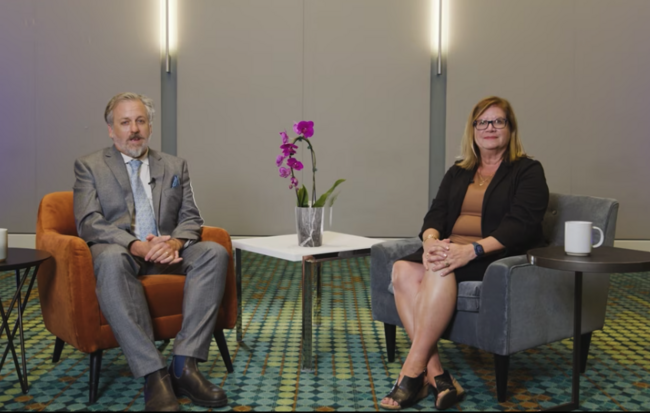
In this interview, Craig Chepke, MD, DFAPA, Chief Medical Officer, Psych Congress, and Kevin Williams, MS, MPAS, PA-C, Co-Chair, Psych Congress Elevate and PA Institute, discuss how busy outpatient clinicians can effectively screen for anhedonia in major depressive disorder (MDD) without sacrificing too much time during everyday clinical practice. They review practical questions that distinguish anticipatory and consummatory anhedonia, broaden assessment beyond joy and pleasure to fulfillment, and explain why motivation, pleasure, engagement, apathy, and emotional blunting should be separated to guide more tailored treatment planning.
Don't miss the second video in this series: Aligning Patient Goals With Novel Mechanisms in MDD Anhedonia Treatment.
Key Clinical Summary
- Major depressive disorder and anhedonia can be assessed in busy outpatient visits by asking about both consummatory anhedonia and anticipatory anhedonia, rather than relying on lengthy rating scales.
- PHQ-9 item 1 can anchor brief anhedonia screening, followed by questions about what patients enjoy, look forward to, anticipate, or feel excited about in the future.
- Motivation, pleasure, and engagement should be assessed separately because anhedonia can overlap with apathy and emotional blunting, including blunting associated with SRI or SNRI treatments.
Read the Transcript
Craig Chepke, MD, DFAPA: Hi, my name is Craig Chepke. I'm the Medical Director of Excel Psychiatric Associates in Huntersville, North Carolina. I'm also the Chief Medical Officer of Psych Congress.
Kevin Williams, MS, MPAS, PA-C: I'm Kevin Williams. I'm a psychiatric physician assistant in Tampa, Florida, as the CEO and lead clinician for On Point Behavioral Health and a Co-Chair for Psych Congress Elevate and PA Institute.
We have a couple of questions regarding your amazing discussion on major depressive disorder, specifically on anhedonia. So, in a busy outpatient visit, what is the most effective way to assess for anhedonia without adding another lengthy rating scale that we have in practice?
Chepke: Yeah, rating scales for anhedonia are largely for clinical trials. We don't have really a good equivalent of like the PHQ-9 or GAD-7, which are great clinical tools for frontline practitioners for anhedonia specifically, although item 1 of PHQ-9 does talk about anhedonia.
Importantly—this is my key point—is assessing both consummatory and anticipatory anhedonia. As clinicians, we often ask, are you doing your hobbies? Are you enjoying things? We're asking only about the consummatory anhedonia aspect of things. It may be the case that people can have a consummatory anhedonia, but some research that I've done in the past shows that patients actually tend to complain more of the anticipatory anhedonia, where they don't want to do anything, they don't look forward to anything.
Some things I get in my practice, and probably you get as well being in the South, is “I don't feel like doing crap.” We might just write off as just a laugh, but that could be a sign of anhedonia, that they are saying that I don't feel like doing anything, I don't have any desire to do anything, nothing feels good to me, so I don't want to go and do anything. So, it may be nonspecific and generic, but we should make sure we're assessing both, because people can have one, the other, or both, when talking about anhedonia.
And they do reinforce each other. If someone initially feels that “oh, I don't want to go to this party because I'm not going to have fun,” then they go to the party, they don't have fun, and they say, “see, I was right.” Next time a dinner party rolls around, “well, last time I didn't want to go, I didn't think it was going to be fun, it wasn't,” and it just can spiral downwards. So, making sure we're assessing both sides of things is really important.
Williams: Do you think there's maybe 1 or 2 questions you find particularly revealing when trying to talk to a patient about anhedonia?
Chepke: Historically, we thought about anhedonia as joy because hedonism is where it comes from. But it's not just about joy and pleasure. It's about fulfillment. For instance, after a long day at the office, neither of us probably feel very joyous, but we feel very fulfilled. Yes, we do, because we help people, and that is what gets us up and gets us into the office every morning. Broadening in that definition, and it's also not a complete lack of the hedonic drive, a complete lack of pleasure. It'd just be a severe diminishment that you feel maybe 10% of the joy, pleasure, fulfillment that you used to out of, whether it's work, going to your kids' sports games or theater. Your son is big into theater. If you only had 10, 20, 30, even if you only had 50% of the joy and fulfillment you have from going to that, that'd be a big problem, right? So, we can't think about anhedonia as black and white. We have to see the shades of gray and really just ask about not just the things you're doing, but the things that you enjoy. What are you enjoying? What do you look forward to? What are you anticipating? What are you excited about in your future?
Williams: Great points, great points. Now, your session highlights the difference between motivation, pleasure, and engagement. Why is it important to clinicians to assess all three rather than just treating anhedonia as a single symptom?
Chepke: Gosh, anhedonia is so multifactorial, and it also overlaps with other things as well. There's apathy, there's emotional blunting, and so it's not just something that we can ask 1 or 2 questions, unfortunately, and get everything we need. By asking about those multiple domains, it can help us kind of tease apart where they're having the issue. Now, let's say that they don't have any desire for anything. Well, they don't have any positive or negative feelings. Well, that's more like apathy. They don't feel excited about anything good, but they don't feel bad about anything negative, that's not good. Emotional blunting is often a consequence of a lot of SRI treatments or SNRI treatments that can blunt the emotions again in both directions. Oh, I'm not crying anymore, but I also couldn't cry at my grandmother's funeral, even though I know I should be sad.
So, helping to ask those different domains of questions can help us to tease out what is it we're actually dealing with, and therefore, how do we tailor the next steps in treatment?
Craig Chepke, MD, DFAPA, is a board-certified psychiatrist in clinical practice as the medical director of Excel Psychiatric Associates in Huntersville, NC. He serves as an adjunct associate professor of psychiatry for the Atrium Health Psychiatry Residency Program and is the Chief Medical Officer of the Psych Congress portfolio of continuing education conferences. Dr Chepke earned his medical degree from NYU School of Medicine and completed his psychiatry residency at Duke University. As part of an interdisciplinary treatment team in his practice, he employs a person-centered care model to tailor treatments to each individual's needs, integrating traditional pharmacotherapy with psychotherapeutic and physical health and wellness interventions. His clinical and academic interests include serious mental illness, movement disorders, ADHD, and sleep medicine. Dr Chepke has been recognized as a Distinguished Fellow of the American Psychiatric Association and is a recipient of the NAMI Exemplary Psychiatrist Award.
Kevin N. Williams MS, MPAS, PA-C, is the CEO and Lead Clinician at OnPoint Behavioral Health. He is a physician associate that specializes in psychiatry and has a mission to provide care that is experienced, holistic, and compassionate. He holds 2 master's degrees in interdisciplinary medical sciences and physician assistant studies from the University of South Florida and South University, respectively. He has gained experience treating children, adolescents, and adults for the past 11 years in the areas of inpatient, outpatient, and long-term care. Kevin has 10 years of experience teaching as an adjunct professor at several institutions around the country. Kevin also has over 10 years of executive leadership experience and maintains a passion for educating others to lead with effective influence. He has participated in mission work abroad and has enjoyed volunteering in several organizations in the Tampa Bay community. He enjoys spending time with his family, along with his hobbies of aviation and traveling abroad.
© 2026 HMP Global. All Rights Reserved.
Any views and opinions expressed above are those of the author(s) and do not necessarily reflect the views, policy, or position of the Psych Congress Network or HMP Global, their employees, and affiliates.