Chapter 3: From Consensus to Clinical Practice: Assessing and Monitoring What Matters
Experts discuss how consensus recommendations can support the assessment and monitoring of associated features and related impairment in patients with attention-deficit/hyperactivity disorder (ADHD).
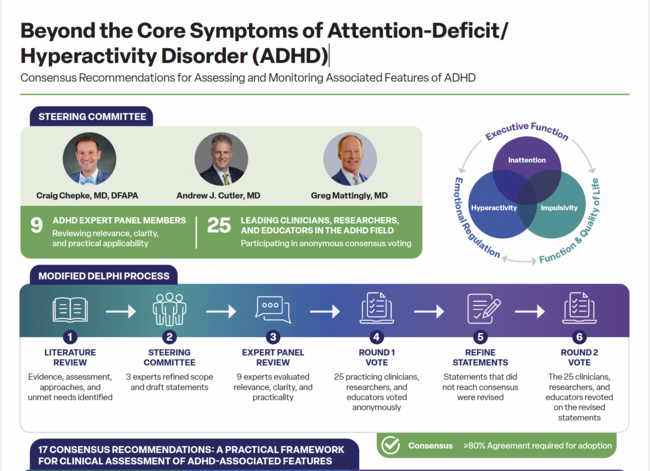
View the poster: Consensus Recommendations for Assessing and Monitoring Associated Features of Attention-Deficit/Hyperactivity Disorder in Clinical Practice.
Transcript
Greg Mattingly, MD: You know, our last guidance, maybe the most important guidance of all of those, and that is we all do things better when we do it together. So, we know that ADHD evaluations are better when we have other sources of information. So, if you bring in that spouse, if you bring in the parent, show me your report card, let's bring in your girlfriend, your boyfriend, your significant other. Let's get other pieces of information so that we have insight in this. A lot of my adults with ADHD, Craig, they've lived their lives their whole life like this. They don't know life could be different. They think their wife's just nagging them or maybe whatever, "Just leave me alone." They don't know it could be different. Andy, you've heard me say this. My oldest ADHD evaluation was an 82-year-old.
Andrew Cutler, MD: Oh, yeah.
Mattingly: A new evaluation in my office. I saw her on my schedule, I'm like, "Wait a minute. I'm not seeing an 82-year-old for an ADHD evaluation." My staff said, "Dr Mattingly, you take care of 2 of her grandkids. She came here because she was taking her grandkids in for a visit, and she saw how much better they're doing." Her husband helped to fill out the forms with her, and they did it together. Sure enough, this lovely lady had been struggling for years, and it wasn't until she saw her grandkids doing better, she goes, "Dr Mattingly, I think this is me." So, multiple sources of information, outside information, report cards, medicine lists. What else would you check, Craig? What other source of information would you like to get?
Craig Chepke, MD, DFAPA: Well, I just want to say this is so important because we talked about earlier that people with ADHD have, often, trouble self-monitoring. If they have trouble self-monitoring, it's going to be challenging for them to be able to assess all of these things we're asking them to assess. But you mentioned a lot of great things on that list. It doesn't have to be just a spouse or a parent, a close friend who's known them for years and knows a lot of their details. I mean, it could be anyone who acts as an outside observer. I like to tell patients, "Look, it's not that I don't trust you, but there's a reason why physicians can't prescribe to themselves." We have blind spots about ourselves, even us. I just want to go from, it's like seeing a CAT scan instead of x-ray. Just your report is like an x-ray, 2 dimensions. You bring in another person into the room, now we've got a 3D look at your life.
Mattingly: When I was taking care of my NFL team in St. Louis, you know who my outside source of information?
Cutler: Trainer.
Mattingly: Sometimes it was the boyfriend, the girlfriend, but it was the team trainer.
Cutler: Trainer.
Chepke: Oh, yeah.
Mattingly: The team trainer knew these guys...
Cutler: In sports...
Mattingly: ... knew them inside and out.
Cutler: That's right. Sports, it's always the trainer.
Mattingly: It was fascinating getting both sides of information. Sometimes they were very consistent, but sometimes they each picked up on something the other one didn't know.
Cutler: But there's 2 issues here. One we've talked about is the part of the brain that's responsible for self-observation, insight and judgment isn't working. So, I'm asking you to use a faulty instrument in a way to report. But there's a second issue, and that is something I call normalization bias, and you alluded to this. I've had it a long time; it's not that bad. How often have we had, we treat a patient and they go, "Oh, I didn't realize how bad it really was and how much better it can be."
Mattingly: Or, you get one of their family members, and they're like, "Listen, my loved one is a hoarder. They don't let anything go, and they don't let anything go because they're afraid they're going to lose it."
Cutler: That's right.
Mattingly: So, now they try to compensate with all these kind of ways that just aren't working for them.
Cutler: But we do say how important it is to get collateral information, but sometimes you really can't. We shouldn't necessarily let that stop us from doing the evaluation and making a diagnosis. It is preferable, but...
Mattingly: Correct. The guidance is, when possible, it's better to get an outside source of information. Guys, this has been really fun. It's been a journey where we've learned a lot. We've gone back and read and pulled articles and read those together. We've gotten to share with friends and colleagues. If there's anything I've taken away from this is that consensus isn't easy right now.
Chepke: Sure thing.
Mattingly: We live in a world that's pretty divided, but we had a lot of consensus about the importance of the associated features of ADHD, the importance of those impairments in people's lives, and the importance about making a difference in people's lives when we use this information together.
Cutler: I'm very proud of the process we went through, because it has been a process. We use the word journey sometimes, Greg, but I've had patients say, "It's not really a journey. Journey's like linear and fun. It's more of an odyssey, where I have challenges and tribulations, and I persist and get through them." So, I think our goal is to help our patients and their families to persist and to treat the whole patient, the whole situation.
Chepke: Yeah. Like you, Andy, I'm just so proud of what we've accomplished, but mostly I'm excited to finally get this now out into the hands of the rest of the field, and let it spread and see how much good we can do, because the efforts that we've put in could be magnified so many fold when clinicians take this up in the field and they utilize it to improve their assessments and their treatment of people living with ADHD.
Cutler: Yeah. The 3 of us are really dedicated educators, and I think we want to go a little viral. We want to help patients that we haven't seen by helping our colleagues to do a better job.
Mattingly: Okay. To our Psych Congress Network family out there, this is hopefully a great educational experience for you. Hopefully you're going to take this home and make a difference. Share it with friends, share it with colleagues. Go out there and make a difference, but let this knowledge go forth to help other people as well, right? Once again, Greg Mattingly, Dr Craig Chepke, Dr Andy Cutler. Thank you for joining us.
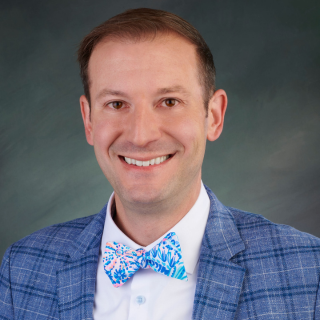 Craig Chepke, MD, DFAPA
Dr Craig Chepke is a board-certified psychiatrist in clinical practice as the medical director of Excel Psychiatric Associates in Huntersville, North Carolina. He serves as an adjunct associate professor of psychiatry for the Atrium Health Psychiatry Residency Program and is the chief medical officer of Psych Congress. As part of an interdisciplinary treatment team in his practice, he employs a person-centered care model to tailor treatments to each individual's needs, integrating traditional pharmacotherapy with psychotherapeutic and physical health and wellness interventions. His clinical and academic interests include serious mental illness, movement disorders, ADHD, and sleep medicine. Dr Chepke has been recognized as a distinguished fellow of the American Psychiatric Association and is a recipient of the National Alliance on Mental Illness Exemplary Psychiatrist Award.
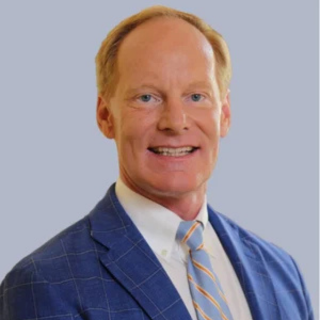 Greg Mattingly, MD
Dr Greg Mattingly is a physician and principal investigator in clinical trials for Midwest Research Group. He is also a founding partner of St Charles Psychiatric Associates and an associate clinical professor at Washington University. A St Louis native, he earned his medical degree and received a Fulbright scholarship while attending Washington University. Dr Mattingly is board certified in adult and adolescent psychiatry, and he is a diplomate of the National Board of Medical Examiners. He has been a principal investigator in over 400 clinical trials focusing on ADHD, anxiety disorders, major depression, bipolar disorder, and schizophrenia. Having served on numerous national and international advisory panels, he has received recognition for clinical leadership and neuroscience research. Dr Mattingly is also the president of the American Professional Society of ADHD and Related Disorders and a member of the Scientific Advisory Board for the World Federation of ADHD.
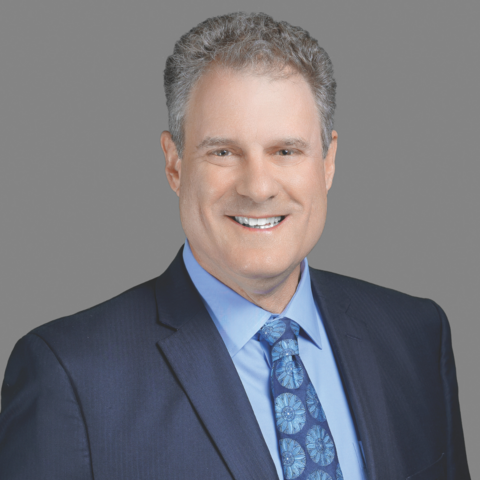 Andrew Cutler, MD
Dr Andrew J. Cutler is a clinical associate professor of psychiatry at SUNY Upstate Medical University in New York, and he serves as the chief medical officer of the Neuroscience Education Institute. He received his MD from the University of Virginia School of Medicine, where he was also elected to the Alpha Omega Alpha honor medical society and received the Merck Award for outstanding medical scholarship. He completed his medical internship, internal medicine residency, and psychiatry residency at the University of Virginia Medical Center, where he served as chief resident of psychiatric medicine and did research on dopamine receptor pharmacology. Dr Cutler then served as the first assistant professor and director of psychiatric medicine at the University of Chicago. He is board-certified in both internal medicine and psychiatry. Dr Cutler has also been the principal investigator on over 400 psychiatric and medical clinical trials.
This program was independently developed with funding from Otsuka Pharmaceuticals.